
Menu
Get Expert Legal Support Today
TL;DR:
- Legal aid services provide free or low-cost legal assistance mainly for civil disputes, including housing, family law, and benefits. Eligibility depends on income, assets, case type, and geographic location, with many applicants facing capacity limits. Since many people are left unserved, exploring multiple providers, legal clinics, and pro bono networks increases chances of receiving help.
Legal aid services are defined as free or low-cost legal assistance provided to individuals who cannot afford private legal representation in civil matters. The term covers a broad network of non-profit organisations, government-funded programmes, and pro bono solicitors working to close the gap between legal need and legal access. In the United Kingdom and the United States, bodies such as the Legal Aid Agency and the Legal Services Corporation coordinate much of this provision. Understanding what legal aid services are, who qualifies, and how to access them is the first step to protecting your rights without facing prohibitive legal costs.
Legal aid services are a structured system of free or subsidised legal support for civil disputes, not a single organisation or programme. The distinction matters. Criminal legal aid is a constitutional right in the United States, with public defenders assigned automatically. Civil legal aid carries no such guarantee. It is delivered through a patchwork of providers, each with its own funding, mandate, and geographic reach.

The scope of legal aid provision varies by provider, but most programmes address civil matters where the consequences of losing are severe. Housing, family law, welfare benefits, debt, and immigration are the most common categories. Criminal defence, personal injury claims on a contingency basis, and most commercial disputes fall outside the typical legal aid mandate.
Understanding this boundary prevents wasted time. If you face a civil legal problem and cannot afford a solicitor, legal aid services are your primary route to representation or advice.
Legal aid services cover a defined range of civil legal problems. The following categories represent the most commonly accepted case types:
Legal aid organisations often have narrow mandates and limit cases by geography, case type, and funding restrictions. That means a provider in one city may accept housing cases but not immigration cases, while a provider in the next town operates the reverse. Checking the specific mandate of your local provider before applying saves significant time.
Personal injury claims are largely excluded because solicitors can take these on a no-win, no-fee basis. Commercial disputes between businesses are almost always outside scope. Knowing what legal aid does not cover is as useful as knowing what it does.
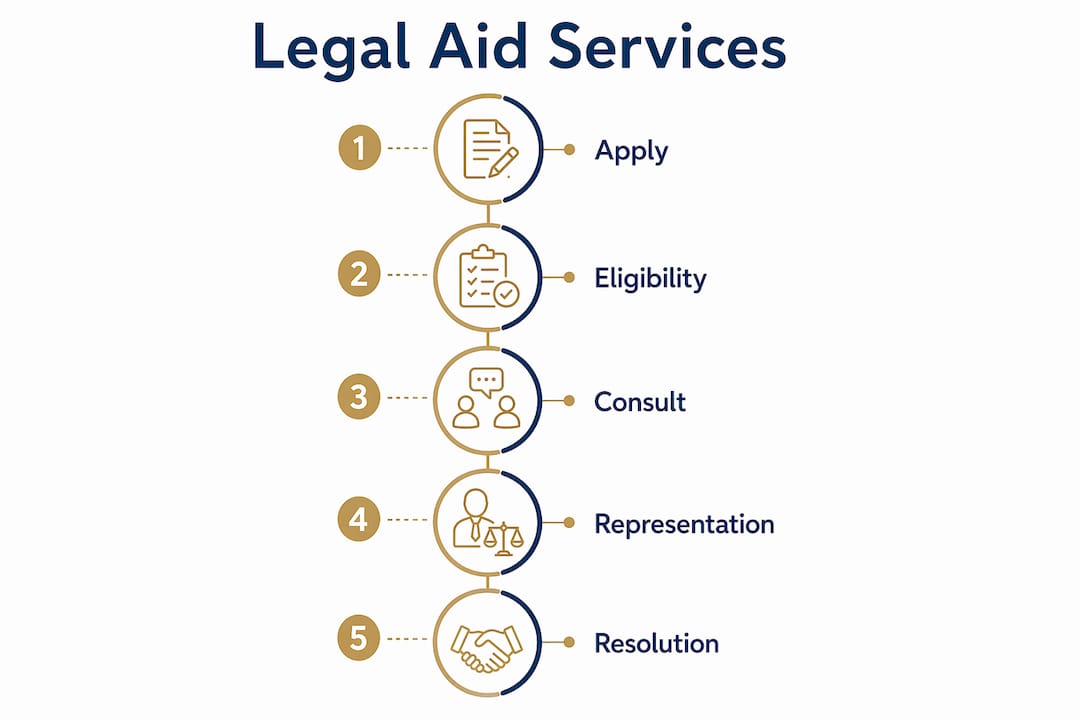
Eligibility for legal aid rests on two tests: a means test and a merits test. Both must be satisfied before a provider will accept your case.
Each organisation has strict case eligibility and geographic service boundaries. This is not a reflection of your situation’s severity. It is a funding constraint. Over 50% of eligible applicants may be turned away due to capacity limits alone.
Pro Tip: Prepare a one-paragraph summary of your legal problem before you call. Include the type of dispute, any court dates, and the outcome you need. Providers make faster decisions when the issue is clear from the first contact.
Legal aid services do not all work the same way. The level of support you receive depends on the provider’s capacity and the complexity of your case. The table below outlines the main service models.
| Service model | What it includes | Best suited for |
|---|---|---|
| Legal advice and information | One-off consultation, explanation of rights | Early-stage disputes, benefit appeals |
| Brief services | Document review, letter drafting, court form help | Straightforward housing or debt matters |
| Limited-scope representation | Solicitor handles specific tasks; client manages the rest | Cases where full representation is unavailable |
| Full representation | Solicitor manages the entire case from start to finish | Serious family law or housing possession cases |
| Legal clinic | Drop-in or appointment-based group advice sessions | First-time enquiries, general guidance |
Limited-scope representation involves legal aid providers handling specific tasks while the client manages the remainder of the case. This model is common because it allows providers to assist more people within tight budgets. You might receive help drafting a defence but attend the hearing yourself.
Pro bono networks such as LawWorks in England and Wales connect volunteer solicitors with individuals who do not qualify for funded legal aid but still cannot afford private fees. These networks fill a critical gap, particularly for those whose income sits just above the eligibility threshold.
An estimated 92% of low-income Americans’ civil legal needs remain unmet annually. That figure reflects the scale of the gap between demand and capacity. It also explains why providers triage cases by urgency and severity rather than first-come, first-served.
Pro Tip: If you are offered limited-scope representation, accept it. Partial legal help is far better than none, and a solicitor drafting your key documents significantly improves your position in court.
Applying for legal aid requires preparation. Providers make decisions quickly, and a well-prepared applicant stands a better chance of acceptance.
Rejection from one provider does not mean rejection from all. Providers have different mandates, and a case outside one organisation’s scope may fall squarely within another’s.
The biggest misconception I encounter is that legal aid is simply charity. It is not. Legal aid is a pillar of the rule of law, and its funding shortfalls force providers to triage cases by severity rather than by need alone. That reality is uncomfortable, but understanding it changes how you approach the application.
People often arrive at intake expecting the same service they would receive from a private solicitor. The reality is frequently a brief consultation or limited document help. That is not a failure of the system. It is the system working within its constraints. Adjusting your expectations before you apply means you use what is offered more effectively.
The distinction between criminal and civil legal representation is the other area where people consistently go wrong. If you are facing criminal charges, a public defender is your right. If you are facing eviction, a custody dispute, or a benefits appeal, you are in civil territory, and the right to free representation does not automatically follow. Knowing which side of that line you stand on shapes every decision you make next.
My strongest advice is persistence. Apply to multiple providers. Attend legal clinics. Contact pro bono networks. The gap between legal need and legal provision is real, but it is not absolute. Preparation and clear communication remain the two factors most within your control.
— Panagiotis
Legal aid services cover a vital range of civil matters, but capacity limits mean many people are left without representation at critical moments. For disputes involving significant financial stakes, complex litigation, or commercial dimensions, professional legal support becomes necessary.

Alilegal provides civil litigation services for individuals and businesses facing disputes where the outcome genuinely matters. The firm operates on fixed fees with clear communication at every stage, so you know exactly what you are paying for and why. For those navigating complex family matters, Alilegal’s family and divorce practice offers direct, experienced support. If legal aid has been declined or is insufficient for your situation, speaking with a solicitor at Alilegal is a practical next step.
Most legal aid programmes set eligibility at 125% of the Federal Poverty Guidelines, approximately $19,950 per year for a single individual in 2026. Some programmes extend this threshold to 200% for specific case types such as domestic violence matters.
Legal aid is free at the point of use for those who qualify financially. Providers funded by government programmes such as the Legal Services Corporation or the Legal Aid Agency charge no fees to eligible clients.
Criminal defence is handled separately through public defenders, who are assigned as a constitutional right in the United States. Civil legal aid, which covers housing, family law, and benefits disputes, is not guaranteed and depends on provider capacity and eligibility.
Legal aid intake involves a screening interview covering income, assets, and case details, with decisions typically taking days to weeks depending on caseload. Cases with imminent court dates are often prioritised.
Rejection from one provider does not close all options. Ask for a referral to another local organisation, attend a legal clinic, or contact a pro bono network such as LawWorks. You can also explore community legal aid resources for accident victims and other specific circumstances.
TL;DR:
- A personal injury claim is a formal legal request for compensation when someone is harmed due to negligence or wrongful conduct. In England and Wales, these claims are governed by tort law, involving solicitors, insurers, and courts, depending on the case. Success requires proving duty of care, breach, causation, and damages while adhering to procedural deadlines and correctly documenting evidence.
A personal injury claim is a formal legal demand for compensation made when someone is harmed due to another party’s negligence or wrongful conduct. In England and Wales, these claims are governed by tort law, and the process involves solicitors, insurers, and in some cases the courts. Whether you have been injured in a road accident, at work, or on someone else’s property, understanding how personal injury claims work gives you the clearest path to fair compensation. This guide covers what you must prove, how to file, what to expect, and how to avoid the mistakes that cost claimants dearly.
A successful personal injury claim requires proving four fundamental legal elements: duty of care, breach of duty, causation, and verifiable damages. Miss any one of these and your claim will fail, regardless of how serious your injury is. Understanding each element before you file puts you in a far stronger position.
Here is what each element means in practice:
Compensation is calculated by multiplying your economic losses by a severity factor of 1.5 to 5, depending on the seriousness of the injury. That means a well-documented set of economic damages directly increases your total award.
Pro Tip: Start a dedicated folder, physical or digital, from day one. Collect every medical receipt, prescription, payslip showing lost income, and photograph of your injuries. Courts and insurers respond to evidence, not assertions.
Filing a compensation claim follows a clear sequence. Skipping steps or rushing the process weakens your position significantly.
| Stage | Expected timeframe |
|---|---|
| Adjuster assigned by insurer | 1–3 days after notification |
| Initial inspection or assessment | 3–7 days after assignment |
| Initial decision from insurer | 1–4 weeks after filing |
| Negotiation and settlement | 3 months to 2 years |
| Court proceedings (if required) | 12–24 months additional |

One deadline that catches many claimants off guard: government entity claims may require a formal Notice of Claim within as little as 90 days. Miss that window and you permanently lose the right to sue, regardless of how strong your case is.
Pro Tip: Your initial notice to an insurer or defendant should state only the date, location, and that an injury occurred. Do not include fault descriptions or financial demands at this stage. Insurers can use premature statements against you later in negotiations.
The types of personal injury cases vary considerably in their complexity, evidence requirements, and typical timelines. Knowing which category your case falls into helps you set realistic expectations.
| Case type | Key evidence needed | Typical complexity | Common compensation |
|---|---|---|---|
| Road traffic accidents | Police report, dashcam footage, medical records | Moderate | Medical costs, lost earnings, vehicle damage |
| Workplace injuries | Accident book, risk assessments, CCTV | Moderate to high | Medical costs, lost income, rehabilitation |
| Slips, trips, and falls | Photographs, maintenance records, witness statements | Moderate | Medical costs, pain and suffering |
| Clinical negligence | Expert medical opinion, treatment records | High | Medical costs, future care, loss of earnings |
| Intentional torts (e.g. assault) | Police report, criminal conviction if applicable | Variable | Compensation from CICA or civil action |
A few distinctions are worth noting. Clinical negligence claims require independent expert evidence, which adds both cost and time. Intentional injury cases may run alongside criminal proceedings, and compensation can be sought through the Criminal Injuries Compensation Authority (CICA) even where the perpetrator is unidentified. Workplace claims often involve the Health and Safety Executive (HSE) and employer liability insurers, making early legal advice particularly valuable.
For a broader view of how these cases interact with UK law, the personal injury law guide from Alilegal covers statutory deadlines and procedural steps in detail.
The most damaging errors in compensation claims are almost always procedural rather than factual. The underlying injury may be genuine and serious, but poor process destroys otherwise strong cases.
Pro Tip: Many personal injury solicitors in the UK operate on a conditional fee arrangement, commonly called a “no win, no fee” agreement. This means you can access legal representation without upfront cost, removing one of the most common barriers to pursuing a legitimate claim.
Most personal injury cases are resolved through private settlements rather than court trials. That is not a compromise. A negotiated settlement can deliver full and fair compensation while avoiding the cost, delay, and uncertainty of litigation.
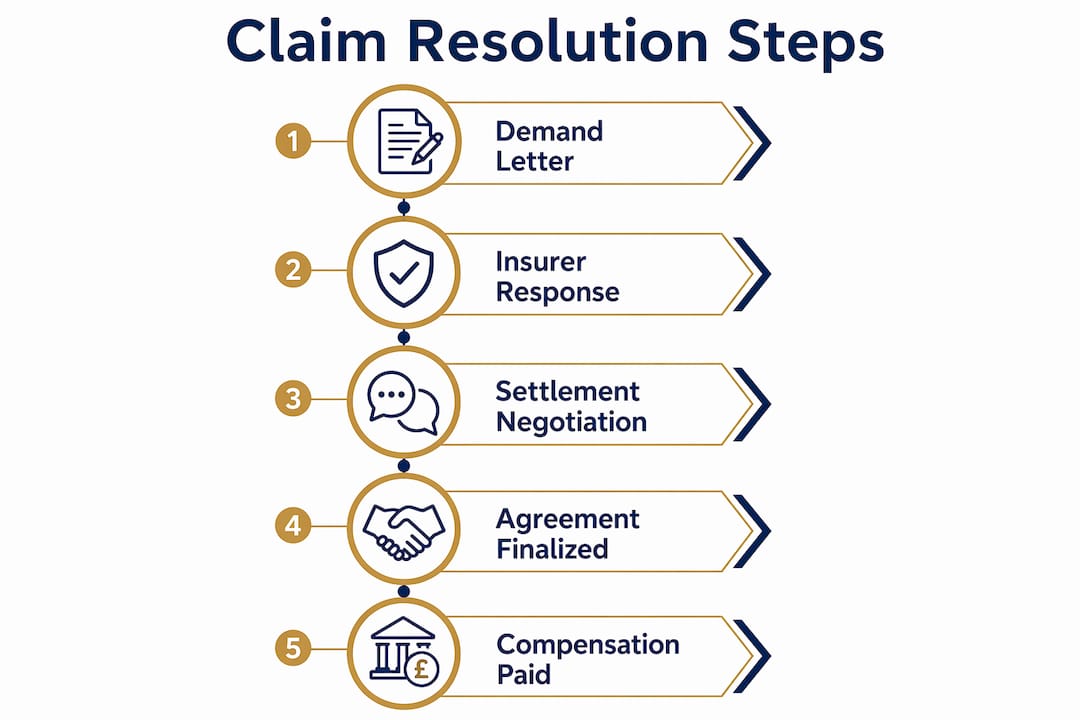
The settlement process works as follows. Your solicitor sends a demand letter setting out the claim. The insurer or defendant responds, often with a lower counter-offer. Negotiations continue until both parties reach an agreed figure, or until it becomes clear that agreement is impossible. At that point, court proceedings become the appropriate route.
Litigation is not a failure of the process. It is a strategic tool used when negotiations stall or when the defendant disputes liability and evidence must be tested before a judge. The personal injury litigation guide from Alilegal explains exactly when and how that step is taken.
What damages can you expect compensation to cover?
Most claims take 6 months to 2 years to resolve, depending on the severity of the injury and whether liability is disputed. Waiting until you have reached maximum medical improvement before settling is the single most important timing decision you will make. Settling early locks in a figure that may not reflect your long-term losses.
Pro Tip: If an insurer makes an early offer shortly after the incident, treat it with caution. Early offers are almost always lower than what a fully documented claim would achieve. Your solicitor can advise on whether an offer reflects the true value of your losses.
Having worked closely with individuals pursuing compensation claims, the pattern I see most often is not legal complexity. It is a gap between what claimants expect and what the process actually delivers.
People frequently assume that having a genuine injury and a clear wrongdoer is enough. It is not. The legal system requires proof, documentation, and procedural compliance. A claimant who seeks medical care immediately, preserves evidence carefully, and instructs a solicitor early is in a fundamentally different position from one who waits, assumes the insurer will be fair, and tries to manage the process alone.
The other misconception I encounter regularly is that going to court means winning more. In reality, settlements are the norm for good reason. They offer certainty, speed, and privacy. Litigation is reserved for cases where the defendant refuses to engage reasonably or where liability is genuinely contested. Knowing the difference between those two situations is where experienced legal advice earns its value.
My honest advice: treat your claim as a professional process from the first day. Document everything, communicate clearly with your solicitor, and resist the pressure to settle before you know the full picture of your recovery. The law gives you the tools. Use them properly.
— Panagiotis
Alilegal’s civil litigation team supports individuals through every stage of the personal injury compensation process, from initial evidence gathering to settlement negotiations and court proceedings where necessary. The team works with transparency and clear communication, so you always know where your claim stands and what the next step involves. Alilegal offers fixed-fee arrangements and straightforward advice, removing the uncertainty that often stops people from pursuing legitimate claims. If you have been injured and want to understand your options, speak to a solicitor at Alilegal today. You can also explore the full claims process guide to understand what to expect at each stage.
A personal injury claim is a legal demand for compensation made by someone who has been injured due to another party’s negligence or wrongful act. It can be resolved through negotiation with an insurer or, where necessary, through court proceedings.
Most claims take between 6 months and 2 years to resolve, depending on the severity of the injury and whether liability is disputed. Claims involving serious or long-term injuries typically take longer because settlement should wait until maximum medical improvement is reached.
A strong claim includes medical records, evidence of the incident, proof of financial losses such as payslips and receipts, witness statements, and a clear account of how the injury has affected your life. A solicitor will help you compile these into a formal demand letter.
Yes. The majority of personal injury cases settle through negotiation before any court proceedings are issued. Litigation becomes necessary only when the defendant disputes liability or refuses to make a reasonable offer.
The standard limitation period in England and Wales is three years from the date of the injury or from the date you became aware of it. Claims against government bodies may have much shorter notice requirements, in some cases as little as 90 days.
Securing high calibre commercial legal advice without the barriers of Magic Circle law firm processes or rates is difficult. Most well known practices rely on high fees, rigid engagement terms, or junior staffed teams for routine matters. This guide reviews client focus, fee models, and sector expertise so businesses can match an alternative firm to their needs without compromise.
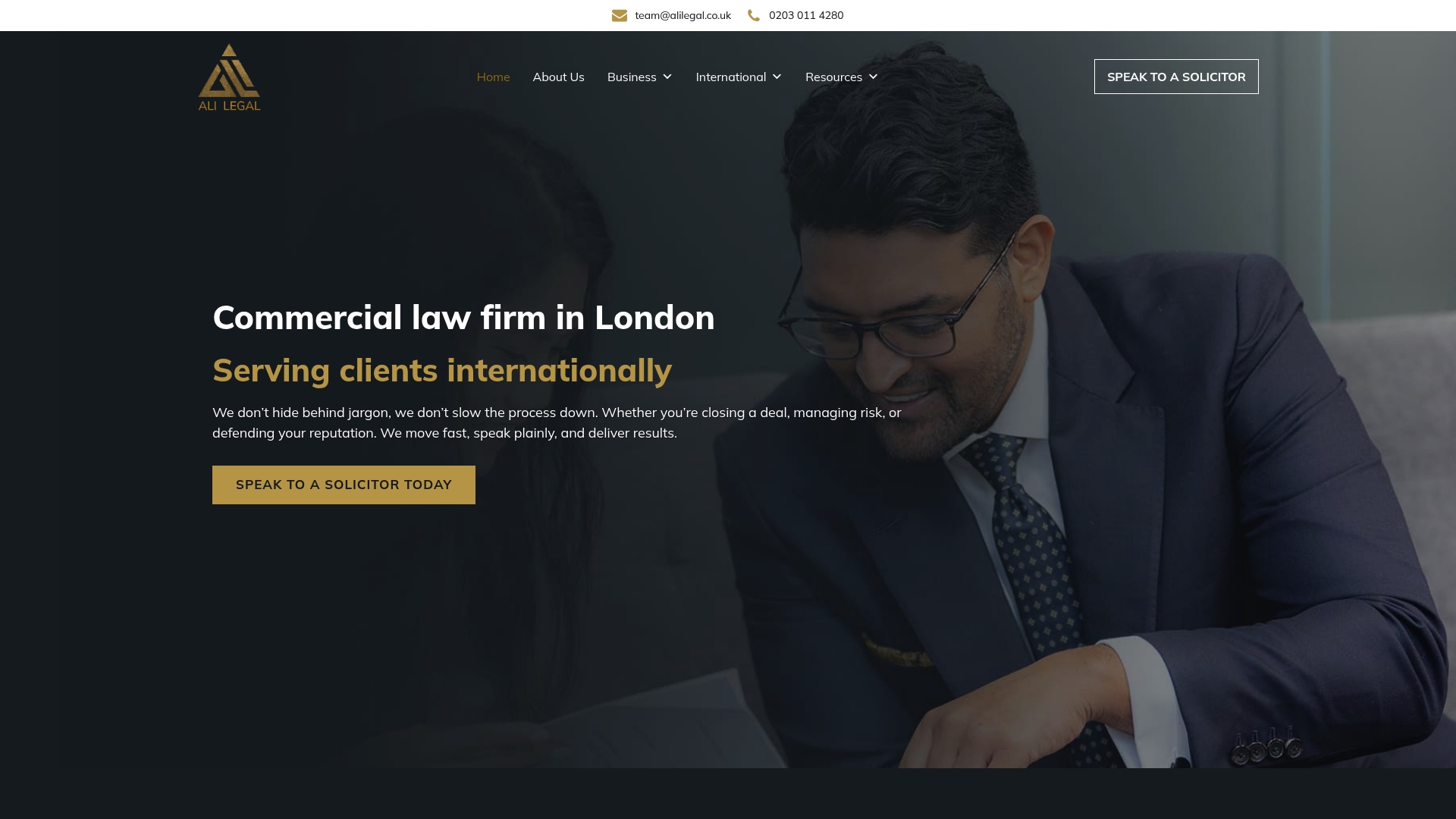
Regulated by the Solicitors Regulation Authority, Ali Legal advertises fixed fees and straightforward advice for clients in London and overseas. The firm presents a client focused model that stresses speed and clear communication. The website features articles, case studies, and client testimonials to support trust.
Ali Legal offers legal services for business, international, and personal matters, with dedicated teams for corporate work, dispute resolution, and immigration. The firm lists practice areas including civil litigation, family law, personal injury, immigration, property, corporate and commercial law, international disputes, and maritime law. Services combine regulatory compliance with tailored advice aimed at growth, risk management, and ongoing client relationships.
The primary distinction is a focus on strategic, long term client relationships backed by transparent, commercial driven legal support. That focus appears across service descriptions and client communications. For businesses this means the firm positions itself as a continuing legal partner rather than a single case handler.
Ali Legal brings deep sector expertise across corporate, banking, and international law while keeping communication direct and prompt. The firm highlights international capability and immigration support, which helps companies expanding across borders. The regulatory status and visible client testimonials add credibility for entrepreneurs, startups, and high net worth individuals seeking trusted advisers.
Growth oriented businesses, international corporations, and individuals needing specialist advice will find the firm relevant. Startups and SMEs seeking practical commercial counsel and immigration help will benefit from the firm’s cross border experience. High net worth individuals wanting clear, responsive legal teams also match the profile.
Fixed fees and prominent contact routes make it easier to budget for routine matters such as immigration applications or straightforward property transactions. That pricing visibility reduces uncertainty when comparing counsel for discrete tasks. For ongoing corporate work the client focused approach aims to convert one off instructions into longer term retained relationships.
A UK company expanding into Europe uses Ali Legal to set up holding structures, secure banking arrangements, and manage employee immigration. The firm handles contractual drafting, cross border compliance checks, and any commercial disputes that follow. The consolidated approach keeps counsel consistent across corporate, property, and immigration tasks.
Pricing is not published on the site and the firm treats most matters as bespoke engagements. Some work is offered under fixed fee arrangements where scope is defined. Contact is required to obtain a fee estimate specific to the matter.
Website: https://alilegal.co.uk

A senior legal team concentrates on startups and high growth companies at every stage of development. The firm offers practical, plain English commercial advice across corporate structuring, employment, data protection, and intellectual property. Clients report a partnership approach that prioritises outcomes over billable hours.
Farringford Legal handles company formation, equity and debt funding, investor agreements, and exit planning while drafting and negotiating commercial contracts. The team advises on employment matters and data protection compliance alongside intellectual property when businesses scale. Services are delivered by senior lawyers who tailor their work to the business stage and commercial priorities.
A dedicated team of senior lawyers offers hands on support for growth driven companies and entrepreneurs. That focus on senior counsel for scaling and exit work sets the firm apart from advisers who rely heavily on junior teams.
Deep sector experience helps founders avoid common pitfalls when taking on investment or entering new markets. The firm uses plain English advice that reduces legal jargon and speeds decision making. Pricing and engagement are pitched as flexible and affordable, and the team favours long term relationships that keep legal matters aligned to business goals.
If you need a fixed price small matter handled by paralegals, this practice may not be the most economical choice. Larger corporates seeking a full in house panel or high volume transactional support might find the tailored senior counsel model misaligned with their scale. Clarify scope and fees for repeat low value work before instructing the team.
Ambitious SMEs, startups, and entrepreneurs planning fundraising, scaling, or exit will find the firm relevant to their needs. Founders who prefer senior lawyer involvement and outcome oriented advice will gain the most value. Businesses that want practical contract drafting and investor negotiation help suit this practice.
A technology startup engaged Farringford Legal to structure founder equity and prepare for a seed round. The team drafted investor agreements, negotiated terms, and updated employment contracts to reflect growth plans. That work reduced legal friction during negotiations and left the company ready for the next funding stage.
Pricing is not specified publicly and appears tailored to client requirements and scope of work. Prospective clients should request an engagement letter that sets fees, estimated disbursements, and any retainer or staged billing. Fee clarity is important when planning multiple funding or exit milestones.
Website: https://farringfordlegal.co.uk

Specialist expertise in fonts and font software enforcement and licensing defines Asenda Law. The firm reports high client satisfaction for its IP and commercial work. That focus shows up in cases that combine registration, enforcement, and bespoke licensing work.
Asenda Law handles the full spectrum of intellectual property and commercial law, including patents, trademarks, copyrights, contracts, and disputes. The team supports registration, enforcement, and dispute resolution while offering tailored contracts for specific industries. Ongoing portfolio management and partner level attention aim to keep IP assets active and commercially useful.
The central difference is partner level support focused on long term client success and plain language advice. Clients work directly with experienced partners rather than a junior-led team. That model suits organisations wanting consistent legal oversight and a single point of accountability for strategy.
High specialist knowledge in font related IP gives creative firms clear technical and legal guidance. The firm pairs industry specific contracts with active enforcement and licensing experience, which benefits brands that monetise design. Clients receive personalised support from partners, promoting continuity through disputes or licensing programmes. The team includes lawyers with international experience, which helps when you need cross border enforcement.
If your need is a single simple document or a low cost, transactional job, this service may be disproportionate. Small sole traders with minimal IP exposure will likely prefer a fixed fee clinic or brief advice service. Also expect more detailed cost discussions for bespoke enforcement programmes.
Creative agencies, type foundries, and tech startups that rely on design assets will gain most from this offering. Corporate clients pursuing licensing, branding, or cross border enforcement will also find the partner level model useful. Choose Asenda Law when you want ongoing legal stewardship of an IP portfolio.
A fashion brand uses Asenda Law to register trademarks, draft licensing agreements, and pursue infringers abroad. Partners draft industry specific licences and coordinate enforcement with local counsel. The result keeps brand controls tight while opening revenue through licences.
Pricing is not specified and appears bespoke by engagement type and scope. Expect matter based fees or retainer arrangements for ongoing portfolio management. Small transactional matters may not fit the typical pricing model and will require explicit fee discussion.
Website: https://asendalaw.co.uk
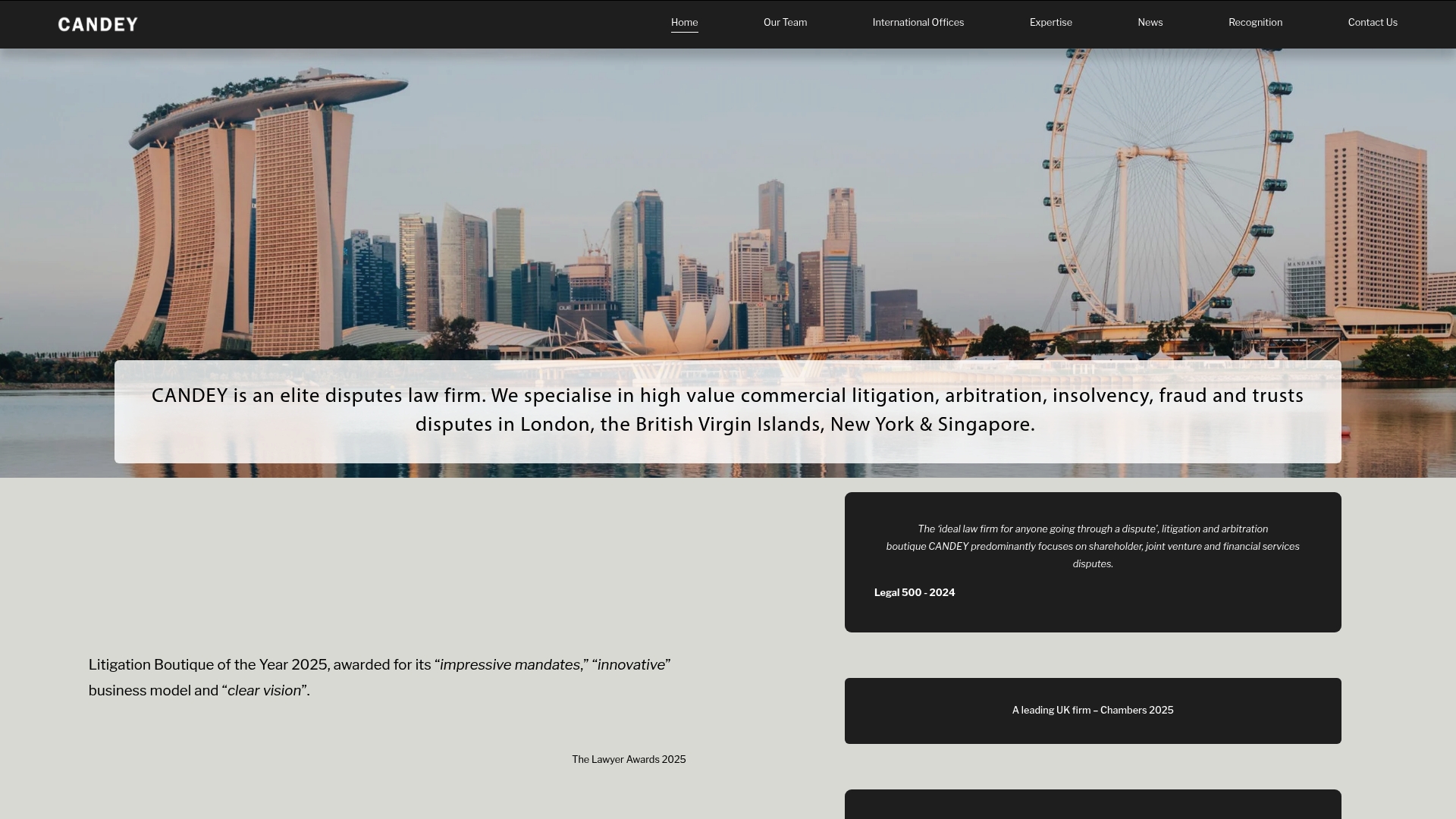
Recognised as Litigation Boutique of the Year 2025, CANDEY concentrates on high value commercial disputes across London, the British Virgin Islands, New York, and Singapore. Their team brings together solicitors, barristers, US attorneys, and other practitioners to handle shareholder, joint venture, insolvency, fraud, and trusts work. That jurisdictional mix gives clients direct access to counsel experienced in cross border enforcement and arbitration.
CANDEY focuses on high value commercial litigation, international arbitration, insolvency, fraud and trusts disputes, with strength in shareholder and joint venture matters. The firm operates from multiple jurisdictions and combines in house solicitors with external counsel to offer multi jurisdictional representation. They also offer value based cost options including contingency agreements and external funding, and they undertake advocacy and reform work on insolvency and lawyers rights.
The standout feature is the firm’s multidisciplinary roster paired with active legal reform work. That combination moves CANDEY beyond casework into public advocacy, which can matter in complex insolvency or cross border disputes. The firm’s market positioning suits clients who need heavyweight dispute specialists plus strategic influence on jurisdictional issues.
CANDEY has a strong track record in high stakes cases and public recognition through industry awards. The international footprint across London, the British Virgin Islands, New York and Singapore gives clients practical options for forum selection and enforcement. Their willingness to deploy contingency and other value based funding models can make major disputes more financially approachable for corporate clients and high net worth individuals.
Large multinational corporations, financial institutions, and high net worth individuals with complex cross border disputes will get the most from CANDEY. Law firms seeking co counsel on high stakes arbitration or insolvency matters will also value the firm’s multi jurisdictional bench. Smaller businesses or litigants with limited budgets should look elsewhere.
A multinational corporation retained CANDEY for a cross border shareholder dispute that included arbitration and parallel litigation. CANDEY coordinated counsel in London and New York and advised on enforcement strategy in the British Virgin Islands. The client benefited from unified strategy on jurisdiction, funding options, and court and arbitral advocacy.
Pricing is not specified. Fees appear to vary by case and client needs, with arrangements that can include hourly rates, fixed fees and contingency agreements. Prospective clients should request a written fee structure and funding proposal for their matter.
Website: https://candey.com
Clients seeking accessible and strategically oriented legal services encounter varied strengths across providers, catering to diverse demands ranging from cross-border engagement to niche specialisations.
Farringford Legal excels in supporting early-stage ventures and startups seeking well-rounded advice on structuring, contracts, and funding preparation. The engagement of senior legal professionals ensures practical solutions tailored to the dynamics of scaling businesses. Conversely, while Ali Legal provides an equally thorough corporate guidance platform, its broader focus across multiple legal domains may not deliver the same direct alignment with fundraising needs. For entrepreneurs prioritising succinct investor engagement, Farringford Legal’s targeted approach is more suitable.
Asenda Law stands out for its precise handling of intellectual property concerns, particularly beneficial to creative agencies and businesses monetising IP portfolios. Their focused services combined with partner-led consultations provide a unique platform for ensuring clients’ intellectual properties are not only protected but also strategically deployed. While Ali Legal comprehensively addresses corporate and personal legal needs, organisations seeking detailed support for intellectual property licensing and enforcement may find Asenda Law’s niche expertise preferable.
Ali Legal best embodies a strategically minded and tailored consultancy approach that aligns with maintaining enduring client relations. For clients prioritising a long-term partnership for complex legal needs—including corporate, international and personal matters—Ali Legal emerges as the definitive choice.
Selecting the optimal legal service provider depends on matching your unique requirements to the strengths of available firms.
| Firm Name | Primary Focus | Key Differentiator | Suitable For | Limitation |
|---|---|---|---|---|
| Alilegal | Comprehensive business, immigration, and personal legal services | Transparent, client-centred approach | Growth-focused businesses, SMEs | Limited public pricing details |
| Farringford Legal | Commercial law for startups and high growth companies | Senior lawyer involvement for scaling companies | Startups and entrepreneurial firms | Higher cost for simple transactional tasks |
| Asenda Law | Intellectual property and commercial law | Partner-level support with tailored contracts | Creative firms and IP-focused clients | Not suited for low-cost transactional needs |
| CANDEY | High-value commercial disputes, international arbitration | Multidisciplinary team with value-based pricing | Multinationals with complex disputes | Limited clarity on case management process |
Choosing an alternative to Magic Circle law firms can be challenging when you seek clear communication, fixed fees, and client-focused service. Alilegal addresses these common pain points by offering transparent legal advice across civil litigation, commercial law, immigration, and more. Their approach prioritises long-term relationships rather than one-off instructions, reducing the uncertainty often faced with bespoke legal fees.
Discover how Alilegal simplifies complex legal needs for businesses and individuals alike. Visit their All | Ali Legal category to explore practice areas or contact them directly through Ali Legal Contact for a tailored discussion. Take control of your legal matters with a partner that combines speed, clarity, and strategic support. Book a consultation and receive fixed fee guidance tailored to your situation.
Alilegal offers commercial legal services including civil litigation, family law, personal injury, immigration, property, corporate and commercial law, international disputes, and maritime law. Their focus is on regulatory compliance and tailored advice aimed at growth and risk management. Consider engaging Alilegal for comprehensive support across these practice areas.
Farringford Legal is known for flexible pricing and engagement, which suits startups and high growth companies needing adaptable legal services. Alilegal, however, provides clear fixed fees for routine matters, making budgeting more predictable. This can be beneficial for clients seeking straightforward costs associated with immigration applications or property transactions.
Alilegal is recognised for its prompt communication and client-focused model, ensuring clients receive quick and direct support. This responsiveness is a key aspect of their service, as highlighted by their commitment to clear communication throughout the legal process.
Yes, Alilegal prioritises long-term relationships by positioning itself as a continuing legal partner rather than a single case handler. This approach fosters ongoing collaboration and support tailored to evolving client needs.
Alilegal caters to various industries, focusing on growth-oriented businesses and individuals needing specialised legal advice, particularly in areas like international law and corporate support. This broad capability allows them to serve startups, SMEs, and high net worth individuals effectively.
Securing clear and cost effective legal guidance for a share purchase agreement often proves tricky for business owners. Many solicitors with commercial expertise hide pricing or do not give the option for online document handling, making budgeting and coordination harder. This comparison offers a direct assessment of four firms so you can weigh transparent fees, specialist cross border support, and client experience before appointing a legal adviser.
Ali Legal Ltd combines UK and UAE business law under one practice. The firm advertises both UAE company formation and UK corporate support on the same team. Its website emphasises a client centric approach with clear calls to action and visible contact details.
Ali Legal gives commercial and cross border legal support across corporate, property and finance matters. The firm lists UAE company formation, business immigration, banking and lending, commercial property, construction and development, and international disputes as practice areas. The team is described as experienced lawyers and specialists who adopt a client centric approach focused on clarity and speed. The website also highlights a transparent fee structure and technology to improve efficiency.
The single thing that sets this firm apart is the firmwide mix of UK and UAE legal expertise. That combination suits transactions that touch both jurisdictions and reduces the need to coordinate separate local counsel. The emphasis on long term client partnerships supports complex programmes that require ongoing corporate or compliance work.
Deep regional expertise. The team covers UK and UAE business law so clients with cross border requirements work with one lead adviser. This reduces time lost to handovers.
Broad commercial scope. Services include corporate structuring, contracts, property, finance, and international disputes which keeps related matters under the same roof. That cuts administrative friction for growing businesses.
Client centric practice. The website positions the firm around clarity, speed, and long term relationships which signals consistent communication during transactions. Multiple navigation menus and resource sections on the site support self directed research.
Transparent approach to fees and process. The firm advertises straightforward advice and fixed fees where possible which helps you budget for a share purchase agreement. They also promote technological integration to speed document handling.
This firm suits business owners and investors executing UK to UAE deals or those who expect ongoing cross border compliance. It also fits entrepreneurs who need company formation in the UAE plus concurrent UK corporate work. Choose this firm if you value a single adviser across jurisdictions and prefer a clear fee proposition discussed up front.
A named offering on the website is the combination of commercial UK practice with practical UAE setup services. That alignment reduces coordination costs when you open operations in Dubai while keeping UK legal issues under the same adviser. For businesses expanding internationally this saves time and avoids repeated briefings with separate firms.
A founder planning a Dubai branch engages the firm for company formation, corporate documentation, and local compliance checks. The same team then drafts shareholder arrangements and the share purchase agreement for the UK parent. Having one lead solicitor keeps timelines and liability allocations consistent across both jurisdictions.
The website states pricing is available via consultation and that the firm uses transparent fees and fixed fee options where appropriate. Expect engagement to begin with a scoped quote after an initial meeting or call.
Website: https://alilegal.co.uk

According to the firm, EM Law holds a Band 1 Chambers & Partners ranking for SME legal services. That placement reflects a practice built around senior lawyers with partner and in-house experience. The firm combines commercial law breadth with specific knowledge of AI, tech, and cross border projects.
EM Law positions itself around senior hires who have partner and in-house backgrounds. That composition gives them a commercial mindset useful to SMEs and growing companies. The firm stresses practical, business oriented advice rather than theoretical opinions. That focus makes them suited to clients needing commercially minded counsel on complex tech or international matters.
Experienced legal team. The lawyers include partners and former senior in-house counsel who know commercial pressures.
Strong SME focus. The firm emphasises pragmatic advice tailored to smaller and mid sized businesses.
Technology and AI capability. They list specific expertise in software, AI and data protection applicable to tech clients.
International capacity. Multilingual advisers and experience with cross border projects make handling overseas issues easier.
Evidence of results. Case studies and client feedback are available to demonstrate how the firm handles real disputes and transactions.
Pricing is not published. Prospective clients must contact the firm for fees and estimates.
Limited detail on client technology. There is no clear mention of portals or online tools for document management.
Broad practice range. The firm covers many areas, so you must choose advisers with the specific sector experience you need.
Third party reviews summarise reliability but do not list specific drawbacks for every service line.
(This section omitted because the product data does not list additional limitations.)
Company directors, founders and legal decision makers at small and medium sized businesses who need hands on corporate and commercial counsel. It suits tech founders who require advice on AI, licensing or data protection. It also suits international businesses needing multilingual support.
A London tech start up engaged EM Law to draft software licences, establish an employee share plan and address GDPR questions. The team delivered negotiated contract terms, a share scheme template, and a compliance checklist for launch in multiple jurisdictions.
Pricing is not specified in public materials. The firm asks prospective clients to contact them for a tailored fee quote and scope. Expect fixed fee options for discrete matters and bespoke proposals for larger or cross border projects.
Website: https://emlaw.co.uk
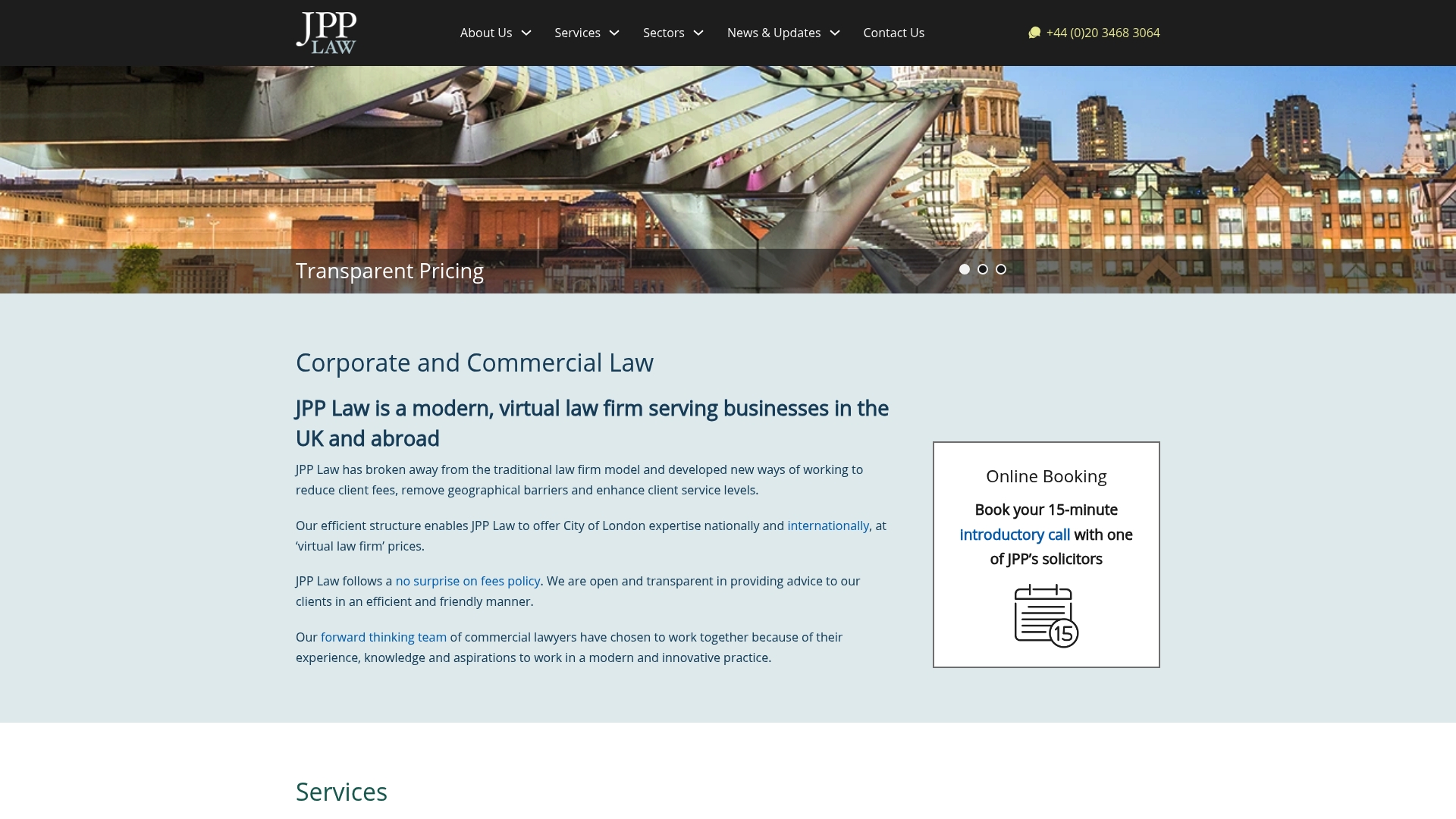
JPP Law advertises transparent fixed fee packages and a no surprises billing policy for startup and scaleup legal work. The firm runs online booking and virtual consultations so you can start a matter without visiting an office. That approach keeps predictable costs for routine corporate tasks such as formation, funding advice, and IP protection.
JPP Law combines several practical features aimed at fast moving businesses. It offers transparent pricing through fixed fee packages, capped fees, and retainer options. Online booking and virtual consultations let you schedule advice and exchange documents without travel. The firm lists specialist support for startups and scaleups covering corporate finance, mergers and acquisitions, intellectual property, and data protection compliance.
The key distinguishing point is the emphasis on virtual, tech-enabled legal services tailored to high growth firms. JPP Law packages standard corporate tasks so early stage teams can predict legal spend. That productised approach suits companies that value speed and clear billing rather than bespoke hourly work for every small transaction.
Clear fee structure that reduces billing surprises. Predictable pricing makes budgeting easier for founders and finance teams.
Online booking and virtual delivery speed up access to advice. You can get documents reviewed or calls arranged quickly without local meetings.
Specialist focus on startups and scaleups means the team understands funding rounds and investor documents. That domain knowledge shortens review cycles and improves drafting quality.
Coverage beyond company law includes data protection and intellectual property. You can bundle related work with a single legal provider.
Flexible pricing options include fixed fees, hourly rates, and retainers. That lets you pick a payment model that suits a particular stage of growth.
Limited physical presence may frustrate clients who prefer face to face meetings with a local firm. For some board or investor negotiations, an in-person solicitor can be useful.
Complex or highly specialised matters will still require scope clarification and a consultation. The stated pricing can vary once you outline bespoke requirements.
The productised approach can feel restrictive for transactions that need heavy bespoke negotiation. Larger M&A mandates may be better with full service corporate teams.
If your company depends on frequent in-person meetings or needs deep local office networks, this virtual model will feel constraining. If you require a long running litigation team or highly specialised cross border tax advice, the packaged pricing will probably need refinement through detailed scoping meetings.
Ambitious startups, scaleups, and innovation led businesses that want predictable legal costs and quick online access to corporate counsel. Founders raising seed to Series A rounds will find the packaged funding and formation support especially relevant.
A tech startup used JPP Law to form the company, draft founder agreements, and prepare investor subscription documents. The team booked a consultation online, agreed a fixed fee package, and received investor paperwork ready for signature within days. That reduced legal friction during the fundraise.
Pricing follows a mix of fixed fee packages, hourly rates, retainer options, and capped fees depending on scope. For precise figures you need a scoped consultation to confirm which package or retainer fits your matter.
Website: https://jpplaw.co.uk
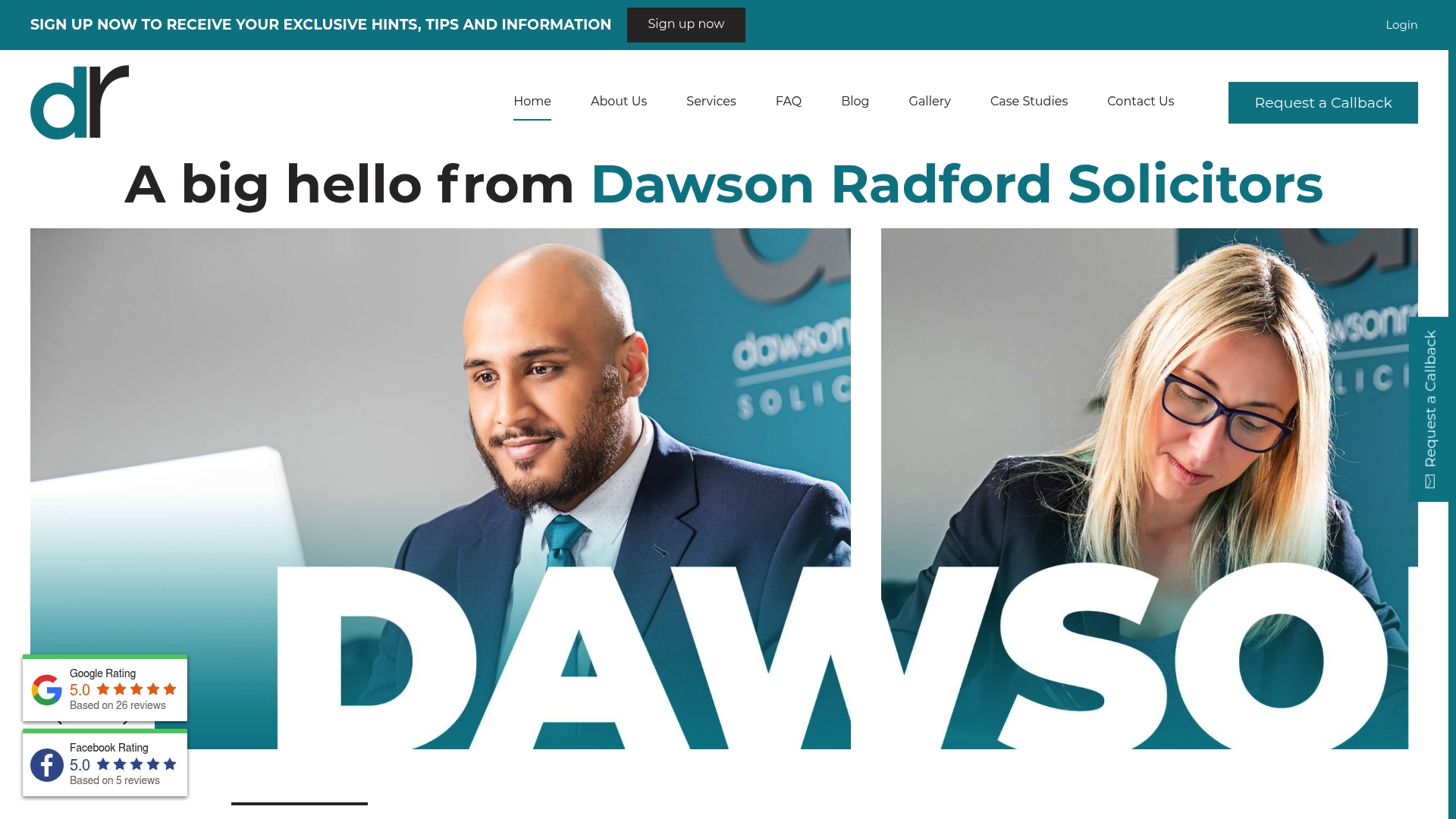
Dawson Radford advertises a five star Google and Facebook rating. The firm is a small, friendly law practice based in North Derbyshire serving Chesterfield, Sheffield, Worksop, and Rotherham. They stress clear communication, flexible meetings, and an emphasis on transparent pricing for local business and individual clients.
The firm pairs transparent upfront pricing with personal service aimed at small and medium businesses. That combination suits owners who prefer predictable fees and a named point of contact. The approach is deliberately local and relationship focused rather than large firm scale.
If you need multi jurisdictional support or an international transaction team, this firm is not the best match. Large corporate buyers or sellers working across multiple jurisdictions will need a firm with explicit cross border capability. Equally, clients who require full feature client portals for document automation may prefer a larger practice with dedicated legal tech.
Local business owners, franchise holders, property investors, and professional practices in Derbyshire will get the best value here. The firm suits buyers who prefer direct access to a solicitor and predictable fees. It also fits owners needing practical, regional expertise rather than national firm bureaucracy.
A Chesterfield business owner sells their company and needs a shareholder agreement and lease review. Dawson Radford provides draft agreements, carries out property due diligence, and explains liabilities in plain language. The client benefits from a named solicitor and upfront cost discussion.
Fees are not published online. The firm states that pricing is reasonable and transparent and offers quoted fees before work begins. Expect to receive an initial cost estimate and a clear explanation of chargeable steps.
Website: https://dawsonradford.co.uk
Selecting a solicitor for complex corporate transactions, such as drafting a share purchase agreement, demands careful consideration of offered services. This comparison highlights notable firms, revealing each one’s specialisations and strengths.
Ali Legal Ltd stands out for handling UK and UAE legal matters, eliminating the need for separate consultations. Conversely, EM Law offers notable expertise in technology and AI, catering to innovation-focused enterprises, but lacks insight into UAE regulations.
For reliable budget planning, JPP Law LLP’s fixed-fee packages provide clear estimates, benefiting startups and entrepreneurs who prioritise cost predictability. Dawson Radford similarly advertises straightforward fee structures, albeit with a local-service orientation, contrasting with Ali Legal Ltd’s international scope.
Ali Legal Ltd’s ability to address both UK and UAE corporate legalities positions it as an exceptional choice. However, for entities favouring extensive technology sector acumen or pre-defined pricing models for startup operations, competitors like EM Law and JPP Law LLP remain compelling alternatives.
Evaluating legal service providers specialising in share purchase agreements can be streamlined with the following table presenting their core features and differentiators.
| Firm | Key Services | Unique Selling Point | Best Suited For | Limitation |
|---|---|---|---|---|
| Alilegal | UK & UAE business law, corporate finance | Single advisor for cross-border transactions | Entrepreneurs requiring UK-UAE corporate and compliance work | Pricing available on consultation |
| EM Law | SME-focused corporate law, AI expertise | Commercial mindset and SME-tailored advice | SMEs needing commercially driven legal counsel | Pricing not publicly disclosed |
| JPP Law LLP | Virtual legal services for startups | Transparent and fixed fee structures | Startups scaling operations quickly and predictably | Limited in-person meeting presence |
| Dawson Radford | Corporate and local property expertise | Client-focused and accessible legal services | Small businesses in Derbyshire requiring plain-language advice | No clear international scope |
When managing share purchase agreements, clarity, transparency and a single trusted adviser are vital. The challenge often lies in coordinating cross-border elements and understanding the legal obligations that come with these transactions. Alilegal specialises in bridging UK and UAE legal expertise, giving you confidence in drafting, negotiating and finalising share purchase agreements without the delays caused by multiple firms.
With Alilegal’s client-focused approach you gain:
Explore all Alilegal legal services designed to support your business decisions with speed and clarity.
Don’t leave your share purchase agreement to chance. Visit Alilegal Contact Us and book a consultation today. Receive clear, fixed fee advice and protect your investment with expert legal guidance tailored to your needs.
Alilegal is recommended for its clear fee structure and transparent pricing options for corporate legal services. The firm emphasises straightforward advice and fixed fees where possible, allowing clients to budget effectively for share purchase agreements. Engaging with Alilegal can ensure clarity in legal costs right from the outset.
EM Law has a strong focus on technology and AI-related legal matters, which can be beneficial for startups in the tech sector. In contrast, Alilegal provides a broader range of corporate and commercial legal services that may be more suitable for clients without a specific technology focus. Clients looking for straightforward share purchase agreements may find Alilegal to be a better fit.
Business owners and investors executing UK to UAE deals often benefit from Alilegal’s cross-border expertise in share purchase agreements. The firm is particularly effective for those requiring ongoing corporate support, ensuring that legal needs are met under both jurisdictions efficiently. Clients should expect enhanced communication and clarity from the outset.
JPP Law offers fixed fee packages and an online consultation process, making it ideal for startups seeking predictable legal costs without the need for in-person meetings. Alilegal may be preferred for more complex share purchase agreements requiring integrated legal expertise across jurisdictions, but JPP Law’s model suits businesses prioritising volume and speed.
Clients can expect transparent fees and fixed fee options from Alilegal, which helps in understanding potential costs early in the engagement. The firm states that initial consultations lead to scoped quotes, ensuring clients have clarity before committing to any work.
Choosing an M and A solicitor in London without repeat billing debates or uncertainty around senior involvement remains unnecessarily time-consuming. Many agencies either limit fee clarity to a quote request or restrict direct partner access, making budgeting and engagement slow. You can match one of the top three London agencies to your transaction complexity, budgeting needs and expectation of senior counsel involvement.
Ali Legal is regulated by the Solicitors Regulation Authority, which matters when you need enforceable advice on cross border deals. The firm advertises fixed fees and fast turnaround for routine corporate tasks. It focuses on commercial and international work while also handling personal legal matters for executives.
Company formation and registration in the UK. Practical support for setting up a UK entity and registering with Companies House.
Legal support for business and international transactions. Contract drafting, transactional advice and review for cross border deals.
Legal advice on business liability and compliance. Guidance on directors duties, regulatory exposure and preventative steps.
Dispute resolution including commercial litigation and arbitration. Representation in court and arbitration forums on commercial disputes.
Legal services for company directors, shareholders, and employees. Conflict avoidance, shareholder agreements and employment-related advice.
Ali Legal positions client needs ahead of firm processes. The practice pairs a client centred approach with published fixed fees and an emphasis on speed. That combination aims to reduce surprise costs and compress decision cycles for businesses working on transactions or disputes.
Clear communication and straightforward legal advice. Solicitors explain options in plain language so you can decide quickly.
Fixed fees for common matters. That pricing model helps budget for incorporation and standard commercial work without hourly billing uncertainty.
Deep expertise in commercial and international law. The team handles cross border contracts and disputes for UK and overseas counterparts.
Personalised support tailored to client goals. They match advice to commercial aims rather than offering only legal theory.
Regulated practice. Regulation by the Solicitors Regulation Authority provides an independent baseline of professional standards.
Owners, founders and general counsel at UK companies that need sensible, commercially minded legal support. The firm suits directors who want fixed fee clarity on incorporation and contract work. It also fits businesses engaged in cross border deals who prefer a single London point of contact.
Fixed fees plus clearly signposted contact routes on the site cut the time between recognising a legal issue and getting advice. That reduces the budgeting friction that slows a deal or a compliance decision. For a busy executive, the result is faster, cost-predictable legal steps without repeated billing debates.
A three founder startup uses Ali Legal to register a UK company and draft founder and investor contracts. They receive a fixed fee quote for formation and an agreed retainer for ongoing contract reviews. That arrangement keeps legal cost predictable while the business raises seed funding.
Pricing is not published as tiered packages on the website. The firm reports fixed fees for common matters but does not list itemised prices online. You must contact the team for a written quote and scope before work begins.
Website: https://alilegal.co.uk

The firm is led by award-winning managing partner Angeli Arora. Allectus Law operates as a London boutique focusing on high-profile corporate work such as M&A, restructuring and shareholder disputes. The team also integrates ESG and activist investor strategies into complex transactions and disputes.
Allectus Law combines high-end corporate legal skill with practical work on ESG and activist strategies. That mix places them where traditional corporate counsel and investor relations counsel overlap. The firm aims to protect value while shaping investor engagement and regulatory responses.
Deep expertise in complex corporate transactions. The team handles multi-jurisdictional private equity and M&A matters with senior partner involvement.
Strong reputation for personalised client service. Senior lawyers stay close to each engagement and lead negotiations directly.
Experience in ESG and impact investments. The firm helps clients translate environmental and social considerations into legal terms for transactions.
Practical approach to activist investor scenarios. They advise on shareholder engagement, defensive measures and litigation options.
Trusted adviser model for repeat clients. This suits funds and boards that require continuity in legal counsel.
No published pricing. The firm appears to work on bespoke fee arrangements rather than fixed schedules.
Limited visibility on legal technology. There is no public detail on document workflows or client portals.
Not aimed at routine small business needs. The focus on high-stakes work may make them a poor fit for low-value matters.
If your requirement is routine commercial contracts or employment work, this firm is likely excessive. Small companies with modest budgets will find bespoke billing structures expensive. Organisations needing volume legal support across many small matters will be better served by a generalist practice.
Senior executives, private equity teams and institutional investors engaged in sizeable or sensitive transactions will get most value. Boards facing activist campaigns or complex restructurings will benefit from partner-led advice. The firm suits clients who want direct access to senior counsel throughout a deal.
A private equity fund hires Allectus Law to advise on a cross-border acquisition in a regulated sector. The firm coordinates restructuring, navigates regulatory hurdles and embeds ESG provisions in the purchase agreement. Senior partners lead the negotiation and help manage investor communications.
Allectus Law does not publish standard fees. Pricing is bespoke and set per engagement, reflecting senior partner involvement and transaction complexity. Expect fee arrangements to be discussed at first engagement rather than shown on the website.
Website: https://allectuslaw.com

Greenberg Traurig reports over 150 lawyers in London. The office opened in 2009 and combines sector focus with cross-border capability. That headcount supports multi-jurisdiction deals and large corporate mandates. If you need depth in London plus global reach, request a partner meeting to scope fee options.
Greenberg Traurig runs a full UK practice that sits alongside its global platform. The team delivers partner led advice across corporate work and complex disputes. Below are the firm’s main capabilities.
Book an initial call with the London partners to check sector fit and resourcing.
The firm combines partner led, tailored advice with an extensive global network. That model lets you keep senior legal decision makers on the file while drawing on specialist teams in other jurisdictions. For cross border sell side or complex financings, this structure reduces coordination overhead. Ask for a partner allocation plan when you brief the team.
Strong international presence. The firm pairs London capability with worldwide offices to handle cross border elements efficiently.
Directory recognition. The practice has listings in Chambers and The Legal 500, which signals market visibility and peer recognition.
Sector focus. Teams cover life sciences, automotive, financial services and retail to match industry specific regulatory work.
Client relationships. The firm emphasises long term client relationships and partner involvement on significant mandates.
Diversity and inclusion. Active internal programmes support diverse hiring and progression across the London office.
Request references and recent matter summaries to confirm the team profile for your sector.
Limited client feedback in the provided material. The public summary does not include third party review excerpts or detailed client testimonials.
Fees likely sit at the premium end. The data does not state rates but the firm’s size and international reach typically command higher fees.
Sparse detail on delivery models. There is little information on alternative billing, secondment options or bespoke resourcing in the available content.
Consider asking for a written resourcing and fee proposal before committing to a retainer.
This firm may not suit smaller businesses with constrained legal budgets. Boutique mandates with modest fee pools will find the partner led model expensive. If you require high volume, low value contracts, consider a smaller local firm or an alternative delivery model. For mid market M&A, request fixed fee pilots to test fit.
Large corporations, multinationals and financial institutions needing integrated UK and international advice will get the most value. The firm suits clients in regulated sectors such as life sciences and financial services. If your deal has material cross border elements, the London office will be a practical match.
A multinational hires Greenberg Traurig London to lead an acquisition with assets in the UK, US and Europe. The London partner coordinates local counsel and the firm’s international teams to handle regulatory approvals and financing. The client keeps one senior point of contact to simplify decision making.
Pricing is not specified in the public summary. Given the firm’s scale and international platform, fees are likely premium and typically billed on an hourly or matter rate model. Ask for an itemised fee estimate and a partner fee cap when you request a proposal.
Website: https://gtlaw.com/locations/london
Determining the most suitable legal firm for mergers and acquisitions tasks in London hinges on operational needs and organisational priorities. Each option in the comparison—Ali Legal, Allectus Law LLP, and Greenberg Traurig London—possesses distinct strengths tailored to specific situations.
Ali Legal excels in providing straightforward, predictable fee structures for its services. This approach suits startups and small to midsize businesses needing cost awareness without compromising expedience or efficacy. The firm’s focus on practical, client-centred advice simplifies decision-making for directors without extensive legal expertise.
For intricate corporate deals, Allectus Law LLP offers engagement. Their success in aligning ESG considerations with legal strategies provides entities crucial insight where environmental and social factors affect stakeholder value. Their bespoke service model ensures high-calibre counsel directly managed by senior legal professionals.
Greenberg Traurig sets themselves apart in delivering services intersecting extensive geographic regions. Their globally integrated platform provides management of international transactions, for multinational organisations needing coordination across several jurisdictions.
Ali Legal caters uniquely to enterprises and founders seeking effective and transparent legal guidance tailored to practical issues with consistent fees. Conversely, organisations pursuing high-profile transactions or solutions aligned with ESG frameworks may find their needs better suited to Allectus Law LLP or Greenberg Traurig’s specialised services. For standard legal advice coupled with predictable pricing, Ali Legal remains in its niche.
For those evaluating options in London to obtain expert M&A legal advice with varying benefits and focus areas, the following table provides a comparative overview:
| Firm | Key Differentiator | Best For | Pricing | Notable Limitation |
|---|---|---|---|---|
| Alilegal | Client-centred approach with fixed fees | Founders needing incorporations and contracts | Not disclosed | Limited published pricing, quote required |
| Allectus Law LLP | ESG integration in corporate transactions | Senior executives, private equity teams | Bespoke per engagement | Focus on high-value mandates unsuitable for smaller projects |
| Greenberg Traurig London | Global reach with sector-specific teams | Multinational corporations | Likely premium, needs consultation | Sparse detail on resourcing models |
Selecting the right M and A solicitors London can feel daunting when faced with complex transactions and the need for transparent, fixed fee arrangements. Alilegal understands these challenges and focuses on clear communication, speedy legal advice, and client-centred support to help you manage incorporation, contract drafting, and compliance with ease.
Explore how Alilegal’s fixed fee model and personalised service reduce uncertainty and accelerate your deals. Visit the All | Ali Legal page to learn more about their comprehensive legal solutions or get in touch directly via contact us to discuss your specific M and A requirements and receive a tailored quote. Book a consultation today and move forward with confidence.
Alilegal provides tailored legal support for business and international transactions, including contract drafting and transactional advice. The firm’s emphasis on commercial needs allows for speedy turnaround and clear communication, making it a solid choice for businesses engaging in M and A.
Allectus Law is renowned for its expertise in complex, high-profile corporate transactions and corporate restructuring. While Allectus focuses on high-end legal counsel, Alilegal excels in providing fixed fee clarity ideal for incorporation and contract work, making it suitable for those seeking cost-effective legal support in M and A transactions.
Alilegal offers legal advice on business liability and compliance, guiding clients on directors’ duties and regulatory exposure. This proactive approach to compliance can help companies navigate legal complexities efficiently, ensuring they stay compliant with UK regulations.
Alilegal promotes fixed fees for common matters, which helps clients budget effectively for services like incorporation and standard contract work. This approach eliminates uncertainty associated with hourly billing, ideal for businesses in need of predictable legal costs.
Alilegal’s services are most suited for owners, founders, and general counsel at UK companies requiring commercially minded legal support, particularly for those involved in cross-border deals who prefer fixed fee clarity.
Finding a solicitor near Temple who balances cross border expertise, dispute focus or privacy controls with transparent service details is unnecessarily complex. Many firms conceal pricing or restrict information behind verification, making it hard to compare specialisms, fees and contact approaches directly. This review matches three alternatives for cross border, dispute-led or privacy-first legal needs so you can contact a firm well matched to your requirements.
Ali Legal handles UAE company formation, shipping and maritime dispute work alongside London corporate matters. The firm combines corporate transactions, immigration and property support for both businesses and high net worth individuals. Contact channels and calls to action are prominent on the website, which highlights fixed fees and clear communication.
Ali Legal pairs UK and international legal experience with a client focus on personalised, strategic partnerships. The firm emphasises rapid response and transparent communications to keep commercial stakeholders informed. That combination makes the team suitable where cross border law and commercial judgment matter concurrently.
Growth oriented businesses, international companies and high net worth individuals who need bespoke legal strategies and fast service will find Ali Legal a good match. Owners setting up operations in the UAE or dealing with cross border disputes will benefit from the dual UK and UAE experience. The firm suits clients who prefer predictable fees and regular, tactical counsel.
Fixed fee options paired with document automation mean you can plan budgets and shorten transaction timelines. That approach lowers routine legal hours for repeat work and lets partners focus on negotiation and risk choices. For cross border transactions this reduces avoidable delays and keeps costs more predictable.
A UK investor wants to establish a UAE company, buy property and prepare for possible cross border litigation. Ali Legal can handle the company formation paperwork, advise on banking and immigration steps and coordinate dispute strategy with local counsel. The client keeps one legal contact for the whole process, which reduces handovers and clarifies risk.
Pricing is not published. The website presents fixed fees and clear fee communication as part of the offering, so the usual route is to request a quote for the specific matter. For complex cross border mandates expect an initial consultation followed by a written fee estimate.
Website: https://alilegal.co.uk

Dual qualified solicitors and barristers operate from chambers in Middle Temple. The firm specialises solely in dispute resolution and handles cases worth several million pounds. The firm advertises a record of media covered, high profile litigation, which signals experience with complex courtroom work.
The firm combines solicitor and barrister qualifications within the same team and operates from chambers in Middle Temple. That model reduces handover between advisory and advocacy stages. For clients facing high value litigation, the same team can advise and then present the case in court.
Extensive experience in complex, high value cases against major institutions. That background helps when you need courtroom credibility and tactical litigation planning.
Presence in Middle Temple adds professional gravitas and makes counsel access straightforward for London hearings and conferences.
Reputation for media covered cases suggests they can manage public attention alongside legal strategy. The vendor states this as part of their marketing.
Client testimonials praise resilience and professional conduct, and the firm offers fixed fee initial consultations to set clear expectations early.
Depth across related dispute areas means a single firm can handle linked issues such as insolvency and professional negligence within one team.
Legal services are expensive, reflecting the specialism and the high profile nature of their work. Expect solicitor and barrister fees at the top end of the market.
The practice primarily targets organisations and high net worth individuals. Small claimants or low value disputes will find the offering hard to justify financially.
The single focus on litigation means the firm does not provide routine transactional or low cost advisory work.
Organisations and high net worth individuals involved in complex, high stake disputes will gain most from LEXLAW. It fits clients who need courtroom advocacy and strategic litigation planning against banks or other institutions. It is not aimed at low value or straightforward consumer matters.
A mid sized business facing an insolvency petition hires LEXLAW to run a defensive litigation strategy. The team advises on interim applications, negotiates with creditors and then instructs in court, keeping a single advisory and advocacy team throughout the case.
The firm offers fixed fee initial consultations to scope matters and set early cost expectations. Full litigation work is charged at standard market rates for senior litigation counsel and will vary by case complexity. Contact the firm for a tailored fee estimate.
Website: https://lexlaw.co.uk
The public site is blocked behind a Cloudflare security verification page. That page prevents viewing public content and stops routine site inspection. Because of the verification gate, available information about services or features is minimal.
The live site presents a visible security verification interstitial that requires human confirmation. Public pages were not viewable during inspection, which limits transparency about offerings. The site displays a professional logo, suggesting an organised brand identity. The observed features point to basic website protection and bot mitigation rather than a browsable service catalogue.
The clearest distinguishing detail is the use of Cloudflare for visitor verification and protection against automated traffic. That indicates a focus on preventing malicious bots and automated scraping. For organisations already prioritising perimeter security, that visible reliance on a major provider is the single standout technical signal.
If you need immediate, transparent service details before contacting a provider, this site will frustrate you. Organisations requiring public proof points such as case studies or published pricing should look elsewhere. If you cannot or will not complete a verification step, you will not gain the basic information needed to proceed.
This fits businesses that already expect to perform direct outreach and that accept a verification step before exchange. Security teams and IT managers who prefer vendors that lock down pre-launch content will find the approach familiar. It does not suit buyers who require open public documentation before first contact.
A fintech firm preparing a client portal stage-gates the site behind visitor verification. The firm limits early visitors to verified addresses while it configures integrations. Prospective clients contact sales and are given controlled access to demos after identity checks.
No pricing information is available publicly. The product data labels pricing as not applicable and informational only. You will need to contact the operator directly to obtain any fee schedules or engagement terms.
Website: https://bankskelly.co.uk
Selecting the appropriate solicitor requires understanding the unique attributes and capabilities of various firms. In this analysis, we examine Ali Legal and LEXLAW Solicitors & Barristers to aid in making an informed decision.
Ali Legal distinguishes itself with its range of legal services spanning UK and UAE jurisdictions. Their focus on business law, property, immigration, and cross-border litigation suits clients with layered legal requirements. By integrating technology for process efficiency, they support faster project turnarounds while maintaining personalised communication. This breadth ensures streamlined legal operations across diverse fields under a single provider.
In contrast, LEXLAW excels in high-stakes dispute resolution. Their team of dual-qualified solicitors and barristers ensures transitions from legal advice to courtroom advocacy. Specialising in banking disputes and insolvency cases, their history with media-covered cases underscores their capacity to manage reputationally critical situations. For those prioritising litigation substance over transactional diversity, LEXLAW offers courtroom strength.
Ali Legal balances a versatile international practice with technological innovations, offering clients an effective and broad-reaching legal resource for cross-border matters.
When selecting a legal service provider, it is crucial to consider their specialisation, experience, and suitability for your specific needs.
| Service Name | Main Specialisation | Key Features | Pricing | Notable Limitation |
|---|---|---|---|---|
| Ali Legal | UAE company formation, UK-UAE legal advice | Fixed fees, document automation, cross-border expertise | Not disclosed | Primarily focused on commercial and international matters |
| LEXLAW Solicitors | Dispute resolution and litigation | Dual-qualified solicitors and barristers, court advocacy | Not disclosed | Limited to high-stakes litigation; high service cost |
| bankskelly.co.uk | Security-focused legal services | Cloudflare verification, professional brand identity | Not disclosed | Limited public visibility; no evident pricing or features |
Choosing solicitors near Temple can feel frustrating when you face complex cross border disputes or need swift, clear legal advice. Alilegal understands these challenges and specialises in providing strategic, transparent legal support for both local and international clients. Their expertise in areas such as corporate law, immigration, property, and maritime disputes means they cover the key concerns highlighted in the article.
Alilegal offers fixed fees and clear communications to help you avoid unexpected costs and delays. Their personalised approach ensures you maintain one reliable legal contact from start to finish. Discover how their client-centric platform can simplify your legal matters and provide peace of mind.
Contact Alilegal Today to arrange your consultation and receive tailored advice that matches the demanding needs of businesses and individuals seeking solicitors near Temple.
Explore how Alilegal’s clear, strategic solutions can assist your legal matters and gain the advantage of predictable fees and swift responses.
Alilegal provides legal advisory services for business clients across UK and UAE jurisdictions, including corporate governance and compliance. The firm assists with corporate transactions and compliance, making it ideal for owners and executives needing strategic counsel.
LEXLAW is known for its expertise in high-profile litigation and courtroom advocacy, primarily targeting complex disputes. Alilegal, in contrast, focuses on corporate transactions and regulatory support, making it a better fit for businesses needing ongoing transactional legal assistance.
Yes, Alilegal offers services for UAE company formation, property, banking, and immigration, which cater specifically to clients moving capital or operations between jurisdictions. This makes Alilegal a solid choice for those looking to establish a business presence in the UAE.
Alilegal has transparent fee structures, offering fixed fee options that help clients anticipate costs without unexpected billing surprises. This clarity allows clients to budget effectively for their legal needs.
LEXLAW primarily targets organisations and high net worth individuals involved in complex disputes, which may not be the best fit for small businesses needing less intensive legal services. In contrast, Alilegal focuses on longer-term client relationships, making it more appropriate for small to medium-sized businesses requiring ongoing support.
Choosing a legal agency for business formation and commercial contracts often means sifting through unclear pricing, limited sector expertise or slow turnaround. Most providers either hide detailed fee structures, lack in industry specific knowledge or restrict fixed fee options to a few entry packages. This comparison highlights fee transparency, remote access and commercial expertise across five agencies so you can pick a fit for your scale and budget.
UAE company formation services including licensing, visas, and shareholder agreements form a central capability. That sits alongside commercial contracts, litigation and property transaction support. Ali Legal is a modern London-based law firm that moves quickly, uses plain language and promotes fixed fees and clear calls to action.
Long term client relationships built around strategic, transparent legal support that combines deep expertise with commercial understanding. The firm pairs corporate and international law knowledge with practical commercial sense. That combination aims to reduce friction during negotiations and across cross-border transactions.
Deep expertise across commercial, international and property law. This makes the firm suited to multi-jurisdictional matters and complex transactions.
Focus on long term client relationships and tailored support. Clients receive ongoing counsel rather than one-off documents.
Strong local knowledge of UAE regulations and contacts in the region. That local understanding helps speed company formation and regulatory compliance.
Transparent communication and an emphasis on straightforward advice. The firm advertises fixed fees and clear calls to action to limit billing surprises.
Business owners and commercial teams expanding overseas, especially into the UAE, will find this firm relevant. Property developers and companies facing cross-border contracts or disputes will also benefit. Individuals needing immigration or relocation support for business purposes are a natural fit.
Fixed fees and plain English advice reduce billing uncertainty for cross-border projects. That pricing approach helps you budget for company formation, contract drafting and litigious advice. Over time, a client centred relationship shortens briefing cycles and reduces repeated onboarding for recurring legal work.
A UK startup expands into the UAE and needs company formation, investor agreements and compliance checks. Ali Legal handles licensing, prepares shareholder agreements and advises on employment visas. The firm then supports contract negotiation with local partners while keeping the client informed in plain language.
Pricing is not published in detail. The practice highlights fixed fees and straightforward advice, but clients should request a written fee estimate for specific matters or retainers.
Website: https://alilegal.co.uk
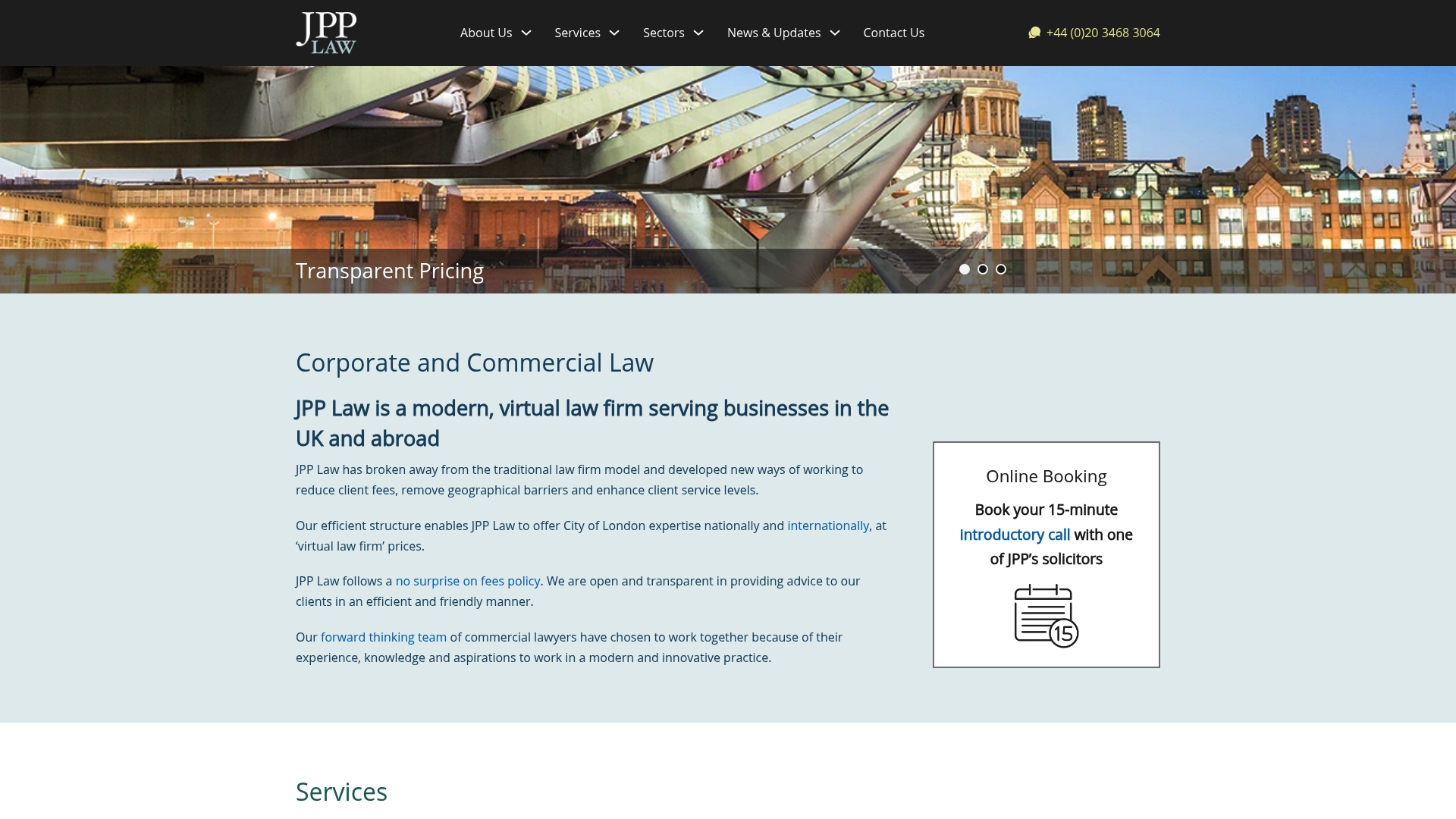
Hourly rates range from £100 for paralegals to £380 for partners. That price spread signals a clear billing scale you can plan around. JPP Law also publishes fixed and capped fee options, which helps make costs predictable for funding rounds and transactions.
JPP Law operates as a virtual law firm that combines City of London experience with remote delivery. That model lets them offer sector-specific legal teams while keeping overheads lower than a traditional City firm. The published fixed fees and online booking make engagement faster for companies that value time and budget visibility.
Clear fee structure. Fixed and capped fees reduce billing surprises and help you budget for discrete projects.
Fast initial access. The 15-minute online calls let you decide quickly whether to proceed or pause legal work.
Sector expertise. The team focuses on Technology, Fintech, Renewable Energy, and Cryptocurrency, which helps when you need industry-aware drafting or negotiation.
End-to-end support for growth. They offer services from early funding documentation through to shareholder exit planning, useful for startups planning rounds.
Flexible engagement models. Options include fixed fees, hourly work, and retainer agreements to match short projects or ongoing advisory needs.
Limited independent reviews. There are few public client reviews to verify consistent delivery across matters.
Visibility gap for small, simple matters. Very small businesses seeking only basic template documents may find the firm’s sector focus unnecessary.
Virtual model may not suit clients who prefer face-to-face meetings for complex dispute work.
If you need a long history of third party reviews to validate service quality, this firm may feel unproven. Very small companies with purely administrative legal needs might prefer a generalist high street solicitor for lower hourly exposure. Clients who require frequent in-person workshops with partners should check availability first.
Startups, scaleups, and technology companies that value legal advice with sector knowledge and transparent pricing will find the firm a strong match. Mid-sized businesses pursuing Mergers & Acquisitions or needing shareholder agreements also fit well. International clients with UK corporate needs will benefit from remote access to City experience.
A tech startup hires JPP Law to draft shareholders agreements, set up the corporate structure, and register intellectual property. The firm provides fixed-fee drafting for each deliverable and advisory cover during a seed funding round. This keeps legal spend predictable while the company negotiates investor terms.
Fixed fee options are available for defined projects. Hourly rates run from £100 for paralegals to £380 for partners. Retainer agreements are offered for rolling advisory needs and final costs depend on scope and client preferences.
Website: https://jpplaw.co.uk
Clearly Business Law operates as a legal services provider under Ervin Hall Limited rather than as a regulated law firm. They advertise fixed fee work and remote access by video calls for SME clients. The offer targets routine commercial contracts, compliance, and ongoing retainer support for small and growing businesses.
Legal support across business stages, from incorporation to sale. This covers contract drafting, shareholder agreements, and compliance documents.
Transparent fixed fees and no hourly billing for many services, with clearer cost expectations than traditional hourly models.
Remote consultations via video calls and online communication to reduce travel and scheduling friction.
Tailored advice aimed at SME needs, including options for retainer and ongoing support rather than one-off pieces of work.
Clearly Business Law positions itself as an extension of an SME’s in-house counsel through fixed price, remote legal advice tailored only to small and medium enterprises. That focus lets the team concentrate on recurring commercial problems familiar to growing firms. The model aims to replace the need to hire full time legal staff for routine corporate work.
Clear, practical advice designed for small businesses. The firm frames guidance in business terms rather than technical legalese.
Transparent pricing helps you budget for legal work without hourly surprises. Many engagements are offered at fixed fee rates.
Flexible access through video calls reduces downtime for you and your team. Remote work suits geographically dispersed founders.
Experienced advisers with over a decade of business law knowledge bring direct commercial experience to drafting and negotiation.
Multiple service forms, including retainer arrangements, make ongoing support straightforward for firms that regularly need contract work.
The organisation is not regulated by the Solicitors Regulation Authority, which will matter to clients who require SRA regulated representation.
No third party user reviews are currently public, so independent buyer feedback is limited and harder to verify.
The website gives limited detail on specific prices for bespoke matters, so you must contact them for a tailored quote.
If you need representation that must be SRA regulated, this provider may not meet formal regulatory requirements. Large corporate transactions with complex regulatory filings will often require a regulated solicitor or specialist firm. Also, highly bespoke or high value work may need a written estimate and scope meeting before proceeding because pricing details are not fully published.
SME owners and managers in the UK who want practical, lower cost legal support for routine corporate needs. This fits teams that prefer fixed fee arrangements and remote consultations. It also suits businesses that expect recurring contract work and want a single firm to handle governance and compliance.
A founder needs a shareholder agreement drafted ahead of an investment and wants a predictable fee. Clearly Business Law would draft the agreement, review investor clauses, and deliver a version suitable for signature via remote calls. The same retainer can then cover future contract reviews and compliance checks.
Pricing is presented as fixed fee for many services, plus retainer options for ongoing support. The site does not publish detailed tariffs for bespoke work, so you should request a written quote for complex matters. That approach keeps cost conversations up front but often requires a short intake call to confirm scope.
Website: https://clearlybusinesslaw.co.uk

Fully remote legal support with direct access to specialist solicitors and transparent fixed pricing aimed at growth focused businesses. The team covers corporate, commercial, employment, intellectual property and data protection work. Their site stresses clear advice and predictable fees for startups and SMEs based in London and across the UK.
Shoredons offers remote consultations and ongoing legal support tailored to each stage of a business.
The firm focuses on fully remote delivery while giving clients direct contact with specialist solicitors. That combination aims to reduce time spent explaining the business to different lawyers. The model suits companies that value straightforward billing and a consistent legal contact as they scale.
If you need a law firm with published, detailed package lists this may frustrate you. Large corporates that require extensive, public audit trails or complex panel contracting will find the information here limited. Firms needing local, in person presence across many regions may prefer a national or multinational firm with multiple offices.
Growth focused UK startups and SMEs that prefer remote legal work and predictable billing will get the most from Shoredons. Founders who want direct access to a named solicitor and clear, concise advice are the ideal clients. Organisations preparing for fundraising, M&A or a sale will find the specialisms relevant.
A London based tech startup retains Shoredons for incorporation, contract drafting and GDPR policy work. The startup uses remote meetings to keep legal costs down and speaks regularly with the same solicitor for continuity. That setup reduces onboarding time on each new legal matter.
The practice advertises transparent, fixed pricing rather than hourly billing. The website is primarily informational and does not publish detailed package prices or tier breakdowns. You must contact the firm for a specific quote.
Website: https://shoredons.co.uk
EM³ Law reports deal cycles as little as 48–72 hours and claims legal spend reductions of 25–30%. Those figures come from the vendor’s own materials. CaaS embeds legal talent into sales, procurement, and compliance workflows. The model targets fast growth firms preparing for rapid expansion or M&A.
CaaS pairs a plug in embedded legal team with operational workflows to deliver rapid, tailored contracting support. That approach focuses on serving sales and procurement teams directly rather than operating only as an external advisory practice. Compared with Alilegal, CaaS aims for deep workflow embedding rather than a fixed fee solicitor engagement model.
Scalable legal infrastructure. You can add legal capacity without hiring full time in house counsel.
Teams learn legal best practice, which often reduces approval and turnaround times.
Faster deal cycles reported. The vendor attributes much of the speed to embedded teams and templates.
Potential cost savings from the stated spending reduction and fewer bespoke reviews.
Improved governance and visibility across the contract lifecycle through standard reporting.
Limited independent reviews. Third party verification of claims is scarce at present.
Integration complexity. Connecting to existing CLM or CRM setups may demand technical effort.
Cultural change required. Operational teams must accept new legal workflows for the model to work.
If your business lacks the core tech stack to accept integrations, CaaS may add complexity. If operational teams resist embedded processes, the service will struggle to deliver the vendor’s stated speed gains. Small firms that prefer ad hoc external advice rather than ongoing embedding will not get value from this model.
High growth companies that need legal capability tied to deal flow will benefit most. Typical buyers include VC backed startups scaling enterprise sales, PE owned platforms expanding geographically, and legal teams looking to embed contract operations. The offering suits firms that plan to evolve processes and invest in integration.
According to EM³ Law, a VC backed SaaS startup cut contract cycle times by over 50% after adopting CaaS. That result supported faster enterprise sales while keeping compliance and risk controls in place. The example shows how embedded legal resource can unblock revenue teams.
EM³ Law asks prospects to contact them for a quote. Pricing is therefore customised and likely depends on deal volume, integration scope, and retained legal capacity. Speak to the vendor for a proposal matched to your contract load.
Website: https://em3law.com/solution/caas
For individuals or organisations navigating business formation and commercial contracts, particularly when considering dynamic regions like the UAE, having the correct legal support proves essential. In this analysis, we compare various service providers, each contributing distinct strengths but catering to diverse needs.
Ali Legal’s standout feature lies in its services for UAE business formation, including regulatory compliance and visa processing. In contrast, JPP Law LLP exhibits notable sector expertise in technology and fintech, making it a option for specific industry-driven legal requirements. Clearly Business Law sets itself apart by functioning as a practical extension of SMEs, providing tailored, lower-cost contracts. Meanwhile, Shoredons emphasises direct solicitor access, allowing startups streamlined and personalised legal counsel. CaaS, on the other hand, innovatively embeds legal operations into workflows, ideal for high-growth firms seeking heightened adaptability.
Each provider offers pricing structures suited to varying approaches. JPP Law LLP publishes a clear fee scale, increasing budget predictability for startups. Clearly Business Law simplifies small business operations through fixed fee services and video consultation. CaaS applies a flexible model where pricing adapts to operational needs, which, while beneficial for large firms, can pose complexity for smaller entities.
Considering client objectives, Ali Legal stands prominently as a provider for organisations pursuing UAE business opportunities. Its combination of licensing, contract negotiation, and practical litigation solutions fosters confidence in thriving globally. However, businesses prioritising pricing visibility or deeply integrated legal processes might find other providers align more closely with their needs.
Selecting the most suitable provider of commercial and corporate legal services involves delving into areas like pricing transparency, areas of specialisation, and service delivery models. Below is a comparative analysis of available options:
| Provider | Specialisation | Pricing | Key Advantage | Notable Limitation |
|---|---|---|---|---|
| Alilegal | UAE company formation and cross-border compliance | Not disclosed | Fixed fees and straightforward advice with local expertise | Higher fees for bespoke international cases |
| JPP Law LLP | Corporate and commercial law for high-growth firms | £100–£380 hourly; fixed fee options | Virtual model reducing overheads without sacrificing expertise | Limited independent reviews |
| Clearly Business Law | SME-focused fixed-fee commercial legal support | Not disclosed | Tailored SME legal advice utilising remote consultations | Not regulated by Solicitors Regulation Authority |
| Shoredons & Co Legal | Corporate, IP, and employment expertise | Not disclosed | Direct access to specialist solicitors | Sparse pricing detail available |
| Contracting as a Service | Embedded contract lifecycle management for growth firms | Custom quoted | Embeds legal team into operations for efficiency | Requires integration setup and operational buy-in |
Starting a new company and managing commercial agreements can feel overwhelming. You need straightforward, transparent legal advice that keeps your business formation and commercial contracts on track without surprises. Alilegal specialises in fixed fee services and clear communication to help you form your UAE or UK business correctly and draft contracts that protect your interests.
Don’t let complexity delay your growth. Explore Alilegal’s trusted commercial legal solutions tailored for entrepreneurs and expanding businesses. Visit our All | Ali Legal page to learn more and take control of your next steps. For bespoke advice and a fixed fee estimate, contact us today at https://alilegal.co.uk/contact-us and book a consultation with a solicitor who understands your challenges.
Alilegal provides tailored UAE company formation services, including licensing, visa processing, and shareholder agreements. The firm focuses on delivering transparent communication and fixed fees, which helps clients manage their legal costs effectively. Contact Alilegal to discuss your specific company formation needs for clear and structured advice.
JPP Law offers fixed and capped fee options alongside hourly billing for bespoke work, which aids in making costs predictable for its clients. In contrast, Alilegal primarily emphasises fixed fees and plain language advice for UAE company formation and cross-border transactions. If you’re looking for predictable costs in UK sectors, JPP Law could be more suitable; however, for comprehensive UAE-based services, Alilegal is the optimal choice.
Clearly Business Law offers flexible retainer options and remote consultations tailored for SMEs, which can be advantageous for startups needing ongoing legal support. Conversely, Alilegal is strategically focused on UAE business formations and offers deep regulatory insights in that area. Startups looking for sustained support may prefer Clearly Business Law, while those focusing on entering the UAE market should consider Alilegal for its specialised services.
Alilegal typically works on a fixed fee structure, but potential clients should request a detailed fee estimate to understand specific costs related to their business formation needs. This way, you can adequately prepare your budget for the required legal services, ensuring there are no unexpected expenses during the process.
Alilegal promotes straightforward communication and fixed fees, which helps to eliminate billing surprises for clients. This approach allows clients to budget appropriately for their legal needs without hidden costs. If you require clear and predictable legal advice, Alilegal’s model is designed to provide you with that reassurance.
Selecting a law firm alternative that balances cross border expertise, commercial advice and regulated engagement terms is difficult for growing businesses. Most traditional city law firms require high minimum retainers or do not use fixed fee structures, causing budget uncertainty for clients. This comparison covers scope, regulatory coverage, and fee approach across six regulated city law firm alternatives so you can match one to your cross border needs.
Ali Legal is regulated by the Solicitors Regulation Authority in England and maintains a presence in the UAE. The firm blends London legal capacity with services for international clients who need UK and UAE advice. The website highlights clear communication, fixed fees for some matters, and a client focused approach.
Legal support for business growth and risk management, including corporate and commercial advice.
International legal services linking London expertise with UAE capability for cross border transactions.
Practice areas spanning corporate, litigation, immigration, family law, personal injury, property, international disputes, and maritime law.
Emphasis on clarity, speed, transparent communication and building long term client relationships.
Regulated law practice in England with service models for both individual and corporate clients.
Ali Legal pairs substantive legal experience with commercial judgment and a long term relationship mindset, and operates under regulation in both the UK and the UAE. That combination suits clients who need legal advice that aligns with commercial objectives rather than purely legal theory. The regulated status underpins professional accountability for cross border work and corporate matters.
Deep legal expertise and practical commercial insight. The team frames legal options against business outcomes.
Strong client focus and proactive communication. The firm emphasises clear updates and straightforward advice during matters.
Geographic reach that includes London and the UAE. That makes handling UAE company formation and UK disputes simpler for a single point of contact.
Broad service offering across corporate, dispute resolution and immigration. Clients can move from advisory work to contentious matters with the same team.
Professional regulation and long term relationship emphasis. That suits clients seeking repeat engagement and predictable engagement terms.
This firm fits medium to large businesses, international entrepreneurs and organisations that need legal counsel for UK and UAE operations. It suits companies planning market entry, directors managing cross border disputes, and HR teams handling corporate immigration. Growth oriented clients who value commercial judgement over purely technical legal opinions will benefit most.
Fixed fees and straightforward advice reduce billing uncertainty for clients expanding into the UAE or pursuing complex commercial disputes. That pricing clarity pairs with a single adviser model for both advisory and litigation work. For businesses, this can cut procurement friction and speed decisions about a legal strategy.
A UK registered company wanted to open an office in Dubai while managing a contract dispute with a regional partner. Ali Legal handled the UAE company set up, coordinated immigration paperwork for staff and provided strategy for parallel dispute resolution in the UK. Using one firm reduced handover delays and kept commercial objectives central.
Pricing is not published on the site and the product data lists pricing as not applicable. The website stresses fixed fee options for some services but expects case specific quotes for most matters. Prospective clients should request a written fee estimate at first contact.
Website: https://alilegal.co.uk

Kirkland & Ellis operates as a unified global practice without a centralised headquarters. The firm traces its roots to 1909 and handles large, complex corporate and litigation matters. The team is well known for private equity, M&A, restructuring, and IP litigation across multiple jurisdictions.
The firm advertises an unmatched global footprint paired with deep expertise in high stakes matters. That claim reflects a unified approach where multi office teams coordinate on cross border deals and disputes. The firm also emphasises a collaborative, entrepreneurial culture that pushes senior responsibility early in careers.
Exposure to complex, high profile legal work. You will see large corporate transactions and major litigation matters that sharpen client facing skills.
Excellent career development opportunities. Associates report early responsibility and formal training paths that accelerate technical growth.
Strong reputation for legal quality and client service. That reputation helps when clients need heavyweight counsel on sensitive deals.
Global reach allows for cross jurisdiction solutions. Teams in multiple offices can manage regulatory and transactional issues across countries.
Collaborative, entrepreneurial culture that empowers lawyers. The culture supports partner led teams and encourages initiative on client matters.
Extremely high billable hour requirements. That expectation creates pressure on workload and personal time.
High stress demanding work environment. Deadlines and client intensity are persistent features of the role.
Limited work life balance for many lawyers. Long hours and weekend commitments are common on major matters.
Constant expectations for exceptional performance. The firm sets a high bar for output on all client engagements.
Kirkland & Ellis is not suitable for clients seeking low cost legal services or very quick transactional turnaround. Small businesses and price sensitive startups will likely find the firm too expensive. Routine conveyancing or simple employment matters are better handled by smaller local firms.
Large corporate legal departments, private equity firms, and financial institutions that need top tier advice across multiple jurisdictions will fit best. Inhouse teams facing major mergers, restructurings, or complex litigation benefit from Kirklands depth and bench. The firm suits clients prepared for partner led, resource intensive engagements.
A multinational engages Kirkland for a complex cross border merger requiring regulatory clearance, tax planning, and litigation risk analysis. Teams across offices coordinate on documents, due diligence, and closing mechanics. The firm manages negotiations with counterparties and regulators until the deal closes.
Not applicable. This listing is informational only and does not include published fee schedules. Prospective clients must contact the firm for bespoke fee arrangements and engagement terms based on matter complexity and jurisdictions involved.
Website: https://kirkland.com

Latham & Watkins reports it operates across over 60 disciplines, giving clients access to deep industry specialists in multiple jurisdictions. The firm combines global reach with a large bench of partners and teams. That scale suits complex corporate work and high value disputes.
The firm offers a global legal practice covering corporate transactions, litigation, regulatory work and environmental, social and governance advisory. It provides in depth advisory for mergers and acquisitions, governance and financial transactions. The firm also runs extensive pro bono and community service programmes. Teams use data driven tools and legal technology to support case management and research.
Latham & Watkins positions itself as a globally integrated practice that pairs industry specific teams with rapid response capabilities. The firm emphasises coordination across offices to handle multi jurisdiction matters. That model aims to keep a single strategic team accountable on large cross border mandates.
Highly ranked for complex and fast paced legal work. Recognition appears across Chambers UK, Chambers USA and The American Lawyer according to the firm.
Strong global network that supports cross border transactions and dispute resolution with local regulatory knowledge.
The firm advertises active use of AI and data driven legal methods to improve document review and research efficiency.
Recognised leadership in diversity, pro bono and sustainability which can matter for governance sensitive clients.
Large, experienced teams covering many industry specific practice groups, reducing the need to manage multiple outside advisers.
Costs can be high for smaller organisations. That scale and reputation often come with premium fees.
The firms extensive size and structure may mean less personalised day to day service for some clients.
Complex organisation can produce communication points that require careful project management from the client side.
If you are an early stage startup or a micro business with limited legal spend, this firm may be beyond budget. If you need a single local adviser for routine property or small claims work, the global model will feel oversized. Clients who prioritise a single named partner handling every detail may find team handovers frequent.
Large corporations, financial institutions and high net worth clients that need top tier counsel for cross border deals or high stakes litigation. In-house teams that require coordination across jurisdictions will get most value. Buyers expecting fixed bite sized pricing should look elsewhere.
A multinational corporation retained Latham & Watkins for a complex cross border acquisition. The firm marshalled industry specialists across several offices to resolve regulatory approvals and transactional covenants. The client benefited from combined local counsel and centralised negotiation strategy.
Not applicable in the source data. Fees for this type of firm are bespoke and usually set per matter or on retainer arrangements. The firms scale makes it likely to be cost intensive for small clients.
Website: https://lw.com
Skadden lists jurisdictional coverage that specifically includes Belgium, France, Germany and the United Kingdom. The site aggregates legal alerts, podcasts and attorney commentary across corporate, litigation and regulatory practice areas. Technical problems currently affect many pages, which limits immediate access to some resources. Expect deep editorial content when the site is fully available.
Skadden pairs broad jurisdictional reach with detailed attorney analysis, making the site a reference point for cross border corporate work. That focus suits complex multinational matters rather than routine or low value transactions. Compared with Alilegal, Skadden addresses larger corporate teams and in‑house counsel handling high‑stakes or regulatory cases.
If you want an immediate, conversational intake experience built for individuals or small businesses, this site is a poor fit. The firm and its site target institutional and corporate clients with complex cross border needs. If your priority is rapid self‑serve forms or fixed fees for small claims, look elsewhere.
Legal professionals, corporate counsel and law students who need authoritative commentary on corporate, litigation and regulatory topics. It also fits procurement teams assessing high value external counsel for cross border matters. Smaller businesses seeking simple, low cost options will find the site less useful.
A corporate legal team prepares for a cross border merger and uses the site to compile jurisdiction specific alerts and practitioner commentary. The team listens to relevant podcasts to brief executives and uses the firm’s privacy policy notes when drafting due diligence protocols. If pages remain unavailable the team calls the relevant office for the same materials.
Website: https://skadden.com

The firm maintains offices and lawyers across five continents. That global footprint lets clients run large legal matters with locally qualified teams under one coordination model. Jones Day combines corporate, litigation, labour, and antitrust expertise to support multinational and institutional clients.
Jones Day’s defining feature is its unified global partnership backed by a long tradition of client engagement. That structure promotes consistent service standards across offices and facilitates coordinated responses on multi jurisdictional matters. The firm markets this as a culture where shared values guide accountability and collaboration.
Lawyers aiming for rigorous training within a globally integrated law firm will find a clear career path. Corporate clients needing legal advice across multiple jurisdictions will benefit from the coordinated offer. The firm suits institutional clients who value long term relationships and a stable adviser.
A multinational corporation engages Jones Day for ongoing counsel on cross border M&A, regulatory compliance, and dispute resolution. Local offices handle jurisdictional law issues while a central team coordinates negotiations and litigation strategy. The result is a single trusted adviser managing subject matter and geography.
Pricing is not published in the product data. The firm lists pricing as not applicable in public materials. Prospective clients must request a bespoke fee proposal tailored to the matter, jurisdiction, and scope.
Website: https://jonesday.com

The team stepped in after the Supreme Court invalidated IEEPA tariffs and new tariffs were introduced under other authorities. The group helps clients pursue refunds, litigate recovery claims, and rewrite compliance approaches. That focus makes the offering particularly relevant to importers hit by recent shifts in United States trade policy.
The Tariff Task Force combines legal counsel with policy and commercial advice focused on the changing United States tariff environment. That blend targets issues that follow court rulings and new trade measures, such as refund pathways and import duty risk. The service suits clients who need legal handling and strategic operational adjustments together rather than pure customs administration.
This offering is not a substitute for customs brokerage or day to day import operations. If your primary need is administrative filing or routine tariff classification without legal risk, this team will add cost without matching benefit. Small importers with limited litigation exposure should weigh whether an operational customs provider and occasional legal advice is a better fit.
Businesses and importers facing tariff disruption, including multinational corporations, trade compliance professionals, and in house legal teams. You should have material import exposure to United States tariffs or active refund claims to make the engagement cost effective. The service suits organisations that need legal representation plus strategic supply chain advice.
A United States importer identified overpaid duties under IEEPA rules after a court ruling. The importer engaged the team to file protests with Customs and pursue refund litigation while adjusting sourcing to reduce future exposure. The firm also advised on contract language and tax treatment linked to the refund claim.
Pricing is not specified in public materials. The service is likely billed as legal fees, either on an hourly basis or via negotiated retainers or project fees. Contact the team for a case specific estimate and fee structure.
Website: https://gtlaw.com
Navigating the field of legal counsel, businesses discover diverse options tailored to specific needs between international corporations and strategic operations. Here we compare key dimensions of these firms, revealing distinct advantages tied to their structures and focuses.
Ali Legal and Jones Day excel at providing a wide range of services across different jurisdictions. While Ali Legal focuses on UK and UAE integration, Jones Day enables global engagement across extensive legal practice areas. Alternatively, Latham & Watkins is widely recognised for their expansive reach across numerous specialist legal disciplines, suited for complex transactions requiring nuanced expertise.
Ali Legal stands out with clarity in communication and long-term relationship building, prioritising bespoke engagement terms. Meanwhile, Kirkland & Ellis offers access to high-volume corporate transactions, albeit with significant expectations for engagement cost and client capacity. These contrasting styles allow businesses to select accessibility types based on resources and strategic goals.
For businesses aiming for strategic growth through cross-jurisdictional legal advice within the UK and UAE regions, Ali Legal presents an choice. While established competitors bring impressive depth and global coverage, Ali Legal is in integrating local expertise with international collaboration. Businesses operating primarily neither in these regions nor experiencing continuous scope requirements might discover alternative choices more suited.
Here is a comparison of city law firms to assist in determining the one best suited to client needs:
| Firm Name | Core Service Areas | Geographic Presence | Key Strength | Limitation |
|---|---|---|---|---|
| Alilegal | Corporate, Litigation, Immigration | United Kingdom, UAE | Integrated UK-UAE legal service | Pricing details not published |
| Kirkland & Ellis LLP | M&A, Private Equity, Restructuring | Global (North America, Europe, Asia) | Experience in high-profile transactions | High billable hours and client pressure |
| Latham & Watkins | Transactions, Litigation, Governance | Global | Industry-specific expertise across areas | High cost for smaller organisations |
| Skadden, Arps, Slate, Meagher & Flom LLP and Affiliates | Corporate, Regulatory, Litigation | Europe, North America | Comprehensive legal analysis and strategy | Limited online resources currently |
| Jones Day | Corporate, Litigation, Antitrust | Global | Unified global office model | Conservative culture not suitable for all |
Choosing the right legal partner outside traditional city law firms can feel challenging, especially when you require transparent fees and clear communication. Alilegal specialises in delivering commercial legal advice tailored to your business goals, bridging UK and UAE legal systems without the complexity common to larger firms. Their focus on fixed fees and straightforward guidance ensures predictable costs and strategic support across corporate, immigration, and dispute resolution matters.
Explore how Alilegal meets the needs of businesses seeking a client-centred approach that avoids overwhelming choices. Visit All | Ali Legal to learn more about their services or contact the team directly through their contact page to receive a bespoke fee estimate and start addressing your legal challenges with clarity today.
Alilegal provides fixed fees for certain services and emphasises clear communication, making it a suitable choice for clients seeking straightforward legal advice. This client-focused approach differentiates it from many traditional city law firms that may not offer fixed pricing or as transparent communication.
Alilegal focuses on building long-term relationships with clients by emphasising clear updates and proactive communication throughout legal matters. In contrast, many larger firms may adopt a less personalised approach due to their size and structure, potentially leading to less direct engagement with clients.
Yes, Alilegal is well-equipped to manage complex cross-border transactions, blending legal expertise from both UK and UAE jurisdictions. This makes it a strong choice for businesses needing comprehensive support in these regions, especially compared to firms that may limit their services to local or domestic matters.
Alilegal does not publish detailed pricing online, as they provide bespoke cost estimates depending on the specifics of each case. This means prospective clients should expect a tailored approach to costs rather than fixed published rates that some larger firms might offer.
Alilegal offers a stronger flexibility for medium to large businesses looking specifically for UK and UAE legal counsel. Larger firms, while providing high-level services, often have rigid structures that can limit responsiveness to specific client needs compared to Alilegal’s more adaptable services.
Securing a solicitor to handle shareholder disputes in London often means navigating opaque pricing, limited public case histories and teams that rotate partners just as matters reach their critical phase. Many firms avoid publishing their fee structures or leave clients guessing about specialist expertise, while others provide little online visibility beyond a generic landing page or directory listing. This comparison highlights six shareholder dispute solicitors so you can match service scope, team continuity and engagement transparency to your requirements without wasted outreach.
Ali Legal operates under a regulatory licence from the Solicitors Regulation Authority and presents itself as a London-based firm with tangible expertise in UAE business setup and cross-border commercial work. The firm emphasises clear communication, speed and long-term client relationships.
Ali Legal offers specialist advice across corporate and commercial law, international disputes, banking and lending, property, employment and immigration. The team handles end-to-end needs from company setup through compliance and dispute resolution, and uses technology to speed document handling and case management.
What separates Ali Legal is the blend of sector knowledge and a human approach that aligns legal strategy with commercial goals. Partners and solicitors work as strategic advisers rather than transactional processors, which suits clients who value clarity and pragmatic outcomes.
Clear, plain language advice that reduces legalese and helps directors and founders act faster on commercial decisions.
Global reach with UAE expertise that benefits companies expanding or operating across Britain and the Gulf; local relationships shorten steps when engaging authorities or local counterparties.
Proactive counsel focused on strategic outcomes, from drafting agreements to negotiating settlements, designed to keep disputes out of court where that serves a client’s interest.
Long-term partnership model that privileges continuity. You get working memory from the same advisers across setup, compliance and dispute phases, which reduces briefing time.
If your project is strictly commodity transactional work requiring the lowest hourly cost, Ali Legal’s tailored, partner-led service will likely be a higher-cost option. Likewise, very large multinational programmes with heavily distributed resourcing needs may require a different scale of team.
Growth-oriented businesses, international clients and individuals needing pragmatic legal counsel for commercial contracts, property matters, M&A and UAE expansion. Best for clients who value strategic partnership and continuity with advisers who understand commercial drivers.
Ali Legal couples partner-led legal advice with a commercial mindset and an explicit practical focus on clarity and speed. That combination turns a single engagement into ongoing legal support: clients keep the same advisers through setup, compliance and disputes, reducing rebrief time and accelerating decisions.
A UK startup expanding to the UAE instructs Ali Legal to incorporate locally, draft supplier and employment contracts, and set up governance for cross-border payments. The same team remains available to resolve a supplier dispute and to advise on banking requirements as the business scales.
Pricing is bespoke and quoted per engagement rather than published as standard brackets. The firm advertises a high-touch, partner-led service which typically results in customised fee proposals aligned to scope and complexity.
Website: https://alilegal.co.uk

Lincoln & Rowe is regulated by the Solicitors Regulation Authority of England and Wales, a concrete marker for corporate clients seeking regulated representation. The firm’s marketing materials describe it as award-winning and emphasise experience in cross-border commercial litigation.
Lincoln & Rowe’s genuine edge is its focus on multi-jurisdictional dispute resolution for complex commercial cases. The team packages strategic case planning with cross-border coordination, so your lead solicitor manages parallel filings and foreign counsel instructions rather than leaving that to ad hoc arrangements.
Experienced dispute resolution specialists. The team handles high-value and legally intricate matters where evidential discipline and tactical sequencing matter.
Clear written advice. Lincoln & Rowe’s marketing materials reference strong client feedback on clarity and thoroughness of legal advice; that feedback appears reflected in their published guides.
International practice. The firm brings structured experience in cross-border claims, useful where foreign courts or multiple enforcement routes are involved.
Breadth of services. From shareholder disputes to insolvency and property litigation, the firm keeps the core commercial litigation toolkit under one roof.
Industry recognition. The firm cites awards and acknowledgements in its public profile, which may reassure corporate clients seeking established counsel.
Limited independent reviews. There are few third-party client reviews accessible online to corroborate the firm’s client satisfaction claims.
Website reliability issues reported in the product data. Some pages have experienced server problems, which could complicate initial briefing or document exchange.
Sparse third-party verification. Independent sources confirming case outcomes or typical fee structures are not readily available.
If you rely on public review platforms to shortlist firms, Lincoln & Rowe’s limited third-party footprint will frustrate that approach. Also, if you require immediate online portals for matter onboarding, reported website instability could slow the first steps.
Commercial clients, company directors and corporate entities with complex litigation needs in the UK and abroad. Best for organisations that value a regulated firm with demonstrable cross-border litigation experience and written thought leadership.
A multinational company engaged Lincoln & Rowe after a breach of contract affecting UK property rights and related overseas licences. The firm coordinated parallel proceedings, consolidated arguments and instructed local counsel to preserve enforcement options across two jurisdictions.
The listing shows pricing as not applicable and is informational only. The firm does not publish fixed fees in the product data; expect engagement terms and retainer arrangements to be agreed in a first meeting.
Website: https://lincolnandrowe.com
The live domain shows only a security check gate followed by a 404 page, leaving no public team bios, service pages, or client testimonials to inspect. Public records and directory listings identify the domain as a legal service provider but the site itself prevents direct verification of services.
What is visible from external checks is scant: the site is unreachable beyond the security gate and returns a standard error page, so there are limited content signals to evaluate. There are also no third-party reviews or client feedback available in public searches, which limits online vetting.
The defining characteristic here is the absence of accessible information. Where most firms publish team credentials or a practice area list, this domain offers no discoverable material, which effectively narrows prospects to those willing to verify credentials by phone or referral.
The domain is registered and publicly listed as a legal practice, which suggests an intent to operate as a solicitor firm rather than an unrelated business.
There are currently no negative reports visible in common legal directories or review sites, which reduces immediate red flags during a rapid web check.
The low online footprint could indicate a deliberately discreet, referral-driven boutique practice rather than a marketing-first firm.
For clients who prefer outreach by phone or direct referral, the lack of online noise may be less important than the firm’s substance offsite.
The most obvious drawback is an inactive site experience that blocks access to key details such as team credentials, specialisms, and contact forms.
With no user reviews or third-party feedback available, judging reputation or prior case experience is difficult.
Limited digital presence increases the risk that published information is outdated or the firm is no longer taking new instructions.
If you need immediate representation, a clear fee structure, or online evidence of litigation experience, this is not a good fit. If you rely on client reviews, published case studies, or a firm web presence to shortlist solicitors for a shareholder dispute, the lack of accessible content will slow your decision.
Clients who have been referred to the firm, or who prefer to verify credentials through the Solicitors Regulation Authority or a professional network, will find this domain acceptable. The firm suits people comfortable with offline checks rather than relying on web-based due diligence.
A director searching for a shareholder dispute solicitor finds the domain but no practice details. They call the firm via a directory listing or ask a referrer for a direct number, then validate SRA registration and request a brief CV before instructing work.
No fee schedule or pricing information is published on the site. The public record here is informational only, so you must contact the firm directly to obtain rates, retainer terms, or whether they bill hourly or by fixed fee.
Website: https://seladorelegal.com
The firm markets itself as a conflict-free, disputes-only platform, founded in London in 2012 with offices in London, Gibraltar, Paris and Frankfurt. That positioning lets the team concentrate on high-stakes international arbitration and litigation rather than general commercial work.
International arbitration and commercial litigation handled by dedicated dispute teams with cross-border experience.
Specialised practice in white-collar crime, product liability and financial disputes supported by multi-lingual lawyers.
A multi-jurisdictional presence in London, Gibraltar, Paris and Frankfurt and cooperative links with local counsel worldwide.
The single clearest distinction is the firm’s disputes-only model. Rather than being one practice among many, Signature Litigation presents a focused platform aimed at complex cross-border matters. That focus supports rapid tactical shifts in multi-forum cases and tighter conflicts screening.
Deep disputes focus. The team’s attention is concentrated on arbitration and litigation which can speed strategic decision making for complex matters.
International footprint. Offices in key European hubs let the firm coordinate hearings and filings across common law and civil law jurisdictions.
Multi-lingual capacity. Native language advocacy reduces translation loss in documentary-intensive cases and aids witness preparation.
Conflict screening. The conflicts-first approach reduces the risk of sudden disqualification in large multi-party disputes.
Close collaboration with global firms. That network makes the firm a practical lead or co-counsel on cross-border mandates.
No independent third-party reviews are publicly available, which makes objective assessment harder for new clients.
Limited public detail on fees or past outcomes means prospective clients must rely on a direct enquiry to gauge value.
The disputes-only positioning narrows the firm’s remit; clients seeking broad corporate advisory plus litigation in one shop will need separate counsel.
If you need day-to-day corporate advice alongside litigation the firm’s disputes-only model is not the right fit. Smaller claims or volume litigation where cost predictability is paramount may be better served by larger full-service firms or panel counsel with published rate cards.
Large corporates, banks and high-net-worth individuals facing cross-border, high-value disputes that require coordinated arbitration and litigation strategies across Europe and beyond. The model suits clients who accept bespoke fee arrangements in exchange for specialised focus.
A multinational manufacturer with contract and product liability exposure in three jurisdictions instructs Signature Litigation to lead parallel arbitrations and related court proceedings in Europe. The firm marshals local counsel, runs consolidated evidence strategies and manages witness preparation across languages.
Pricing is not published. The product data lists pricing as not applicable and the firm appears to operate on bespoke engagement terms. Expect retainer and hourly arrangements agreed after an initial case assessment.
Website: https://signaturelitigation.com
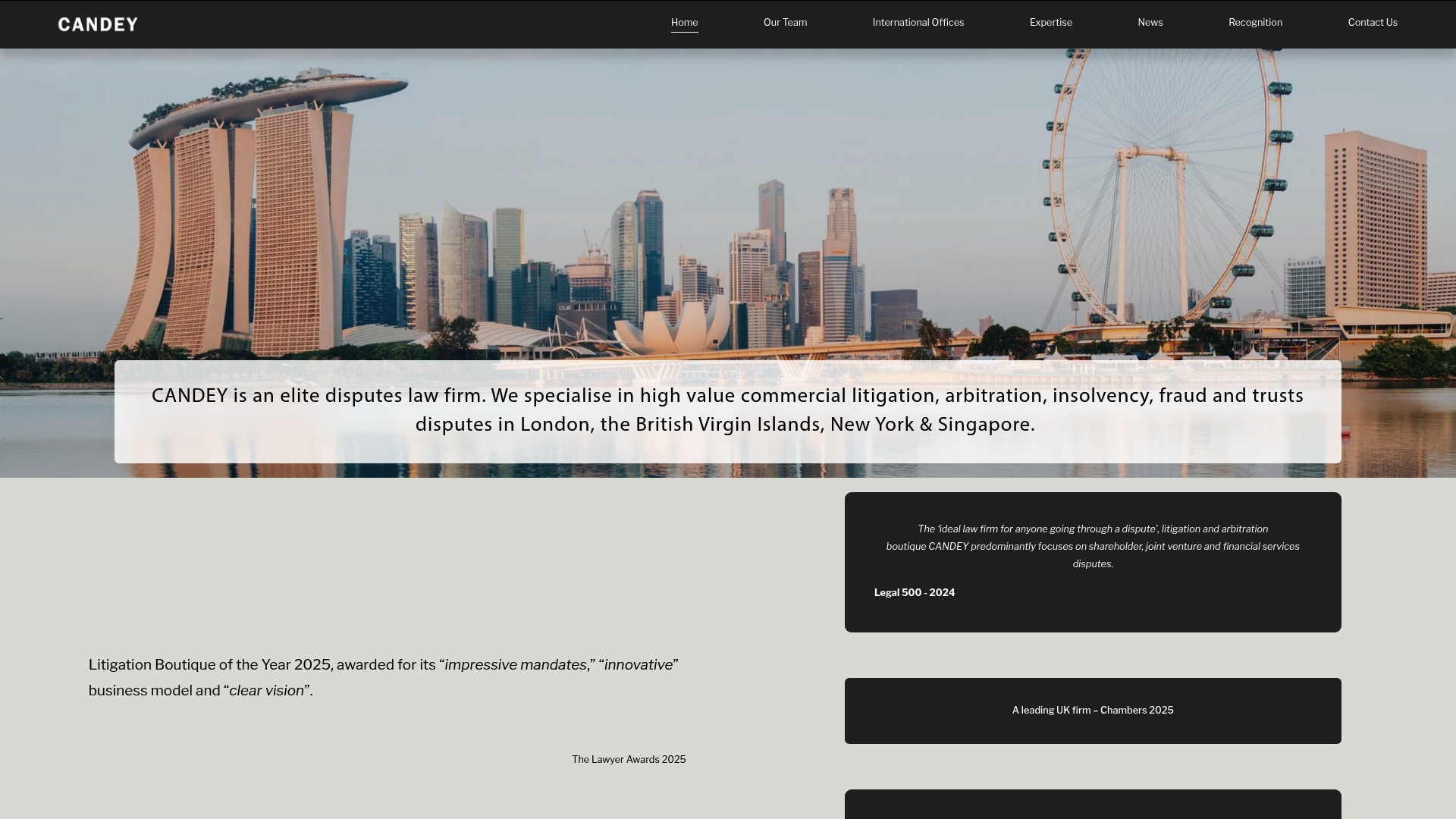
The firm advertises recognition as Litigation Boutique of the Year 2025, a marker it uses to signal market standing. CANDEY operates from London, the British Virgin Islands, New York, and Singapore and pursues mandates it describes as high value across sectors.
CANDEY’s distinct offering is the integrated bench model that blends solicitors, barristers and US attorneys under one retainer. That mix lets the firm manage simultaneous court and arbitral threads without repeatedly rebriefing external counsel.
Large corporates, private funds, high‑net‑worth individuals and foundations facing high‑stakes, cross‑border disputes who need a single team to co‑ordinate litigation and arbitration across seats.
A multinational firm with a contested shareholder claim uses CANDEY to run parallel High Court proceedings and arbitration. CANDEY leads pleadings, manages evidence disclosure across jurisdictions and instructs US attorneys on parallel enforcement strategy.
CANDEY does not publish standard fees. Pricing is not available publicly and will reflect premium rates typical for high‑value dispute counsel, usually agreed on a retainer and hourly or hybrid fee model.
Website: https://candey.com
Represents governments, major banks and high-net-worth individuals in landmark, high-value cross-border disputes that often span multiple jurisdictions. The firm markets itself as a boutique firm from the City of London focused on complex commercial litigation, arbitration and asset recovery.
CYKLaw pairs City of London experience with a small, conflict-free structure so clients rarely face partner rotation or internal conflicts. That focus suits disputes where personal client attention and a consistent litigation team matter more than scale or a large bench.
Avoid CYKLaw if you need a published fixed-fee menu or clear price brackets before engagement. Likewise, clients wanting a single vendor to manage long-term implementation work across disputes, compliance and regulatory programmes may prefer larger full-service firms.
Commercial clients, international corporates and high-net-worth individuals with high-stakes disputes where continuity of counsel and conflict-free representation matter. Also suitable for financial institutions seeking senior-led litigation or arbitration teams for cross-border enforcement.
A multinational corporation retained CYKLaw for a complex cross-border arbitration involving contractual breaches in multiple jurisdictions. CYKLaw provided strategic case mapping, led the arbitration hearings and coordinated enforcement actions across two countries while keeping client communications with senior partners only.
CYKLaw does not publish a standard price list; fee arrangements are bespoke and provided after initial assessment. Prospective clients should expect a confidential fee proposal tailored to case complexity and likely phases of the litigation or arbitration.
Website: https://cyklaw.com
Selecting the right solicitor for navigating shareholder disputes involves assessing expertise, service range, and approach efficiency. Here, we compare several prominent firms to highlight critical distinctions useful for prospective clients.
Ali Legal excels in delivering client-centric advice, combining sector skills with a commercial mindset, particularly for corporate transactions and UAE-related ventures. In contrast, Lincoln & Rowe demonstrates significant litigation expertise, excelling in multi-jurisdictional dispute resolution—a vital skill for complex cross-border cases. Clients prioritizing nuanced representation in international disputes might find Lincoln & Rowe aligns with their expectations.
Ali Legal offers a unique partnership model fostering continuity across transactions. Signature Litigation focuses exclusively on high-stakes litigation and international arbitration, providing specialised attention to complex cases. Compared to other competitors, CYKLaw provides bespoke senior-focused services, fostering direct partner-client interaction, especially suitable for asset recovery disputes.
Ali Legal’s tailored approach, designed around commercial outcomes and legal strategy spanning regions, ensures exceptional service continuity, particularly for businesses expanding internationally. However, clients emphasizing narrowly focused litigation or prioritizing dedicated conflict-free environments for significant arbitration matters might prefer alternative firms from this list.
Below is a comparison of prominent solicitors offering services specialised in shareholder disputes, highlighting their expertise, unique features, and client suitability.
| Firm | Core Services | Key Differentiator | Best For | Notable Limitation |
|---|---|---|---|---|
| Alilegal | Corporate law, dispute resolution, UAE business setup | Strategic partnership approach | Growth-focused businesses | High-touch model without transparent fee schedules |
| Lincoln & Rowe | Commercial litigation, multi-jurisdictional cases | Expertise in cross-border dispute resolution | Corporates requiring strategic case management | Limited independent client reviews and online onboarding accessibility issues |
| Signature Litigation | Disputes-only focus, international arbitration | Concentrated expertise in high-value disputes | Corporates dealing with complex, high-stakes disagreements | Narrow scope excludes general corporate advisory services |
| CANDEY | Litigation and arbitration, insolvency, fraud cases | Integrated team of solicitors, barristers, attorneys | High-value, cross-border complicated disputes | High fees tailored to premium cases may be cost-prohibitive for smaller clients |
| CYKLaw | Cross-border litigation, asset recovery | Conflict-free model ensuring dedicated team | High-net-worth individuals valuing consistency | Bespoke pricing not disclosed publically requiring direct engagement for estimates |
Shareholders disputes in London can feel overwhelming and time-sensitive for business leaders seeking practical and strategic legal support. Alilegal specialises in providing partner-led advice that aligns commercial goals with dispute resolution to help you act decisively and avoid drawn-out conflicts. Their focus on clear communication and long-term client relationships means you will receive straightforward guidance tailored just for you.
Start resolving your shareholders dispute with confidence. Visit Alilegal Contact Us to connect directly with solicitors who offer fast, transparent, and commercially focused legal solutions. Explore more on their full range of services at All | Ali Legal and take action now to secure a strategic partner dedicated to your business success.
Alilegal is known for its clear, plain language advice that reduces legal jargon, helping directors and founders act faster on commercial decisions. The firm’s focus on proactive counsel designed to keep disputes out of court aligns with the needs of clients looking for effective resolution strategies. Engaging Alilegal may offer you a tailored approach that prioritises your commercial goals.
Alilegal operates on a bespoke pricing model that is quoted per engagement, which contrasts with firms that publish fixed fee schedules. While this may mean higher costs for commodity transactional work, it allows Alilegal to provide tailored solutions that fit your specific needs. Consider reaching out to discuss your requirements for a personalised pricing proposal.
Signature Litigation is exclusively focused on disputes, with a deep expertise in international arbitration and commercial litigation. This unique positioning allows them to manage complex cross-border disputes more effectively than firms with a broader service scope. If your case requires intense focus on multi-jurisdictional litigation, Signature Litigation might be ideal, but for comprehensive stakeholder engagement, Alilegal remains a strong contender.
Growth-oriented businesses and international clients needing pragmatic legal counsel for commercial contracts and disputes will find Alilegal particularly suited to their needs. The firm’s long-term partnership model is appealing for those who value continuity with advisers throughout different phases of legal engagement. If you seek strategically aligned legal support, Alilegal is worth considering.
Alilegal provides continuity by assigning the same advisers through setup, compliance, and dispute phases, reducing briefing time significantly. This approach facilitates a better understanding of your commercial drivers over time, which can make a notable difference in the efficiency of your case management. Consider discussing your specific requirements with Alilegal to leverage this continuity.
Finding a corporate or commercial solicitor in London who can handle cross-border transactions, deliver partner-led advice and maintain transparent fee structures is often hindered by limited published pricing and sparse third-party reviews. Many firms either restrict fee visibility behind bespoke proposals or focus primarily on multinational mandates with little clarity for smaller UK-focused businesses. This head-to-head comparison shows which legal teams offer ongoing relationship models, international expertise or predictable billing so you can choose a firm that aligns with your commercial work and engagement preferences.
Alilegal publishes a client-centred model that pairs fixed fees for many services with a deliberate focus on long-term relationships across UK and international matters. The firm combines transactional, dispute and compliance work with a fast, communicative approach aimed at business clients.
The firm builds legal work around durable client relationships rather than one-off engagements. That commercial alignment means advice is offered with an eye to future transactions and cross-border implications, not just the immediate legal task.
Companies and international clients seeking strategic legal support in the UK and abroad. Ideal for businesses expanding into the Middle East or Europe, in need of company formation, commercial contracts and immigration advice backed by a long-term relationship model.
A combination of fixed-fee options and a single-team approach converts external legal costs into more predictable budget lines and fewer handovers. For in‑house teams handling recurring cross-border work, that predictability shortens procurement cycles and keeps commercial plans on track.
A UK exporter launching an office in the UAE instructs Alilegal to set up a local company, draft supplier and distribution agreements, and secure work visas for staff. The same team negotiates leases and advises on banking arrangements, avoiding repeated briefings to new counsel.
Pricing is not published comprehensively and varies by service. Alilegal offers fixed fees for specific packages alongside bespoke quotes for larger transactions. Contact the firm for a scoped estimate and a written fee proposal.
Website: https://alilegal.co.uk

The firm reports more than 150 lawyers across its London practice, a scale the office says supports large cross-border mandates. The London office was established in 2009 and combines UK market focus with what the firm describes as broad global reach.
The office highlights a London Sustainability Desk and recognised directory listings for responsiveness and service quality, as stated in public materials.
The principal edge is uninterrupted access to an international platform combined with a partner-led model. That pairing lets clients use local lawyers who can call on overseas teams for jurisdictional issues without a separate search for foreign counsel.
This model suits transactions that require quick co-ordination across legal systems and sectors where continuity of adviser matters to deal timetables.
Recognised in legal directories for high-quality service and responsiveness, according to publicly available listings; such recognition helps when you need fast, authoritative advice on tight timetables.
Partner-led approach reduces hand-offs. Senior counsel remain visible through negotiations and closings, which lowers client management overhead.
Global platform support simplifies cross-border instructions. You get a single lead adviser rather than multiple unconnected law firms.
Diversity initiatives and the London Sustainability Desk provide structured support for ESG and inclusive governance priorities that many institutional clients now require.
Independent client reviews are sparse in public sources, so there is limited third-party feedback to compare experience across peers.
No published client satisfaction metrics or quantifiable outcome data are available in public materials, which makes vendor comparison harder on measurable terms.
Public sources do not cite specific weakness areas, which leaves due diligence dependent on reference checks and direct interviews rather than searchable customer evidence.
Large corporations, financial institutions and institutional investors needing partner-led advice on complex cross-border deals. Particularly relevant for clients who prioritise having a single law firm coordinate multi-jurisdictional work and those seeking advisers with an ESG and inclusion focus.
A multinational engages Greenberg Traurig London to lead a cross-border merger. The London team manages UK regulatory clearance, coordinates financing with US and EU teams and keeps partner-level oversight through negotiation and closing, reducing the need to assemble separate local counsel.
Not applicable. The London office presents itself as an informational legal services practice and does not publish fixed pricing or standard rates for the services described.
Website: https://gtlaw.com/locations/london
Public-facing detail on White & Case is unusually limited; the firm does not publish a service menu or standard fee schedule. According to user reviews, the firm is recognised for high-profile international work and a deep bench of senior lawyers.
Public information is restricted so precise service lists are not available. What appears consistently in external commentary is a focus on cross-border corporate matters, disputes, and transactional work led by experienced partners.
The reputation above suggests a global network of teams able to coordinate across jurisdictions for multinational mandates.
The standout feature is the firm’s reputation as an elite global practice staffed by senior legal talent. That reputation positions the firm for large, complex international mandates rather than small, fixed-scope retainer work.
If you want published rates, packaged services, or fast fixed-fee engagement for a single-jurisdiction matter, this firm is likely the wrong fit. The lack of public pricing and limited public service detail make it hard for smaller organisations to self-assess fit.
Corporate legal teams and multinational clients with complex cross-border transactions or high-value disputes. Also experienced lawyers seeking a prestigious platform and exposure to global matters.
A multinational client facing simultaneous regulatory inquiries across three jurisdictions engages the firm for coordinated advice and parallel litigation strategy. The firm deploys partners across offices to align settlement strategy and transactional fallback options.
White & Case does not publish pricing. Fee arrangements are bespoke and negotiated per matter so prospective clients must request a proposal to obtain a fee estimate.
Website: https://whitecase.com
Seddons GSC’s marketing materials note recognition in Legal 500 and Spear’s 500, a signal the firm uses to position itself among established London practices. The team operates from Fitzrovia and emphasises partner-led advice and transparent fee communication.
The firm offers partner-led advice across real estate, corporate, dispute resolution, employment, intellectual property, immigration and private client work. Offices in Fitzrovia provide a central meeting point for London-based matters.
Seddons GSC stresses clear communication and a transparent fee approach. The team mixes partners, associates and legal specialists so you get senior oversight on complex instructions.
What separates Seddons GSC is the combination of directory recognition and a broad practice mix delivered through an office-based, partner-led model. Compared with Alilegal, which markets fixed fees and a broader international practice, Seddons GSC targets in-person strategic counsel from West End offices for UK-focused matters.
Strong professional recognition. That directory recognition above gives prospects a quick signal when vetting firms.
Wide scope of services. You can instruct the same team on commercial property, corporate transactions and dispute work to keep strategy consistent.
Client-first approach. The firm advertises long-term relationships and clear, straightforward advice rather than churn through junior staff.
Transparent fee communication. The site and firm literature emphasise fee clarity which reduces surprise billing and speeds decision making.
Partner involvement. Senior lawyers are named on teams which helps at negotiation tables and in high-value matters.
Limited public case studies or client testimonials on the website. That makes it harder to judge outcomes from third-party evidence.
The firm is office-centric. If you prefer a heavily digital client portal for ongoing matter management, there may be better fits.
Cookie and privacy notices are visible on the site but detailed client references or sample retainer terms are not published.
If you need a firm that publishes extensive client case studies or a fully fledged online client platform, Seddons GSC may feel constrained. Also, international corporates seeking multi-jurisdictional teams with overt global footprints will find this UK-focused practice narrower than global firms.
Businesses and individuals in London and across the UK who want partner-led legal counsel for commercial property, corporate work, dispute resolution or private client matters. Good for clients who value in-person meetings and a predictable fee discussion.
A London company instructs Seddons GSC on a commercial property acquisition and related employment warranties. The partner supervises the negotiation, the associate handles due diligence and the firm delivers hands-on settlement support and pragmatic drafting for the completion pack.
The firm states a commitment to a transparent fee structure but does not publish detailed rate cards on the website. Prospects should request a fee estimate or engagement letter during initial contact to obtain a clear pricing proposal.
Website: https://gscsolicitors.com
Selecting the most appropriate legal partner for corporate and commercial law needs in London can have profound implications for a business or individual’s operations. Each firm within this analysis offers distinct benefits tailored to varying client requirements. In this section, we compare the leading options, highlighting notable strengths while examining specific dimensions of their services where each stands out.
A significant aspect influencing the choice of legal services is the transparency and clarity in fee structures. Seddons GSC emphasises open communication regarding fees, ensuring clients understand financial expectations prior to engagement. For those prioritising budget predictability, this approach stands out. Conversely, while Alilegal Ltd offers some fixed-fee services, it requires custom quotes for broader engagements, which could delay decision-making processes. With regard to pricing accessibility, Greenberg Traurig and White & Case provide limited information in the public domain, potentially challenging for businesses or individuals with strict budget constraints.
For clients requiring legal guidance across jurisdictions, the scope of an international firm’s global presence becomes. Greenberg Traurig London Office and White & Case leverage extensive networks to handle transnational matters effectively. Alilegal Ltd, though notably skilled in UK-international ties with Middle Eastern and European jurisdictions, offers a more focused regional capability compared to these global giants. Businesses contemplating highly complex international ventures, therefore, have the greatest advantage with firms featuring broad multinational networks.
Developing strong, enduring client relationships can enrich engagement by fostering trust and understanding over time. Alilegal Ltd excels in this area, embracing a single-team concept to promote communication and facilitate progressive strategic alignment with client goals. This approach can greatly benefit organisations requiring a consistent legal presence for long-term projects or strategic initiatives.
Alilegal Ltd embodies a solution for businesses requiring a confluence of UK and targeted global engagement expertise with tailored, relational services. Notably, for organisations preferring highly structured, published pricing structures or strongly globalised operations, alternate providers might better match their needs. However, for businesses prioritising qualitative relationships, a united legal team, and proactive client service, Alilegal Ltd is a dependable ally.
Determine the right legal firm for your corporate and commercial law needs with a comparison of their unique offerings and specialisations.
| Firm | Core Features | Key Differentiator | Best For | Pricing | Notable Limitation |
|---|---|---|---|---|---|
| Alilegal | Corporate advisement, cross-border compliance, tailored legal services | Centred on long-term business relationships | International businesses expanding or located in the UK | Not disclosed | Fees require tailored quotes for large engagements |
| Greenberg Traurig | Multidisciplinary international legal services, partner-led advice | Combines local focus with a global support platform | Large companies needing coordinated international work | Not disclosed | Limited public reviews for comparison |
| White & Case | High-profile corporate and dispute solutions across global jurisdictions | Renowned for elite global support in complex cases | Multinational clients needing large-scale legal solutions | Not disclosed | Demanding hours may influence consistent team allocation |
| Seddons GSC | Partner-led services in corporate, real estate, and dispute resolution | Transparent fees with emphasis on personal interactions | Businesses requiring local expertise and transparency | Not disclosed | Less suited for digitally centred ongoing matter support |
When selecting due diligence solicitors in London, clarity, speed and reliable long-term advice are top priorities. Alilegal understands these challenges and offers fixed fee structures that eliminate guesswork while providing expert guidance on cross-border corporate and commercial matters. Their client-focused approach ensures you have a single point of contact who manages your case with full transparency.
Discover how Alilegal can reduce delays and uncover critical legal insights before you finalise deals. Visit All | Ali Legal to explore key practice areas or reach out directly through their contact page. Act now to book a consultation and receive a tailored fee proposal that keeps your budget on track and your transactions secure.
Alilegal provides comprehensive legal support for corporate and commercial matters, including company formation, contract negotiations, and immigration advice. The firm emphasises a client-focused approach with fixed fees and single points of contact for all transactions, ensuring clarity and consistent communication throughout the process.
Greenberg Traurig is recognised for its partner-led approach that simplifies cross-border instructions, providing clients with direct access to senior advisers. In contrast, Alilegal’s strength lies in its focus on building long-term relationships, making it ideal for clients seeking ongoing legal support across multiple jurisdictions, albeit with less transparency in published fees.
Alilegal offers fixed fees for specific packages, although their overall pricing transparency is somewhat limited as fees vary by matter. Potential clients should contact the firm for scoped estimates to understand the overall costs for their due diligence needs.
Alilegal is well-suited for companies and international clients looking for strategic legal support in corporate and commercial law, especially those expanding into European markets or needing comprehensive immigration and compliance services. This focus on long-term client relationships makes it a fitting choice for ongoing legal needs.
Seddons GSC is known for its partner-led advice delivered in-person in London, focusing on clear communication and transparent fee structures. While Seddons GSC provides strong recognition and specific service areas, Alilegal excels in offering comprehensive support across various international jurisdictions, making it a better option for cross-border legal matters.
Securing reliable corporate and commercial legal support in London is complicated by the mix of opaque fee structures, boutique versus full‑service scope, and differing expertise across creative, technology and cross‑border matters. Many firms still avoid publishing fixed fees or fail to give early clarity over costs and the practical reality of their engagement models, making it hard for businesses to shortlist viable advisers without a lengthy procurement process. This comparison outlines service models, pricing transparency and sector focus across five top law firms so you can judge which aligns with your requirements before sharing confidential details or attending multiple consultations.
Ali Legal pairs hands-on UAE company setup work with a London practice regulated by the Solicitors Regulation Authority. The team is led by Managing Director Akbar Ali and serves businesses, individuals and international clients requiring cross-border legal support.
The firm advertises a client-focused approach that prioritises clarity, speed and long-term relationships across corporate, dispute and immigration matters.
The firm combines UK regulatory standing with practical on-the-ground knowledge of UAE market mechanics. That pairing lets clients move from UK corporate decisions to Dubai implementation without switching advisers or relearning local process.
Tailored strategic advice for complex transactions. The team frames commercial risk, drafts bespoke contracts and negotiates cross-border terms with local nuance.
Strong UAE and Dubai market knowledge. That background shortens company setup timelines and reduces downstream compliance queries when compared with advisers unfamiliar with Emirate practice.
Client-focused communication. The firm prioritises clear timetables, named contacts and prompt responses, which keeps multi-jurisdiction matters coordinated.
Wide scope of services under one roof. You can run corporate, disputes, immigration and property work through the same adviser rather than hiring separate boutiques.
Businesses and high net worth individuals seeking expert legal support with an international or UK focus, especially corporates planning UAE expansion, cross-border transactions or complex dispute resolution that benefit from a single coordinating firm.
The website emphasises fixed fees, straightforward advice and long-term client relationships as central to the offer. That creates an expectation of early cost clarity and a single legal team handling both UK strategy and Dubai operational steps.
This positioning reduces procurement friction and keeps commercial decisions moving while you establish overseas operations.
A UK company setting up a Dubai branch engages Ali Legal to handle company registration, licence selection, local compliance checks and cross-border supply agreements. The firm coordinates UK corporate approvals and drafts contracts that reflect UAE regulatory requirements.
Ali Legal then hands over regulatory filings and stays on as the point of contact for post‑registration compliance queries.
Fees are not specified publicly and appear to be provided as custom quotes based on scope. Expect an initial consultation to agree deliverables and a tailored fee arrangement rather than a published rate card.
Website: https://alilegal.co.uk

Mishcon runs MDR Lab to support early-stage legaltech startups, signalling a rare institutional commitment to legal innovation within a full‑service firm. The firm combines market-leading dispute resolution work with private client, real estate and technology sector teams across key international offices.
This makes Mishcon a practical choice when you need bespoke litigation and sector expertise under one roof.
If you want both courtroom and sector knowledge, these features give you integrated advisory and advocacy.
The firm mixes traditional litigation strength with public‑facing thought leadership and practical support for legaltech. That hybrid approach makes Mishcon useful where a commercial dispute or transaction intersects with innovation, reputational risk or public policy.
If you need a fixed, published fee for routine corporate work or a clear rate card for procurement, Mishcon’s bespoke pricing model may slow procurement decisions. Smaller organisations or cost‑sensitive startups needing predictable hourly caps will find the lack of public pricing unhelpful.
Corporates, high‑net‑worth individuals and startups seeking senior counsel for complex disputes, cross‑border transactions or bespoke private client work. Particularly relevant where litigation risk overlaps with public profile or technology issues.
A multinational instructs Mishcon to manage a cross‑border commercial dispute that spans the UK and Singapore. The firm coordinates local teams, draws on its dispute resolution bench and uses in‑house thought leadership to shape public statements and strategy.
Not published. Mishcon’s fee arrangements are handled on a bespoke basis and vary by practice and matter complexity. Contact the firm for a tailored fee proposal and initial scope estimate.
Website: https://mishcon.com

Fortune Law combines boutique commercial practice with structured founder education, running programmes such as DRIVE and a Law Academy alongside webinars and bootcamps to support startup founders throughout early growth stages. The firms marketing materials cite multiple awards for excellence and innovation.
Fortune Law delivers specialist commercial advice targeted at founders and early stage companies across corporate, employment, property and finance matters.
The firm operates a visible founder education strand that includes masterclasses, bootcamps and an active founder network that keeps founders connected to advisers and peers.
You will also find practical dispute resolution support and a vetted network of partners for advisory needs beyond the firms in-house scope.
Fortune Laws defining angle is its explicit focus on founders combined with educational programming. Rather than treating education as marketing, the firm embeds learning through cohort events and repeat network meetings, which helps founders convert legal workshops into operational checklists.
Deep sector expertise for startups. The team knows common founder pitfalls and writes documents with investor and founder priorities kept in mind.
Educational approach improves client readiness. Founders who attend masterclasses leave with templates and steps they can use immediately.
Strong referrals and repeat work. The emphasis on community means introductions to accountants, funders and non executive advisers are routine.
Recognition for diversity and innovation. The firms awards and industry mentions, as cited in its materials, reinforce the practices public profile.
No transparent fee list. There is limited public information on fixed pricing or standardized packages which adds friction to procurement comparisons.
Resource limits for very large mandates. As a boutique, Fortune Law may not be resourced like a major City firm for complex multi jurisdiction transactions.
Geographic focus on London. The practice appears centred on London clients and events which reduces suitability for distributed or international founders requiring local counsel abroad.
If you need a large transactional team for cross border M&A or syndicated finance, this boutique model will feel small. If procurement requires published fixed fees or large retainer structures, the limited pricing transparency will complicate vendor selection.
Founders, entrepreneurs and early stage business owners based in London who want bespoke legal drafting plus hands on education. Ideal for teams seeking adviser introductions and practical templates rather than hourly firefighting alone.
A tech founder preparing a seed round attends a masterclass, uses the firms shareholder agreement template and then books a short advisory session to finalise valuation and vesting. The founder joins the network and receives an introduction to a recommended accountant.
Website: https://fortunelaw.com

Harbottle & Lewis pairs sector specialists with experienced partners across entertainment, art, fashion and technology, offering corporate, IP and dispute work under one roof. The firm is known for highly personalised client relationships that emphasise industry nuance over off-the-shelf templates.
Specialist teams deliver corporate and commercial advice, intellectual property management and dispute resolution tailored to creative sectors. Partners and associates work with in-house sector experts to draft licences, negotiate commercial contracts and advise on reputation risk.
The firm also handles private client matters such as family and private wealth work, and provides employment and regulatory advice to creative organisations.
The firm’s edge is its sector focus. Harbottle & Lewis blends legal partners with deep industry exposure so advice uses creative-sector vocabulary and commercial priorities. This approach suits clients who need counsel that understands how entertainment and fashion deals actually operate.
Highly knowledgeable in sector contexts. The team’s experience in entertainment, art and fashion leads to pragmatic drafting and negotiation that speaks the client’s language.
Professional and personable service. Several clients report partner-led attention and clear, meticulous communication on sensitive agreements.
Sector specialism enables tailored risk assessment. That focus reduces revisions and avoids generic clauses that create downstream disputes.
Broad internal capability. Corporate, IP, employment and dispute resolution are all available without switching firms, which simplifies case ownership.
Some clients report escalating and disproportionate costs, with fees rising faster than expected on prolonged matters.
Billing transparency has attracted criticism from a subset of clients who prefer fixed or capped fees rather than time recording and periodic invoices.
Work pace can feel slow for high-pressure, time-critical projects when multiple partners and specialists are involved.
If you require fixed-fee certainty or a published rate card the firm will be a poor match. Likewise, matters that must turn around within days rather than weeks may not receive the rapid resourcing that agile start-ups often expect.
Creative entrepreneurs, founders and established organisations in entertainment, art, fashion and technology that value industry-aware legal counsel. Start-ups and media clients who prioritise sector insight and partner access will see the most value.
A media company engaged Harbottle & Lewis on a complex licensing and dispute matter. Partners coordinated IP clearance, negotiated territorial rights and led settlement talks, keeping the client informed in industry terms rather than legalese and managing reputational risk throughout.
No standard fees are published. Engagements are quoted by matter and billing is typically time based rather than fixed. Some clients request fee estimates up front; others negotiate caps for discrete projects.
Website: https://harbottle.com
CB Counsel operates as a visible fixed fee alternative to ad hoc retainer models, bundled with regular seminars and roundtables for in-house teams. I found the combination of predictable billing and peer events useful when planning a six to twelve month legal support programme.
Flexible engagement options include monthly retainers and project-based support that scale to transactional or strategic work. The firm covers corporate, employment, intellectual property, data protection and dispute resolution under a single point of contact.
Sector expertise spans Financial Services, Real Estate, Manufacturing and Private Equity, and the firm uses international memberships to coordinate cross-border matters with local counsel where needed.
The visible fixed fee model coupled with proactive client engagement sets this apart from firms that only advise reactively. You pay for predictable access rather than hourly firefighting, and the roundtables and seminars create a forum for sharing precedent and practice notes across General Counsel peers.
Tailored, pragmatic advice for in-house teams. The lawyers frame legal options around business outcomes, not abstract doctrine.
Flexible engagement options. Choose a monthly CB Counsel retainer or discrete project support to match workload peaks without recruiting headcount.
Strong sector depth. When I worked with them on a regulatory matter, sector context reduced briefing time and kept external expert spend lower.
Proactive client events. Roundtables and seminars provide candid peer benchmarking and practical templates you can adapt quickly.
One-stop handling of common corporate matters. You can consolidate corporate, employment and IP advice under one relationship and reduce internal coordination overhead.
Pricing and precise service scope are not published in detail; you generally need a direct conversation to get a formal quote.
The bespoke nature of some engagements means initial scoping calls can be lengthy before a statement of work lands on your desk.
There is no overt mention of in-house tooling or legal operations integrations, so expect manual handovers to your preferred matter management system.
General Counsel and in-house legal teams at medium-sized organisations that prefer predictable external legal capacity and sector-aware counsel. Best when you want a partner who will join your planning cycles rather than just respond to crises.
A medium-sized Financial Services firm retained CB Counsel to supplement its team for a complex M&A and regulatory clearance process. The fixed fee retainer covered due diligence, employment risk assessments and liaison with foreign counsel, smoothing the peak workload without hiring temporary lawyers.
The offering is sold as fixed fee retainers and project-based arrangements rather than published hourly schedules. The vendor positions CB Counsel as a predictable-cost option; you should expect to request a scoped proposal to see exact fees for your situation.
Website: https://collyerbristow.com/business/general-counsel
Navigating the complex landscape of corporate and commercial law services requires organisations to evaluate firms based on their specialisations, operational capabilities, and alignment with specific client needs. Presented here is a comparison of the featured firm, Ali Legal, alongside competitors Mishcon de Reya, Fortune Law, Harbottle & Lewis, and Collyer Bristow, emphasising their merits and distinctions.
Ali Legal demonstrates notable expertise in facilitating UAE company setups and multinational transactions, bolstered by its unique dual capability in UK and UAE legal systems. This positions the firm as particularly valuable for businesses seeking a single adviser for their cross-border activities. In contrast, while firms such as Mishcon de Reya possess global resources and sector-specific strength, their focus on cases with complex inter-jurisdictional disputes may not cater as directly to companies with straightforward international expansion requirements.
One notable challenge is the general lack of published pricing structures among the reviewed firms. Here, Collyer Bristow stands out with its visible fixed fee and retainer models, which lend themselves to more predictable budgeting. In cases where budget clarity and structured cost estimation are, this consistent pricing model may feel more approachable than the bespoke quotes provided by Ali Legal, Mishcon, and Fortune Law.
When comparing suitability for founders and early-stage businesses, Fortune Law excels in providing tailored resources and education through structured masterclasses and bootcamps. This differentiates the firm from others, including Ali Legal, which targets more diverse client profiles rather than focusing explicitly on startup community support. This emphasis on education aids founders in preparing legal frameworks.
We recommend Ali Legal for businesses needing a firm that integrates UK-regulated legal practices with operational UAE insights. This combination uniquely enables effective management of cross-border commercial legal matters. However, clients who prefer a predefined fee structure or are concentrated in industries such as legaltech or creative sectors might find more targeted services through competitors like Fortune Law or Harbottle & Lewis.
Through this analysis, firms are shown to provide varying benefits catered to specific needs, ensuring that organisations can identify a corporate law partner aligned with their unique requirements.
Understanding the unique strengths of corporate law firms helps in selecting the best service for complex legal needs.
| Firm | Key Features | Differentiator | Best For | Pricing | Notable Limitation |
|---|---|---|---|---|---|
| Alilegal | UK and UAE expertise, wide legal services, fixed-fee consultation options | Combines UAE on-ground expertise with UK regulatory standing | Corporates planning UAE expansion | Not disclosed | Pricing details require consultation |
| Mishcon de Reya LLP | Dispute resolution, private client, MDR Lab for legal tech innovation | Strong litigation expertise combined with public-facing innovation programmes | Complex disputes with legaltech or policy ties | Not disclosed | Fee structures are bespoke, complicating comparisons |
| Fortune Law | Specialist founder support, educational programmes, award-winning services | Targeted early-stage educational support and founder network | London-based startups | Not disclosed | Resource limits for complex multi-jurisdiction cases |
| Harbottle & Lewis | Creative sector expertise, tailored agreements, partner attention | Deep focus on entertainment, fashion, and technology sectors | Creative entrepreneurs needing sector-specific advice | Not disclosed | Costs can escalate unexpectedly |
| Collyer Bristow | Fixed-fee model, corporate and employment coverage, sector-specific advice | Predictable cost models combined with proactive client engagement | Medium-sized in-house teams needing predictable costs | Not disclosed | Manual handovers required for in-house tooling usage |
Choosing the right corporate law firm WC2 can feel overwhelming when faced with complex cross-border regulations and the need for clear, strategic advice. Whether expanding your business or managing compliance, Ali Legal simplifies these challenges through straightforward communication and fixed-fee transparency. Their combined expertise in UK and UAE markets ensures your corporate needs are met without switching advisers.
For reliable and client-focused support, explore All | Ali Legal. Don’t let legal complexities slow your plans. Contact Ali Legal today via their consultation page and receive tailored guidance that aligns with your corporate goals and delivers actionable next steps.
Alilegal offers tailored assistance for UAE business setup, ensuring clients navigate local compliance efficiently. The firm has expertise in UAE market mechanics, which helps shorten company setup timelines significantly. Businesses planning to enter the Dubai market can expect streamlined support from Alilegal.
Mishcon de Reya is recognised for its strong standing in dispute resolution and private client work, making it a credible choice for high-stakes litigation. In contrast, Alilegal excels in providing seamless support for businesses entering the UAE market, bridging the gap between UK corporate decisions and Dubai operational steps. Companies focusing on UAE expansion may find Alilegal to better suit their requirements.
Alilegal emphasises fixed-fee options, which are clearly promoted on their website. This approach offers prospective clients early cost clarity for corporate and commercial law services in the UAE. Firms seeking predictable legal costs should consider Alilegal for their legal needs.
Yes, Alilegal prioritises client-focused communication, ensuring timely responses and named contacts for client convenience. The firm’s commitment to clarity and promptness helps keep complex, multi-jurisdiction matters well-coordinated. Businesses will appreciate the dedicated communication throughout the process.
Alilegal builds long-term relationships by providing clear timetables and regular updates to clients. This focus on clear communication and detailed briefings sets it apart from competitors who may not emphasise the same level of client engagement. Prospective clients can expect a more collaborative experience when working with Alilegal.
Sorting out business-critical legal tasks such as company formation, cross-border compliance or conveyancing is often slowed by opaque pricing and inconsistent partner access at traditional law firms. Many highly rated full-service firms do not publish fixed fees online, leaving prospective clients unclear about budgeting until an initial consult. This summary breaks down service breadth, specialisms and how each firm handles client relationships so you can choose which to instruct without booking a discovery call.
End-to-end support for UAE company formation is handled within a single London-based practice, including licences, visas and shareholder agreements. The profile also highlights a multilingual team and a client-centred approach that aims for long-term legal relationships rather than one-off engagements.
Deep UAE business setup experience combined with a client-focused partnership model is the distinct angle. Ali Legal packages regulatory know‑how, local stakeholder contacts and UK practice capabilities so clients get a single legal counterparty for both jurisdictions.
Companies, investors and founders aiming to establish or expand operations between the UK and the UAE. If you need combined company formation, immigration support and commercial contracting with a single legal contact, this profile is relevant.
The ability to manage licences, visas and shareholder agreements for UAE setups from a London base reduces the number of intermediaries you must co‑ordinate. For businesses expanding into the UAE, that single‑partner workflow cuts administrative friction and shortens turnaround across formation and immigration tasks.
A London startup wants a UAE foothold. Ali Legal prepares the licence application, drafts shareholder and service agreements, handles sponsor or local partner checks and manages visa filings for staff. The same team then updates UK corporate documents to reflect the cross‑border structure.
Website: https://alilegal.co.uk
Pairs blockchain and digital assets expertise with an explicit commitment to community and pro-bono work. The firm operates from London with legal teams positioned internationally, which suits clients needing cross-border advice that blends emerging technology law with established practice areas.
The combination of a dedicated blockchain and digital assets capability with a visible community and social responsibility focus is the standout. That pairing positions the firm to advise tech-forward clients while maintaining traditional client services and public interest work.
If you require transparent, fixed-fee pricing immediately available online, this firm may feel opaque. Equally, clients who need day-one, hands-on project delivery from a single local team for implementation work might find the cross-office coordination introduces extra steps.
High-net-worth individuals, corporate clients and startups that value a London-headquartered firm with an international footprint and niche expertise in digital assets. Also suitable for charities and community organisations seeking a firm with visible pro-bono activity.
A fintech startup raising a seed round asks for corporate structuring, tokenomics advice and a regulatory overview. Saracens coordinates corporate documentation from London while its digital assets specialists assess token classification and provide cross-border guidance to investor counsel.
Pricing information is not published; the product data lists pricing as not applicable. Prospective clients should expect to discuss fees during an initial consultation and to receive bespoke fee estimates based on jurisdictional complexity and scope.
Website: https://saracenssolicitors.co.uk
The firm advertises accreditation by the Law Society and by Lexcel, WIQS and CQS, a credential set it highlights across its materials. Founded in 2011, Starck Uberoi operates multiple offices across London and Kent and emphasises partner-led client care.
Starck Uberoi provides conventional solicitor services across property, litigation, family law, wills and probate, criminal defence and immigration. Its model pairs specialised teams with named partners to handle case strategy and client contact.
The firm maintains several physical offices across London and Kent to improve access for in-person meetings. Client relationships and long-term case handling are central to its service offer.
What the firm leans on most is the accreditation cluster noted above and a partner-driven model across multiple locations. That combination is positioned to reassure clients who prioritise established process standards and face-to-face access to senior lawyers rather than an exclusively online service.
Highly experienced team. The firm stresses partner involvement across matters, which helps with complex property transactions and contested family cases.
Accreditation claims. The certificates the firm advertises provide a shorthand for quality assurance during procurement and conveyancing checks.
Client-focused long-term relationships. The practice model favours continuity of counsel, useful for estate, probate and ongoing commercial matters.
Geographic accessibility. Multiple offices across London and Kent reduce travel for hearings, signings and in-person consultations.
Communication gaps reported. Several clients describe unanswered emails and difficulty reaching their solicitor, which can extend response times.
Case delays. Some matters have experienced slower handling than clients expected, particularly when file progress requires external steps.
Occasional file-management issues. There are isolated reports of misfiled documents and interactions the complainants described as unprofessional.
If you want a purely online, DIY-friendly legal service that completes fixed-fee work entirely remotely, this firm is not aimed at that market. It may also struggle with matters that require immediate emergency representation, since its model prioritises scheduled partner-led handling.
Individuals and small businesses in London or Kent who need traditional solicitor support for residential or commercial property, family law, wills and probate, or immigration. Best for clients who value partner continuity and in-person meetings.
A first-time homebuyer instructs Starck Uberoi for conveyancing. The buyer benefits from partner oversight, local office meetings for ID checks and contracts, and the firms accreditation when coordinating lender searches and exchange timelines.
No fixed pricing is published; the product data lists pricing as not applicable and the firm operates on case-by-case fee estimates. Contact the office for a written fee estimate and any standard retainer amounts before instruction.
Website: https://starckuberoi.co.uk
Deciding on the legal representation for your business or personal affairs necessitates a close examination of available options. Below, we evaluate and contrast Ali Legal Ltd, Saracens Solicitors, and Starck Uberoi Solicitors to offer a nuanced perspective.
Ali Legal Ltd provides an extensive range of legal services with a unique specialisation in UAE business setups. Their integrated approach, combining corporate law and immigration support, offers a service model convenient for businesses seeking international expansions. Saracens Solicitors, on the other hand, shines with their niche expertise in blockchain and digital assets law, appealing to technology-driven enterprises and startups. Starck Uberoi Solicitors emphasises accredited traditional property and family law services paired with partner-led continuity, a major draw for local clients valuing direct senior involvement.
When considering pricing transparency, all evaluated firms lack publicly accessible fee details, impacting initial budgetary assessments. In terms of accessibility, Ali Legal Ltd positions itself uniquely with its cross-border focus managed from a single headquarters. Saracens Solicitors’ international network adds value for multi-jurisdictional considerations, though the decentralised nature may result in less streamlined communication. Contrastingly, Starck Uberoi Solicitors’ multiple regional offices cater specifically to clients prioritising face-to-face services.
Ali Legal Ltd stands out for organisations prioritising integrated UK-UAE business setups, leveraging their explicit multi-jurisdictional expertise to simplify complex legal processes. However, enterprises entrenched in blockchain and emerging technologies may find Saracens Solicitors the more specialized partner for industry-specific requirements.
Evaluating leading London-based solicitors offering diverse legal expertise tailored for various client needs.
| Firm Name | Core Feature | Key Differentiator | Best For | Pricing | Notable Limitation |
|---|---|---|---|---|---|
| Ali Legal Ltd | Comprehensive UAE business setup services | Integrated UK-UAE legal services in one practice | Companies needing cross-border legal support | Not disclosed | Fee schedules not publicly available |
| Saracens Solicitors | Blockchain and digital assets specialism | Expertise in emerging technology law | Tech-forward businesses needing digital asset counsel | Not disclosed | Limited published fees |
| Starck Uberoi Solicitors | Traditional solicitor services across London and Kent | Partner-driven model with extensive accreditations | Clients valuing in-person meetings and continuity | Not disclosed | Communication gaps reported in external feedback |
Choosing the right solicitors Strand London can feel overwhelming when faced with multiple options and complex legal needs. Whether you require expert advice on commercial contracts, immigration, or property matters Ali Legal offers fixed fees and straightforward guidance to help you budget confidently without surprises. Their client-centred approach builds long-term relationships so you receive consistent support tailored to your unique circumstances.
Explore the full range of Ali Legal’s services and gain clear communication combined with multilingual expertise for cross-border challenges. Don’t let legal complexity delay your goals — act today by contacting Ali Legal for a personalised consultation at Contact Ali Legal or browse all offerings at All | Ali Legal to get started with trusted solicitors in Strand London.
Alilegal provides end-to-end support for UAE company formation, including licences, visas, and shareholder agreements. This is backed by their deep experience in managing cross-border operations while ensuring compliance with local laws. Clients benefit from a single legal counterparty for their UK and UAE dealings, which simplifies the process significantly.
Saracens Solicitors is known for its extensive expertise in blockchain and digital assets while partnering well with clients seeking traditional legal services. In contrast, Alilegal offers fixed fee options, which help clients budget their legal work effectively without unexpected charges. If you seek straightforward pricing for complex UAE setup requirements, Alilegal’s model may be the better fit.
Alilegal offers a comprehensive range of legal services across business, international, and personal matters, including corporate law, immigration support, and commercial contracts. Their broad coverage means clients can consolidate their legal needs in one place, making the process more efficient and coherent.
While Alilegal excels in managing licenses and shareholder agreements, their fee schedules are not publicly available, necessitating an initial consultation for clear pricing on more complex cross-border projects. This means that clients may need to be prepared for variable costs in certain scenarios.
Alilegal is particularly beneficial for companies, investors, and founders looking to establish or expand operations between the UK and the UAE. Their combination of regulatory expertise and client-focused partnership model makes them well-suited for businesses needing ongoing legal support and operational continuity.


