
Menu
Get Expert Legal Support Today

More than 350,000 British families encounter estate management issues every year, often finding themselves confused by probate myths and expensive legal advice. Facing an inheritance dispute or managing a loved one’s assets can feel overwhelming in the United Kingdom, especially when misinformation clouds the process. This guide delivers straightforward answers and practical solutions, so you gain real confidence making decisions about probate without unnecessary stress or cost.
Probate represents the legal process of administering a deceased person’s estate, managing asset distribution, and settling financial obligations. This crucial mechanism ensures systematic and lawful transfer of property after someone passes away.
Understanding probate involves recognising its core functions. Legal processes for estate management require executors to follow specific steps: obtaining a grant of probate, valuing the deceased’s assets, paying potential inheritance taxes, and distributing remaining property to designated beneficiaries.
Common myths frequently create unnecessary confusion about probate. Many individuals mistakenly believe probate is always complex or expensive, or that it is required for every estate. In reality, some small estates may not require full probate proceedings, with certain banks willing to release funds under specific value thresholds. Estate settlement procedures vary depending on estate size, will complexity, and individual financial circumstances.
The probate process becomes mandatory when an estate includes significant assets, property ownership, or complex financial arrangements. Executors must validate the will, pay outstanding debts, and ensure legal transfer of assets to rightful inheritors. Without proper probate, potential legal complications could arise, potentially delaying inheritance and creating financial uncertainties.
Expert tip: Always consult a legal professional to understand your specific probate requirements and streamline the estate management process.
In the United Kingdom, probate law recognises two primary legal mechanisms for managing a deceased person’s estate: the grant of probate and letters of administration. Probate legal procedures distinguish between these approaches based on whether a valid will exists.
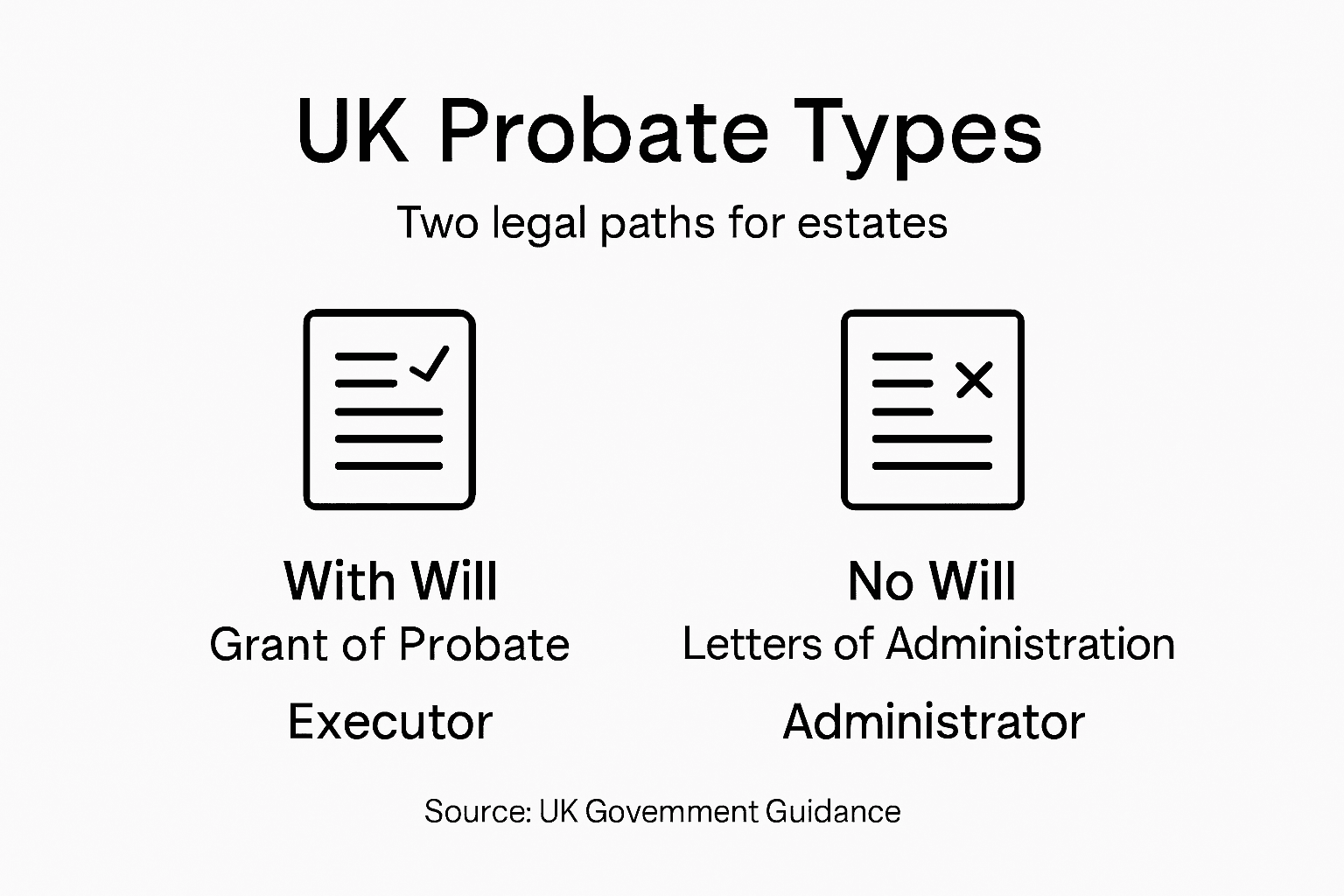
When a deceased individual leaves a valid will, executors named in the document can apply for a grant of probate. This legal document provides official authorisation to manage and distribute the estate according to the deceased’s wishes. Estate administration processes become more complex when no will is present, requiring an alternative legal route.
In cases without a will, close relatives must apply for letters of administration. This legal mechanism appoints an administrator, typically a spouse or next of kin, who gains legal authority to manage the estate according to intestacy laws. The administrator assumes responsibilities similar to an executor, including asset valuation, debt settlement, and asset distribution among legal heirs.
The key distinctions between these probate types involve legal authority, documentation requirements, and inheritance distribution procedures. Grant of probate follows explicit will instructions, while letters of administration rely on statutory inheritance guidelines. Both mechanisms serve to ensure transparent, lawful estate settlement, protecting the interests of beneficiaries and maintaining legal integrity.
Here’s a summary comparing probate options depending on the presence of a will:
| Probate Type | When Used | Who Manages Estate | Asset Distribution Basis |
|---|---|---|---|
| Grant of Probate | Will present | Named executor | According to the deceased’s wishes |
| Letters of Administration | No valid will | Appointed administrator | As defined by intestacy laws |
Expert tip: Consult a legal professional to determine which probate process best suits your specific estate circumstances and familial situation.
The probate process in the United Kingdom is a structured legal procedure designed to manage and distribute a deceased person’s estate. Probate application procedures begin immediately after an individual’s death, requiring executors to navigate several critical stages of estate management.
Initially, the executor must comprehensively value the deceased’s estate, which involves cataloguing all assets, properties, investments, and personal belongings. This valuation is crucial for determining potential inheritance tax liabilities. The executor then submits necessary documentation to the Probate Registry, including the original will, death certificate, and detailed estate valuation. Estate settlement steps typically involve completing official application forms, either online or through postal submission, and paying the requisite probate fees.

Once the grant of probate or letters of administration are obtained, executors gain legal authority to manage the estate. This includes settling any outstanding debts, closing financial accounts, and preparing to distribute assets to beneficiaries. The process requires meticulous record-keeping and adherence to legal requirements, ensuring that the deceased’s wishes are respected and all financial obligations are fulfilled.
Complexity can arise when estates involve multiple properties, international assets, or complicated family circumstances. Executors must navigate potential inheritance tax calculations, resolve any potential disputes among beneficiaries, and ensure transparent and equitable distribution of the estate according to the will or intestacy laws.
Expert tip: Maintain detailed documentation and consider professional legal guidance to navigate the intricate probate process effectively.
Executors and administrators bear significant legal responsibilities when managing a deceased person’s estate. Executor duties and obligations encompass a comprehensive range of critical tasks that demand meticulous attention and professional diligence.
The primary responsibilities include securing and valuing the deceased’s property, collecting all assets, and preparing a detailed inventory of the estate. Estate management processes require executors to locate and compile all financial documents, notify relevant financial institutions, and open a dedicated estate account. They must also calculate and settle any outstanding debts, including potential inheritance tax liabilities, before distributing remaining assets to beneficiaries.
Legal obligations extend beyond mere administrative tasks. Executors hold a fiduciary duty, which means they must act in the best interests of the estate and its beneficiaries. This includes making impartial decisions, maintaining transparent financial records, and protecting the estate’s value. Multiple executors must work collaboratively, and they have the option to seek professional assistance to ensure accurate and lawful estate management.
The role involves significant personal responsibility, with potential legal consequences for errors or negligence. Executors can be held personally liable for mistakes in estate administration, emphasising the importance of careful, methodical approach to managing the deceased’s final financial affairs.
Expert tip: Consider seeking professional legal advice to understand the full scope of your responsibilities and protect yourself from potential legal complications.
Probate administration involves significant financial and legal risks that can potentially expose executors to substantial personal liability. Probate administration risks encompass complex challenges that require meticulous attention to financial and legal details.
Tax obligations represent a critical area of potential risk, with executors responsible for accurately calculating and paying inheritance tax. Miscalculations or failures to disclose assets can result in severe financial penalties, including potential retrospective tax assessments and legal sanctions. Executors must comprehensively identify all assets, including property, investments, and personal possessions, ensuring complete transparency in estate valuation.
Legal compliance challenges extend beyond tax considerations, involving strict adherence to regulatory requirements. Potential risks include breaches of fiduciary duty, improper asset management, and failure to comply with anti-money laundering regulations. Executors can face personal financial consequences for administrative errors, including potential legal claims from beneficiaries or regulatory bodies.
The complexity of probate administration demands exceptional attention to detail and a comprehensive understanding of legal and financial frameworks. Executors must maintain precise documentation, manage potential beneficiary disputes, and navigate intricate legal requirements while protecting the estate’s financial interests.
For quick reference, here are common risks faced during probate and their possible consequences:
| Risk Type | Example Scenario | Possible Consequence |
|---|---|---|
| Tax miscalculation | Incomplete asset disclosure | Financial penalties from HMRC |
| Fiduciary breach | Favouring one beneficiary unfairly | Legal action by heirs |
| Regulatory non-compliance | Failing to meet anti-money laundering rules | Personal liability and fines |
Expert tip: Maintain comprehensive documentation and consider professional legal guidance to mitigate potential risks and ensure full compliance throughout the probate process.
Individuals seeking to reduce probate complexities and associated expenses have several strategic alternatives available. Probate cost reduction strategies include innovative approaches that can significantly simplify estate management and minimise financial burdens.
One primary method involves structuring asset ownership to bypass formal probate proceedings. Joint property ownership allows assets to transfer directly to surviving owners, eliminating the need for complex legal processes. Establishing living trusts represents another effective strategy, enabling asset distribution without mandatory probate intervention. Lifetime gifting can additionally reduce potential inheritance tax liabilities and simplify future estate administration.
Probate service options vary in complexity and cost, with executors having multiple approaches to managing estate settlement. For straightforward estates, self-administration can significantly reduce professional fees. Alternatively, some legal firms offer targeted services like grant of probate only, allowing executors to handle remaining administrative tasks independently and control overall expenses.
Careful estate planning is crucial in minimising probate costs. This involves creating clear, comprehensive wills, maintaining updated asset documentation, and understanding potential tax implications. Executors should compare professional service fees, consider partial legal assistance, and explore cost-effective application methods such as online platforms.
Expert tip: Consult a legal professional to design a personalised estate planning strategy that balances cost efficiency with comprehensive asset protection.
Navigating probate law in the United Kingdom can feel overwhelming, especially when dealing with complex estates and important responsibilities like managing assets, paying inheritance tax, and ensuring clear asset distribution. This article highlights crucial challenges you might face such as understanding the differences between grants of probate and letters of administration, fulfilling your fiduciary duties, and avoiding costly mistakes that delay your estate’s future.
If you want to remove uncertainty and protect your interests, Ali Legal offers transparent and strategic legal solutions tailored to your probate needs. Explore our comprehensive range of services in All | Ali Legal designed to support you every step of the way.

Don’t wait until complications arise. Contact our experienced solicitors today for straightforward advice, fixed fees, and fast action that secures your estate’s future without unnecessary stress. Visit our contact page to schedule your consultation now and take control of the probate process with trusted professionals at your side.
Probate is the legal process of administering a deceased person’s estate, ensuring the lawful transfer of property, settling financial obligations, and managing asset distribution according to the will or intestacy laws. It is important to ensure the estate is managed properly and beneficiaries receive their inheritance without legal complications.
Executors are responsible for securing and valuing the deceased’s estate, collecting all assets, paying outstanding debts, filing tax returns, and distributing the remaining assets to beneficiaries according to the will or intestacy laws. They must act in the best interests of the estate and keep detailed records.
If a person dies without a will, known as dying intestate, close relatives must apply for letters of administration. An administrator is appointed to manage the estate according to intestacy laws, which dictate how assets are distributed among the deceased’s legal heirs.
Costs associated with probate can be minimised by structuring asset ownership to bypass probate processes, such as joint ownership or living trusts. Comprehensive estate planning, including clear wills and up-to-date documentation, can also help reduce complications and associated costs.


