
Menu
Get Expert Legal Support Today

Most british investors and homeowners discover property law is anything but straightforward. With over one million property transactions completed in the United Kingdom each year, even minor oversights can spark expensive disputes or threaten your investment security. Understanding the core principles of property ownership, transfer, and rights is vital for anyone navigating the intricate british property market. This clear overview highlights the essentials you need to protect your interests, streamline transactions, and avoid common legal pitfalls.
Property law represents a fundamental legal framework governing how individuals and entities interact with real estate and tangible assets in the United Kingdom. At its core, this specialised legal discipline addresses the complex relationships between property ownership, transfer, and rights. Property law scholars explore critical questions about what constitutes property rights and how these rights function within society.
The scope of property law encompasses multiple critical domains, including residential and commercial property transactions, tenancies, mortgages, and dispute resolution. It touches virtually every aspect of property interaction, whether you are a homeowner, investor, landlord, or tenant. Real estate law deals with transactions involving residential and commercial properties, covering specialised areas such as property finance, mortgage lending, and social housing.
Property law in the UK distinguishes itself through intricate regulations that protect both property owners and potential buyers. These legal provisions manage critical aspects like ownership transfer, boundary disputes, easements, and adverse possession. The framework ensures transparent mechanisms for property transactions, providing legal safeguards that prevent potential conflicts and establish clear guidelines for property-related interactions.
Pro tip: Always conduct thorough property searches and obtain comprehensive legal advice before completing any property transaction to protect your investment and understand potential legal implications.
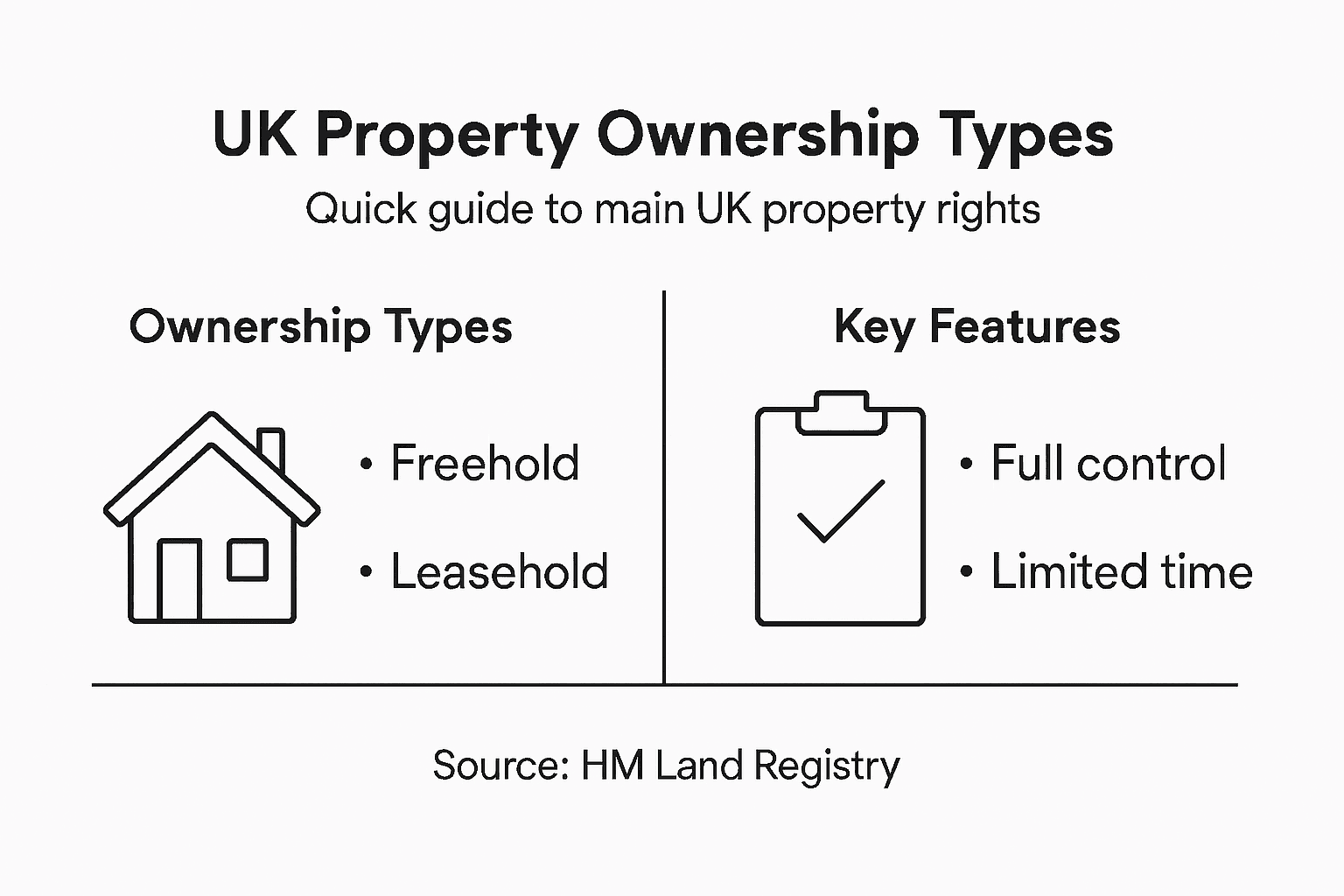
Property ownership in the United Kingdom presents a complex landscape with multiple distinct legal structures that significantly impact property rights and responsibilities. Property ownership types primarily encompass three fundamental categories: freehold, leasehold, and share of freehold, each offering unique advantages and constraints for property holders.
In the realm of personal ownership, British law recognises several key models. Ownership titles include sole ownership, where a single individual holds complete property rights, and joint ownership structures such as joint tenancy and tenancy in common. Joint tenancy ensures equal ownership with survivorship rights, meaning if one owner passes away, their share automatically transfers to the remaining owner. Conversely, tenancy in common allows owners to hold unequal shares that can be independently inherited or sold.
Freehold ownership represents the most comprehensive property rights, typically associated with detached houses where the owner possesses both the building and underlying land. Leasehold arrangements, common in flats and apartments, involve owning the property for a specified lease period without owning the land itself. Share of freehold offers a hybrid model where leaseholders collectively purchase the freehold, providing greater control over property maintenance and lease extensions.
Pro tip: Before purchasing property, carefully evaluate the ownership structure and consult a legal professional to understand the specific rights, responsibilities, and potential long-term implications of each ownership type.
Here is a summary of the main types of property ownership in the UK and their distinct features:
| Ownership Type | Who Holds Rights | Key Advantages | Main Limitations |
|---|---|---|---|
| Freehold | Single or joint owners | Complete land and building control | Higher purchase cost |
| Leasehold | Leaseholder | Lower upfront cost for property | Lease expiry and restrictions |
| Share of Freehold | Group of leaseholders | Greater control over management | Requires cooperation among owners |
| Joint Tenancy | Multiple owners equally | Automatic survivorship transfer | Shares cannot be left by will |
| Tenancy in Common | Multiple owners, shares | Flexible share allocation and bequest | Complex inheritance arrangements |
Property law in the United Kingdom represents a sophisticated legal framework built upon foundational legislative acts and evolving judicial interpretations. Real estate law primarily governs property interactions through critical statutes like the Law of Property Act 1925 and the Land Registration Act 2002, which consolidated and modernised fundamental property rights and ownership regulations.

The legal landscape encompasses multiple layers of regulation, with statutory legislation working alongside common law principles. Key legislative frameworks address critical aspects such as land ownership, property transfers, leasehold arrangements, and statutory formalities. Property law principles provide a comprehensive understanding of how legal mechanisms protect property interests, define ownership boundaries, and establish rights for individual and institutional property holders.
Complex legal principles underpin property transactions, with courts continuously interpreting and refining property rights through case law. These principles address nuanced situations involving third-party interests, inheritance considerations, and potential disputes. The legal system ensures that property rights remain adaptable to changing societal needs while maintaining robust protections for property owners and potential stakeholders.
Pro tip: Consult a specialised property law solicitor to navigate the intricate legal landscape and understand the specific implications of property ownership in your unique circumstances.
The following table compares key UK property law legislation and their practical significance:
| Legislation | Year | Core Focus | Impact on Property Rights |
|---|---|---|---|
| Law of Property Act | 1925 | Consolidation of ownership | Simplified property transfer process |
| Land Registration Act | 2002 | Formal registration system | Legal proof and protection of title |
| Leasehold Reform Act | 1967 | Leasehold enfranchisement | Enabled leaseholders to buy freehold |
| Trusts of Land Act | 1996 | Management of trust assets | Clarified rights of beneficiaries |
Property transfers in the United Kingdom represent a complex legal procedure requiring meticulous documentation and strict adherence to regulatory frameworks. Land registration practices encompass a comprehensive system designed to protect property interests and ensure transparent ownership records, governed primarily by the Land Registration Act 2002.
The registration process involves multiple critical stages, beginning with the submission of formal documentation to the Land Registry. Property owners must provide detailed evidence of ownership, including precise property descriptions, existing encumbrances, and transfer mechanisms. Each transaction requires careful verification to prevent potential disputes and establish clear legal title. Accurate record-keeping ensures that property rights are formally recognised, with official documentation serving as definitive proof of ownership and interest.
Complex compliance requirements mandate thorough investigation of property histories, potential third-party interests, and any existing legal restrictions. Solicitors play a crucial role in navigating these intricate processes, conducting comprehensive searches to identify potential legal complications before finalising property transfers. The system protects both buyers and sellers by creating a transparent, legally binding record of property transactions that can be referenced and verified through official channels.
Pro tip: Engage a qualified solicitor to conduct exhaustive property searches and verify all legal documentation before completing any property transfer to mitigate potential risks and ensure comprehensive legal compliance.
Property ownership in the United Kingdom encompasses a complex framework of legal entitlements and responsibilities that extend far beyond simple possession. Property owners possess specific rights that include exclusive use, transfer capabilities, and the fundamental ability to enjoy their property, balanced against a corresponding set of critical obligations designed to protect broader societal interests.
These rights and obligations create a nuanced legal landscape where property owners must navigate multiple regulatory requirements. Land law governs intricate ownership frameworks that balance individual property interests with community standards. Owners must comply with planning regulations, environmental protection guidelines, and respect established third-party interests such as easements and restrictive covenants. Potential risks include boundary disputes, adverse possession claims, and potential liability for improper property maintenance or usage.
The legal system provides robust mechanisms for resolving property-related conflicts, ensuring that owners understand their responsibilities while protecting their fundamental property rights. Complex interactions between statutory regulations and common law principles create a dynamic environment where property owners must remain vigilant about their legal standing. Potential risks can emerge from unexpected sources, including historical land usage, unresolved boundary issues, or unexpected third-party claims that may challenge existing property interests.
Pro tip: Conduct comprehensive property searches, maintain detailed documentation, and consult a specialised property law solicitor to proactively identify and mitigate potential legal risks associated with property ownership.
Navigating the complexities of property law in the United Kingdom can be daunting. Whether you are examining freehold versus leasehold ownership, managing transfers and registrations, or facing challenges related to property disputes and compliance, understanding your rights and responsibilities is essential. Key terms like “land registration,” “leasehold enfranchisement,” and “easements” can feel overwhelming without professional advice. At Ali Legal, we specialise in helping property owners confidently manage these intricate legal matters while protecting your investment and peace of mind.

Explore our All | Ali Legal services to find tailored legal solutions that prioritise transparency, speed, and clear communication. Do not wait until risks become problems. Contact us today at https://alilegal.co.uk/contact-us to consult with a property law expert who will guide you through every step with fixed fees and straightforward advice. Secure your property rights with trusted advice now.
The main types of property ownership in the UK are freehold, leasehold, and share of freehold. Freehold gives complete control of both the property and the land, leasehold allows ownership for a set period without owning the land, and share of freehold combines aspects of both by allowing leaseholders to collectively own the freehold.
Transferring property ownership in the UK involves submitting formal documentation to the Land Registry. This includes evidence of ownership, property descriptions, and any encumbrances. It’s essential to have accurate records to establish clear legal title and compliance with regulatory frameworks.
Property owners have several legal obligations, including compliance with planning regulations, maintaining the property, and respecting third-party interests such as easements and restrictive covenants. Failure to uphold these obligations can lead to disputes or liabilities.
Property owners can mitigate legal risks by conducting comprehensive property searches, maintaining detailed documentation of their property, and consulting a specialised property law solicitor to identify potential legal complications before undertaking transactions.


