
Menu
Get Expert Legal Support Today

Regulatory pressures do not pause for busy periods or resource gaps, and each sector demands a unique response from compliance teams. For British compliance officers in mid-sized companies, balancing daily operations with complex legal duties is a constant challenge. This article breaks down the core responsibilities across banking, healthcare, education, retail, and technology, revealing how tailored strategies help control risk, ensure regulatory alignment, and protect organisational reputation.
…
Compliance officers work across banking, healthcare, education, retail, and technology. Their core mission remains consistent: ensure organisations follow the law and internal policies. Yet the specific demands shift dramatically depending on the sector they serve.
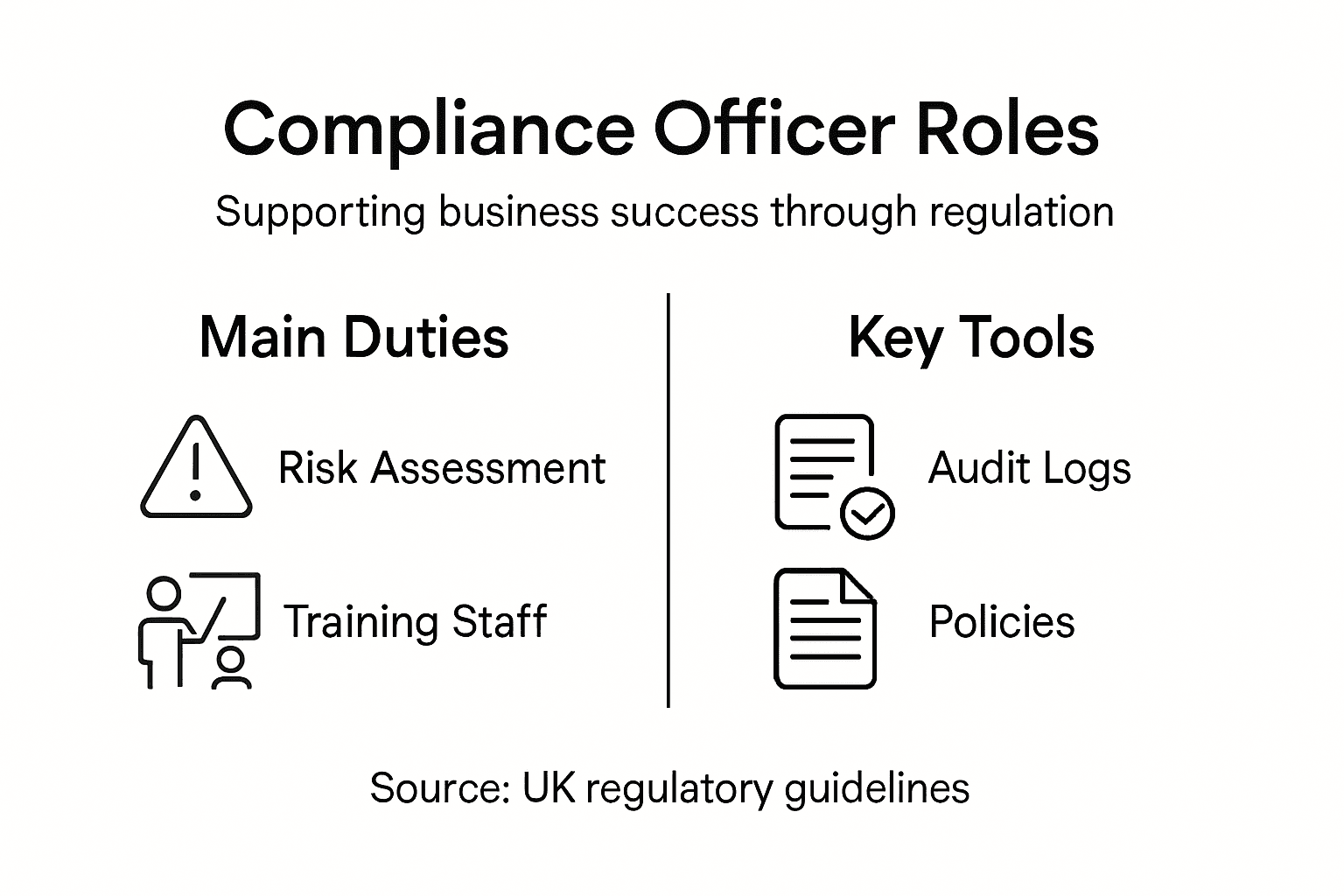
The foundation of any compliance role involves several core responsibilities.
In banking and financial services, compliance officers face particularly stringent demands. They manage anti-money laundering (AML) controls, know-your-customer (KYC) verification, and conduct rigorous risk assessments. Financial regulators expect meticulous documentation and rapid response to suspicious activity. A single oversight can trigger substantial penalties.

Healthcare compliance officers address different pressures. They ensure patient data protection, manage confidentiality requirements, and oversee clinical governance. Data breaches carry reputational damage alongside financial consequences.
Technology sector compliance officers tackle evolving challenges. Data protection, cybersecurity standards, and international regulations like GDPR demand constant vigilance. They work closely with IT departments to implement systems that ensure regulatory compliance requirements are met throughout operations.
Retail and education sectors require different expertise. Retail compliance officers manage consumer protection laws and employment standards. Education compliance officers focus on student safeguarding, data protection, and institutional governance.
Despite sector differences, all compliance officers share a critical role: translating complex regulations into practical action. They bridge the gap between legal requirements and day-to-day business operations.
Here is a summary comparing compliance officer priorities by sector:
| Sector | Main Priority | Unique Challenge |
|---|---|---|
| Banking | Preventing financial crime | Stringent anti-money laundering checks |
| Healthcare | Protecting patient data | Sensitive information management |
| Technology | Ensuring cybersecurity | Adapting to fast-changing regulations |
| Retail | Safeguarding consumers | Navigating diverse product rules |
| Education | Safeguarding students | Complying with complex data regulations |
Compliance responsibilities vary by sector, but the core mission remains unchanged: protect the organisation through rigorous adherence to legal and regulatory standards.
Pro tip: Map your sector-specific regulatory landscape first. Identify which regulations have the greatest financial and reputational impact, then prioritise your compliance efforts accordingly.
Compliance officers in the UK operate within a complex web of statutory and regulatory requirements. Understanding these frameworks is essential to your role and your organisation’s survival. Ignorance of the law protects no one—not you, and certainly not your employer.
Several major regulatory frameworks shape compliance work across UK businesses.
Your responsibility involves staying current with these regulations and ensuring anti-money laundering compliance measures align with organisational practices. This isn’t a one-time exercise—regulations change constantly, and your vigilance must match that pace.
The FCA sets particularly stringent standards for financial services firms. They conduct unannounced inspections and expect meticulous documentation of compliance activities. A breach can result in six-figure fines, reputational damage, and criminal prosecution of senior management.
Data protection requirements have tightened significantly. UK GDPR applies whether your organisation is based in the UK or processes data of UK residents. Breaches trigger mandatory reporting to regulators and affected individuals within 72 hours.
Criminalisation of corporate failure extends beyond financial crime. Directors and senior managers face personal liability under various frameworks. This means your compliance work directly protects them from prosecution.
Organisations must also comply with industry-specific standards. These vary by sector but typically address governance, risk management, and ethical practices.
The following table outlines the impact of major UK regulatory frameworks on compliance objectives:
| Regulation | Compliance Objective | Organisations Affected |
|---|---|---|
| FCA Rules | Market integrity | Financial services firms |
| UK GDPR & Data Protection Act | Safeguard personal data | All handling UK resident data |
| Modern Slavery Act | Ethical supply chains | All with supply chains |
| Anti-Bribery Act | Prevent corruption | All sectors |
| Health and Safety at Work Act | Workplace safety | All employers |
UK regulatory frameworks exist to protect consumers, prevent financial crime, and maintain market integrity. Your role enforces these protections through rigorous internal controls.
Pro tip: Create a regulatory calendar that tracks all major compliance deadlines, regulatory consultation periods, and anticipated rule changes. Review it quarterly with your senior management team to anticipate compliance costs and resource needs.
Risk management defines modern compliance work. You cannot eliminate risk entirely, but you can identify it, measure it, and control it before it becomes a crisis. This proactive approach saves organisations millions in avoided penalties and litigation costs.
Your primary objective involves reducing exposure across three critical areas.
Effective risk management requires a systematic approach. Start by mapping your organisation’s regulatory obligations against current practices. Identify gaps where compliance falls short. Then prioritise these gaps based on likelihood and potential impact.
Audit programmes form the backbone of risk assessment. Conduct regular audits to verify that policies work in practice, not just on paper. Document everything. Audits reveal patterns that informal observations miss, and they create evidence of your due diligence efforts.
Compliance culture matters more than you might think. Employees who understand why rules exist, not just what the rules are, follow them more consistently. Your training programmes should emphasise business risk rather than bureaucratic burden. Show them how compliance protects both the organisation and their own employment.
Criminal liability for senior management has intensified. Directors face personal prosecution under corporate manslaughter, fraud, and financial crime statutes. Your compliance work directly protects them. When you document compliance failures and escalate them to leadership, you create a record that they took compliance seriously.
Implement a robust risk management framework that identifies emerging threats before they materialise. Monitor regulatory announcements, industry guidance, and enforcement trends. Stay ahead of changes rather than reacting after breaches occur.
Document your risk assessments thoroughly. If regulators investigate your organisation, this documentation proves you identified and managed risks responsibly. It distinguishes between negligence and genuine attempts at compliance.
Effective risk management transforms compliance from a box-ticking exercise into a strategic business function that protects profitability, reputation, and leadership from personal liability.
Pro tip: Develop a risk heat map that visualises your organisation’s compliance risks by likelihood and impact. Review it quarterly with the board or audit committee to ensure senior leadership understands which risks demand immediate attention.
A compliance strategy transforms regulatory requirements from abstract obligations into practical business processes. Without strategy, you respond to crises. With strategy, you prevent them. The difference between these approaches determines whether your organisation thrives or merely survives.
Effective compliance strategies rest on several foundational elements.
Start by understanding your regulatory landscape. Many mid-sized companies operate under multiple overlapping regimes. You cannot comply with rules you do not know exist. This requires continuous regulatory monitoring and employee education, not annual reviews.
Policies must address real situations, not theoretical ones. Generic compliance manuals fail because employees cannot see how they apply to their actual work. When developing policies, involve frontline staff who understand where compliance challenges actually occur.
Training requires regular repetition, not one-off inductions. Compliance knowledge decays quickly. Annual or bi-annual training refreshes memory and introduces regulatory changes. Vary your training formats—video, workshops, testing—to maintain engagement.
Monitoring systems should detect problems before regulators do. This means spot-checking transactions, reviewing decision-making, and testing whether controls actually work. Audits reveal gaps that policy documents hide.
Communication channels matter profoundly. Employees must know they can report concerns without fear of retaliation. Develop multiple reporting routes—direct to compliance, anonymous hotlines, or external advisers—so people choose what feels safe.
Regularly review your strategy against regulatory developments and enforcement trends. Regulators publish decisions and guidance that reveal their priorities. Adjust your strategy accordingly.
Effective compliance strategies balance regulatory adherence with practical business considerations, ensuring your organisation meets legal obligations whilst maintaining operational efficiency.
Pro tip: Embed compliance responsibilities into job descriptions and performance evaluations across all departments, not just the compliance function. When managers own compliance for their areas, accountability becomes systemic rather than siloed.
Navigating the complex role of a Compliance Officer in UK business requires not only detailed knowledge of regulations such as UK GDPR and the Anti-Bribery Act 2010 but also strategic risk management to protect your organisation and its leadership from financial and reputational harm. Key challenges like regulatory monitoring, risk assessment, and embedding a compliance culture demand clear policies and ongoing vigilance. When compliance gaps threaten your business, having trusted legal partners to guide you through these challenges becomes essential.

Ensure your compliance strategy aligns with current UK laws and mitigates regulatory risks by consulting with Ali Legal. Our team specialises in providing fast, transparent advice tailored to your sector-specific needs. Contact us today to safeguard your organisation’s future and uphold your leadership’s accountability. Begin your journey to robust compliance by reaching out via our Contact Us page now. Discover how our legal experts can help you turn compliance risks into competitive strengths.
Explore more about anti-money laundering compliance measures and risk management frameworks with Ali Legal to build lasting business resilience.
A compliance officer’s core responsibilities include monitoring regulations, conducting risk assessments, managing audits, training staff on compliance, overseeing investigations of breaches, and developing policies to ensure legal adherence.
Compliance officers identify, measure, and control risks by mapping regulatory obligations, conducting audits, implementing training programmes, and creating documentation to evidence compliance efforts.
Compliance officers face specific challenges tailored to their sectors, such as stringent anti-money laundering checks in banking, safeguarding patient data in healthcare, and adapting to fast-changing regulations in technology.
A compliance strategy transforms regulatory requirements into practical business processes, preventing crises and ensuring that the organisation adheres to legal obligations while maintaining operational efficiency.


