
Menu
Get Expert Legal Support Today

Compliance challenges can disrupt even well-run British businesses. With evolving standards and complex regulations, corporate decision-makers and legal advisors are under pressure to protect their organisations and meet stakeholder expectations. Understanding the UK Corporate Governance Code is essential for shaping strong board leadership, enforcing transparent practices, and safeguarding against costly risks. This guide clarifies the system that underpins responsible decision-making in the United Kingdom and highlights practical approaches for more resilient business operations.
Corporate governance represents the fundamental system of principles, practices, and processes by which businesses are directed and controlled in the United Kingdom. At its core, it establishes the framework for balancing the interests of a company’s many stakeholders, including shareholders, management, customers, suppliers, and the broader community.
The UK Corporate Governance Code provides the primary regulatory guidance for listed companies, operating on a crucial ‘comply or explain’ principle. This approach allows organisations flexibility while maintaining transparency and accountability. Key aspects of effective corporate governance include:
Understanding governance goes beyond mere compliance. It involves creating a structured environment where strategic decisions align with organisational values and long-term objectives. Accountability and transparency remain the foundational principles that distinguish high-performing organisations.
Board Composition and Responsibilities
Effective corporate governance hinges on having a diverse, skilled board that can provide strategic oversight. Board members must possess the necessary expertise to challenge management constructively and drive organisational performance. This includes:
Pro tip: Regular board performance evaluations and ongoing professional development can significantly enhance governance quality and organisational effectiveness.
Corporate governance models vary significantly across different legal and economic systems, with each approach reflecting unique national business cultures and regulatory frameworks. In the United Kingdom, the Anglo-Saxon governance model predominates, characterised by dispersed ownership, market-driven mechanisms, and a strong emphasis on shareholder value.
The primary governance models encountered in contemporary business environments include:
Comparative Governance Structures
The comparative corporate governance analysis reveals distinct characteristics across different national systems. The UK typically employs a unitary board structure where executive and non-executive directors collaborate within a single board, promoting integrated decision-making and direct accountability.

Key distinctions between governance models include:
Here is a comparison of major corporate governance models and their distinctive features:
| Model Type | Board Structure | Stakeholder Focus | Regulatory Approach |
|---|---|---|---|
| Monistic | Single-tier board | Primarily shareholders | Flexible, market-driven |
| Dualistic | Two-tier board | Stakeholders and employees | Strict, statutory oversight |
| Hybrid | Mixed board features | Varies by organisation | Adaptable, blend of systems |
| Stakeholder-Oriented | Single or dual tier | Broad, includes society | More interventionist rules |
| Shareholder-Oriented | Single-tier board | Investor returns prioritised | Strong compliance focus |
Shareholder vs Stakeholder Approaches
The Anglo-Saxon model, prevalent in the UK, fundamentally differs from continental European and Asian approaches. It prioritises shareholder value, featuring more flexible labour markets, dynamic capital allocation, and a robust market for corporate control. This approach enables quicker strategic transformations and more responsive corporate structures.
Pro tip: Regularly benchmark your organisation’s governance model against international best practices to identify potential improvements and maintain competitive effectiveness.
The UK Corporate Governance Code establishes a comprehensive framework defining essential board responsibilities and governance principles. At its core, the code emphasises creating sustainable value, maintaining ethical standards, and ensuring robust organisational leadership through strategic oversight and accountability.
Key principles of board responsibilities include:
Board Leadership and Responsibilities
Effective governance demands that board members understand and execute their multifaceted roles with precision. KPMG’s governance guidance highlights critical responsibilities that extend beyond traditional oversight:
Oversight and Accountability
Boards must balance strategic vision with rigorous performance monitoring. This involves creating transparent reporting mechanisms, regularly evaluating organisational performance, and maintaining independence in decision-making processes. Non-executive directors play a crucial role in providing objective external perspectives and challenging management’s strategic assumptions.
To clarify responsibilities, below is a summary of key board duties and their intended business impacts:
| Board Responsibility | Intended Outcome | Business Impact |
|---|---|---|
| Strategic oversight | Aligned long-term direction | Drives sustainable growth |
| Internal control management | Reduced risks and vulnerabilities | Enhances organisational resilience |
| Monitoring executive actions | Improved leadership accountability | Promotes ethical culture |
| Conflict of interest review | Unbiased decision making | Safeguards stakeholder trust |
| Promoting integrity | High ethical standards | Boosts corporate reputation |
Pro tip: Implement annual board performance evaluations and maintain a continuous learning environment to enhance governance effectiveness and adaptability.
The UK Corporate Governance Code forms the cornerstone of regulatory compliance for British corporations, establishing comprehensive standards that guide organisational conduct and accountability. This critical framework provides a structured approach to governance that balances regulatory requirements with organisational flexibility.
Key legal frameworks impacting corporate governance include:
Compliance Mechanisms
The UK’s governance approach typically follows a ‘comply or explain’ principle, which allows organisations strategic adaptability while maintaining transparency. This mechanism requires companies to:
Regulatory Oversight
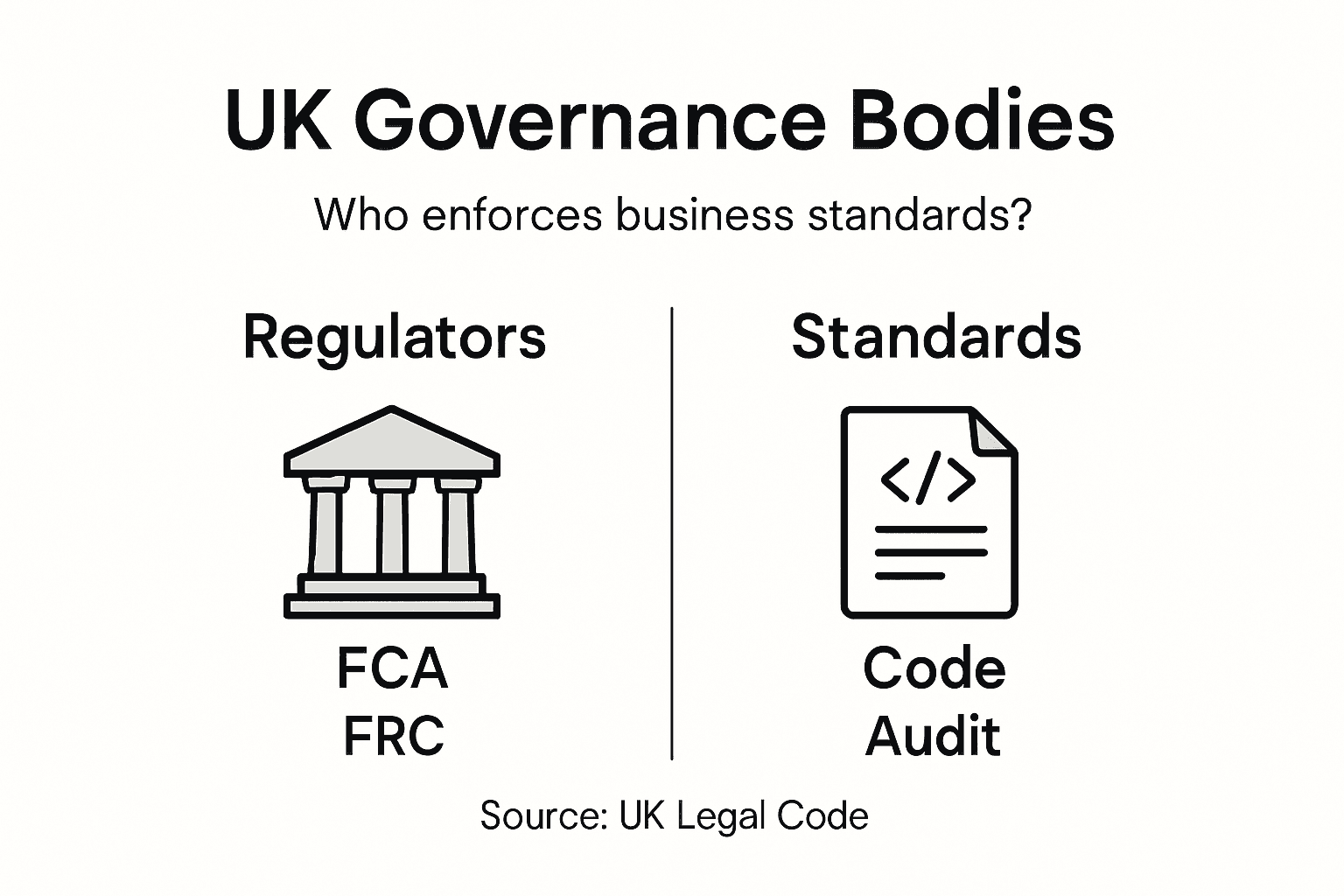
Multiple regulatory bodies play crucial roles in enforcing corporate governance standards. These include the Financial Conduct Authority, Financial Reporting Council, and Companies House, each monitoring different aspects of organisational compliance and performance. Directors must navigate these complex regulatory landscapes, ensuring their organisations meet statutory requirements while maintaining operational effectiveness.
Pro tip: Conduct regular internal governance audits to proactively identify and address potential compliance gaps before regulatory inspections.
The UK Corporate Governance Code’s Provision 29 establishes comprehensive guidelines for managing organisational risks and reporting duties. This critical provision mandates that boards proactively identify, assess, and transparently communicate potential risks affecting business operations and stakeholder interests.
Key risk management and reporting responsibilities include:
Types of Organisational Risks
Businesses face multifaceted risks that demand sophisticated management approaches:
Director Accountability
Directors bear significant legal responsibilities for risk management and reporting. They must demonstrate active oversight of internal control systems, provide annual declarations about control effectiveness, and ensure comprehensive documentation of risk management processes. Failure to meet these obligations can result in substantial legal and financial consequences.
Pro tip: Implement a quarterly risk assessment review process to maintain proactive and dynamic risk management strategies.
Navigating the complexities of corporate governance in the United Kingdom requires clear understanding of board responsibilities, risk management, and compliance with evolving legal frameworks. Whether you face challenges related to implementing the UK Corporate Governance Code or need to ensure robust internal controls that protect shareholders and stakeholders alike Ali Legal is here to help. Our expertise in corporate and commercial law means we provide straightforward advice tailored to your organisation’s unique needs ensuring transparency accountability and sustainable growth.

Take control of your corporate governance framework today by consulting with our dedicated legal team. Benefit from our fixed fees and personalised service that values long-term client relationships. Contact us now to receive fast clear communication and strategic legal solutions that keep your business compliant and competitive. Reach out through our contact page and explore how Ali Legal can guide you in building trust and integrity within your corporate structure.
Corporate governance refers to the principles, practices, and processes by which businesses are directed and controlled, ensuring an alignment of interests between stakeholders such as shareholders, management, customers, and the community.
Effective corporate governance is crucial as it promotes transparency, accountability, and ethical practices within an organisation, ultimately fostering trust with stakeholders and contributing to long-term business success.
The main principles include establishing clear board responsibilities, maintaining financial integrity, implementing effective risk management, promoting transparency, engaging stakeholders, and developing robust internal control mechanisms.
The ‘comply or explain’ principle allows companies flexibility in adhering to governance standards. Organisations must comply with established guidelines or explain any deviations from them, ensuring transparency in their governance practices.


