
Menu
Get Expert Legal Support Today

A well-structured estate plan is one of the most powerful tools for protecting family wealth and passing on your legacy with confidence. Without thoughtful preparation, even sizeable assets can quickly become entangled in legal uncertainty and unnecessary disputes. This article cuts through misconceptions and highlights why comprehensive estate planning is vital for every high-net-worth family in the United Kingdom, providing clear, practical steps to secure your assets and support your loved ones.
Estate planning represents a strategic approach to managing and preserving family wealth after an individual’s death. At its core, estate planning involves making critical legal arrangements to ensure your assets are distributed according to your specific wishes, minimising potential tax liabilities and potential family conflicts.
Understanding estate planning requires dispelling several common myths. Many people mistakenly believe that estate planning is only for wealthy individuals, when in reality, comprehensive estate management is crucial for families across different financial backgrounds. The process involves more than simply drafting a will - it encompasses detailed considerations about asset distribution, potential inheritance tax implications, and protecting vulnerable family members.
Key components of effective estate planning include:
Contrary to popular belief, estate planning is not a one-time event but an ongoing process that requires periodic review and adjustment. Life changes such as marriage, divorce, birth of children, or significant financial shifts necessitate updating estate planning documents to ensure they remain current and reflective of your intentions.
Pro tip: Consult a legal professional annually to review and update your estate planning documents, ensuring they accurately represent your current financial situation and family circumstances.
Estate planning involves three critical legal instruments that provide comprehensive protection for individuals and their families: wills, trusts, and powers of attorney. Each plays a unique role in managing and protecting assets, ensuring that an individual’s wishes are respected and financial interests are safeguarded throughout different life stages.
Wills represent the foundational document in estate planning, legally dictating how personal assets will be distributed after death. These legal documents are crucial for preventing potential family disputes and ensuring that specific wishes are legally recognised. Without a properly drafted will, assets may be distributed according to standard inheritance laws, which might not align with an individual’s intentions.
Key considerations for effective estate planning include:
Trusts offer an additional layer of financial protection and flexibility. They enable individuals to set specific conditions for asset distribution, potentially reducing inheritance tax liabilities and providing structured financial support for beneficiaries. Different types of trusts can be established to address various family and financial scenarios, from protecting vulnerable family members to managing complex asset portfolios.
Lasting Powers of Attorney (LPA) are another essential component of comprehensive estate planning. These legal arrangements allow trusted individuals to make critical decisions on one’s behalf if mental capacity is compromised. There are two primary types of LPA in the UK: one for health and welfare decisions, and another for property and financial affairs.
Professional legal guidance is essential when establishing these complex legal instruments to ensure they accurately reflect your intentions and provide maximum protection.
Pro tip: Consult a qualified legal professional who specialises in estate planning to create a comprehensive strategy tailored to your unique family and financial circumstances.
To clarify the main legal tools, here is a comparison of wills, trusts, and lasting powers of attorney:
| Instrument | Primary Purpose | Typical Use Case |
|---|---|---|
| Will | Directs distribution of estate assets | Outlining beneficiaries and executors |
| Trust | Manages assets with set conditions | Protecting minors, reducing tax |
| Lasting Power of Attorney | Delegates decision-making authority | Managing affairs if incapacitated |
Estate planning in the United Kingdom is governed by a complex legal framework that significantly influences how individuals can manage and distribute their assets. These laws provide critical guidelines that determine inheritance rights, tax implications, and the overall process of asset transfer upon an individual’s death.
One of the most fundamental legal considerations is the intestacy rules governing estate distribution. When an individual dies without a valid will, these statutory regulations determine how assets are allocated among surviving family members. The hierarchy of inheritance follows a strict legal protocol, prioritising spouses, civil partners, and direct descendants.
Key legal aspects affecting estate planning include:
The Inheritance and Trustees’ Powers Act 2014 introduced significant changes to how estates are managed. This legislation modified previous inheritance laws, particularly regarding the rights of spouses and civil partners. For instance, the Act altered the distribution of assets when someone dies without a will, ensuring more equitable treatment of surviving partners and children.
Legal frameworks are dynamic, with periodic legislative updates significantly impacting estate planning strategies.
Understanding these legal intricacies requires careful navigation of complex statutory requirements. Different rules apply depending on whether an individual is domiciled in England, Wales, Scotland, or Northern Ireland, adding another layer of complexity to estate planning decisions.
Pro tip: Consult a specialised legal professional who can provide up-to-date guidance on the latest legislative changes affecting estate planning in your specific region.
Inheritance Tax (IHT) represents a critical financial consideration for individuals engaged in comprehensive estate planning across the United Kingdom. This complex taxation mechanism directly impacts how families preserve and transfer wealth, requiring strategic financial management and proactive planning.

The current UK tax framework establishes specific inheritance tax thresholds and regulations that significantly influence estate planning strategies. Typically, estates valued above £325,000 are subject to a 40% tax rate, though numerous exemptions and allowances can help mitigate this substantial financial burden.
Key financial considerations in inheritance tax planning include:
Nil-Rate Band and Residence Nil-Rate Band provide crucial mechanisms for reducing inheritance tax liability. The standard nil-rate band allows individuals to pass on £325,000 tax-free, with an additional residence nil-rate band of £175,000 when passing a primary residence to direct descendants. This means married couples can potentially shield up to £1 million from inheritance tax through careful planning.
Below is a summary of key inheritance tax thresholds and benefits available in the UK:
| Allowance Type | 2024/25 Value | Who Benefits |
|---|---|---|
| Nil-rate band | £325,000 | All UK estate owners |
| Residence nil-rate band | £175,000 | Passing home to descendants |
| Combined spouse benefit | Up to £1 million total | Married couples or civil partners |
Proactive estate planning can significantly reduce inheritance tax liabilities, preserving more wealth for future generations.
Complex estates require sophisticated financial strategies, including lifetime gifting, establishing trusts, and leveraging various tax relief mechanisms. Professional financial advice becomes essential in navigating these intricate regulations and developing a comprehensive wealth preservation approach.
Pro tip: Conduct a comprehensive estate valuation and consult a tax specialist annually to optimise your inheritance tax strategy and maximise potential exemptions.
Estate planning requires meticulous attention to detail, with numerous potential missteps that can significantly compromise the intended distribution of family wealth. Navigating these complex legal and financial landscapes demands strategic foresight and comprehensive understanding of potential risks.
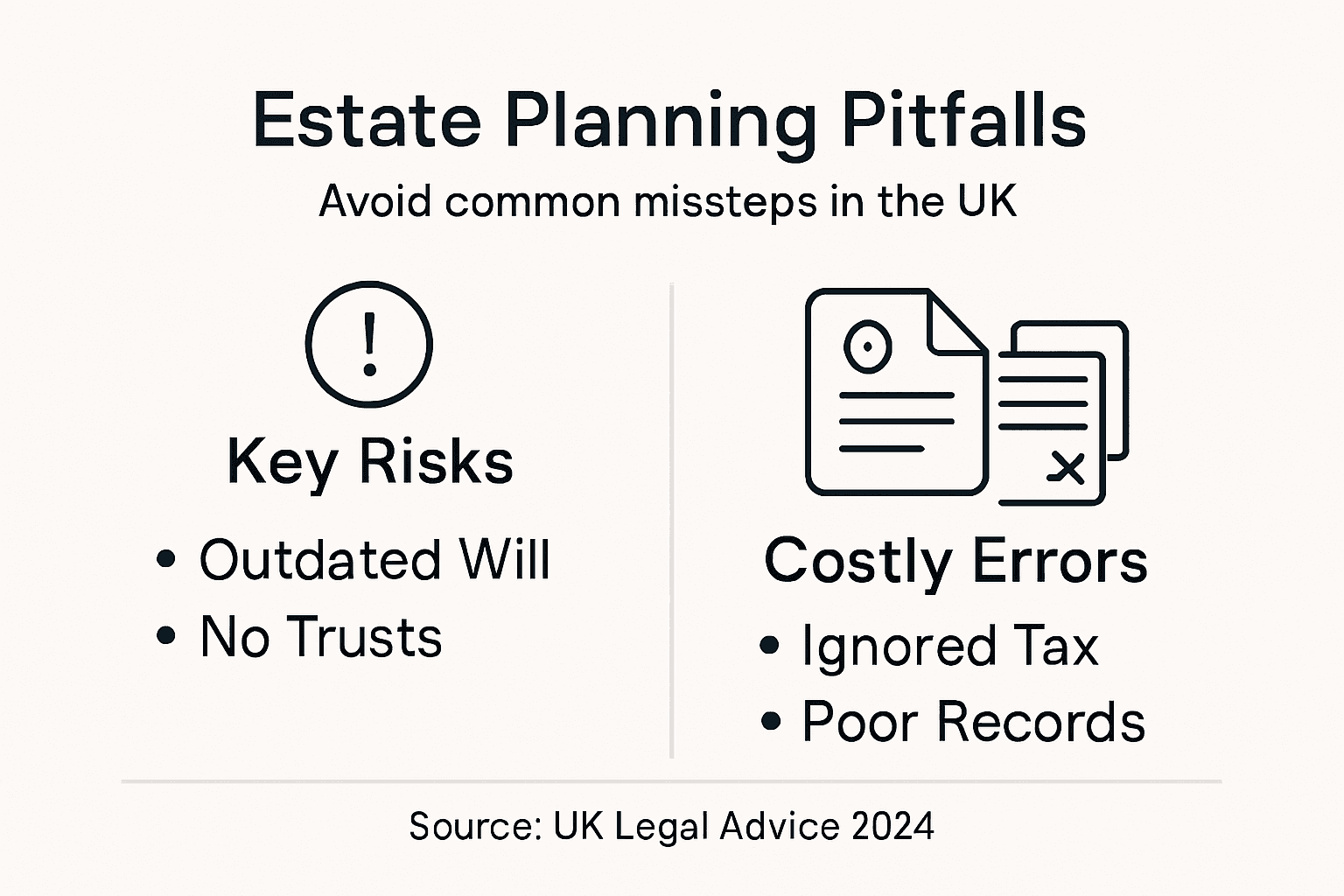
One of the most critical errors individuals make is failing to create a legally valid will. Without a properly constructed legal document, assets may be distributed according to standard intestacy rules, potentially contradicting an individual’s genuine wishes and causing unnecessary familial conflict.
Common estate planning pitfalls include:
Incomplete Documentation represents another significant risk in estate planning. Many individuals mistakenly believe that verbal agreements or informal arrangements will suffice, when in reality, legally binding documentation is crucial for ensuring precise asset transfer and minimising potential disputes among beneficiaries.
Professional legal guidance can help prevent costly mistakes and ensure comprehensive estate protection.
Complex family structures and changing life circumstances further complicate estate planning. Marriages, divorces, births, and significant financial changes necessitate regular document reviews and updates to maintain the relevance and effectiveness of estate planning strategies.
Pro tip: Schedule an annual comprehensive review of your estate planning documents with a legal professional to ensure they remain current and accurately reflect your intentions.
Estate planning can feel overwhelming especially with complex laws and tax implications that threaten your family’s financial future. Whether you are navigating wills, trusts, or inheritance tax strategies, Ali Legal understands the challenges you face in securing your assets and ensuring your intentions are respected. From drafting clear and legally binding documents to managing lasting powers of attorney, our client-centred approach provides transparent, straightforward advice with fixed fees and speedy solutions.

Take control of your estate with confidence today. Visit Ali Legal to access expert legal support tailored to your unique situation. Don’t leave your family’s wealth to chance – contact us now to start your personalised estate planning journey and safeguard your legacy with trusted professionals dedicated to clarity and long-term care.
Estate planning is a strategic approach to managing and preserving family wealth after an individual’s death. It ensures that assets are distributed according to your wishes, minimises tax liabilities, and helps prevent family conflicts.
Key components include drafting a legally binding will, identifying and valuing personal assets, considering inheritance tax strategies, establishing trusts for specific beneficiaries, and designating a power of attorney.
Estate planning is an ongoing process, so it’s advisable to review and update your documents annually or after significant life changes, such as marriage, divorce, or the birth of children, to ensure they reflect your current circumstances.
A will directs the distribution of estate assets after death, a trust manages assets under certain conditions possibly reducing tax liabilities, and a lasting power of attorney allows trusted individuals to make decisions on your behalf if you become incapacitated.


