
Menu
Get Expert Legal Support Today

A supplier suddenly misses a key delivery, or a vendor disputes payment terms and your small business faces immediate uncertainty. For UK-based owners, these moments are not just stressful but can disrupt critical operations and threaten valuable relationships. Understanding the essentials of a breach of contract in British law helps you respond swiftly and protect your interests, ensuring every agreement works for—not against—your company.
In British legal practice, a breach of contract represents a significant legal event where one party fails to fulfil their contractual obligations as originally agreed. When considering employment contract terms, such breaches can emerge through multiple scenarios that fundamentally disrupt the established legal agreement between parties.
A breach occurs when specific contractual conditions are not met, which can manifest in several distinct ways:
Under UK law, breaches are typically categorised into three primary types:
Employment contracts specifically require both employers and employees to understand their legal obligations and responsibilities. A fundamental breach by an employer might enable an employee to claim constructive dismissal, while an employee’s significant breach could justify immediate termination.
A breach of contract is not just a technical legal term, but a potential turning point in business relationships.
The severity and nature of the breach determine potential legal remedies, which might include financial compensation, contract modification, or complete contract termination. Small businesses must carefully document all contractual interactions and maintain clear communication to minimise potential breach risks.
Pro tip: Regularly review and update your contractual agreements to ensure clarity and reduce potential misunderstandings that could lead to breach scenarios.
In British contract law, understanding the nuanced types of breach is crucial for small businesses navigating legal complexities. Fixed-term contract breaches represent a particularly sensitive area where precise legal distinctions can significantly impact business relationships and potential litigation outcomes.
The primary categories of contract breaches in UK law include:
Each breach type carries distinct legal implications and potential remedies. For instance, contract breach scenarios can range from minor technical infractions to substantial violations that justify immediate contract termination.
The following table summarises how different breach types typically impact small businesses:
| Breach Type | Common Example | Business Impact | Typical Legal Response |
|---|---|---|---|
| Minor breach | Slight delay in payment | Minimal disruption | Negotiation, small claim |
| Material breach | Reduced quality of service | Operational or financial loss | Compensation, contract change |
| Fundamental breach | Unlawful job termination | Relationship breakdown | Immediate termination, claim |
| Anticipatory breach | Notice of non-performance | Planning uncertainty | Early intervention |
Not all contract breaches are created equal - the severity and context determine the legal response.
In employment contexts, breaches can manifest through various actions. An employer reducing pay without agreement or an employee consistently refusing essential duties could constitute significant contractual violations. The legal system evaluates these breaches based on their materiality and impact on the overall contractual relationship.
Specific considerations for assessing breach severity include:
Legal remedies for contract breaches might include financial compensation, specific performance orders, or contract rescission. Small businesses must carefully document interactions and understand the potential consequences of different breach types.
Pro tip: Maintain detailed contract documentation and communicate proactively to mitigate potential breach risks before they escalate into formal legal disputes.
In the United Kingdom, employment contracts represent complex legal instruments that go far beyond simple written agreements. Employment contract requirements encompass a comprehensive framework of statutory and express terms that protect both employer and employee interests.
Typical contract terms can be categorised into several key components:
Under British law, employment contract details must comprehensively address multiple critical elements:
A well-constructed contract serves as both a legal shield and a roadmap for workplace expectations.
Contracts can exist in various forms - written, verbal, or implied through consistent workplace conduct. However, written contracts provide the most robust legal protection and clarity for small businesses, helping to prevent potential misunderstandings or disputes.
Employers must be particularly attentive to specific legal obligations, including providing a written statement of particulars by the first day of employment. This document should outline the fundamental aspects of the working relationship, ensuring transparency and legal compliance.
This table provides an at-a-glance guide to essential elements every employment contract should cover:
| Contract Element | Purpose | Typical Business Risk When Missing |
|---|---|---|
| Job description | Defines key duties | Disputes over role expectations |
| Payment terms | Outlines wages and frequency | Unpaid wages or payroll errors |
| Notice period | Sets termination notification | Sudden staffing or business disruption |
| Confidentiality | Protects sensitive information | Risk of data or IP leakage |
| Holiday entitlement | Ensures legal leave provision | Statutory claim for lost benefits |
Pro tip: Consult a legal professional to review your contract templates, ensuring they comprehensively cover all necessary terms and comply with current UK employment regulations.
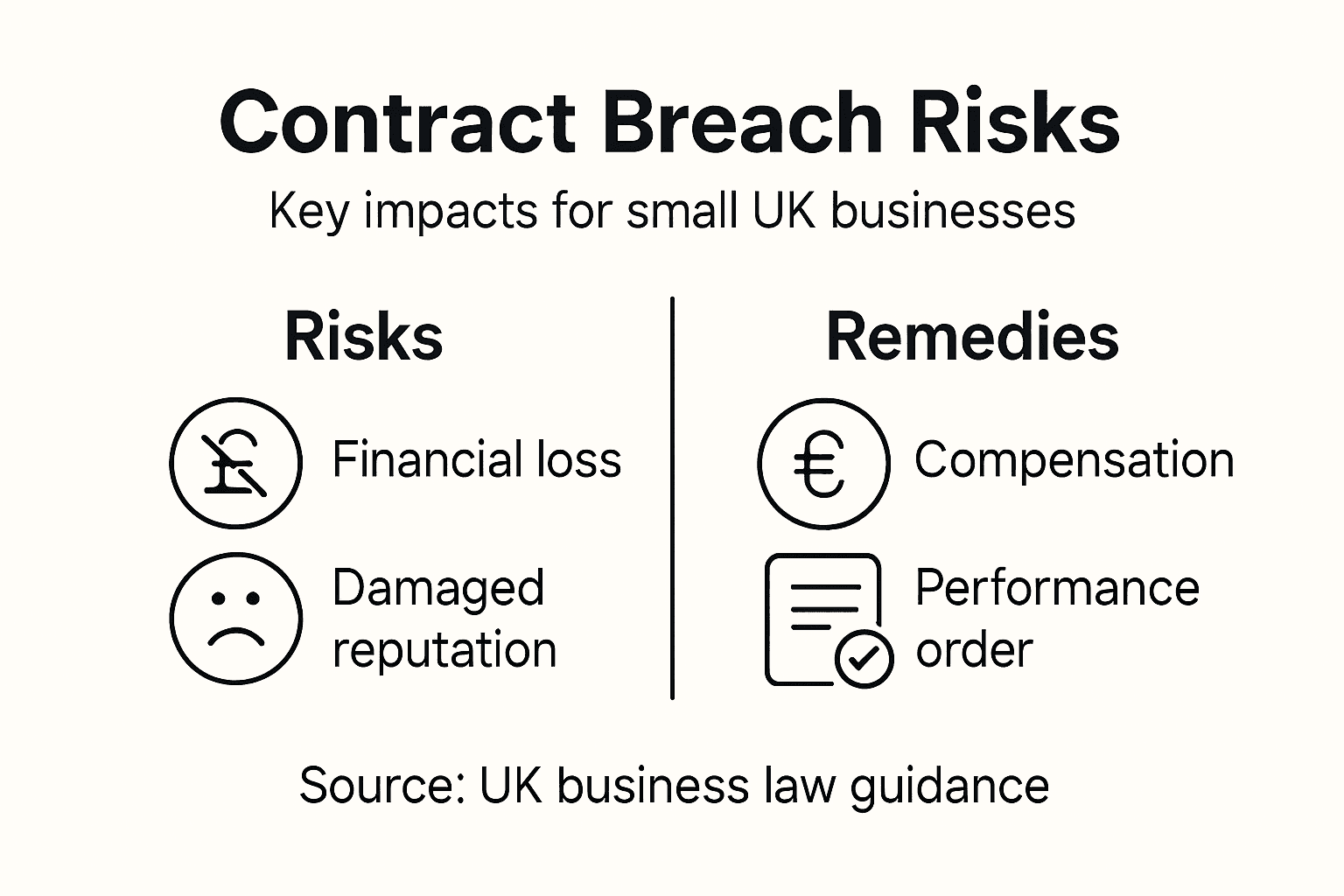
Breaches of contract represent significant challenges for small businesses, with potential consequences that extend far beyond immediate financial implications. Contract breach consequences can fundamentally disrupt operational stability and workplace relationships.
The primary risks associated with contract breaches include:
Potential remedies for contract breaches vary depending on the specific circumstances:
The true cost of a contract breach extends well beyond immediate monetary damages.
Business liability management requires proactive strategies to mitigate potential risks. Small businesses must develop robust contract frameworks, implement clear communication protocols, and maintain comprehensive documentation to minimise vulnerability.

Critical considerations for managing contract breach risks include understanding potential financial exposure, maintaining detailed records of all interactions, and being prepared to engage in constructive dispute resolution processes. Professional legal guidance can provide invaluable support in navigating these complex scenarios.
Pro tip: Develop a systematic approach to contract management, including regular reviews and clear escalation procedures to address potential breaches before they become significant legal challenges.
For small businesses, preventing contract disputes requires a proactive and strategic approach to contract management. Contract dispute prevention demands meticulous attention to detail and clear communication throughout the contractual relationship.
Key strategies for minimising potential contract conflicts include:
Effective contract protection involves several critical steps:
Proactive communication is the most effective prevention against potential contract disputes.
Contract term clarification requires businesses to ensure all parties fully understand their obligations. This involves creating precise job descriptions, explicitly stating payment terms, and outlining specific performance expectations with measurable criteria.
Small businesses should prioritise documentation, maintain open dialogue, and address potential issues promptly before they escalate into formal disputes. Keeping comprehensive records of all interactions, contract modifications, and performance assessments provides crucial protection in case of future disagreements.
Pro tip: Develop a standardised internal review process for all contracts, including mandatory legal consultation and clear escalation procedures for potential disputes.
Facing a breach of contract can place your small business in a difficult position, from unexpected financial losses to operational disruption. Understanding terms like fundamental breach and navigating sensitive issues such as fixed-term contract breaches requires more than just knowledge — it demands professional guidance focused on your unique challenges. Ali Legal specialises in delivering clear, strategic advice that helps you minimise risks, resolve disputes promptly, and protect your valuable business relationships.
Key benefits of working with us include:

If contract disputes threaten your operations take action now to safeguard your business. Reach out to Ali Legal for tailored support on contract management and breach resolution. Visit our Contact Us page and let us help you navigate these challenges with confidence. Explore our expert services designed for small businesses seeking stability and clarity in every contract.
A breach of contract occurs when one party fails to fulfil their contractual obligations, which can include failing to perform duties, delivering substandard work, or not making payments as agreed.
There are primarily three types of breaches: minor breaches, material breaches, and fundamental breaches. Each type carries different legal implications and potential remedies.
Legal remedies for breaches can include financial compensation, modification or rescission of the contract, and, in some cases, specific performance orders, depending on the severity of the breach.
Small businesses can minimise breach risks by drafting clear contracts, maintaining open communication, thoroughly documenting interactions, and regularly reviewing contract performance to address potential issues proactively.


