
Menu
Get Expert Legal Support Today

Most british clients underestimate the sheer amount of paperwork required for a single legal consultation. Missing even one vital document can slow progress and weaken your case. Whether you are dealing with family law, contracts, or criminal matters in the United Kingdom, being thoroughly prepared allows your solicitor to deliver precise advice and strategy from day one. This guide shows you how to gather, organise, and present exactly what is needed for a strong legal start.
Preparing the right documentation is crucial for a successful legal consultation. Your solicitor will need comprehensive evidence to evaluate and strategise your case effectively. The goal is to compile a clear, organised collection of documents that tell your complete legal story.
Start by collecting all relevant paperwork systematically. This includes official court records and legal documentation that directly relate to your specific legal matter. Personal identification documents, contracts, correspondence, financial statements, medical records, police reports or incident logs are typically essential. Arrange these chronologically and make copies to ensure your originals remain intact.
A critical tip is maintaining absolute document integrity. Ensure all papers are legible, undamaged and properly authenticated. If certain documents are challenging to obtain, consult your solicitor about proper acquisition methods. Your thorough preparation demonstrates professionalism and helps your legal representative build a robust case strategy from the outset.
In the next step, you will learn how to review and organise these gathered documents for maximum legal effectiveness.
Successful legal strategies begin with a precise understanding of your case’s core challenges. Your objective in this stage is to distil complex circumstances into clear, actionable legal issues that will guide your solicitor’s approach.
Carefully analyse your collected documents to establish consultation objectives and prevent information duplication. Identify the primary legal questions at the heart of your situation. These might involve contractual disputes, personal injury claims, property disagreements, or potential legal breaches. Examining legal precedents and case citations can help you understand how similar legal scenarios have been resolved historically.
A strategic approach involves ranking these issues by their potential impact and urgency. Consider which problems could have the most significant legal or financial consequences. Some matters may require immediate attention while others can be addressed more incrementally. By presenting a clear hierarchy of issues to your solicitor, you enable more focused and efficient legal representation.
With your key issues now identified and prioritised, you will next prepare a concise summary to discuss during your initial legal consultation.
Creating a strategic list of questions is crucial for maximising the effectiveness of your initial legal consultation. Your goal is to communicate your legal concerns clearly and efficiently, ensuring your solicitor comprehends the nuances of your situation.

Providing relevant information to inform legal discussions requires thoughtful preparation. Structure your questions to address specific legal aspects of your case. Begin by drafting clear open ended inquiries that explore potential legal strategies, potential outcomes, probable timelines, and estimated costs. Focus on extracting practical insights rather than overwhelming your solicitor with excessive details. Legal research platforms can help refine your understanding of potential questions before your consultation.
A critical tip is to prioritise your questions by importance and complexity. Start with fundamental legal issues and progress to more nuanced concerns. Write your questions concisely using straightforward language avoiding legal jargon. Consider grouping related questions together to facilitate a more organised discussion. By presenting a well structured set of queries, you demonstrate professionalism and help your solicitor provide more targeted advice.
With your questions prepared, you are now ready to schedule and attend your initial legal consultation with confidence.
Compiling a comprehensive and well structured portfolio of personal and financial documents is essential for supporting your legal case. Your objective is to create a clear and accessible record that provides your solicitor with a complete picture of your circumstances.
National archival resources offer guidance on maintaining important personal records. Gather critical documents including bank statements, tax returns, payslips, property deeds, insurance policies, identification documents, and any correspondence relevant to your legal matter. Arrange these chronologically and create both digital and physical copies. Ensure sensitive documents are secured and password protected when digitised.
Legal precedent collections can help you understand the type of documentation required for different legal scenarios. Group your documents into logical categories such as financial evidence, personal identification, communication records, and case specific materials. Use clear folder labels or digital file names to make retrieval straightforward. Include a brief summary or index to help your solicitor quickly navigate through the information.
With your documents meticulously organised, you are now prepared to present a comprehensive overview during your initial legal consultation.
The final stage of preparation involves a systematic and thorough review of all documents and information you have gathered. This critical step ensures that your legal consultation will be as productive and efficient as possible.
Consultation preparation requires comprehensive evaluation of your materials to guarantee completeness and accuracy. Methodically go through each document checking for legibility, relevance, and comprehensiveness. Verify that all personal details are current and correctly spelled. Remove any outdated or irrelevant documents that might confuse your solicitor. Create a clear table of contents or index to help your legal representative quickly navigate your materials.
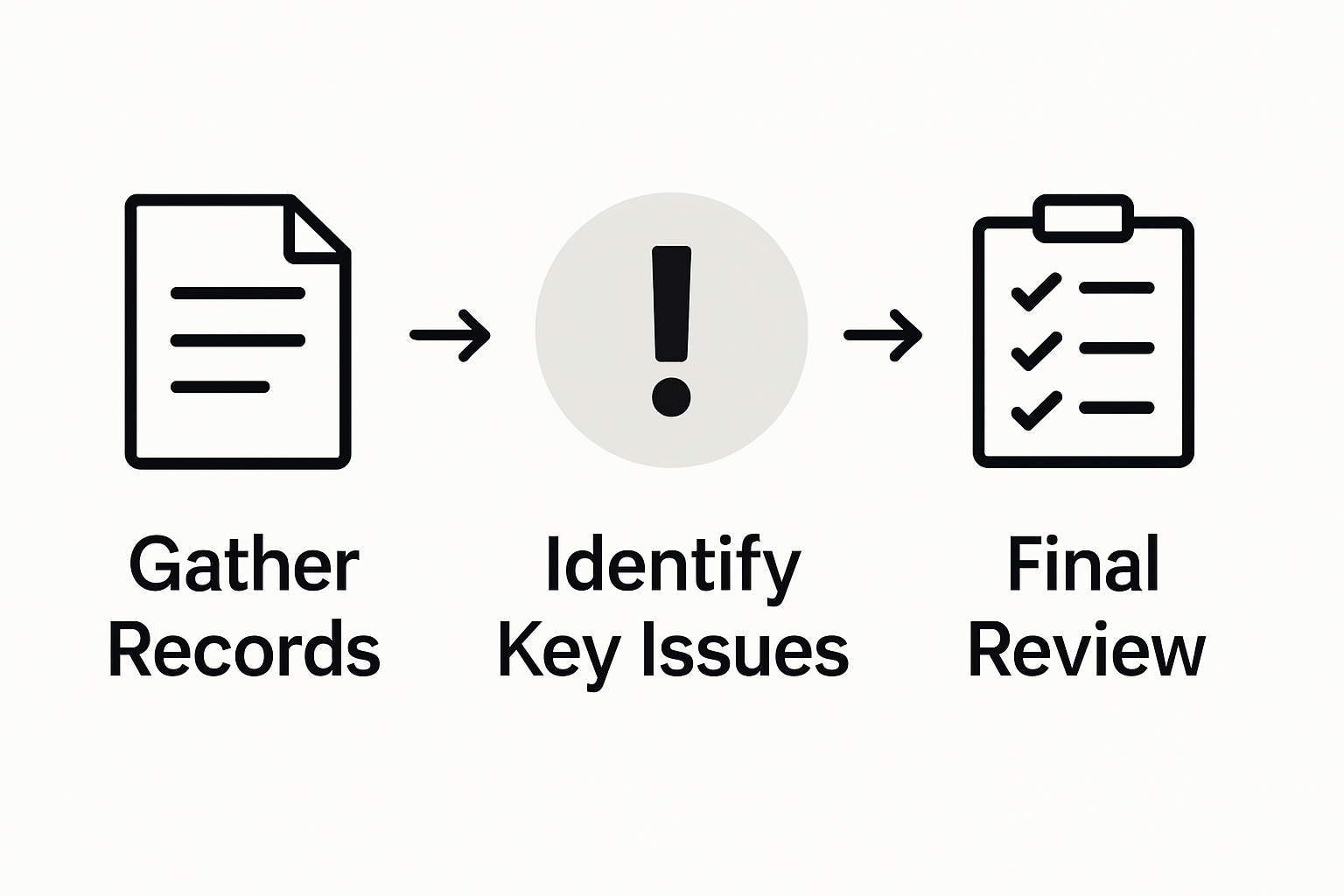
Digital research tools can assist in verifying the accuracy of legal documentation. Cross reference your documents with any original sources and ensure all copies are clear and readable. Make digital backups of your physical documents and consider password protecting sensitive files. Check that you have included all relevant financial statements, identification documents, correspondence, and case specific materials. A final review from an objective perspective can help identify any potential gaps or areas that require additional information.
With your materials thoroughly reviewed and confirmed, you are now fully prepared to engage in a productive legal consultation.
Navigating the complexities of legal consultation preparation requires precision and clear organisation, as outlined in our Legal Consultation Preparation Guide for Successful Outcomes. Key challenges such as gathering essential documents, prioritising legal issues and structuring concise questions can be overwhelming. Ali Legal understands these pain points and offers a client-centred approach that emphasises straightforward advice, fixed fees and transparent communication. Whether you are facing civil litigation, property disputes or international matters, our experienced solicitors help turn your thorough preparation into a strategic advantage.

Take control of your legal journey today by consulting with Ali Legal. Benefit from targeted expertise designed to expedite your case and clarify complex legal processes. Do not let uncertainty delay your progress. Contact us now to schedule your consultation and access tailored legal solutions supported by clear guidance and long-term commitment at Contact Ali Legal. Explore more insights and resources relevant to your needs at our All Articles page.
To gather essential documents, compile all relevant paperwork such as court records, identification, contracts, and any evidence related to your case. Organise these documents chronologically and ensure you have clear copies for your solicitor.
Before your consultation, identify the primary legal issues related to your case, such as contractual disputes or personal injury claims. Prioritise these issues by their urgency and potential impact to facilitate focused discussions with your solicitor.
Prepare concise, open-ended questions that address your legal concerns, potential strategies, and likely outcomes. Start with fundamental questions before advancing to more complex ones, using straightforward language to communicate your needs effectively.
Organise your financial and personal information by gathering relevant documents such as bank statements, tax returns, and correspondence related to your legal matter. Create logical categories and label them clearly to help your solicitor navigate through your materials easily.
Review your prepared materials by checking each document for legibility, relevance, and completeness. Ensure all personal details are current and create a clear index to facilitate easy access during your consultation.
To ensure productivity, thoroughly prepare by gathering all necessary documentation, identifying key issues, and crafting strategic questions for your solicitor. Present your organised materials clearly to allow for a focused discussion on your legal matters.


