
Menu
Get Expert Legal Support Today

Running a business in the United Kingdom often means grappling with changing regulations, complex contracts, and evolving legal obligations. The risks can lead not only to financial losses but also threaten your reputation and asset security. By understanding the essentials of legal risk management and implementing strategic frameworks for compliance and protection, you can build a resilient foundation that helps your organisation avoid costly mistakes and maintain integrity.
Legal risk management represents a strategic approach organisations use to identify, assess, and mitigate potential legal challenges before they escalate into significant problems. For UK businesses, this process involves systematically evaluating potential legal vulnerabilities across multiple operational domains.
At its core, legal risk management encompasses several critical components:
Understanding legal risk requires businesses to recognise that risks are not merely about avoiding litigation, but about protecting organisational integrity through structured approaches. These approaches involve carefully mapping potential legal challenges that could disrupt business operations, damage reputation, or result in financial penalties.
Companies must develop robust frameworks that anticipate potential legal complications. This involves creating systematic processes for ongoing legal assessment, which includes regular review of contracts, understanding current regulatory requirements, and maintaining comprehensive documentation of all potential risk areas.
Typical Legal Risk Categories Include:
Pro tip: Conduct a comprehensive legal risk audit annually to proactively identify and address potential vulnerabilities before they become significant challenges.
UK businesses face a complex landscape of potential legal risks that can significantly impact their operations and financial stability. Key legal risks span multiple operational domains, requiring strategic awareness and proactive management.

The primary categories of legal risks businesses must navigate include:
The following table compares the impact of key legal risk categories on UK businesses:
| Legal Risk Category | Typical Impact on Business | Example Scenario |
|---|---|---|
| Contractual | Financial losses, disputes | Unclear contract terms cause claims |
| Regulatory Compliance | Fines, operational restrictions | Missed legislative change leads to penalties |
| Employment Law | HR disputes, tribunal claims | Staff grievance mishandled |
| Intellectual Property | Loss of innovation, reputation | Patent infringement by competitor |
| Data Protection | Regulatory fines, data breaches | Customer information exposed |
Contractual risks represent one of the most prevalent challenges for organisations. These risks emerge from poorly drafted contracts, ambiguous terms, or failure to fully understand contractual obligations. Comprehensive contract management strategies can help mitigate potential disputes and financial exposure.
Moreover, regulatory compliance risks continue to evolve, with businesses facing increasing scrutiny across various sectors. This requires maintaining up-to-date knowledge of legislative changes, implementing robust internal compliance mechanisms, and regularly reviewing organisational practices to ensure alignment with current legal standards.
Legal risks are not static; they represent dynamic challenges that demand continuous monitoring and strategic adaptation.
Common Sources of Legal Vulnerability:
Pro tip: Develop a comprehensive legal risk register that systematically tracks and evaluates potential legal vulnerabilities across all operational domains.
Legal risk assessment represents a systematic approach that enables businesses to identify, evaluate, and proactively manage potential legal vulnerabilities. Comprehensive risk assessment frameworks provide organisations with strategic tools to understand and mitigate potential legal challenges.
The legal risk assessment process typically involves several critical stages:
Effective risk assessment requires a multi-dimensional approach. Businesses must consider various factors, including the specific nature of their industry, regulatory environment, operational complexities, and potential legal exposure. This involves conducting thorough internal audits, reviewing existing contracts, and analysing potential areas of legal vulnerability.
Key Components of Legal Risk Assessment:
Legal risk assessment is not a one-time event, but a continuous process of strategic evaluation and adaptation.
Mitigation strategies must be tailored to each organisation’s unique risk profile. This involves developing robust internal policies, implementing comprehensive training programmes, and creating clear protocols for managing potential legal challenges.
Pro tip: Conduct a quarterly legal risk assessment that involves cross-departmental collaboration to ensure a holistic approach to identifying and managing potential legal vulnerabilities.
Navigating the complex landscape of UK legal frameworks requires businesses to develop a comprehensive understanding of regulatory obligations. Comprehensive business regulation guidance provides critical insights into maintaining legal compliance across various operational domains.
The primary legal frameworks that UK businesses must understand include:
Compliance is not a static concept but a dynamic process requiring continuous adaptation. Businesses must remain vigilant about evolving legal requirements, implementing robust internal mechanisms to track and respond to regulatory changes. This involves establishing dedicated compliance teams, conducting regular training programmes, and maintaining meticulous documentation of organisational practices.
Key Compliance Strategy Components:
Effective compliance is about understanding the spirit of the law, not just its letter.
Organisations must develop a proactive approach to compliance, integrating legal requirements into their core operational strategies. This means going beyond mere technical adherence and cultivating a culture of ethical and responsible business practices.
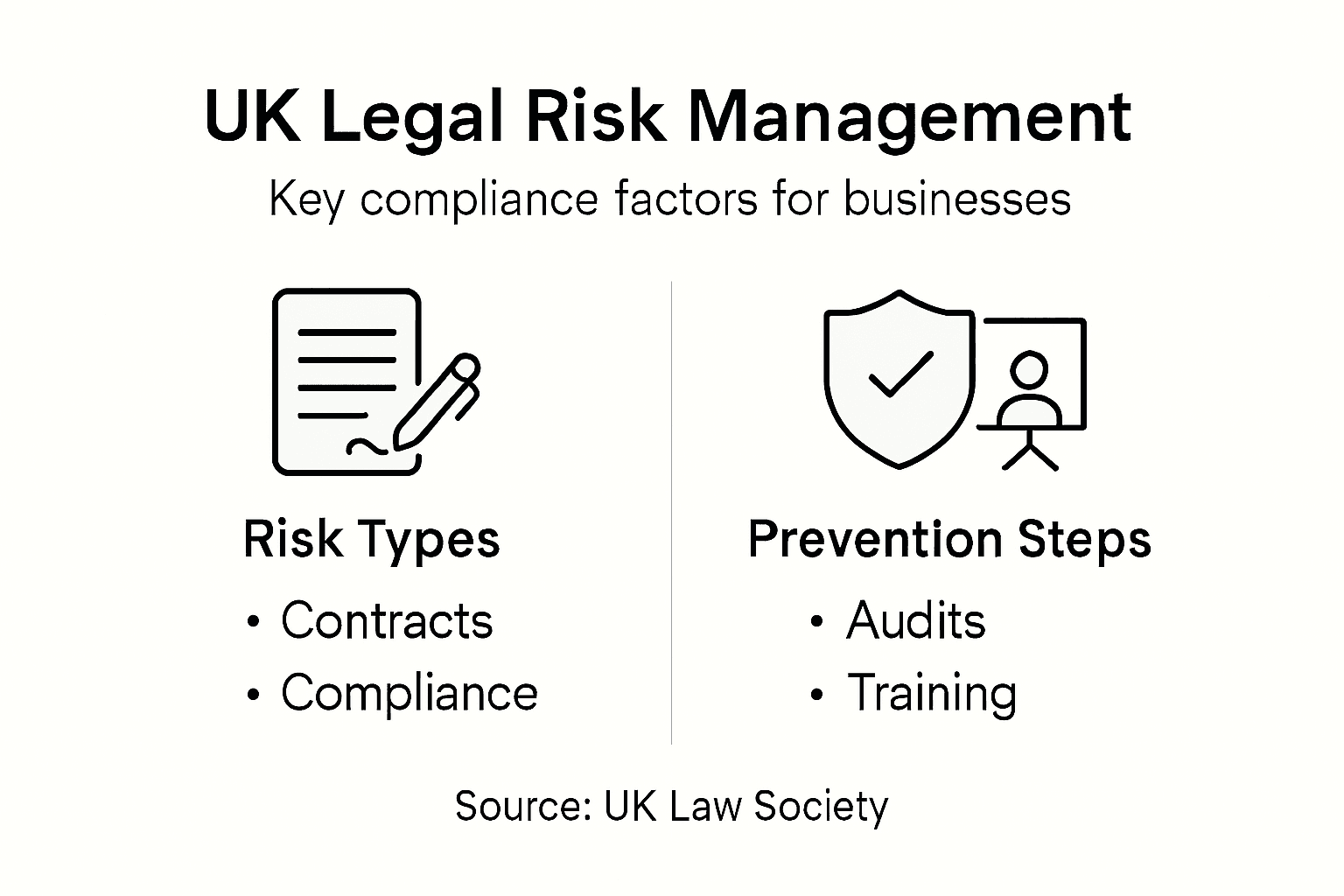
Pro tip: Develop a dedicated compliance calendar that tracks upcoming regulatory changes and schedules regular internal reviews to ensure ongoing legal alignment.
Legal risk management demands a proactive approach to identifying and mitigating potential organisational vulnerabilities. Businesses frequently encounter several recurring challenges that can significantly impact their legal and operational stability.
The most prevalent legal risk management pitfalls include:
Small and medium-sized enterprises are particularly susceptible to legal vulnerabilities due to limited resources and complex regulatory landscapes. Many organisations struggle with developing robust risk management frameworks that can effectively anticipate and mitigate potential legal challenges.
Critical Prevention Strategies:
Here is a summary of prevention strategies and their benefits for legal risk management:
| Prevention Strategy | Benefit for Organisations | Example Outcome |
|---|---|---|
| Legal training programmes | Improved staff legal awareness | Fewer inadvertent policy breaches |
| Regular compliance audits | Early risk detection | Issues addressed before penalties arise |
| Systematic documentation processes | Evidence in disputes | Quick retrieval during investigations |
| Clear risk communication channels | Faster escalation of issues | Prompt action on legal concerns |
| Ongoing expert consultation | Updated compliance knowledge | Adaptation to new regulations |
Legal risk prevention is not about eliminating all risks, but about managing them intelligently and strategically.
Successful prevention requires a cultural shift within organisations, transforming legal compliance from a bureaucratic requirement to a strategic business priority. This involves creating an environment where every team member understands their role in maintaining legal integrity.
Pro tip: Develop a standardised risk reporting template that enables consistent, clear communication of potential legal vulnerabilities across all organisational levels.
Navigating the complexities of legal risk management is essential for safeguarding your UK business from costly disputes, compliance breaches, and reputational damage. This article highlights critical challenges such as contractual risks, regulatory compliance, and evolving data protection laws that demand your immediate attention. Key goals for any organisation include proactive legal assessment, strategic risk mitigation, and maintaining robust internal compliance.
At Ali Legal, we understand these pain points and offer tailored legal solutions designed to help you build a resilient framework. Whether you need assistance with contract drafting, compliance audits or ongoing risk evaluation, our team delivers straightforward advice with transparency and speed. Explore our comprehensive insights and resources in Uncategorized | Ali Legal to deepen your understanding.

Ready to take control of your legal risks before they escalate? Connect with our expert solicitors today for a clear, strategic approach that protects your business integrity. Visit Ali Legal Contact Us now and secure your business future with confidence.
Legal risk management is a strategic approach that organisations use to identify, assess, and mitigate potential legal challenges before they escalate into significant problems. It involves proactive legal assessments, compliance monitoring, risk mitigation planning, and regular legal audits.
Typical categories of legal risks include contractual risks, regulatory compliance risks, employment law risks, intellectual property risks, and data protection and privacy risks. Each category has its unique impact on business operations and financial stability.
Businesses can conduct an effective legal risk assessment by identifying potential risks, evaluating their likelihood and impact, developing targeted mitigation strategies, continuously monitoring risks, and maintaining comprehensive documentation of the assessment process.
Compliance is crucial in legal risk management as it ensures that businesses adhere to relevant laws and regulations. This proactive approach helps prevent legal disputes, financial penalties, and reputational damage, thus safeguarding the organisation’s integrity and sustainability.


