
Menu
Get Expert Legal Support Today

Every family facing uncertainty about their residency in the United Kingdom knows how confusing citizenship rules can seem. Understanding British citizenship law is vital for securing your place and unlocking your legal rights. The law shapes who can belong, how membership is granted, and what protection or benefits you have as a resident. This article offers clear guidance on the official pathways and requirements, making complex legal concepts easier to grasp for those seeking certainty about their future in the United Kingdom.
Citizenship law in the United Kingdom represents a complex legal framework that determines an individual’s membership, rights, and obligations within the national community. At its core, British citizenship establishes a fundamental legal relationship between a person and the state, defining who belongs and under what conditions.
The legal definition of citizenship encompasses several critical dimensions:
British citizenship can be acquired through multiple pathways, including:
Each pathway involves distinct eligibility criteria and procedural requirements. For instance, citizenship by birth is not automatically granted and depends on complex factors such as parental status, immigration history, and the specific period of birth.
Citizenship represents more than a legal document - it embodies belonging, identity, and participation in the national community.
The legal framework surrounding citizenship balances individual rights with the state’s sovereign authority to define membership. This means that while individuals may qualify for citizenship, the final decision remains within governmental discretion.
Naturalisation represents a particularly intricate process where immigrants can transition to full citizenship status. This typically requires:
The evolving nature of citizenship law reflects broader social and political transformations, adapting to changing migration patterns, international obligations, and domestic policy priorities.
Pro tip: Always consult official government resources and consider professional legal advice when navigating complex citizenship applications to ensure accurate understanding of your specific circumstances.
The United Kingdom offers several distinct types of British nationality, each with unique characteristics and legal implications. Understanding these variations is crucial for individuals navigating their legal status and potential rights within the British immigration system.
British Citizenship represents the most comprehensive form of national membership, providing the broadest range of rights. The primary types of British nationality include:
Each category reflects different historical, territorial, and legal connections to the United Kingdom, with varying levels of rights and protections.

Here is a summary comparison of key types of British nationality and their core benefits:
| Nationality Type | Right to Live in UK | Voting Rights | British Passport |
|---|---|---|---|
| British Citizen | Unlimited, unrestricted | Full national and local | Entitled |
| British Overseas Territories Citizen | Restricted to territories | None in the UK | Entitled |
| British Overseas Citizen | No automatic right | None | Entitled |
| British Subject | Limited (if right of abode) | None in the UK | Entitled |
| British National (Overseas) | No automatic right | None | Entitled |
| British Protected Person | No automatic right | None | Entitled |
Not all forms of British nationality offer the same entitlements, making careful distinction essential.
British Citizens enjoy the most extensive privileges, including:
Other categories like British Overseas Citizens have more limited rights, often stemming from historical colonial relationships. These status types emerged from the complex process of decolonisation, preserving legal connections with individuals from former British territories.
The nuanced landscape of British nationality reflects the nation’s intricate historical and legal evolution. Each type of citizenship represents a unique legal pathway, shaped by geopolitical changes and specific immigration policies.
Pro tip: Consult an immigration specialist to understand precisely which type of British nationality applies to your specific personal and familial circumstances.
The cornerstone of British nationality law is the British Nationality Act 1981, which establishes the comprehensive legal framework governing citizenship acquisition and rights in the United Kingdom. This foundational legislation defines the intricate pathways through which individuals can become British citizens.
The primary application routes for British citizenship include:
Citizenship is not merely a legal status, but a complex negotiation between individual circumstances and national policy.
Naturalisation represents the most common pathway for adults seeking British citizenship. The process involves rigorous eligibility criteria:
Each application route carries unique requirements and documentation challenges. Citizenship by registration offers alternative pathways for individuals with specific connections to the United Kingdom, such as children of British parents or individuals with historical territorial links.
The application process typically involves comprehensive documentation and verification by UK immigration authorities. Applicants must provide extensive personal history, linguistic evidence, and meet stringent character assessment standards.
Pro tip: Carefully document every aspect of your personal and professional history, and consider seeking professional legal guidance to navigate the complex citizenship application process.
British citizenship encompasses a comprehensive set of legal entitlements and societal responsibilities that define an individual’s relationship with the United Kingdom. Core citizenship rights extend far beyond mere legal documentation, representing a fundamental connection to national identity and civic participation.
The primary rights of British citizens include:
Citizenship is a dynamic contract between the individual and the state, balancing privileges with collective responsibilities.
Civic Obligations represent the reciprocal commitments citizens make to their society:
Beyond legal frameworks, citizenship embodies a deeper sense of belonging. The right of abode allows British citizens complete freedom to enter, live, and work in the United Kingdom without immigration restrictions. This fundamental right distinguishes citizens from other residency statuses.
Citizens also bear significant responsibilities in maintaining the social fabric. Good character remains a crucial aspect of citizenship, particularly during naturalisation processes and ongoing civic engagement.
Pro tip: Maintain comprehensive documentation of your civic contributions and legal compliance to support your standing as a responsible British citizen.
Navigating the path to British citizenship involves confronting several significant financial and procedural challenges. The journey is complex, with multiple potential obstacles that can deter even the most determined applicants.
Key financial hurdles include:
The financial burden of citizenship applications can be substantial, often creating systemic barriers for vulnerable migrants.
The primary cost components of citizenship applications typically involve:
Citizenship requirements extend beyond mere financial considerations. Applicants must demonstrate:
Migrant communities face disproportionate challenges in navigating these complex requirements. Low-income individuals often find the cumulative costs and stringent criteria particularly prohibitive.
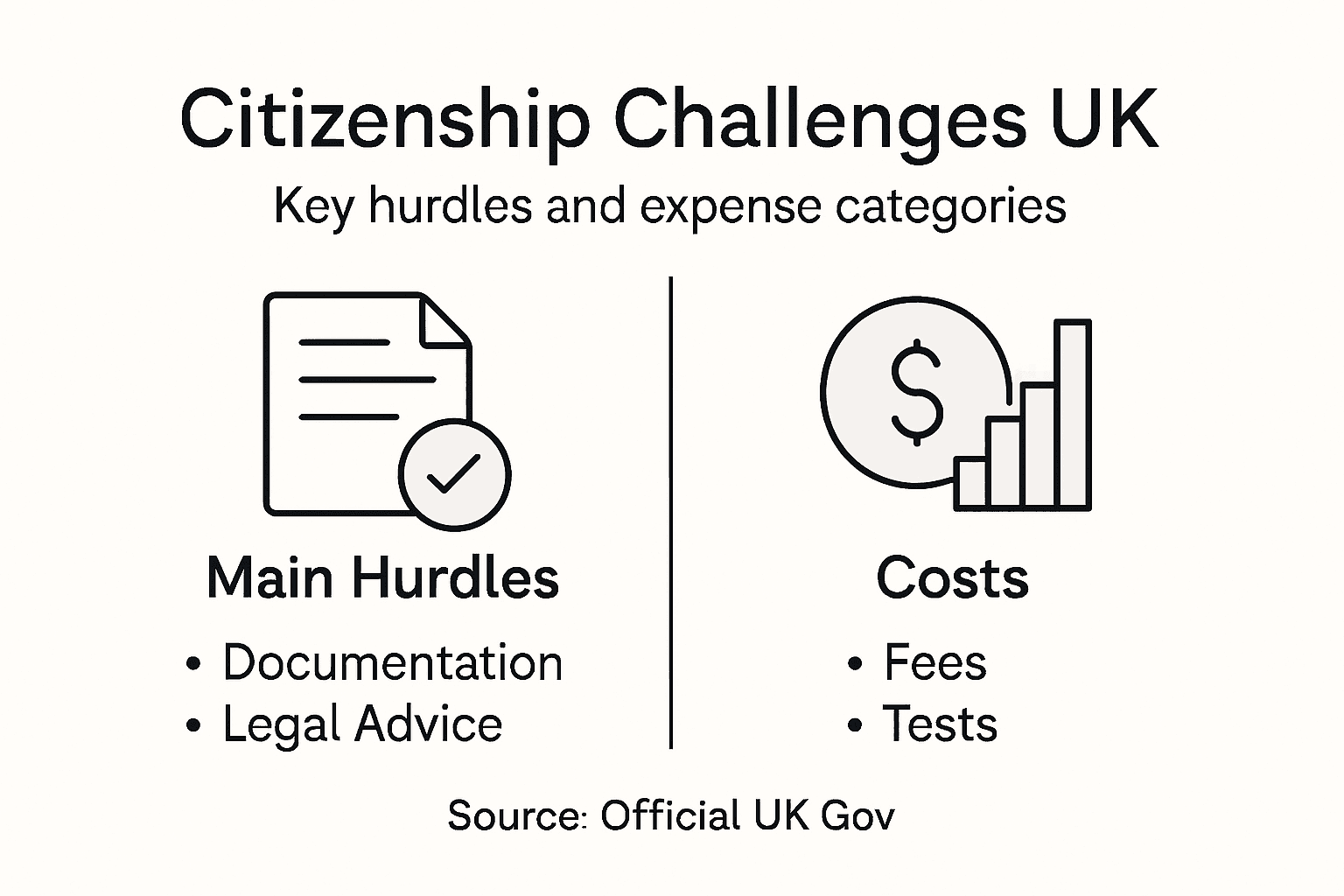
Additional hidden expenses can include professional document preparation, potential legal advice, and multiple test attempts. Some applicants might require multiple applications, further increasing the financial strain.
Here’s a concise overview of common citizenship application costs and practical strategies:
| Expense Category | Typical Amount | Suggested Mitigation |
|---|---|---|
| Application Fee | £1,330 (approximate) | Budget in advance |
| Language Test | £150–£200 | Prepare thoroughly to avoid retakes |
| Document Translation | £50–£200 per document | Use certified translators only |
| Legal Assistance | £500–£2,000 | Seek free legal clinics or advice |
| Biometric Registration | £20–£50 | Check if included in main fee |
Pro tip: Begin saving and preparing documentation early, and explore potential fee waivers or reduced-cost support programmes to manage citizenship application expenses.
Understanding British citizenship law involves complex terms like naturalisation, registration, and right of abode that can be overwhelming and daunting. If you are facing challenges such as meeting residency requirements, passing language tests, or managing the high costs linked to citizenship applications then you do not have to face these hurdles alone. Ali Legal specialises in providing clear and strategic legal solutions tailored to your personal circumstances. Our transparent approach emphasises fixed fees and straightforward advice ensuring you stay informed every step of the way.

Explore our comprehensive legal services on All | Ali Legal to find immigration support and more. Take control of your citizenship journey now and benefit from expert guidance designed to simplify application routes and protect your rights. Contact us today at https://alilegal.co.uk/contact-us and let Ali Legal help turn complex citizenship law into clear pathways forward.
Citizenship law in the UK is a complex legal framework that outlines the rights, obligations, and paths to legal membership in the national community, determining who can be classified as a British citizen.
British citizenship can be acquired through several pathways, including birth within the UK, descent from British parents, naturalisation, and registration under specific legal provisions.
British citizens enjoy various rights, including the unrestricted right to live and work in the UK, eligibility to vote in national elections, and access to public services and social welfare.
Common challenges include high application fees, costs for language tests and document translations, complex procedures, and stringent eligibility criteria that can create barriers for applicants.


