
Menu
Get Expert Legal Support Today

Over 1 in 4 people living in the United Kingdom today were born outside its borders, making the role of british immigration lawyers more crucial than ever. With evolving regulations and complex paperwork, navigating the legal side of migration can quickly become overwhelming for individuals and families hoping to call the United Kingdom home. This guide explains what british immigration lawyers do, the types of services they offer, and why expert legal guidance often becomes a turning point for successful relocation.
Immigration lawyers specialise in navigating the complex legal landscape of migration and nationality law. They provide crucial legal support to individuals and organisations seeking to understand and comply with intricate immigration regulations. These legal professionals are fundamental in helping clients traverse challenging administrative processes, ensuring their rights are protected throughout immigration proceedings.
The core responsibilities of immigration lawyers encompass several critical areas. They assist clients with visa applications and legal documentation by preparing comprehensive paperwork, interpreting legislative requirements, and strategically presenting cases to immigration authorities. Their expertise extends beyond simple form completion; they offer strategic counsel on potential legal challenges, analyse individual circumstances, and develop tailored approaches to immigration challenges.
Professional immigration lawyers typically handle a wide range of scenarios, including asylum applications, work permit requests, family reunification cases, and appeals against immigration decisions. They must possess deep understanding of human rights legislation, administrative law, and international legal frameworks. Specialised knowledge becomes particularly crucial when representing vulnerable populations or managing complex cross-border legal situations that require nuanced interpretation of immigration statutes.
Understanding the legal system’s intricacies is essential, which is why many practitioners maintain active membership with professional bodies like the Immigration Law Practitioners’ Association to stay current with evolving regulations and best practices. Their role goes beyond simple legal representation, serving as critical advocates who protect individual rights and facilitate legal migration pathways.
Pro Tip: Always schedule an initial consultation with an immigration lawyer who specialises in your specific migration scenario, as each case requires personalised legal strategy and expert guidance.
Immigration legal services encompass a comprehensive range of specialised support designed to address diverse migration challenges. These services cater to individuals, families, and businesses seeking professional guidance through complex immigration processes. Personal immigration services typically focus on helping individuals navigate visa applications, residency permits, citizenship requests, and family reunification programmes.
Professional immigration lawyers offer multiple critical service categories tailored to specific client needs. These include visa and entry clearance services, which involve preparing and submitting applications for work visas, student visas, family visas, and settlement permits. Asylum and humanitarian protection services represent another crucial area, where lawyers provide legal representation for individuals seeking refuge or protection from persecution in their home countries. Additionally, lawyers assist with complex appeal processes, representing clients in administrative tribunals and immigration courts.
Business immigration services represent a sophisticated segment of legal support, particularly for organisations expanding internationally. These services include advising corporations on work permit strategies, managing global talent mobility, navigating sponsorship licence requirements, and ensuring compliance with international employment regulations. Lawyers in this domain help companies understand intricate legal frameworks surrounding international workforce management and strategic global expansion.
Specialised immigration services also extend to high-net-worth individuals and investors seeking unique migration pathways. These bespoke services involve developing comprehensive relocation strategies, managing investment-linked migration programmes, and providing strategic counsel on complex cross-border legal considerations. Such services often require nuanced understanding of international law, investment regulations, and diplomatic protocols.
Here is a summary of key immigration legal services and their intended audiences:
| Service Category | Typical Clients | Primary Purpose |
|---|---|---|
| Personal Immigration | Individuals, families | Achieving residency, visas, or citizenship |
| Business Immigration | Companies, employers | Talent mobility, compliance, sponsorship |
| Asylum & Humanitarian | Vulnerable migrants, refugees | Protection from persecution or instability |
| High Net Worth & Investors | Investors, entrepreneurs | Access through investment, global mobility |
Pro Tip: Always request a comprehensive initial consultation that maps out your specific immigration journey, allowing your legal team to develop a tailored strategy addressing your unique circumstances and migration objectives.
Immigration lawyers shoulder profound responsibilities in protecting clients’ legal interests and navigating complex migration frameworks. Ensuring meticulous compliance with administrative deadlines represents a fundamental duty that can dramatically impact an individual’s migration prospects. These legal professionals must systematically track application timelines, prepare comprehensive documentation, and anticipate potential procedural challenges that might compromise a client’s immigration objectives.

Client representation involves far more than completing paperwork. Immigration lawyers act as strategic advocates, interpreting complex legal statutes, communicating with governmental authorities, and developing nuanced arguments that protect their clients’ rights. This requires deep understanding of human rights legislation, administrative procedures, and international migration policies. Lawyers must craft compelling narratives that demonstrate an individual’s eligibility, whether for asylum, work permits, family reunification, or permanent residency.
The scope of legal duties extends beyond immediate case management. Immigration lawyers must maintain ongoing professional development to stay current with rapidly evolving legal landscapes. This includes monitoring policy changes, understanding shifting geopolitical dynamics, and maintaining extensive networks within immigration administrative systems. The role of a solicitor in immigration contexts involves providing comprehensive strategic guidance that anticipates potential legal obstacles and proactively develops mitigation strategies.
Each client interaction demands a personalised approach, recognising that immigration challenges are inherently unique and emotionally complex. Lawyers must balance technical legal expertise with empathetic communication, helping clients understand intricate legal processes while providing emotional support during potentially stressful migration journeys. This holistic approach distinguishes exceptional immigration legal representation from merely transactional service delivery.
Pro Tip: Always request a comprehensive documentation checklist during your initial consultation, ensuring you understand exactly what evidence and supporting materials will be required for your specific immigration application.
Navigating the intricate landscape of UK immigration law requires profound understanding of complex legal frameworks, administrative procedures, and evolving governmental policies. Immigration lawyers must develop comprehensive expertise across multiple interconnected legal domains, including administrative law, human rights legislation, and international migration regulations. The United Kingdom’s immigration system presents unique challenges, demanding precise knowledge of nuanced statutes and regulatory requirements that frequently undergo significant transformations.
The Home Office serves as the primary administrative body governing immigration processes, establishing stringent criteria for entry, residency, and citizenship. Immigration lawyers must meticulously interpret these regulations, helping clients understand eligibility requirements, preparing robust documentation, and developing strategic approaches to navigate potential legal obstacles. This involves comprehensive analysis of visa categories, work permit regulations, asylum protocols, and family reunification pathways, each requiring specialised legal interpretation and strategic planning.
Professional development plays a critical role in maintaining legal expertise within this dynamic field. Immigration law practitioners must continuously update their knowledge, tracking policy changes, judicial precedents, and emerging legislative trends. This ongoing learning process involves engaging with professional networks, attending specialist conferences, and maintaining active memberships in professional organisations that provide updated guidance and training resources. Understanding the interconnected nature of international migration law requires lawyers to develop a holistic perspective that transcends traditional legal boundaries.
The complexity of UK immigration law necessitates a multifaceted approach that balances legal technicality with human compassion. Lawyers must not only interpret statutes but also understand the broader socio-economic contexts that shape migration experiences. This involves recognising individual circumstances, addressing potential humanitarian considerations, and developing nuanced legal strategies that respect both legal frameworks and fundamental human rights principles.
Pro Tip: Maintain a comprehensive digital portfolio of all immigration-related documents, ensuring you can quickly access and reproduce critical paperwork throughout your migration journey.
Identifying and mitigating potential risks in immigration processes represents a critical aspect of successful legal migration strategies. Immigration applicants frequently encounter complex challenges that can significantly compromise their legal objectives, ranging from procedural errors to misunderstandings of intricate regulatory requirements. These risks can result in application rejections, extended processing times, potential legal complications, and in extreme cases, potential deportation or future immigration restrictions.
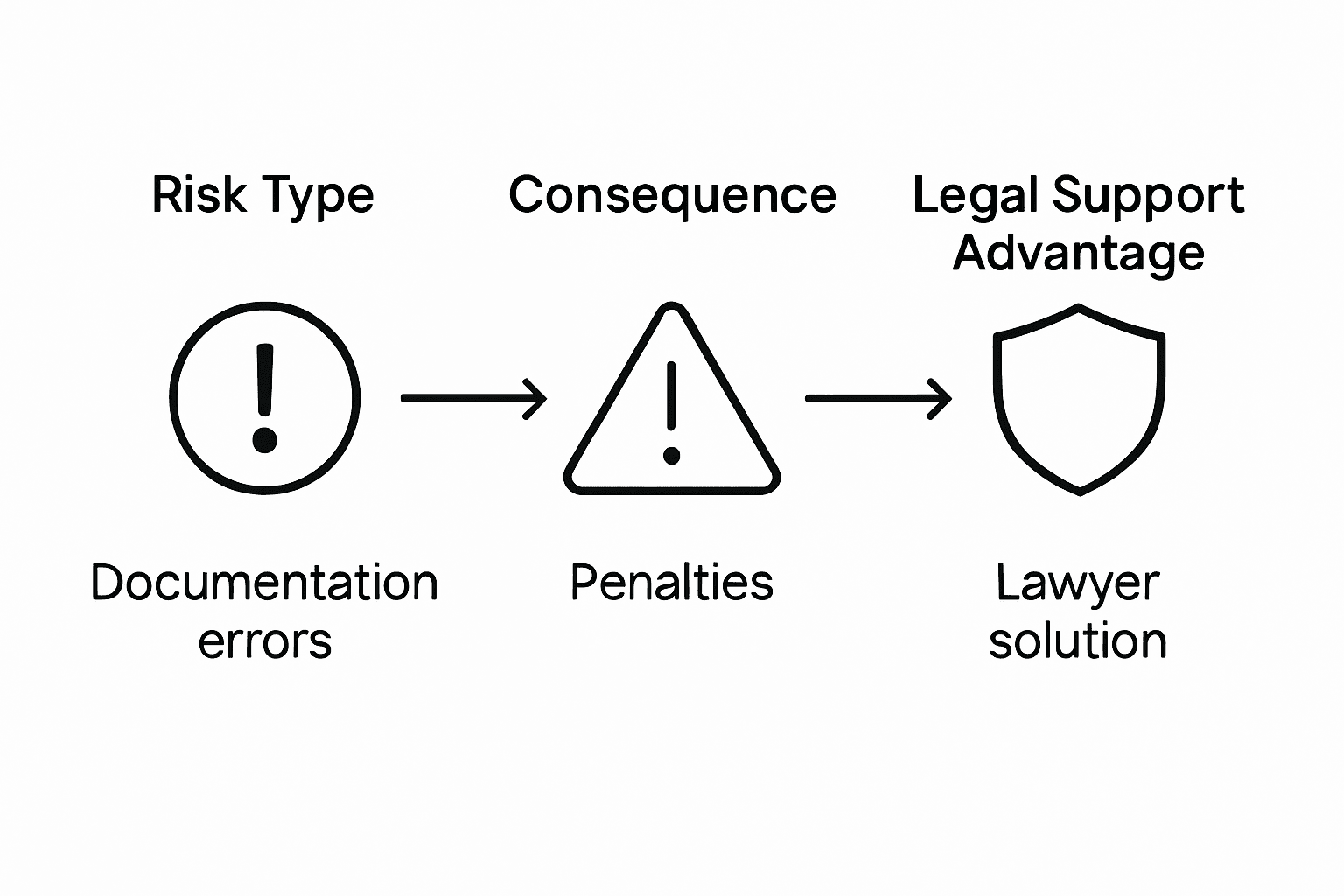
Critical documentation errors constitute one of the most prevalent risks in immigration applications. Incomplete or inaccurate paperwork can trigger immediate application rejection, requiring applicants to restart complex procedures. Common mistakes include providing outdated documentation, submitting incorrect forms, failing to translate official documents properly, or neglecting to include essential supporting evidence. Immigration lawyers play a crucial role in meticulously reviewing documentation, ensuring every submission meets stringent governmental standards and minimising potential procedural obstacles.
Legal and administrative risks extend beyond mere paperwork. Applicants must navigate complex eligibility criteria, understanding nuanced requirements across different visa categories, work permits, and residency programmes. Compliance challenges can emerge from rapidly changing immigration policies, requiring constant vigilance and proactive legal guidance. Potential risks include misinterpreting visa conditions, inadvertently breaching immigration regulations, or failing to maintain required documentation throughout residency periods. Professional legal representation becomes instrumental in interpreting these complex regulatory landscapes and developing comprehensive risk mitigation strategies.
Emotional and psychological risks represent another critical dimension often overlooked in immigration processes. The prolonged uncertainty, potential financial investments, and complex legal requirements can create significant stress for individuals and families. Immigration lawyers must not only provide technical legal support but also offer compassionate guidance, helping clients understand potential scenarios, manage expectations, and develop resilient approaches to navigating challenging immigration journeys.
Below is a comparison of common risks in immigration processes and how effective legal support can address them:
| Risk Type | Consequence | Legal Support Advantage |
|---|---|---|
| Documentation errors | Application rejection | Detailed review, correct form selection |
| Misinterpreting regulations | Regulatory non-compliance | Accurate advice on eligibility and policy |
| Missed deadlines | Delays, dismissals | Systematic tracking of key dates |
| Emotional pressure | Stress, poor decision-making | Empathetic guidance and stress management |
Pro Tip: Create a comprehensive digital file management system that maintains chronological records of all immigration-related documents, enabling quick retrieval and ensuring you can promptly respond to any administrative queries.
Navigating the complex and often overwhelming UK immigration system demands more than just knowledge it requires strategic guidance and steadfast advocacy to protect your rights and achieve your goals. This article highlights critical challenges such as meticulous documentation, intricate legal requirements, and emotional pressures faced by migrants. At Ali Legal, we understand these unique pain points and offer tailored immigration solutions that focus on transparency, speed, and clear communication so you feel supported every step of the way.

Ready to take control of your immigration journey with confidence Consult our experienced solicitors who specialise in immigration law and benefit from straightforward advice, fixed fees, and a client-centric approach. Whether you are seeking personal immigration assistance or business-related support, Ali Legal is here to develop a personalised strategy that fits your needs. Contact us today through our contact page or explore expert insights in our Uncategorized | Ali Legal section to see how we can protect your rights and streamline your immigration process.
Immigration lawyers specialise in navigating complex migration legalities, helping individuals and organisations understand and comply with immigration regulations, and advocating for their clients’ rights throughout immigration processes.
Immigration lawyers prepare comprehensive visa applications, interpret legislative requirements, and develop tailored strategies to enhance the likelihood of approval, reducing the risk of errors or omissions that may lead to application rejection.
Immigration lawyers handle a variety of cases, including visa applications, asylum requests, family reunification, work permits, and appeals against immigration decisions, addressing the specific needs of each client.
Engaging an immigration lawyer provides clients with expert guidance and support throughout their immigration journeys, ensuring meticulous compliance with legal requirements, minimising risks, and enhancing the chances of a successful outcome.


