
Menu
Get Expert Legal Support Today
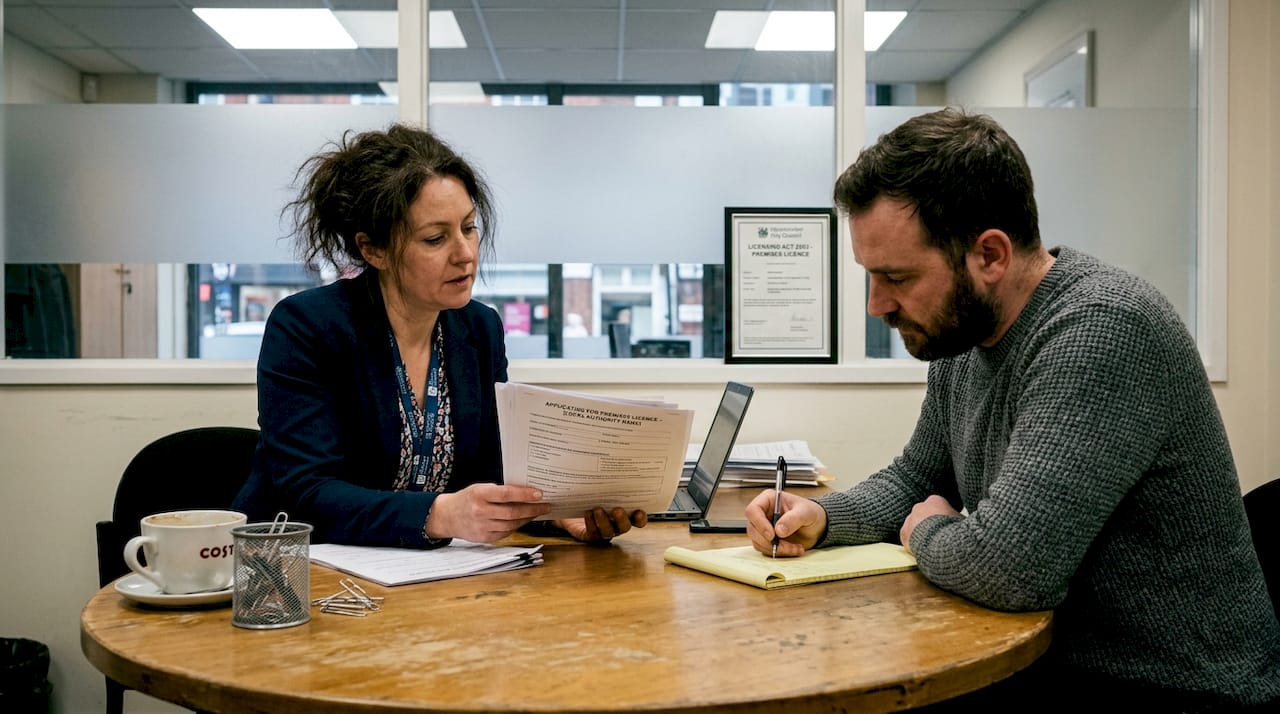
Most business owners assume that licensing is straightforward paperwork anyone can handle alone. That assumption costs some of them everything. Operating without the correct licence, or submitting a flawed application, can result in prosecution, forced closure, and lasting reputational damage. Premises licence applications under the Licensing Act 2003 require careful preparation, local authority knowledge, and the ability to navigate objections. Whether you run a restaurant, a late-night venue, or a retail operation selling alcohol, understanding the solicitor’s role in this process is not optional. It is essential.
| Point | Details |
|---|---|
| Licensing errors are costly | Missing compliance or deadlines can lead to fines, lost revenue, or business closure. |
| Solicitors streamline complex cases | Expert legal help is essential for contested or high-risk applications. |
| Ongoing compliance needs support | Solicitors help maintain licence conditions, manage renewals, and respond to enforcement. |
| Broader regulatory value | Legal advisers offer wider compliance benefits beyond just licensing applications. |
Licensing is not a formality. It is a legal framework that governs how and whether your business can operate. Get it wrong, and the consequences are severe. Get it right, and you have a stable, enforceable foundation for growth.
Licensable activities include the sale of alcohol, regulated entertainment, and late-night refreshment. If your business falls into any of these categories, you need a premises licence before you open your doors. Operating without one is a criminal offence.
The sectors most commonly affected include:
The risks of getting licensing wrong are significant. Fines for unlicensed activity can run into thousands of pounds. Licences can be revoked following a single serious incident. Beyond the financial penalties, a failed or refused application can delay your launch by months, damaging investor confidence and commercial relationships.
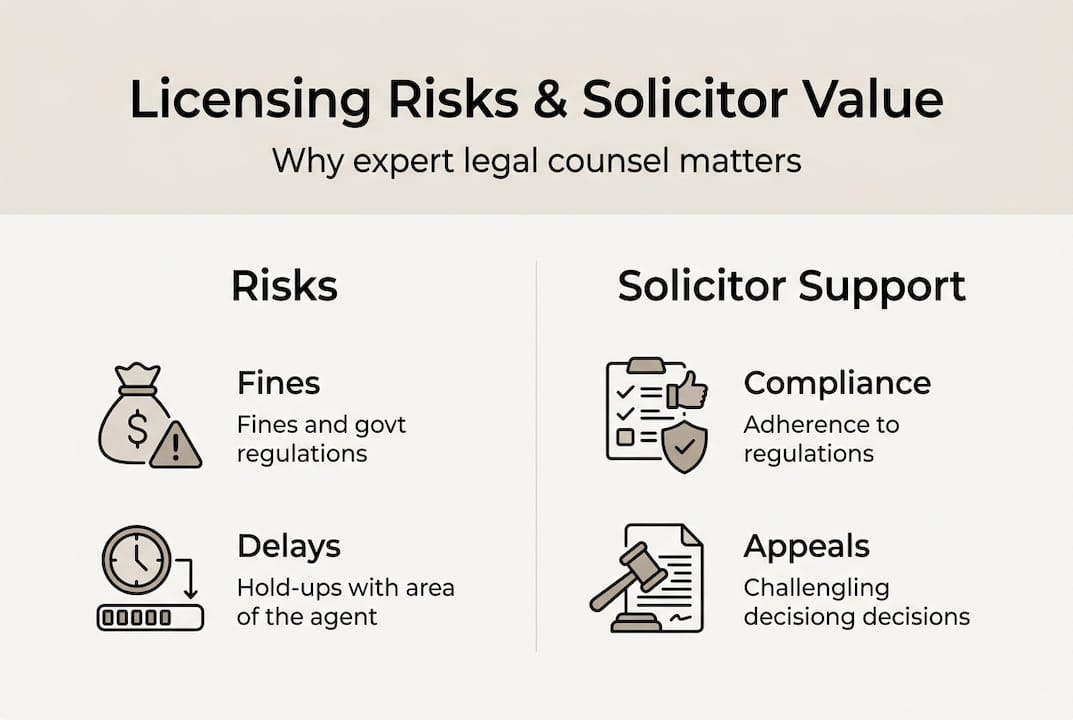
This is where legal counsel in business becomes genuinely valuable. A solicitor does not just fill in forms. They understand the local authority landscape, anticipate objections before they arise, and ensure your application reflects the licensing objectives the council expects to see. For any business owner unfamiliar with UK SME commercial law essentials, the licensing process can feel opaque. A solicitor makes it transparent. With the stakes established, let’s look at where solicitors fit in the process.
A solicitor’s involvement begins well before any paperwork is submitted. The pre-application stage is often where the most important work happens, and it is where inexperienced applicants make the most costly errors.
Here is how a solicitor typically guides you through the process:
Solicitors handle operating schedules, site plans, DPS nomination, consultations, and objections or hearings. Each of these steps carries risk if handled incorrectly. A poorly drafted operating schedule, for example, can lock your business into unnecessarily restrictive conditions that are difficult and expensive to change later.
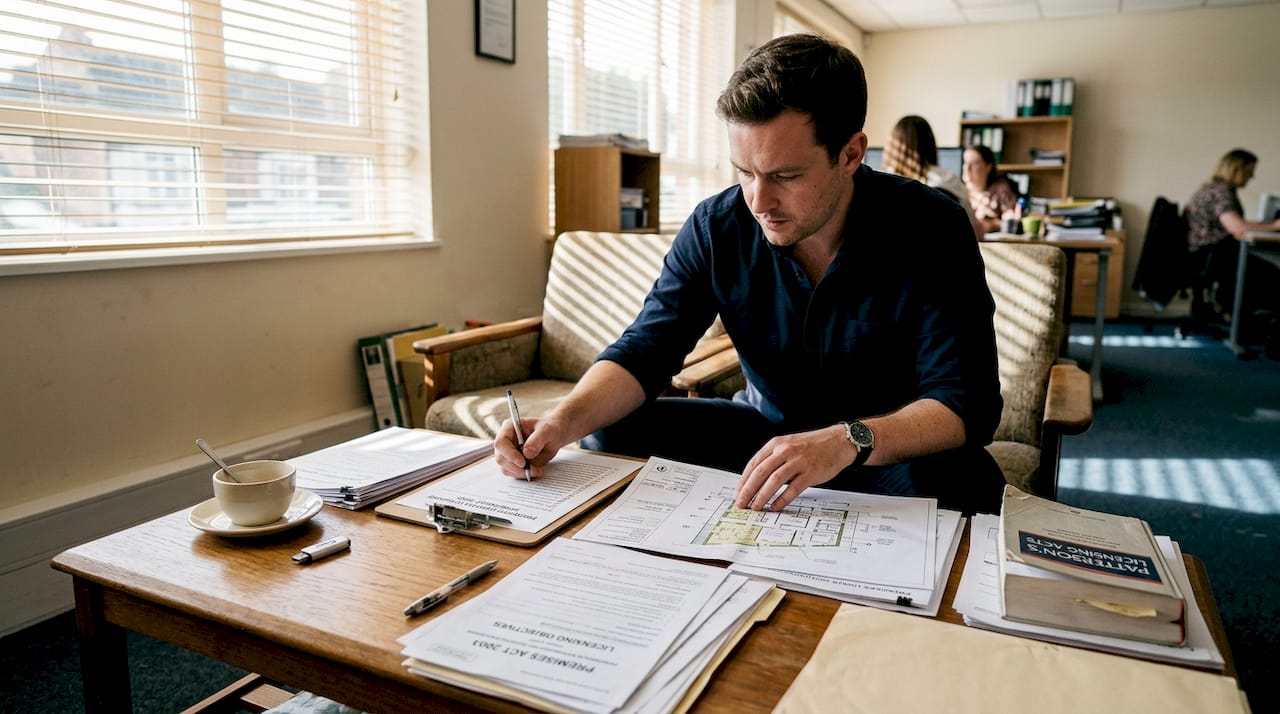
Pro Tip: Before instructing a solicitor, use a legal consultation checklist to document your business activities, proposed hours, and any known local sensitivities. This saves time and reduces costs.
| Approach | DIY application | Solicitor-led application |
|---|---|---|
| Operating schedule quality | Often generic, may restrict future activity | Tailored, flexible, and future-proofed |
| Objection handling | Reactive, often ineffective | Proactive, strategic, and well-evidenced |
| Hearing representation | Unrepresented, high risk | Professionally argued, better outcomes |
| Timeline | Prone to delays and resubmissions | Managed efficiently from the outset |
| Cost of errors | Potentially thousands in lost revenue | Minimised through expert preparation |
Many solicitors now offer fixed fee structures for standard applications, making costs predictable. When preparing for a legal consultation, bring your floor plans, proposed trading hours, and any correspondence with the local authority.
While most applications follow a familiar template, certain situations demand a level of legal expertise that goes far beyond form-filling. These are the scenarios where a solicitor moves from helpful to essential.
Cumulative Impact Zones (CIZs) are designated areas where licensing authorities have determined that the concentration of licensed premises is already causing problems. Applying for a new licence in a CIZ is significantly harder. Exceptional handling is required for CIZ applications; solicitors are expert in the consultation and hearing processes these cases demand. Without specialist knowledge, applications in these zones are routinely refused.
Other complex scenarios include:
“A solicitor brings not just legal knowledge but local authority relationships and hearing experience that no online guide can replicate. In complex cases, that difference is the difference between trading and not trading.”
| Scenario | Standard process | Complex process |
|---|---|---|
| New application, no objections | 4 to 8 weeks | N/A |
| Application in a CIZ | Not straightforward | Specialist hearing required |
| Contested application | Hearing likely | Legal representation critical |
| Variation or transfer | Shorter process | Depends on objections |
| Appeal against refusal | Magistrates’ Court | Solicitor essential |
Understanding legal representation in the UK is important here. Solicitors are SRA authorised professionals with regulated obligations to act in your best interests, which matters enormously when your licence is under threat.
After securing a licence, compliance and maintenance determines long-term success. Many business owners treat their premises licence as a one-time achievement. It is not. It is an ongoing legal obligation with conditions that must be met every single day.
Solicitors help ensure adherence to licence conditions, DPS requirements, and handle renewals, revocations, and enforcement actions. Here is what ongoing solicitor support typically covers:
Pro Tip: Set a calendar reminder to review your licence conditions every January. Changes to local licensing policy or responsible authority priorities can affect your compliance position even if nothing in your business has changed. This connects directly to navigating commercial contracts and broader risk management across your operations.
For premises subject to lease arrangements, it is also worth checking EPC compliance for lease renewals as part of your broader property obligations.
Licensing is only one area where solicitors add value. Their regulatory role is much broader, and for growing businesses, that wider perspective is often where the greatest return on legal investment is found.
Solicitors advise on business regulatory compliance beyond licensing, covering areas such as anti-money laundering obligations, data protection, and employment regulation. For businesses operating across multiple sectors or jurisdictions, this breadth of knowledge is invaluable.
The areas where solicitors most commonly provide ongoing regulatory support include:
Maintaining regular contact with your solicitor, rather than calling only in a crisis, pays genuine dividends. A solicitor who knows your business can spot regulatory risks before they become enforcement actions. For businesses with international dimensions, international business law guidance adds another layer of protection when operating across borders.
Think of your solicitor less as a problem-solver and more as a business partner who happens to understand the law.
Here is an uncomfortable truth that many business owners discover too late: the cost of not using a solicitor is almost always higher than the cost of using one.
The assumption that going it alone saves money is understandable. Legal fees feel like an overhead. But a refused application, a contested hearing, or a revoked licence costs far more in lost revenue, reapplication fees, and damaged relationships with local authorities than any solicitor’s invoice.
While not legally required to use a solicitor, experts advise one for complex or contested applications to draft flexible licences that protect your business long-term. That flexibility matters. A licence drafted without expert input often contains conditions that feel manageable at the start but become serious operational constraints as your business grows.
What solicitors bring that no online guide can replicate is local authority insight. They know which responsible authorities are likely to object, what language licensing committees respond to, and how to frame an operating schedule that achieves approval without unnecessary restriction. That knowledge comes from experience, not from reading the Licensing Act.
The role of a solicitor in acquisitions mirrors this principle. Whether buying a business or securing a licence, the investment in expert advice at the outset protects everything that follows.
For business owners ready to secure safe, robust compliance, expert support is one step away.

At Ali Legal, we work with businesses across the UK to navigate licensing applications, manage compliance obligations, and respond to enforcement actions with clarity and confidence. Our team brings practical regulatory knowledge and a straightforward approach to advice, so you always know where you stand. Whether you are applying for your first premises licence, dealing with a contested application, or managing an ongoing compliance programme, we provide bespoke support tailored to your specific situation. Our commercial litigation support is also available when disputes escalate. Contact our team today to discuss your licensing and regulatory needs.
No, but solicitors are advised for complex or contested applications to avoid costly delays and ensure your licence is drafted with appropriate flexibility from the outset.
The DPS is legally responsible for authorising alcohol sales and ensuring daily compliance with licence conditions. No DPS means no alcohol sales can legally take place on the premises.
The process typically takes between 4 and 12 weeks, depending on the complexity of the application and whether any objections are received during the consultation period.
Licences are refused or reviewed when licensing objectives are not met, including failures around crime prevention, public safety, or persistent noise complaints from neighbouring properties.
Yes, licences can be transferred when a business changes hands. A solicitor can manage the transfer process and ensure all regulatory requirements are met without interruption to trading.


