
Menu
Get Expert Legal Support Today

An employment lawyer advises on workplace rights and represents clients in disputes, covering everything from drafting contracts to appearing at tribunal. The work splits into two strands: advisory (contracts, policies, restructures) and contentious (unfair dismissal, discrimination, tribunal claims). You typically need one when facing dismissal, a discrimination complaint, redundancy, or a settlement negotiation.
Most of the work is less dramatic than television courtroom scenes suggest. An employment lawyer’s job is largely about paperwork, timing, and getting the strategy right before anything reaches a hearing room.
The core duties include:
Solicitors take instructions from a client, advise on the realistic options, then draft the paperwork and either appear in tribunal themselves or instruct a barrister when the case needs specialist advocacy. A large chunk of tribunal preparation time actually goes into assembling witness statements in the right chronological order and drafting a tight schedule of loss, work that is unglamorous but decides outcomes.
Employment law splits neatly into two camps, and knowing which one applies to your situation shapes what kind of lawyer you need.
The distinction matters because a lawyer who is brilliant at drafting settlement agreements is not automatically the right person to cross-examine a witness at a full hearing, and vice versa.
Timing is where most people trip up, and it is unforgiving. Most claims must be lodged within three months minus one day of the incident, with narrower exceptions running to six months for some redundancy pay claims and as little as seven days for interim relief applications.
Before you can even file most claims, you need to go through Acas Early Conciliation, a free, impartial service that tries to settle the dispute before it reaches tribunal. You cannot usually start a claim without an Acas certificate number.
Pro Tip: Contact Acas the moment a dispute looks likely to escalate. Early conciliation has no cost and can resolve matters in weeks rather than the months a tribunal claim takes.
Once a claim is lodged, the sequence generally runs like this:
A lawyer’s job at each stage is to keep the paperwork on time, the evidence organised, and the client aware of what happens next.
Fees vary by charging model. Fixed fees suit straightforward advisory work such as contract review or a single settlement negotiation. Hourly rates apply to more unpredictable litigation, and some firms offer conditional fee arrangements for tribunal claims.
Costs climb with case complexity, the volume of evidence, whether a barrister needs instructing, and how many days a hearing runs. You should also budget for the risk of adverse costs orders and witness expenses in some claims.
Look for a solicitor or barrister qualified to practise in England and Wales, with genuine tribunal advocacy experience rather than purely advisory background.
A short first meeting tells you most of what you need to know, provided you ask the right questions.
Pro Tip: Treat vague costs estimates and a lack of a clear next step as warning signs. A lawyer who cannot outline your first three months in plain terms probably has not thought your case through yet.
We work with individuals facing dismissal, discrimination or redundancy, and with employers defending claims, building services around fixed fees and straightforward advice rather than open-ended billing.
At first contact, we will ask for your Acas certificate number where one applies, a timeline of events, and any relevant correspondence, then set out fees and next steps before any work begins.
Waiting rarely helps. The clients who come to us within weeks of a dismissal or grievance almost always have more options than those who wait until the tribunal deadline is close. Evidence is fresher, witnesses remember more, and there is still time to try Acas conciliation properly rather than as a box-ticking exercise before a rushed claim.
One pattern shows up repeatedly: someone treats a written warning or a difficult meeting as something to survive rather than something to document. By the time they seek advice, the paper trail is thin. A quick note taken at the time, a saved email, a date written down, that is often the difference between a strong case and a weak one.
If you think you have a claim, get your Acas Early Conciliation certificate sorted early. It costs nothing and buys you time to think clearly rather than react.
— Panagiotis
If you are facing dismissal, a discrimination complaint, or a redundancy process that feels rushed, waiting for the tribunal deadline to loom is the wrong strategy. We work on fixed fees for defined pieces of advice, so you know the cost before anything starts, without open-ended hourly billing creeping upward while your case sits unresolved.

Before you get in touch, gather your contract, any written warnings or dismissal letters, relevant emails, and your Acas Early Conciliation certificate number if you already have one. From there, the process is simple: an initial call to understand your situation, a clear fee quote, and a plan for what happens next, whether that is a settlement negotiation or a tribunal claim. Visit the employment claims service page to see what is covered, or head straight to the contact page to start the conversation.
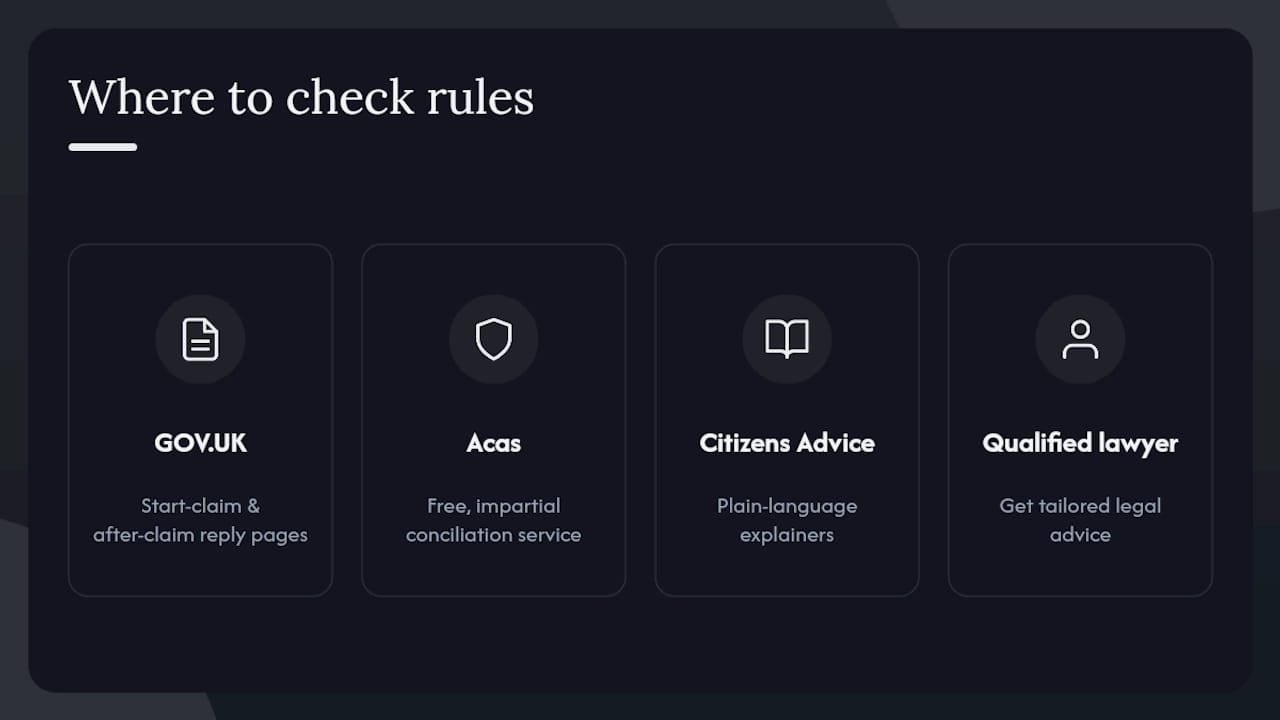
For the official process and deadlines, GOV.UK’s tribunal claim guidance covers how to start a claim, while its after-you-claim page explains the respondent’s reply period. Acas provides free, impartial conciliation, and Citizens Advice offers plain-language explainers for anyone weighing up their options before instructing a solicitor.
This article is general information, not a substitute for advice from a qualified lawyer. Consult a qualified legal professional about your own circumstances before acting on anything here.


