
Menu
Get Expert Legal Support Today

Choosing legal representation often feels like navigating a maze blindfolded. Nearly 80% of law firm clients feel uncared for, revealing a profound disconnect between traditional legal practices and client expectations. Relationship-based legal services flip this script entirely. They prioritise transparent communication, genuine client partnerships, and personalised attention across family law, personal injury, and corporate matters. When solicitors treat you as a strategic partner rather than just another case file, outcomes improve dramatically. This approach transforms legal services from transactional encounters into collaborative relationships built on trust, clarity, and shared goals.
| Point | Details |
|---|---|
| Transparent communication | Clients receive regular updates in plain language so they understand every decision and the associated costs. |
| Client as partner | When treated as strategic partners, solicitors focus on long term outcomes and collaborative problem solving rather than single file results. |
| Personalised attention | Personalised attention enables tailored strategies across family law, personal injury, and corporate matters. |
| Cost clarity | Fixed fees and upfront cost discussions remove surprises and help clients plan their recovery and finances. |
Relationship-based legal services represent a fundamental shift in how solicitors engage with clients. Rather than viewing legal matters as isolated transactions, this approach builds ongoing partnerships centred on understanding your unique needs, circumstances, and goals. The foundation rests on three pillars: transparent communication, genuine empathy, and collaborative problem-solving.
Transparent communication means you receive regular updates without having to chase your solicitor. Your legal team explains complex concepts in plain language, ensuring you understand every decision point. This clarity extends to billing practices, with fixed fees and upfront cost discussions eliminating unpleasant surprises.
Building trust requires more than professional competence. It demands solicitors who listen actively, acknowledge your concerns, and adapt their approach to your communication preferences. Some clients prefer detailed written updates, whilst others value quick phone calls. Relationship-focused firms accommodate these differences naturally.
Practitioners benefit from treating clients as strategic assets for sustainable growth, creating mutual value that extends beyond individual cases. This partnership mindset transforms how legal services function. Your solicitor becomes invested in your long-term success, not just closing the current file.
Pro Tip: Request a feedback session within the first two weeks of engagement. This early checkpoint prevents misunderstandings and establishes clear communication patterns that serve you throughout your legal matter.
When solicitors view you as a partner, they proactively identify opportunities and risks you might not recognise. They anticipate your questions and provide context that helps you make informed decisions. This collaborative dynamic proves especially valuable in complex family disputes, personal injury negotiations, and corporate transactions where outcomes hinge on understanding nuanced details. The importance of clear legal advice becomes evident when you experience genuine partnership versus transactional service.
Personal attention translates directly into better legal strategies. When your solicitor invests time understanding your specific situation, they craft approaches tailored to your circumstances rather than applying generic templates. Family law matters benefit enormously from this personalisation. Divorce proceedings, child custody arrangements, and financial settlements require sensitivity to emotional dynamics alongside legal expertise.
Transparency reduces stress significantly during challenging legal processes. Knowing exactly where your case stands, what steps come next, and how costs accumulate provides peace of mind. Personal injury clients particularly value this clarity whilst recovering from accidents. Regular updates about claim progress, settlement negotiations, and expected timelines help you plan your recovery and financial future with confidence.

Relationship-focused firms empower you to make better-informed decisions. Rather than simply presenting options, they explain the practical implications of each choice. What does accepting this settlement mean for your long-term financial security? How might different custody arrangements affect your children’s wellbeing? These conversations go beyond legal technicalities to address real-world consequences.
Nearly 80% of clients feel uncared for but those treated as strategic assets see better results, demonstrating the measurable impact of relationship-based approaches. Client satisfaction surveys consistently show higher ratings for firms prioritising ongoing engagement and personalised service.
“The difference between feeling like a case number and feeling truly heard cannot be overstated. When your solicitor knows your name, remembers your concerns, and proactively addresses your needs, the entire legal experience transforms from intimidating to manageable.”
Specialised support in family and divorce legal care exemplifies how relationship-based services improve outcomes during life’s most difficult transitions. Similarly, comprehensive personal injury litigation guidance demonstrates how sustained client relationships lead to more favourable settlements and smoother claims processes.
The benefits extend beyond individual cases. Clients who establish strong relationships with their legal teams gain a trusted adviser for future needs. Business clients particularly value this continuity, as their solicitor develops deep understanding of their operations, industry challenges, and strategic objectives over time.
Traditional legal services often operate on a transactional model. You contact a solicitor when problems arise, they address the immediate issue, and the relationship ends when the matter concludes. Communication typically occurs when you initiate contact or when critical deadlines approach. This reactive approach leaves many clients feeling disconnected and uncertain about their case status.
Relationship-based services flip this dynamic. Your solicitor maintains regular contact throughout your matter, providing proactive updates and anticipating your questions. Communication flows naturally in both directions, with your legal team actively seeking your input and feedback.
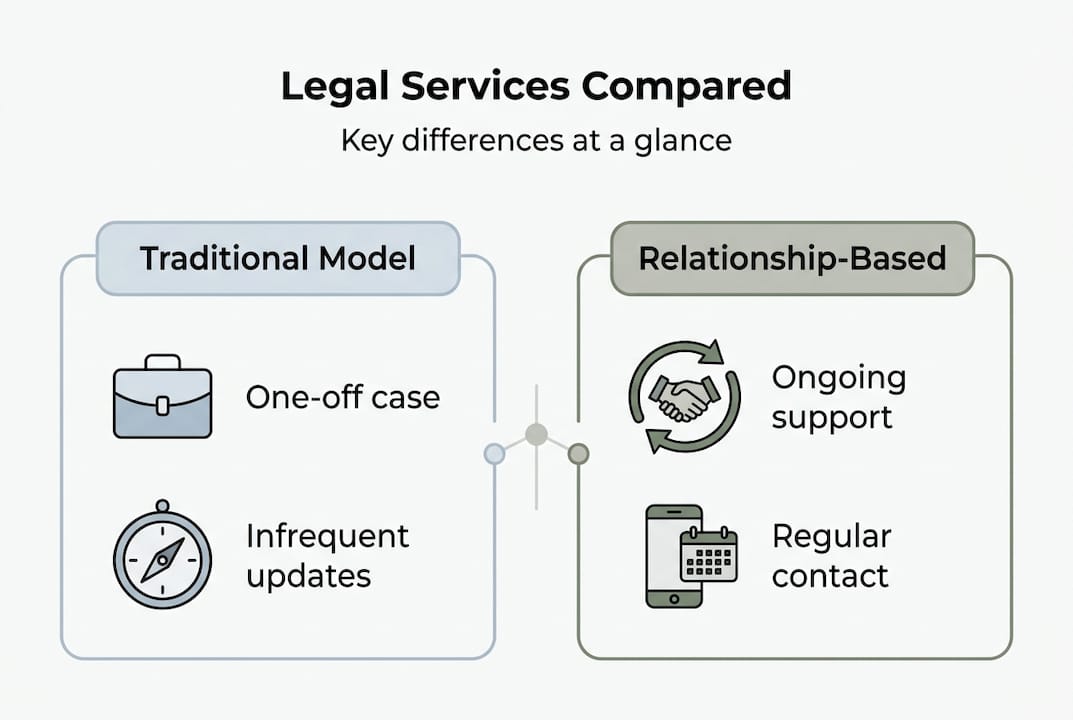
| Feature | Traditional legal services | Relationship-based legal services |
|---|---|---|
| Communication frequency | Client-initiated or deadline-driven | Regular proactive updates and check-ins |
| Fee transparency | Often hourly billing with unpredictable costs | Fixed fees with upfront cost discussions |
| Client focus | Case-centric approach | Person-centric partnership approach |
| Engagement duration | Ends when matter concludes | Ongoing advisory relationship |
| Feedback mechanisms | Limited or non-existent | Regular satisfaction checks and adjustments |
Fee transparency distinguishes these approaches significantly. Traditional firms frequently bill by the hour, making final costs difficult to predict. Relationship-based practices typically offer fixed fees or clear pricing structures, allowing you to budget confidently. This transparency extends to explaining why certain actions cost more and identifying opportunities to reduce expenses without compromising outcomes.
The philosophical difference runs deeper than communication patterns. Traditional services focus on resolving the immediate legal problem efficiently. Relationship-based services consider your broader circumstances and long-term wellbeing. How does this divorce settlement affect your retirement plans? Will this corporate structure support your business growth over the next decade?
Pro Tip: When interviewing potential solicitors, ask specific questions about their client engagement process. How frequently will they update you? What communication channels do they offer? How do they gather and respond to client feedback? Their answers reveal whether they genuinely prioritise relationships or simply claim to.
Feedback mechanisms prove crucial for service quality. Relationship-focused firms actively solicit your input throughout your matter, adjusting their approach based on your preferences and concerns. This responsiveness creates a collaborative environment where you feel heard and valued. Understanding the role of legal counsel in business and exploring legal retainers for UK businesses illustrates how ongoing relationships deliver superior value compared to one-off engagements.
Family law demands exceptional sensitivity and personalised attention. Divorce, child custody disputes, and financial settlements involve deeply personal matters where emotional support matters as much as legal expertise. Relationship-based solicitors recognise that family law clients need someone who understands their unique family dynamics, not just statutory requirements.
These solicitors invest time learning about your children’s needs, your financial circumstances, and your hopes for post-divorce life. They explain options in context, helping you understand how different arrangements might work practically. This personalised guidance proves invaluable when making decisions that affect your family’s future.
Personal injury litigation benefits enormously from sustained client relationships. Recovery from serious accidents takes time, and your legal needs evolve throughout the process. Relationship-focused solicitors maintain regular contact, adjusting their approach as your medical situation and financial needs change. They coordinate with medical professionals, insurers, and other parties whilst keeping you informed every step of the way.
Corporate law clients gain strategic partners who understand their business inside and out. Rather than calling a solicitor only when problems arise, you have an adviser who knows your industry, competitive challenges, and growth objectives. This deep understanding enables proactive guidance on contracts, compliance, risk management, and strategic transactions.
| Practice area | Client satisfaction rating | Average case duration | Communication frequency |
|---|---|---|---|
| Family law | 4.7/5.0 | 8-14 months | Weekly updates |
| Personal injury | 4.8/5.0 | 10-18 months | Fortnightly updates |
| Corporate law | 4.6/5.0 | Ongoing advisory | Monthly reviews |
Seeking relationship-based legal counsel requires a deliberate approach:
Pro Tip: Prioritise firms with proven track records in your specific legal area that explicitly commit to regular communication and transparent billing. Check online reviews and testimonials for consistent mentions of responsiveness and client care.
Exploring essential family law tips provides valuable context for relationship-based family legal services. Similarly, comprehensive guides on personal injury claims and corporate law in the UK demonstrate how specialised expertise combines with client-focused approaches to deliver superior outcomes across diverse legal matters.
Navigating complex legal matters becomes significantly easier when you partner with solicitors who genuinely prioritise your needs and goals. Ali Legal specialises in relationship-based legal services that transform how you experience legal support. We focus on transparent communication, personalised strategies, and long-term client partnerships across our core practice areas.

Our family and divorce legal care provides compassionate guidance during life’s most challenging transitions. We combine legal expertise with genuine understanding of your family’s unique circumstances. For personal injury matters, our comprehensive litigation support ensures you receive the compensation you deserve whilst maintaining clear communication throughout your recovery. Business clients benefit from our strategic corporate law services that support sustainable growth through proactive legal guidance and transparent advice. Contact Ali Legal today to experience legal services built on trust, clarity, and genuine partnership.
Relationship-based legal services prioritise ongoing client partnerships over transactional interactions. Solicitors invest time understanding your unique circumstances, maintain regular communication, and provide personalised strategies tailored to your specific needs. This approach treats you as a strategic partner rather than just another case file.
Transparent communication and consistent engagement build trust naturally over time. When solicitors proactively update you, explain complex concepts clearly, and demonstrate genuine interest in your wellbeing, you feel valued and confident in their guidance. Regular feedback opportunities ensure your concerns are heard and addressed promptly, strengthening the partnership.
Not necessarily. Many relationship-focused firms offer fixed fees and transparent pricing structures that provide better value than unpredictable hourly billing. The personalised attention and proactive guidance often prevent costly mistakes and delays, ultimately saving money. Understanding the importance of clear legal advice helps you recognise the long-term value of transparent, relationship-based services.
Ask specific questions during initial consultations about communication frequency, feedback mechanisms, and how they tailor strategies to individual circumstances. Request client references and check testimonials for consistent mentions of responsiveness and personalised service. Establish clear expectations early about how often you’ll receive updates and through which channels.
Absolutely. Corporate clients benefit significantly from solicitors who understand their business operations, industry challenges, and strategic objectives. Ongoing advisory relationships through legal retainers for UK businesses provide proactive guidance on contracts, compliance, and growth opportunities. This deep understanding enables solicitors to anticipate needs and provide strategic counsel that supports long-term success.


