
More than one in three british SMEs face legal challenges every year, yet many struggle to find support that actually prevents future problems. With shifting rules in the United Kingdom and unpredictable commercial contract risks, small business owners need more than one-off advice. Ongoing legal support gives british companies constant, proactive protection, helping owners stay ahead of compliance issues and avoid costly mistakes before they arise.
Ongoing legal support represents a strategic partnership designed to provide UK small and medium enterprises with continuous protection and proactive guidance across their business operations. Unlike traditional legal services that respond only when problems emerge, this approach focuses on preventing potential risks before they escalate. Small businesses face complex legal challenges that require consistent monitoring and expert intervention.
The landscape of SME legal support typically encompasses two primary categories: reactive support and proactive management. Many SMEs find legal support costly and time-consuming, often uncertain about when professional legal guidance becomes necessary. Reactive support addresses immediate issues like contract disputes, debt recovery, and urgent compliance matters. Proactive management, however, involves routine document review, ongoing regulatory compliance checks, and strategic legal planning to mitigate potential future risks.
Effective ongoing legal support for UK SMEs should include comprehensive services such as regular contract reviews, data protection assessments, employment law guidance, intellectual property monitoring, and compliance health checks. The Information Commissioner’s Office offers tailored advice for SMEs on critical areas like information security and personal data management, highlighting the importance of continuous legal oversight.
The following table highlights the practical differences between reactive and proactive legal support for UK SMEs:
| Aspect | Reactive Legal Support | Proactive Legal Support |
|---|---|---|
| Timing | Addresses issues after they arise | Prevents issues before they escalate |
| Typical Activities | Contract dispute resolution, debt recovery | Regular contract reviews, compliance checks |
| Resource Allocation | Short-term, urgent response | Ongoing, scheduled engagement |
| Business Impact | Reduces immediate risk, may be costly long-term | Minimises risk, supports business continuity |
Pro tip: Schedule quarterly legal health checks to identify potential risks and ensure your business remains compliant with current regulations.
Legal support services for UK small and medium enterprises encompass a diverse range of offerings designed to address different business needs and legal challenges. These services are strategically structured to provide comprehensive protection and guidance across various operational aspects. Many SMEs require flexible legal solutions that balance cost-effectiveness with professional expertise, making the selection of appropriate legal support critical for sustainable business growth.
The primary categories of legal support services typically include reactive legal assistance and proactive legal management. Reactive services focus on immediate problem resolution such as contract disputes, debt recovery, employment conflicts, and urgent compliance issues. Proactive services, by contrast, involve routine legal health checks, preventative document reviews, ongoing regulatory compliance monitoring, and strategic legal planning. Modern legal support increasingly integrates technological solutions, with lawtech platforms offering digital tools that streamline legal processes and reduce traditional consultation costs.
Citizens Advice highlights several support channels available to SMEs, ranging from free professional advice to specialised legal insurance coverage. These support options include legal aid for serious problems, pro bono services from volunteer lawyers, trade union legal assistance, and reduced-cost consultations through community law centres. Additionally, many professional legal firms now offer scalable service packages tailored specifically for small and medium enterprises, allowing businesses to access high-quality legal support without committing to expensive long-term retainers.
Pro tip: Research and compare multiple legal support service providers, focusing on those offering flexible, technology-integrated solutions that can adapt to your specific business needs.
Ongoing legal support for UK small and medium enterprises operates through a sophisticated, multi-layered approach that combines proactive monitoring, strategic guidance, and responsive intervention. Legal support mechanisms enable SMEs to manage regulatory compliance through practical tools and tailored advice, ensuring businesses remain protected and legally aligned with current statutory requirements.

The operational framework typically involves a hybrid model integrating digital technologies and human expertise. Lawtech solutions automate routine legal tasks such as document management, compliance tracking, and risk assessment, while professional legal experts provide nuanced guidance for complex scenarios. Research demonstrates that SMEs benefit from an integrated approach balancing technological efficiency with professional human intervention, allowing businesses to control legal costs while maintaining comprehensive protection.
Key operational components of ongoing legal support include continuous regulatory monitoring, periodic legal health checks, preventative risk assessments, and rapid response mechanisms for emerging legal challenges. These services often encompass specialised areas such as data protection, employment law, contract management, intellectual property safeguarding, and regulatory compliance. Modern legal support platforms offer scalable solutions that can be customised to match the specific complexity and requirements of individual businesses, providing flexible access to professional legal resources without requiring full-time in-house legal teams.
Pro tip: Develop a comprehensive legal support strategy that integrates both technological tools and professional legal expertise to create a robust, adaptive protection framework for your business.
Legal compliance represents a fundamental cornerstone for UK small and medium enterprises, establishing a comprehensive framework that governs business conduct and mitigates potential regulatory risks. The Information Commissioner’s Office emphasises continuous adherence to data protection principles through ongoing education and tailored regulatory guidance, ensuring businesses maintain transparent and accountable operational practices.
The governing principles of legal compliance extend beyond mere regulatory adherence, encompassing broader strategic considerations that balance business innovation with statutory requirements. Regulatory frameworks such as the UK GDPR, employment legislation, and sector-specific guidelines create a structured environment where businesses must demonstrate active commitment to legal standards. The Financial Conduct Authority establishes principles of good regulation that prioritise proportionality, senior management responsibility, and market integrity, providing a nuanced approach to compliance that recognises the unique challenges faced by SMEs.
Effective legal compliance requires a proactive, multi-dimensional approach involving continuous monitoring, regular risk assessments, staff training, and adaptive policy development. Key compliance domains include data protection, financial reporting, health and safety regulations, employment law, and industry-specific statutory requirements. Businesses must develop robust internal mechanisms that not only meet current legal standards but also anticipate potential regulatory changes, creating a dynamic compliance culture that protects both organisational interests and stakeholder rights.
Pro tip: Implement a comprehensive compliance management system that combines technological tools, regular staff training, and periodic external audits to maintain a proactive and adaptive legal governance approach.
Managing contractual and regulatory risks represents a critical strategic imperative for UK small and medium enterprises, requiring a comprehensive and proactive approach to legal governance. SMEs must implement robust data protection policies and systematic compliance monitoring to minimise potential legal exposures, ensuring they remain protected against evolving regulatory landscapes.
Contractual risk management involves multiple strategic dimensions, including comprehensive contract drafting, thorough legal review processes, and systematic risk assessment protocols. Modern businesses must develop sophisticated mechanisms that anticipate potential legal vulnerabilities, addressing issues such as liability limitations, performance expectations, confidentiality provisions, and dispute resolution frameworks. Precise contract language becomes instrumental in defining clear operational boundaries and protecting organisational interests, preventing potential misunderstandings that could escalate into costly legal disputes.
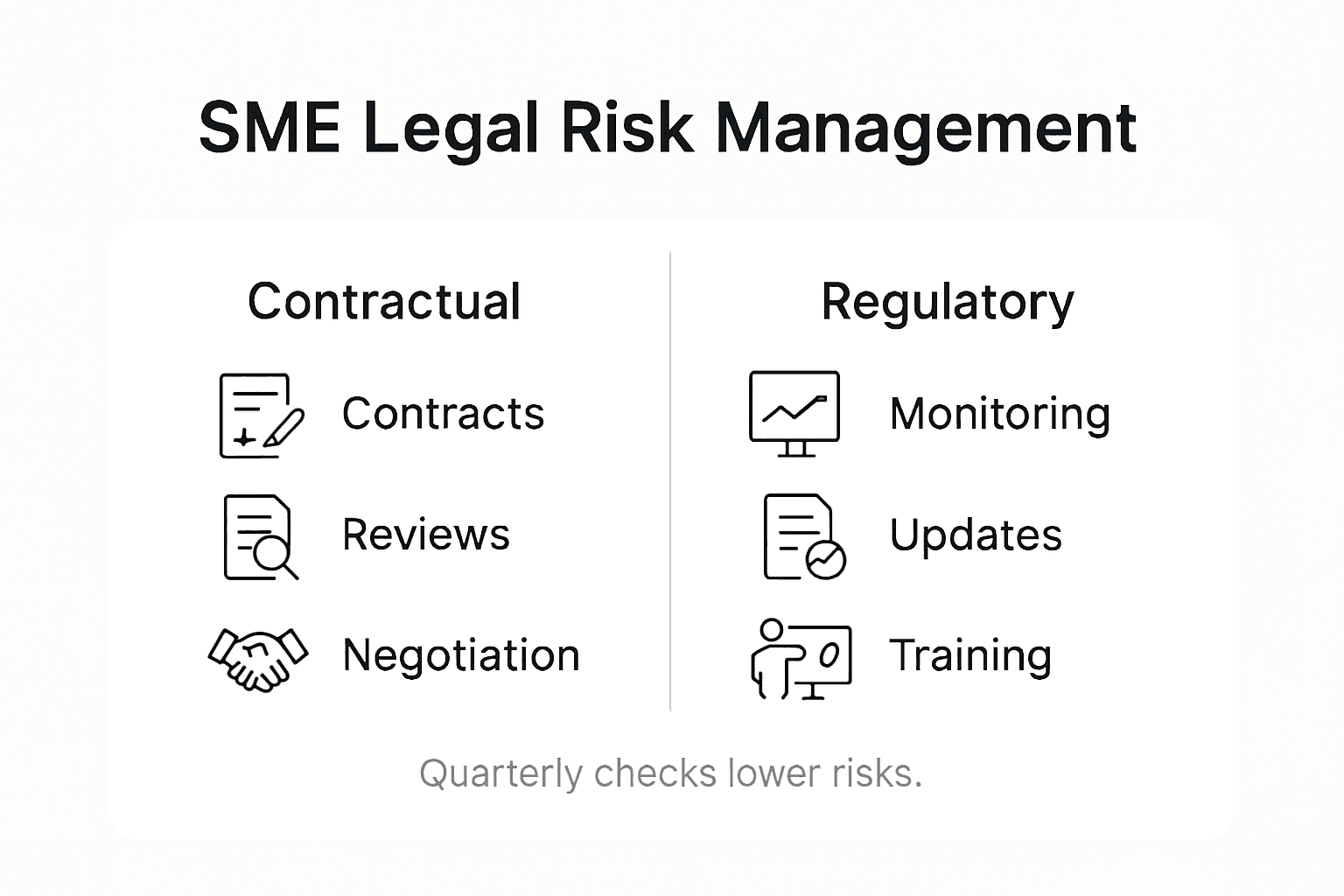
The regulatory risk management framework requires organisations to maintain continuous vigilance across multiple compliance domains. Key focus areas include data protection regulations, employment legislation, sector-specific statutory requirements, financial reporting standards, and health and safety protocols. Successful risk management demands a holistic approach that integrates technological solutions, regular staff training, periodic external audits, and adaptive policy development. Businesses must cultivate a proactive compliance culture that views regulatory adherence not as a bureaucratic burden but as a strategic opportunity to build organisational resilience and stakeholder trust.
Pro tip: Develop a dynamic risk register that systematically tracks, evaluates, and updates potential legal and regulatory risks, enabling your organisation to respond swiftly and strategically to emerging challenges.
Navigating legal support costs represents a significant challenge for UK small and medium enterprises seeking comprehensive protection without financial strain. Solicitors are legally obligated to provide transparent, upfront cost information to help businesses make informed decisions, ensuring SMEs understand potential financial implications before committing to legal services.
Common legal support mistakes often stem from inadequate understanding of available alternatives and cost-management strategies. Cost-effective legal solutions range from fixed-fee consultations to technology-enabled platforms that reduce traditional legal expenses. Citizens Advice recommends exploring multiple support channels, including legal aid, trade union assistance, and innovative lawtech solutions, which can significantly mitigate financial burdens for resource-constrained businesses.
Alternative legal support options have expanded dramatically, offering SMEs increasingly flexible and affordable approaches to managing legal risks. These alternatives include legal insurance packages, fixed-price service bundles, online legal document preparation tools, and hybrid models combining digital platforms with professional human expertise. Businesses must critically evaluate these options, considering factors such as service comprehensiveness, cost-effectiveness, response time, and alignment with specific organisational needs. The emerging legal support marketplace provides unprecedented opportunities for SMEs to access high-quality legal guidance without traditional prohibitive costs.
Here is a summary of popular alternative legal support options and their key benefits for SMEs:
| Option | Main Advantage | Cost Level |
|---|---|---|
| Legal insurance packages | Predictable legal expense coverage | Moderate to high |
| Fixed-fee service bundles | Clear, upfront pricing structure | Low to moderate |
| Lawtech platforms | Fast, automated legal support | Low |
| Pro bono or legal aid | Potentially no cost for eligible cases | Very low to none |
Pro tip: Conduct a comprehensive audit of your legal support needs and budget, comparing multiple service models to identify the most cost-efficient solution for your specific business requirements.
Small and Medium Enterprises in The United Kingdom face constant legal risks that demand proactive management and clear, expert guidance. Challenges like managing contractual complexities, meeting evolving regulatory compliance, and preventing costly disputes leave many SMEs vulnerable. This article highlights the crucial difference between reactive responses and continuous legal oversight that can protect your business from these risks while fostering growth and resilience.
At Ali Legal, we understand these pain points intimately and offer tailored solutions designed for UK SMEs. With transparent fixed fees and straightforward advice, our legal professionals blend technology and expertise to deliver fast, strategic support. Whether you require routine contract review, regulatory compliance checks, or risk assessment, our services provide the ongoing legal health checks your business needs. Explore our broad range of offerings in Uncategorized | Ali Legal and comprehensive insights in All | Ali Legal to see how we address common SME challenges.

Take the decisive step to safeguard your SME with a trusted partner who prioritizes your long-term success. Contact us today at Ali Legal for a personalised consultation that can transform your legal risk into confident opportunity.
Ongoing legal support for SMEs refers to a continuous partnership that provides proactive guidance and protection, focusing on preventing legal issues before they arise, rather than reacting only when problems occur.
Proactive legal management involves regular reviews, compliance checks, and risk assessments to prevent issues, while reactive assistance focuses on resolving immediate legal problems like disputes or compliance failures.
SMEs should consider a mix of reactive services such as contract disputes and debt recovery, and proactive services like routine legal health checks and regulatory compliance monitoring to minimise risks and ensure legal alignment.
SMEs can manage legal support costs by exploring alternatives like legal insurance, fixed-fee service bundles, and lawtech platforms, which offer more affordable options compared to traditional legal services.
Over 80 percent of British technology firms rely on specialised legal counsel to navigate complex regulations and protect their growth. In a rapidly evolving sector, both corporate lawyers and business owners need clear guidance to safeguard intellectual property and manage risk. Understanding the strategic function of legal counsel is vital for staying competitive and compliant, especially when technological innovation introduces fast-changing legal challenges.
Legal counsel represents a strategic professional role within organisations, providing expert legal guidance and comprehensive risk management across multiple business domains. These specialised legal professionals serve as critical navigators through complex regulatory landscapes, ensuring businesses operate within legal boundaries while supporting strategic objectives.
In the context of technology firms, legal counsel play an increasingly sophisticated role beyond traditional compliance functions. They act as proactive strategic partners who understand technological innovation cycles and help organisations mitigate potential legal risks through informed decision making. Modern legal counsel must possess not only robust legal expertise but also deep technological literacy, enabling them to translate complex legal frameworks into actionable business strategies.
The core responsibilities of legal counsel encompass several critical dimensions. These include contract negotiation, intellectual property protection, regulatory compliance, dispute resolution, and strategic advisory services. Technology firms particularly require legal professionals who can navigate rapidly evolving digital regulatory environments, protect innovative intellectual assets, and provide nuanced guidance on emerging technological legal challenges.
Pro tip: When selecting legal counsel for a technology firm, prioritise professionals with demonstrable technological understanding and a proven track record of supporting innovative business models.
In the United Kingdom, legal counsel functions manifest in diverse professional configurations, each tailored to specific organisational and legal requirements. Legal professionals in England and Wales typically operate across several specialised roles, including in-house counsel, external counsel, and specialised legal advisors.
In-house legal counsel represent a critical category within corporate environments, particularly for technology firms. These professionals are directly employed by organisations to provide continuous legal strategic guidance. Their responsibilities encompass comprehensive risk management, contract negotiations, intellectual property protection, and ensuring regulatory compliance. Unlike external solicitors, in-house counsel develop deep understanding of their organisation’s specific operational nuances and strategic objectives.
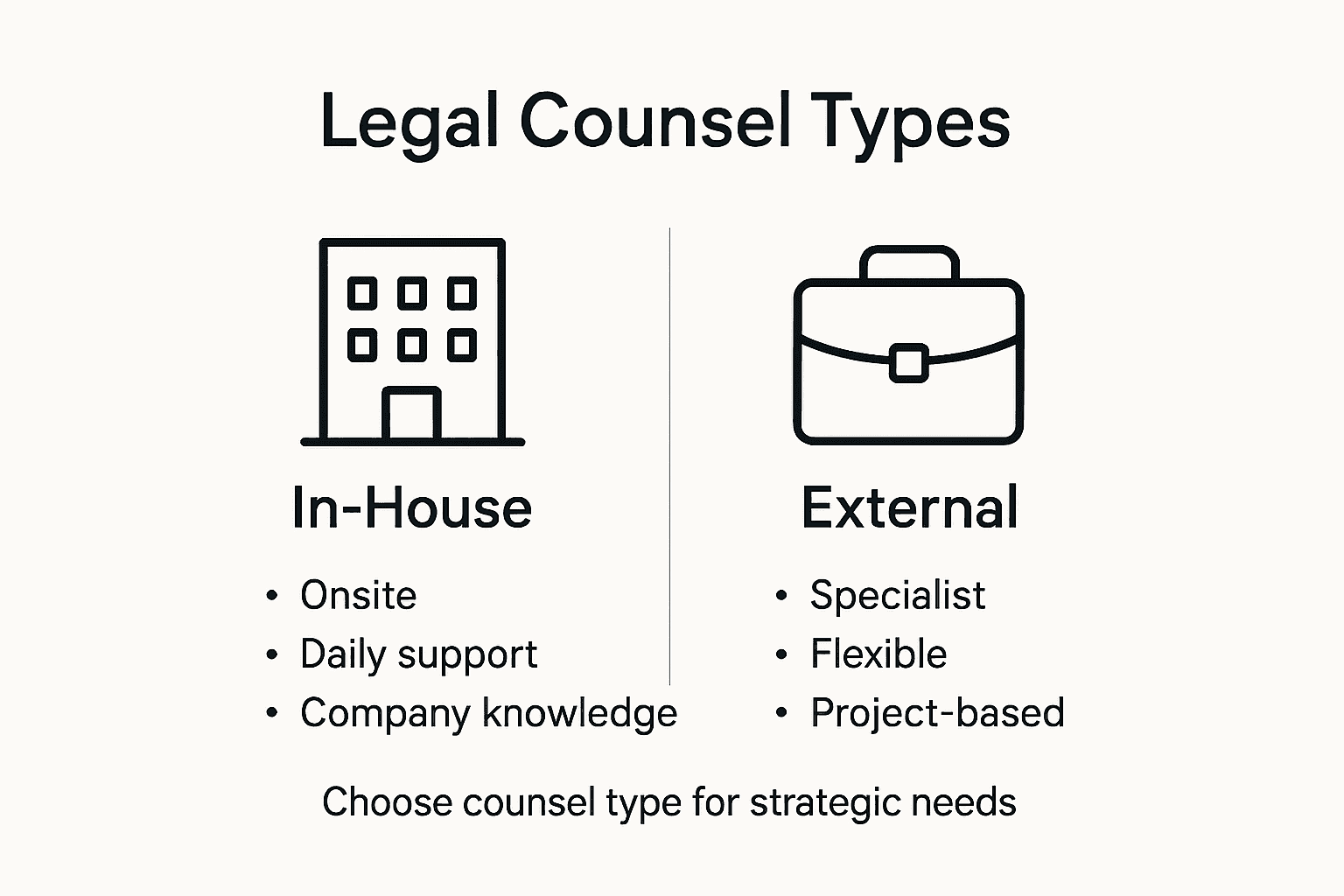
External legal counsel, alternatively, provide specialised services on a consultative or project-based arrangement. These professionals offer targeted expertise for complex legal challenges, such as mergers and acquisitions, litigation support, or specialised regulatory compliance. Technology firms often engage external counsel for specific technical legal domains requiring advanced specialisation that might exceed internal legal department capabilities.
Here’s a comparison of in-house and external legal counsel roles for technology firms:
| Aspect | In-house Legal Counsel | External Legal Counsel |
|---|---|---|
| Employment Status | Direct organisational employee | Independent legal specialist |
| Strategic Knowledge | Deep business operational insight | Advanced technical legal expertise |
| Engagement Duration | Continuous, ongoing | Project-based or consultative |
| Typical Responsibilities | Comprehensive legal risk management | Specialist advice for unique challenges |
Pro tip: When building a legal team for a technology organisation, create a balanced approach by combining in-house expertise with strategic external counsel partnerships to maximise legal coverage and operational flexibility.
Legal counsel in the UK technology sector occupy a multifaceted role that extends far beyond traditional legal boundaries. Technology legal professionals navigate complex regulatory landscapes by providing specialised advice on critical technological domains including software licensing, cloud services, and digital transformation initiatives.

The primary responsibilities encompass several strategic dimensions. These include drafting sophisticated technology contracts, managing intellectual property rights, ensuring comprehensive data protection compliance, and mitigating potential legal risks associated with emerging technologies. Technology legal counsel must possess deep understanding of both technological innovations and the intricate legal frameworks governing digital business operations.
In the context of technology startups and established firms, legal counsel play a pivotal role in supporting organisational growth and investment strategies. Their expertise extends to negotiating investment agreements, establishing robust contractual frameworks, and providing strategic guidance through complex regulatory environments. This involves maintaining a proactive approach to anticipating potential legal challenges while facilitating technological innovation and business expansion.
Pro tip: Develop a comprehensive understanding of both technological trends and legal regulations to become an indispensable strategic partner in technology organisations.
Legal counsel in technology firms must demonstrate exceptional expertise in understanding complex regulatory frameworks that govern digital business operations. This involves maintaining comprehensive knowledge of data privacy regulations, cybersecurity standards, and emerging legal requirements specific to technological innovations.
The regulatory landscape for technology businesses demands proactive compliance strategies. Legal professionals must develop robust mechanisms for monitoring regulatory changes, implementing appropriate policies, and ensuring organisational adherence to statutory requirements. This includes managing risks associated with data protection, intellectual property rights, and digital transaction frameworks that continually evolve alongside technological advancements.
UK regulated professions are subject to stringent professional standards which require continuous professional development and strict ethical compliance. For technology legal counsel, this means maintaining an ongoing commitment to understanding regulatory nuances, participating in professional training programmes, and developing adaptive compliance frameworks that can respond quickly to legislative changes.
Pro tip: Develop a systematic approach to tracking regulatory updates by creating dedicated monitoring processes and establishing direct communication channels with relevant regulatory bodies.
Technology firms face increasingly complex legal landscapes that demand sophisticated risk management strategies. Legal counsel must develop comprehensive frameworks for identifying and mitigating potential legal vulnerabilities through evidence-based decision-making and proactive risk assessment approaches.
The primary focus of risk mitigation involves systematic evaluation of potential legal exposures across multiple operational domains. This includes conducting thorough contract reviews, implementing robust intellectual property protection mechanisms, ensuring comprehensive data privacy compliance, and developing clear organisational policies that anticipate and address potential legal challenges. Technology firms require legal counsel who can translate complex regulatory requirements into practical, actionable strategies that protect organisational interests.
Effective risk mitigation demands a dynamic approach that combines preventative measures with responsive legal strategies. Legal counsel must continuously monitor emerging legal trends, technological developments, and regulatory shifts that could potentially impact the organisation’s risk profile. This involves maintaining close collaboration with internal stakeholders, developing adaptive compliance frameworks, and creating mechanisms for rapid legal response to potential vulnerabilities.
The following table summarises crucial legal risks faced by UK technology firms and their strategic business impacts:
| Legal Risk | Example in Tech Sector | Business Impact |
|---|---|---|
| Data Protection Breach | Cybersecurity incident | Fines, reputational damage |
| IP Infringement | Unauthorised software use | Loss of innovation value |
| Contract Dispute | Vendor disagreement | Project delays, added costs |
| Regulatory Non-Compliance | Failure to meet GDPR standards | Legal penalties, operational halt |
Pro tip: Develop a structured risk assessment matrix that categorises potential legal risks by probability and potential impact, enabling prioritised and strategic legal risk management.
Navigating the complex regulatory and legal landscape of the technology sector demands specialised legal counsel who understands both the rapid pace of innovation and intricate compliance requirements. Your business deserves a proactive legal partner that delivers transparent advice, manages risks like data protection breaches and intellectual property issues, and supports your strategic goals with clarity and speed. Ali Legal offers precisely that with a client-focused approach designed for businesses that value fixed fees, straightforward advice, and long-term relationships.
Discover how Ali Legal’s expert team can help you mitigate legal risks, negotiate contracts, and ensure regulatory compliance with confidence. Visit our All | Ali Legal page to explore our specialised services or connect directly via contact us for tailored guidance. Don’t wait until legal challenges slow your growth – take the strategic step today to secure your technology firm’s future with trusted legal counsel.
Legal counsel in technology firms are responsible for contract negotiation, intellectual property protection, regulatory compliance, dispute resolution, and offering strategic advisory services. They also help navigate complex regulatory environments specific to the tech industry.
In-house legal counsel are directly employed by an organisation, providing continuous and tailored legal support, while external legal counsel operate independently, offering specialised services based on project needs or consultative arrangements.
Technological literacy is crucial for legal counsel as it enables them to understand and interpret complex legal frameworks related to technological innovations, ensuring that businesses can mitigate legal risks effectively and operate within legal boundaries.
Technology firms can mitigate legal risks by developing comprehensive risk management frameworks that include systematic evaluations of legal exposures, thorough contract reviews, robust intellectual property protections, and ensuring compliance with data privacy and regulatory requirements.
Almost half of British businesses face costly disputes every year, with many struggling to avoid court delays and escalating fees. For small and medium-sized owners, securing fast contract compliance and protecting cash flow is vital to remain competitive. This guide reveals effective dispute resolution strategies tailored for British organisations, helping you save time and money while settling conflicts without resorting to lengthy litigation.
Negotiation represents the most flexible and cost effective dispute resolution strategy for UK businesses seeking swift contract compliance. By mastering strategic communication techniques, organisations can resolve conflicts quickly without resorting to expensive legal proceedings.
At its core, negotiation involves two or more parties engaging in constructive dialogue to reach a mutually acceptable solution. The goal is not to defeat the other side, but to create an outcome where everyone feels their core interests have been addressed. UK research institutions have extensively studied negotiation frameworks to develop robust approaches for business dispute resolution.
Successful negotiation requires preparation, active listening, and a collaborative mindset. Business owners should gather relevant documentation, understand their bottom line, and enter discussions with clear objectives. By identifying shared interests and potential compromise areas, you increase the likelihood of reaching an agreement efficiently.
Key strategies include maintaining professional composure, asking open-ended questions, and demonstrating willingness to understand the other party’s perspective. Emotional intelligence plays a critical role in navigating complex discussions and finding creative solutions that satisfy both parties’ fundamental needs.
Professional Recommendation: Before entering any negotiation, draft a clear agenda outlining your primary objectives and potential areas of flexibility to streamline the discussion process.
Mediation offers businesses a strategic alternative to lengthy and expensive legal battles, providing a collaborative approach to resolving commercial conflicts. Unlike traditional litigation, mediation creates a flexible environment where parties can explore mutually beneficial solutions with the guidance of a neutral third party.
Businesses across the United Kingdom are increasingly recognising the significant advantages of mediation. Recent research demonstrates that mediation can save organisations substantial time and financial resources, with potential cost reductions reaching billions of pounds annually.
The core strength of mediation lies in its ability to preserve professional relationships while efficiently addressing disputes. Traditional legal proceedings often create adversarial environments that can permanently damage business connections, whereas mediation encourages open communication and collaborative problem solving.
Key benefits include confidentiality, faster resolution times, reduced legal expenses, and greater control over the outcome. Parties can craft creative solutions that standard court proceedings cannot accommodate, allowing for more nuanced and flexible agreements that address the specific needs of each business.
Professional Recommendation: Before initiating formal mediation, prepare a comprehensive summary of your dispute, including desired outcomes and potential areas of compromise, to maximise the effectiveness of the mediation process.
Arbitration offers UK businesses a confidential and efficient alternative to traditional court litigation, providing a streamlined approach to resolving commercial disputes. This private dispute resolution method allows organisations to address complex legal challenges with greater flexibility and control.
Unlike public court proceedings, arbitration provides a more discreet environment where business conflicts can be resolved. Commercial arbitration enables parties to select specialised decision makers with expertise in their specific industry, ensuring that complex technical disputes receive nuanced and informed resolution.
The primary advantage of arbitration lies in its ability to deliver faster outcomes compared to traditional legal proceedings. Businesses can typically resolve disputes more quickly, with reduced procedural complexity and lower overall costs. The process allows parties to agree on specific rules, timelines, and procedural requirements that suit their unique commercial needs.
Arbitration proceedings are typically binding, meaning the arbitrator’s decision carries legal weight and can be enforced like a court judgment. This provides businesses with a definitive resolution mechanism that offers predictability and closure, helping organisations move forward without prolonged legal uncertainty.
Professional Recommendation: Ensure your commercial contracts include clear and comprehensive arbitration clauses that specify the selection process for arbitrators, preferred arbitration institution, and jurisdiction to prevent potential procedural disputes.
Expert determination represents a specialised dispute resolution mechanism tailored for complex technical and professional disagreements where deep industry knowledge is essential for fair resolution. This approach allows businesses to engage independent specialists who possess precise understanding of specific technical domains.
Technical expertise plays a crucial role in resolving intricate commercial disputes where standard legal approaches might lack the nuanced understanding required. Unlike traditional arbitration or litigation, expert determination focuses on technical merits rather than strictly legal interpretations.
Businesses commonly use expert determination in sectors such as construction, engineering, information technology, and financial services. The process involves appointing a neutral expert with recognised credentials in the specific technical field relevant to the dispute. This expert evaluates evidence, technical specifications, and professional standards to render a binding or non binding decision.
The primary advantages include rapid resolution, cost effectiveness, and access to specialised knowledge that traditional legal proceedings cannot easily replicate. Parties can mutually agree on the selection criteria for their expert, ensuring a fair and knowledgeable assessment of their specific technical disagreement.
Professional Recommendation: When considering expert determination, carefully draft the selection criteria for your technical expert, specifying required qualifications, industry experience, and potential conflict of interest provisions.
Early neutral evaluation offers UK businesses a strategic approach to resolving disputes swiftly and efficiently before conflicts escalate into costly legal proceedings. This proactive dispute resolution method involves an impartial expert providing an objective assessment of the potential strengths and weaknesses of each party’s position.
The UK Bar Council’s comprehensive guide highlights the procedural advantages of neutral evaluation as a mechanism for facilitating faster settlement discussions. By obtaining an independent, professional perspective early in the dispute, businesses can make more informed decisions about potential resolution strategies.
The process typically involves both parties presenting their perspectives to a neutral evaluator who is typically an experienced legal professional or industry expert. This evaluator provides a non binding assessment that helps organisations understand the potential judicial or arbitral outcomes if the dispute were to proceed to formal litigation.
Key benefits include reduced legal expenses, shorter resolution timelines, and preservation of professional relationships. Early neutral evaluation allows businesses to gain strategic insights without committing to lengthy and expensive legal proceedings, enabling more constructive dialogue and potential compromise.
Professional Recommendation: Prepare a comprehensive and objective summary of your dispute before the neutral evaluation, including key documents, financial implications, and desired outcomes to maximise the effectiveness of the assessment.
Collaborative law represents a groundbreaking approach to dispute resolution that prioritises maintaining professional relationships while effectively addressing commercial conflicts. This method transforms traditional adversarial legal processes into cooperative problem solving opportunities for businesses.
Scholarly research highlights collaborative law as a sophisticated alternative to confrontational dispute resolution strategies, emphasising mutual understanding and constructive dialogue. Unlike litigation, which often creates permanent rifts, collaborative law enables organisations to work together towards mutually beneficial solutions.
The process involves both parties committing to resolving their dispute without court intervention, typically supported by specially trained legal professionals who facilitate transparent negotiations. Each participant agrees to share information openly, negotiate in good faith, and focus on long term business relationships rather than short term victories.
Key advantages include preserving professional networks, reducing legal expenses, maintaining confidentiality, and creating more flexible solutions that traditional legal frameworks cannot accommodate. Collaborative law proves especially valuable in sectors where ongoing business relationships and reputation are critical to future success.
Professional Recommendation: Establish clear collaborative protocols and communication guidelines before entering negotiations, ensuring all parties understand the process and are committed to achieving a constructive resolution.
Selecting the most appropriate dispute resolution method can significantly impact a business’s financial health, professional reputation, and long term relationships. Understanding the nuanced differences between various resolution strategies allows organisations to make informed decisions that protect their interests effectively.
Practical guidance for UK businesses emphasises the importance of carefully evaluating dispute resolution options before committing to any specific approach. The optimal method depends on multiple factors including the nature of the dispute, relationship between parties, financial implications, and desired outcomes.
Key considerations include assessing the complexity of the conflict, potential financial exposure, desired timeline for resolution, and the importance of maintaining ongoing business relationships. Some disputes may benefit from collaborative approaches like mediation, while others might require more formal processes such as arbitration or expert determination.
Businesses should conduct a thorough preliminary assessment by examining the specific dispute characteristics, gathering relevant documentation, and potentially consulting legal professionals who can provide strategic guidance on the most suitable resolution pathway. The goal is to minimise financial risk, preserve professional relationships, and achieve a timely and fair resolution.
Professional Recommendation: Develop a comprehensive dispute resolution strategy in advance, including a clear decision making framework that outlines preferred methods for different types of potential conflicts.
Below is a comprehensive summary table outlining the primary dispute resolution methods discussed in the article.
| Resolution Method | Main Features | Key Benefits |
|---|---|---|
| Negotiation | Strategic communication for mutual agreement. | Flexible, cost-effective, and fast conflict resolution without legal proceedings. |
| Mediation | Guided by a neutral professional to achieve collaborative solutions. | Confidential, preserves relationships, faster and more cost-effective than litigation. |
| Arbitration | Confidential private proceedings with industry expert arbiters. | Tailored solutions, quicker outcomes, reduced complexity, and binding decisions. |
| Expert Determination | Complex technical disputes overseen by independent specialists. | Rapid resolution and cost-effective decisions based on industry-specific expertise. |
| Early Neutral Evaluation | Objective assessment of dispute strengths and weaknesses by impartial evaluators. | Faster settlements, informed decision-making, and reduced time and expense compared to litigation. |
| Collaborative Law | Transparent negotiation facilitated by legal professionals, focusing on mutual benefit. | Preserves long-term business relationships and enables nuanced, confidential agreement drafting. |
| Resolution Method Selection | Evaluation of options based on dispute characteristics and business priorities. | Ensures appropriate and tailored approach for effective and strategic conflict resolution. |
Navigating complex disputes can be overwhelming when financial risks and long term relationships hang in the balance. This article highlights clear strategies like negotiation, mediation, arbitration, and expert determination that UK businesses rely on to settle conflicts efficiently without costly court battles. If you seek transparent, fast, and strategic legal solutions to protect your business interests while preserving professional ties trust Ali Legal’s expert solicitors to guide you. We champion a client focused approach offering fixed fees, straightforward advice, and tailored dispute resolution plans.
Get ahead of your dispute today by consulting with specialists who understand the nuances of UK commercial law and alternative resolution methods. Whether your challenge calls for collaborative law, early neutral evaluation, or arbitration we equip you with clear options and practical support. Start resolving your issues calmly and confidently by contacting Ali Legal now. Our team is ready to discuss your unique situation and help you build a pathway toward swift settlement.
The most efficient types of dispute resolution for UK businesses include negotiation, mediation, arbitration, expert determination, early neutral evaluation, and collaborative law. Evaluate the nature of your conflict and choose a method that suits your specific needs.
Negotiation allows parties to engage in constructive dialogue to reach a mutually acceptable solution, often preventing lengthy legal processes. Begin by gathering documentation and establishing your objectives to facilitate a swift resolution.
Mediation provides a collaborative approach to resolving disputes, preserving relationships while reducing legal expenses and time. Prepare a summary of your dispute and desired outcomes to maximise the effectiveness of the mediation process.
Consider arbitration when you desire a confidential and efficient resolution to your dispute, as it typically offers faster outcomes and specialised decision makers. Incorporate arbitration clauses in your contracts to clarify the resolution process in advance.
Expert determination is ideal for resolving complex technical disputes, as it involves independent specialists with relevant industry knowledge. Clearly define the selection criteria for your expert to ensure a knowledgeable and fair assessment.
To benefit from an early neutral evaluation, prepare a comprehensive summary of the dispute, including key documents and desired outcomes. This will help you gain insights into the strengths and weaknesses of your position before proceeding with formal dispute resolution.
Over half of british small businesses encounter legal compliance issues that threaten daily operations. For business owners balancing growth and legal obligations, staying ahead of paperwork and contract details can feel overwhelming. A well organised legal consultation checklist can help you take control, simplify document gathering, and focus on practical steps that protect your business and support confident decision making.
Compiling a comprehensive collection of business documents is the foundational step in preparing for a robust legal consultation. Proper document preparation allows your solicitor to conduct a thorough assessment of your business’s legal standing and potential risks.
Your document gathering process should encompass all critical legal paperwork that defines your business operations. This includes commercial contracts that outline key business relationships, employment agreements, supplier terms, intellectual property documentation, and regulatory compliance records.
Start by creating a systematic file organisation system that categorises documents by type and chronology. Prioritise recent contracts and legal agreements, ensuring you have the most up to date versions. Digital scanning and creating secure digital backups of physical documents can provide an additional layer of protection and easy accessibility.
Key documents to collect include:
Business Core Documents:
Contractual Documentation:
Regulatory and Compliance Records:
Ensuring your documents are well organised demonstrates professionalism and enables your solicitor to provide precise, targeted legal advice. Missing or incomplete documentation can significantly hinder the consultation process and potentially expose your business to unnecessary legal vulnerabilities.
Top tip: Create a digital master folder with subfolders for each document category, and keep both digital and physical copies securely stored with restricted access.
Successful legal consultations begin with crystal clear communication about your specific objectives and underlying concerns. Understanding precisely what you want to achieve allows your solicitor to develop a targeted and strategic approach to addressing your legal challenges.
Legal objectives can range widely depending on your business context. You might seek protection for intellectual property, need guidance on contractual disputes, require compliance advice, or want to mitigate potential litigation risks. Preparing a comprehensive legal consultation demands honest and thorough self reflection about your business’s legal landscape.
To effectively identify your objectives, consider conducting an internal assessment that covers multiple strategic dimensions:
Strategic Assessment Areas:
Practical identification involves creating a structured list of specific questions and concerns you want your solicitor to address. Be precise and provide context. Instead of a vague statement like “I need contract help,” outline exact scenarios such as “I need review of supplier agreements to clarify termination clauses.”
Your solicitor will use these clearly articulated objectives to develop a tailored legal strategy. Transparent communication reduces misunderstandings and allows for more efficient legal support.
Professional recommendation: Create a written summary of your legal objectives before the consultation, organised by priority and potential impact on your business operations.
Evaluating your current business policies and regulatory compliance represents a critical preparatory step before any legal consultation. A thorough review helps identify potential vulnerabilities and demonstrates proactive management to your legal advisor.
Selecting the right solicitor involves understanding your comprehensive legal landscape, which requires meticulous examination of your existing policies and compliance frameworks.
Key Policy Review Areas:
When reviewing policies, focus on identifying potential gaps or outdated provisions that might expose your business to legal risks. Look for inconsistencies between written policies and actual operational practices. Pay special attention to recent legislative changes that might impact your current documentation.
Compiling a comprehensive compliance audit involves gathering all relevant policy documents, comparing them against current legal standards, and noting areas requiring updates or immediate attention. This systematic approach allows your solicitor to provide targeted advice and develop strategic recommendations.
Effective policy review extends beyond simple document collection. You must critically analyse how these policies translate into real world business practices and potential legal implications.
Professional recommendation: Create a detailed compliance checklist that maps your current policies against recent regulatory requirements to identify potential areas of vulnerability.
Creating a comprehensive list of questions about contracts and legal risks is a strategic approach to maximising the value of your legal consultation. Understanding the nuanced legal landscape requires thoughtful preparation and targeted inquiry.
Navigating complex commercial contract requirements demands a systematic approach to identifying potential legal vulnerabilities and contractual uncertainties.
Essential Contract and Risk Questions:
Effective questioning requires deep reflection on your business operations. Consider scenarios that might create legal complications such as supplier disputes, performance failures, intellectual property concerns, or potential breach of contract situations.
Your goal is to transform abstract legal concerns into precise, actionable questions. This approach enables your solicitor to provide targeted advice and develop proactive risk mitigation strategies.
When drafting your questions, be specific and provide context. Instead of asking “Are our contracts safe?”, outline exact scenarios or clauses causing concern. Detailed questions lead to more comprehensive legal guidance.
Professional recommendation: Organise your contract questions by priority and potential business impact, ensuring your solicitor can address the most critical legal risks first.
Business relationships form the intricate network that supports your organisational ecosystem. Understanding and documenting these relationships comprehensively provides critical context for legal consultations and potential dispute resolution.
Resolving contract disputes effectively requires a nuanced understanding of the interconnected relationships that define your business operations.
Key Relationship Categories to Document:
When preparing relationship details, go beyond surface level information. Include historical context, performance history, financial interdependencies, and potential future implications. Your solicitor needs a comprehensive view of how these relationships function and potentially impact your business strategy.
Compile documentation that demonstrates the nature and depth of each relationship. This might include communication records, performance metrics, contractual agreements, and any historical challenges or resolutions.
Consider creating a relationship mapping document that visually illustrates the connections between different business entities. This approach helps your legal advisor quickly understand the complex dynamics of your business ecosystem.
Precise documentation can reveal potential legal risks, contractual vulnerabilities, and strategic opportunities that might otherwise remain hidden.
Professional recommendation: Create a detailed relationship registry with contact information, key agreement dates, and critical interaction points to provide a comprehensive overview of your business network.
Clarifying your desired outcomes transforms a generic legal consultation into a strategic planning session. Precise articulation of your objectives ensures your solicitor can develop targeted solutions aligned with your business goals.
Preparing for a legal consultation requires clear communication about what you want to achieve and the specific challenges you are navigating.
Strategic Outcome Clarification Components:
Effective outcome clarification involves moving beyond vague aspirations to specific measurable objectives. Instead of stating “I want to protect my business,” outline precise goals such as “I need to update supplier contracts to reduce potential liability” or “I want to establish intellectual property protection for our new product line”.
Consider creating a prioritised list of outcomes that distinguishes between urgent matters requiring immediate attention and strategic long term objectives. This approach allows your solicitor to allocate appropriate resources and develop a comprehensive action plan.
Your desired outcomes should reflect both defensive positioning and proactive strategic planning. Think about how legal interventions can not only mitigate risks but also create opportunities for business growth and development.
Professional recommendation: Write your desired outcomes as specific actionable statements using clear language that a legal professional can directly translate into practical strategies.
Transparent fee structures and clear communication channels are fundamental to establishing a productive relationship with your solicitor. Understanding these elements helps set realistic expectations and prevents potential misunderstandings.
Clear legal communication strategies can significantly impact the effectiveness and efficiency of your legal consultation.
Key Fee and Communication Considerations:
British legal practices are required to provide comprehensive fee transparency before commencing work. This means you should expect a detailed breakdown of potential costs, including any fixed fee consultation options available. Ask for a written estimate that outlines exactly what services are included and potential additional charges.
Communication methods are equally important. Modern legal practices offer multiple channels including in person meetings, telephone consultations, video conferences, and email communications. Discuss and agree upon your preferred method of communication during the initial consultation.
Prepare a list of questions about fees and be direct in your inquiries. Understanding the financial commitment upfront prevents unexpected expenses and helps you budget effectively for legal support.
Professional recommendation: Request a comprehensive fee agreement in writing that details all potential costs and communication protocols before proceeding with your legal consultation.
Below is a comprehensive table summarising the main steps, strategies, and key considerations discussed throughout the article about preparing effectively for a legal consultation to address business needs comprehensively.
| Step | Key Actions | Outcome |
|---|---|---|
| Gather Key Business Documents and Contracts | Organise and prepare essential documents, including contracts and compliance records, ensuring recent versions are backed up securely. | Enables thorough legal assessment and reduces consultation delays. |
| Identify Your Legal Objectives and Concerns | Evaluate business legal goals, vulnerabilities, and required advice; prepare specific questions for clarity. | Facilitates precise legal strategy development aligned with business priorities. |
| Review Existing Policies and Compliance Status | Analyse current policies for gaps or outdated provisions and ensure alignment with recent regulations. | Highlights areas for improvement while informing targeted legal recommendations. |
| List Questions About Contracts and Legal Risks | Draft detailed inquiries tied to your contracts and legal vulnerabilities, specifying problematic scenarios. | Streamlines focus of the consultancy on critical issues and promotes efficient resolution. |
| Prepare Details of Relevant Business Relationships | Document and categorise key professional relationships, including history and agreements. | Provides context regarding dynamics influencing legal decisions and outcomes. |
| Clarify Desired Outcomes and Next Steps | Articulate specific, actionable legal objectives and determine prioritisation and strategies. | Transforms consultation into a proactive business development session with clear objectives. |
| Understand Fixed Fees and Communication Methods | Discuss and confirm solicitor fees, communication preferences, and consultation scope. | Prevents unexpected costs and ensures effective solicitor-client communication. |
Navigating the complex process of legal consultation can feel overwhelming. The article highlights the importance of organising key documents, clarifying legal objectives, and understanding regulatory compliance to avoid costly mistakes and protect your business interests. If you are ready to transform your legal challenges into strategic opportunities, Ali Legal provides transparent, fixed fee services focused on clear communication and effective solutions.
Take control of your legal journey today by accessing expert guidance and personalised advice tailored to your needs. Explore insights and practical tips available in our All Articles section or learn more about our client-centred approach in Uncategorized Articles. When you are ready to act, contact us for a consultation that puts your priorities first and offers fast, transparent legal support. Start your next step now at Ali Legal Contact Us.
Gather essential business documents such as articles of incorporation, partnership agreements, and contractual agreements. Organise them systematically for easy access, focusing on the most recent versions.
Identify your legal objectives by conducting an internal assessment of your business’s legal landscape. Create a structured list of specific questions and concerns to clarify what you want to achieve during your consultation.
Review key policy areas such as health and safety regulations, employment contracts, and data protection protocols. Evaluate these documents for any outdated provisions or inconsistencies to ensure alignment with current legal standards.
Prepare focused questions addressing specific concerns like potential liability in agreements, adequacy of termination clauses, and the impact of regulatory changes on existing contracts. Being precise will help your solicitor provide tailored legal advice.
Clarify your desired outcomes by drafting specific, actionable statements that outline your legal goals. Distinguish between immediate needs and long-term objectives, allowing your solicitor to develop a comprehensive action plan tailored to your situation.
Only a fraction of British firms succeed in global trade without major legal setbacks. The tangled world of International Business Law affects every cross-border contract, leaving even seasoned British entrepreneurs and executives searching for clear answers. This guide breaks down complex regulations, explains compliance risks, and reveals the essential frameworks driving successful international transactions for British companies.
International Business Law represents a complex legal framework governing cross-border commercial interactions, regulations, and transactions between businesses operating across different national jurisdictions. This specialised area of legal practice addresses the intricate challenges arising from global economic exchanges.
The field encompasses several critical domains, including international trade regulations and legal frameworks. Key components typically involve international sales contracts, cross-border regulatory compliance, corporate governance standards, dispute resolution mechanisms, and the nuanced interactions between different national legal systems. Businesses must navigate complex rules surrounding taxation, intellectual property protection, labour regulations, and investment protocols when engaging in international commerce.
Furthermore, International Business Law addresses emerging challenges in global trade, such as digital economy regulations, technological compliance, and ethical business practices. The discipline integrates legal principles with economic realities, helping organisations understand and mitigate risks associated with international transactions. Topics like cross-border litigation, international arbitration, and transnational contract enforcement form the core of this sophisticated legal domain.
Professional Insight: Always consult specialised legal counsel familiar with international business regulations before initiating complex cross-border commercial agreements to minimise potential legal risks and ensure comprehensive compliance.
International Legal Frameworks constitute the foundational structure governing cross-border commercial interactions, providing essential guidelines for businesses operating across different jurisdictional boundaries. These frameworks establish the rules and principles that enable smooth, predictable international trade and commerce.
The primary sources of international business law are comprehensively defined by established legal principles. Treaties, international customs, and general legal principles form the core legal instruments that regulate global business interactions. In the United Kingdom, these sources are supplemented by domestic legislation, residual European Union regulations, and participation in multilateral and bilateral trade agreements. The intricate web of legal sources ensures comprehensive coverage of potential commercial scenarios, providing businesses with clear guidelines for international transactions.
Moreover, international business law draws from multiple authoritative sources beyond primary legal instruments. Judicial decisions, scholarly writings, and academic commentaries serve as subsidiary means of interpreting and developing legal frameworks. These sources help clarify complex legal provisions, resolve ambiguities, and adapt international business law to evolving global economic landscapes. The dynamic nature of these legal frameworks allows for continuous refinement and interpretation, ensuring that businesses can navigate increasingly complex international commercial environments.
Professional Insight: Always maintain comprehensive documentation of international legal sources and consult specialised legal experts to ensure precise understanding and compliance with the multifaceted legal frameworks governing cross-border business transactions.
International Business Law encompasses three critical domains that form the backbone of cross-border commercial interactions: trade regulations, contractual frameworks, and comprehensive compliance mechanisms. These interconnected areas ensure that businesses can operate effectively and legally across different national jurisdictions.
Trade represents a fundamental pillar of international business law, with complex regulations governing imports, exports, and cross-border transactions. UK businesses must navigate intricate rules involving tariff classifications, customs requirements, and international trade agreements. These regulations determine how goods and services move across borders, specifying everything from documentation standards to potential restrictions on specific products or services.

Contracts and compliance form equally crucial components of international business law. Companies must develop robust contractual frameworks that account for different legal systems, cultural nuances, and regulatory environments. Effective trade compliance involves managing export controls, understanding sanctions, and adhering to complex international regulations. This requires meticulous attention to detail, including correct tariff classifications, origin determinations, and comprehensive risk management strategies to prevent potential legal challenges or financial penalties.
Professional Insight: Develop a comprehensive compliance checklist that incorporates legal requirements from multiple jurisdictions, and regularly update your understanding of international trade regulations to maintain seamless business operations.
International Business Disputes represent complex legal challenges that require sophisticated strategies for resolution and enforcement. Businesses engaged in cross-border transactions must develop comprehensive approaches to manage potential conflicts and protect their commercial interests effectively.
Recent UK legal reforms have significantly enhanced arbitration mechanisms, creating more robust frameworks for resolving international commercial disputes. These reforms empower businesses with streamlined processes for addressing legal challenges, including early dismissal of weak cases, increased transparency requirements, and improved court support for arbitration proceedings. The changes demonstrate the United Kingdom’s commitment to providing efficient dispute resolution pathways for international commercial entities.
Dispute Resolution Mechanisms play a critical role in international business law. The International Chamber of Commerce offers comprehensive services including arbitration, mediation, and expert determination, which provide neutral, predictable frameworks for resolving cross-border conflicts. These mechanisms allow businesses to address disputes outside traditional court systems, offering more flexible, cost-effective solutions that can be enforced across multiple jurisdictions. Companies must carefully select appropriate dispute resolution strategies, considering factors such as contractual obligations, potential enforcement challenges, and the specific legal environments of involved parties.
The following table summarises the principal differences between international commercial arbitration and litigation, two key dispute resolution methods discussed:
| Aspect | Arbitration | Litigation |
|---|---|---|
| Forum | Private tribunal | National court system |
| Speed | Typically faster resolution | Often prolonged procedures |
| Confidentiality | Proceedings kept private | Generally a public process |
| Enforceability | Awards enforceable internationally | Enforcement may be limited by jurisdiction |
Professional Insight: Develop a comprehensive dispute resolution strategy before entering international contracts, including clear clauses specifying arbitration procedures, applicable laws, and potential enforcement mechanisms.
International Business Compliance represents a multifaceted challenge for UK companies operating in global markets. Organisations must navigate an increasingly complex regulatory landscape that demands sophisticated, proactive approaches to risk management and legal adherence.
Regulatory complexity poses significant challenges for businesses, particularly in understanding and implementing evolving legal requirements. Small and medium enterprises frequently struggle with the administrative burden of compliance, facing risks such as misinterpreting regulations, encountering unexpected sanctions, and managing the financial implications of legal requirements. These challenges are compounded by rapidly changing international trade rules, which demand continuous learning and adaptability from corporate legal teams.
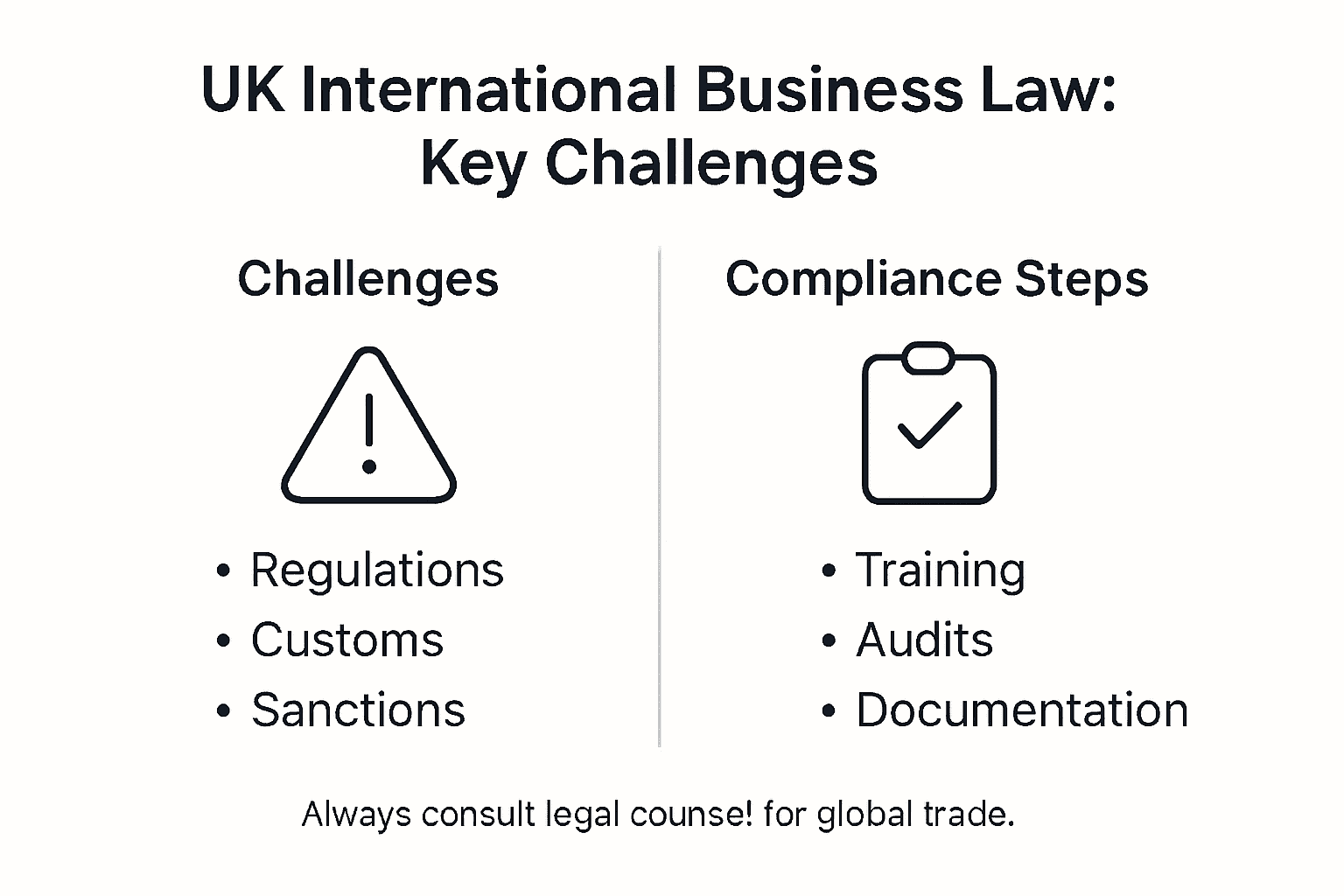
The UK’s regulatory framework emphasises that effective compliance extends beyond mere documentation to encompass organisational culture and behaviour. Businesses must implement robust risk assessment processes, develop clear procedural guidelines, and commit to ongoing staff training. This holistic approach requires regular evaluation of compliance programmes, ensuring they remain responsive to emerging legal challenges and aligned with the specific operational context of each organisation.
For clarity, the table below highlights common risks in international business and corresponding compliance steps for UK organisations:
| Risk Area | Common Challenge | Mitigation Approach |
|---|---|---|
| Regulatory Changes | Sudden new legal requirements | Proactive legal monitoring |
| Cross-Border Taxation | Inconsistent tax laws | Engage tax specialists |
| Data Protection | Varying privacy standards | Customise compliance programmes |
| Trade Sanctions | Unexpected trade bans | Pre-transaction due diligence |
Professional Insight: Create a dynamic compliance strategy that includes regular legal audits, continuous staff training, and flexible mechanisms for adapting to changing international regulatory landscapes.
Understanding the complex rules of international business law is crucial for UK companies involved in cross-border trade. This field covers key challenges such as compliance with trade regulations, managing contracts across jurisdictions, and resolving disputes efficiently. At Ali Legal, we recognise that navigating tariffs, customs requirements, and arbitration procedures can feel overwhelming. Our expert team offers clear and strategic guidance tailored to your business needs, helping you minimise risks and stay compliant throughout every stage of your international transactions.
Explore practical insights and legal support with our Uncategorized | Ali Legal resources and reach out directly through our contact page for personalised advice.
Take control of your global business ventures now by partnering with Ali Legal for transparent, fast, and reliable legal solutions. Protect your investments and streamline cross-border operations with expert counsel just a click away at Ali Legal Contact.
International business law refers to the legal framework that governs commercial transactions and regulations between businesses across different national jurisdictions.
The primary sources include treaties, international customs, and general legal principles. These are supplemented by domestic legislation and trade agreements.
Businesses can ensure compliance by developing robust risk assessment processes, understanding evolving regulatory requirements, and implementing a comprehensive compliance strategy that includes ongoing staff training.
Key dispute resolution mechanisms include arbitration and mediation, which provide structured, neutral processes for resolving conflicts outside of traditional court systems.
Over £1 billion flows into the British economy each year through foreign investment and skilled migration. For many British small and mid-sized businesses, tapping into global talent means facing a maze of legal rules and common myths about immigration. Whether you are welcoming international employees or investors, understanding the reality behind business immigration gives you the practical edge for smarter planning and risk reduction.
Business immigration represents a strategic legal pathway for companies seeking to recruit skilled international talent or expand their operations across national boundaries. At its core, business immigration involves obtaining specialised visas and work permits that enable foreign professionals to legally enter and contribute to a host country’s economic ecosystem.
Contrary to popular misconceptions, business immigration is not merely about moving workers between countries. It encompasses a nuanced process involving complex legal frameworks, compliance requirements, and strategic workforce planning. Businesses must navigate intricate regulations that vary significantly across jurisdictions. Understanding these immigration law complexities requires expert guidance and meticulous preparation.
Several persistent myths surround business immigration. Many believe it is a simple administrative process, when in reality, it demands sophisticated legal strategies. Common misconceptions include the notion that all skilled workers can automatically relocate, or that companies can quickly hire international talent without significant documentation. In truth, each immigration pathway involves specific eligibility criteria, substantial paperwork, and potential financial investments.
The landscape of business immigration continues to evolve, influenced by geopolitical dynamics, economic shifts, and changing labour market needs. Organisations must remain adaptable and well-informed about emerging trends and regulatory updates. Successful business immigration strategies require proactive planning, comprehensive understanding of legal requirements, and a commitment to supporting international talent integration.
Pro Tip: Research Thoroughly: Before initiating any business immigration process, conduct comprehensive research on specific visa categories, eligibility requirements, and potential challenges specific to your target country and industry.
The United Kingdom offers several strategic business immigration routes designed to attract talented professionals and innovative entrepreneurs. These pathways provide businesses with opportunities to recruit international talent and support economic growth through carefully structured legal frameworks.
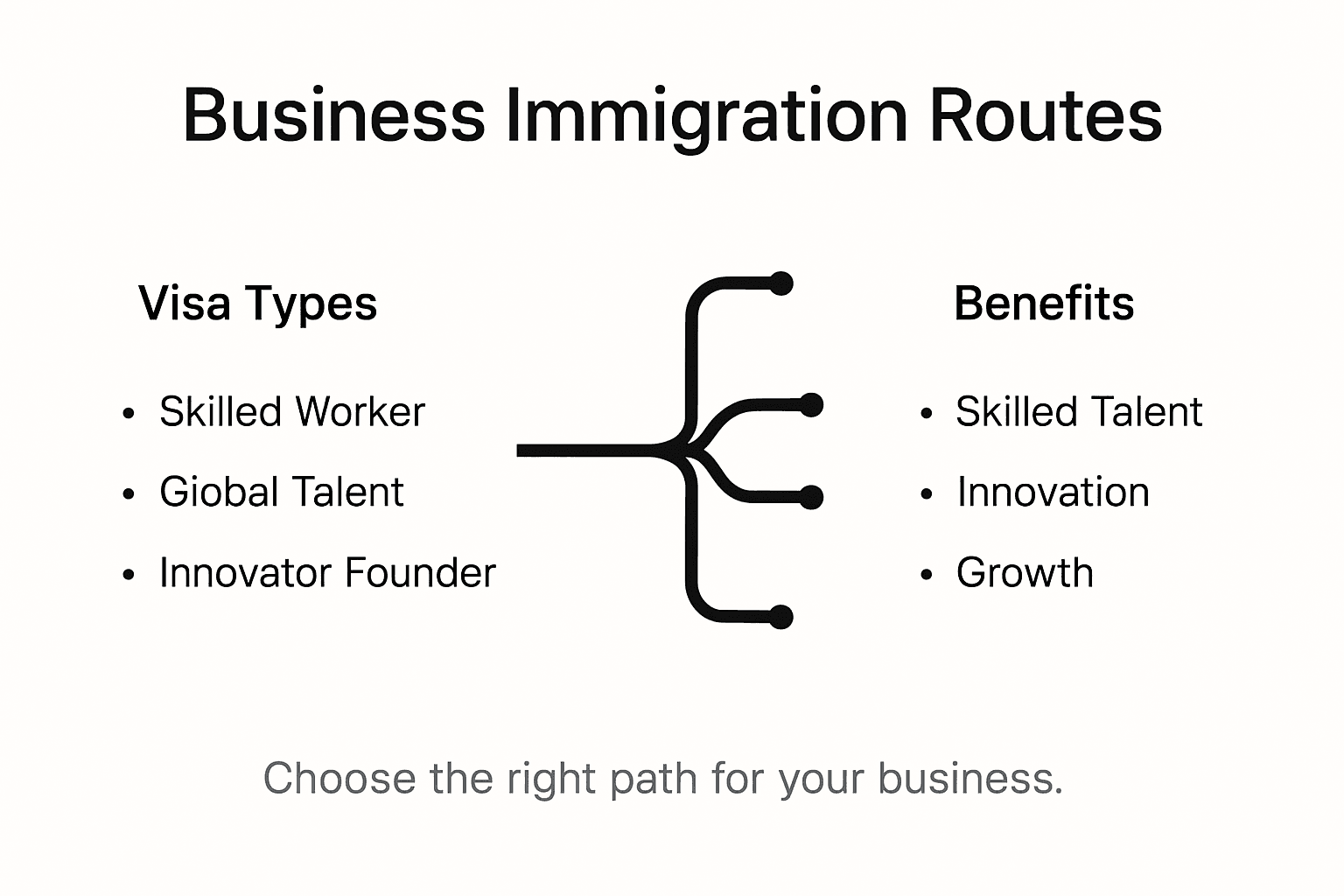
Primary business immigration routes include the Skilled Worker Visa, which remains the most popular pathway for companies seeking to recruit international talent. This visa allows organisations to sponsor skilled professionals who meet specific salary and skill requirements. Additionally, the business immigration landscape encompasses specialised routes like the Global Talent Visa for exceptional researchers and innovators, and the Innovator Founder Visa targeting entrepreneurs with innovative business concepts.
Understanding the nuanced differences between these immigration routes is crucial for businesses. The Skilled Worker route requires a valid job offer from a licensed sponsor, whereas the Global Talent Visa allows more flexibility for internationally recognised experts. The Innovator Founder Visa specifically supports individuals looking to establish innovative businesses in the United Kingdom, with stringent criteria designed to attract high-potential entrepreneurs.
Navigating these immigration pathways requires meticulous planning and comprehensive legal understanding. Businesses must consider factors such as minimum salary thresholds, skill level requirements, English language proficiency, and specific documentation needed for each visa category. Successful applications demand strategic preparation, detailed documentation, and a thorough comprehension of the evolving regulatory landscape.
Here’s a concise comparison of major business immigration routes available in the United Kingdom:
| Route Name | Target Applicants | Key Eligibility Criteria | Unique Feature |
|---|---|---|---|
| Skilled Worker Visa | Skilled professionals | Job offer, salary threshold, skill level | Requires licensed sponsor |
| Global Talent Visa | Researchers, innovators | International recognition, endorsement | No job offer required |
| Innovator Founder Visa | Entrepreneurs with business ideas | Innovative concept, investment proof | Supports new UK businesses |
Pro Tip: Strategic Planning: Consult with immigration specialists early in your recruitment process to understand the most appropriate visa route for your specific business needs and potential candidate profiles.
Business immigration in the United Kingdom demands comprehensive understanding of eligibility criteria and intricate application procedures. Organisations must navigate complex requirements that encompass legal, professional, and administrative dimensions of recruiting international talent.
The sponsorship and application framework involves multiple critical components. Employers must first obtain a valid sponsor licence, which requires demonstrating the ability to effectively manage international recruitment. Key eligibility requirements include specific salary thresholds, skill level assessments, and stringent English language proficiency standards. Potential candidates must typically hold qualifications equivalent to a UK bachelor’s degree or possess demonstrable expertise in their professional domain.

Sponsorship entails significant legal responsibilities for businesses. Licensed sponsors must maintain detailed records, track employee movements, and ensure compliance with Home Office regulations. This involves reporting any changes in an employee’s circumstances, monitoring visa expiration dates, and maintaining comprehensive documentation. Each visa category presents unique requirements, with the Skilled Worker route demanding precise job role classifications and minimum salary levels that vary depending on the specific occupation.
The application process itself requires meticulous preparation and understanding of complex documentation requirements. Applicants must submit comprehensive evidence including academic qualifications, professional certifications, proof of English language proficiency, and detailed employment contracts. Background checks, including criminal record verification, are standard procedure. Businesses must work closely with potential employees to compile accurate, comprehensive applications that meet all regulatory standards.
Pro Tip: Documentation Precision: Maintain a systematic, digital documentation management system that tracks all visa-related paperwork, expiration dates, and compliance requirements to prevent potential administrative oversights.
Employers engaging in business immigration assume substantial legal responsibilities that extend far beyond standard recruitment practices. These obligations represent a critical framework designed to protect both international workers and the broader national labour market.
The legal landscape for sponsors involves comprehensive monitoring and reporting requirements. Businesses must maintain meticulous records, track employment law compliance with exceptional precision, and ensure ongoing adherence to Home Office regulations. Key responsibilities include verifying an employee’s right to work, maintaining accurate documentation, reporting significant changes in employment status, and ensuring continued eligibility throughout the visa duration.
Sponsorship duties encompass multiple critical dimensions. Employers must conduct rigorous pre-employment checks, including identity verification, qualification authentication, and criminal background assessments. They are legally obligated to monitor sponsored employees’ immigration status, reporting any breaches or changes promptly. This includes tracking visa expiration dates, ensuring continued employment compliance, and maintaining a systematic approach to workforce documentation.
Failure to meet these legal obligations can result in severe consequences, including substantial financial penalties, suspension of sponsorship licences, and potential criminal prosecution. Businesses must implement robust internal systems that create comprehensive audit trails, demonstrating proactive compliance with complex immigration regulations. This requires continuous staff training, systematic documentation processes, and a commitment to understanding the evolving legal landscape of business immigration.
Pro Tip: Compliance Vigilance: Establish a dedicated compliance team or assign a specific individual responsible for tracking and managing all immigration-related documentation and regulatory requirements to minimise potential legal risks.
Business immigration involves substantial financial investments and complex regulatory challenges that can significantly impact an organisation’s strategic planning. Direct and indirect costs encompass multiple dimensions, ranging from application fees and legal support to potential compliance penalties and administrative overheads.
The financial landscape of business immigration is multifaceted, with organisations facing significant expenses beyond basic visa processing. Corporate law compliance strategies become critical in managing potential financial risks. Typical cost components include sponsor licence fees, which range from £536 to £1,476 depending on business size, individual visa application fees typically between £625 and £1,423, and mandatory health surcharges for each international employee.
Below is a summary of typical costs and risks associated with UK business immigration:
| Expense/Risk Type | Typical Range or Example | Business Impact | Mitigation Strategy |
|---|---|---|---|
| Sponsor licence fee | £536 to £1,476 | Increases overhead | Budget for licence renewal |
| Visa application fee | £625 to £1,423 per applicant | Affects hiring decisions | Plan recruitment costs |
| Health surcharge | £624+ annually per employee | Ongoing annual expense | Factor into long-term planning |
| Compliance penalty | Up to £20,000 per breach | Severe financial risk | Establish internal audit system |
Common pitfalls in business immigration often stem from inadequate preparation and insufficient understanding of regulatory nuances. Businesses frequently encounter challenges such as incomplete documentation, missed reporting deadlines, and failure to maintain accurate employee records. These oversights can trigger severe consequences, including substantial financial penalties, potential licence suspension, and legal prosecution. Organisations must develop robust internal systems that provide comprehensive tracking, systematic documentation, and proactive compliance management.
Risk mitigation requires a sophisticated, multi-layered approach. Successful businesses invest in specialised training programmes, implement digital compliance tracking systems, and maintain ongoing legal consultations. This proactive strategy helps organisations navigate the complex regulatory environment, minimise potential financial exposure, and maintain the integrity of their international recruitment processes.
Pro Tip: Financial Preparation: Develop a comprehensive budgeting strategy that accounts for all potential immigration-related expenses, including application fees, legal consultations, compliance management, and potential contingency costs.
Navigating the complexities of business immigration in the United Kingdom requires more than knowledge—it demands strategic legal expertise to overcome challenges like eligibility requirements, sponsorship obligations, and compliance risks. This article highlights critical pain points such as understanding visa categories, maintaining meticulous documentation, and avoiding costly penalties. At Ali Legal, we specialise in providing clear, fast, and transparent legal guidance tailored to your business immigration needs.
Trust our client-centric approach to help you manage the Skilled Worker Visa, Global Talent Visa, and Innovator Founder Visa processes with confidence. We ensure your organisation meets all legal duties while minimising financial risks and avoiding common pitfalls. Let us handle the intricate paperwork and evolving regulations so you can focus on growing your business internationally.
Are you ready to simplify your business immigration journey and secure the right legal foundation? Contact Ali Legal today for straightforward advice and expert support. Speak with a solicitor who understands your unique challenges and is committed to your success. Take the first step now by visiting our Contact Us page or exploring how our business immigration services can benefit you.
Business immigration refers to the legal process that allows companies to recruit skilled international talent or expand operations across borders by obtaining specialised visas and work permits for foreign professionals.
Business immigration is vital as it enables organisations to access a broader talent pool, drive innovation, and remain competitive in a global marketplace by integrating skilled professionals into their workforce.
Common myths include the belief that business immigration is a simple administrative process and that all skilled workers can relocate automatically. In reality, it involves complex legal frameworks, specific eligibility criteria, and extensive documentation.
Companies should consider eligibility criteria, sponsorship responsibilities, and the documentation needed for various visa categories. It’s also essential to stay updated on regulatory changes and to consult with immigration specialists for strategic planning.
Every british corporate legal manager knows the high stakes of international trade disputes, where a single oversight can escalate costs dramatically. More than sixty percent of failed cross-border cases trace back to misunderstanding of local laws or missed deadlines. In today’s shifting regulatory environment post Brexit, clear and efficient checklists help safeguard company interests, ensuring legal risks are managed before they become costly errors.
Cross-border commercial disputes require precise understanding of legal jurisdiction and the applicable legal framework. Determining which courts have authority and what laws govern your specific case forms the critical foundation for successful international dispute resolution.
After Brexit, the legal landscape for cross-border disputes in the United Kingdom significantly transformed. UK managers must now carefully assess international legal frameworks and jurisdictional rules to ensure proper dispute management.
The process involves several key considerations. First, identify whether your dispute falls under international civil or commercial legal categories. This determination impacts which conventions and regulations apply. Next, examine the specific contractual agreements between parties, as these often contain predefined jurisdiction and governing law clauses.
Understanding jurisdictional nuances requires thorough contract review and comprehensive legal analysis. Look for explicit statements about dispute resolution mechanisms, preferred courts, and chosen legal systems. Some contracts specify arbitration venues or international tribunals as alternative dispute resolution methods.
Critical factors include the physical location of contract execution, the domicile of involved parties, and the nature of the commercial transaction. European conventions and international treaties may also influence jurisdictional determinations, especially in complex cross-border scenarios.
Practical advice demands proactive documentation and clear contractual language. Document every jurisdictional consideration meticulously, maintaining comprehensive records that demonstrate your systematic approach to identifying applicable legal frameworks.
Pro tip: Always consult specialised legal counsel with expertise in international commercial law before finalising any cross-border agreements to ensure robust jurisdictional protections.
Contractual dispute resolution clauses form the essential roadmap for managing potential conflicts in cross-border commercial relationships. These critical contractual provisions determine how disagreements will be addressed, preventing potential litigation and establishing clear expectations for all parties.
Understanding the nuanced mechanics of dispute resolution requires careful examination of potential mechanisms. Arbitration clauses offer significant advantages in international commercial contexts, providing flexible, confidential alternatives to traditional court proceedings.
Multiple dispute resolution approaches exist, including negotiation, mediation, arbitration, and litigation. Each method carries distinct implications for time, cost, and potential outcomes. Skilled managers must carefully evaluate and specify the most appropriate mechanism within their contractual framework.
When drafting dispute resolution clauses, specify precise details such as the number of arbitrators, preferred language, governing jurisdiction, and procedural rules. Ambiguity can create significant legal complications, potentially transforming a manageable disagreement into a protracted international dispute.
Consider including tiered dispute resolution strategies that mandate negotiation or mediation before escalating to formal arbitration. This approach can preserve business relationships and reduce unnecessary legal expenses. Ensure the chosen mechanism aligns with both parties commercial interests and cultural expectations.
Detailed clauses should address potential scenarios comprehensively. Include provisions for emergency relief, interim measures, and methods for selecting neutral arbitrators or mediators. Anticipate potential challenges and build flexibility into your dispute resolution framework.
Pro tip: Always consult international legal specialists when drafting cross border dispute resolution clauses to ensure comprehensive protection and clarity in your commercial agreements.
Navigating cross-border disputes demands meticulous preparation of evidence and documentation. Understanding the complex landscape of international legal requirements is crucial for successful dispute resolution.
Obtaining documentation across multiple jurisdictions presents significant legal and procedural challenges, requiring strategic and systematic approaches to evidence collection.
Documentation requirements vary dramatically between different legal systems. UK managers must comprehensively understand the specific evidentiary standards in relevant jurisdictions. This involves identifying acceptable document types, authentication protocols, translation requirements, and potential legal restrictions on evidence gathering.
Effective evidence assessment involves several critical steps. First, create a comprehensive inventory of all potentially relevant documents. This includes contracts, correspondence, financial records, electronic communications, and any supplementary materials that might substantiate your position.
Consider the admissibility of different evidence types across various legal frameworks. Digital evidence, email threads, and electronic communications require particular attention, as their legal status can differ significantly between jurisdictions. Ensure documents are properly preserved, authenticated, and capable of meeting international legal standards.
Translation becomes a crucial consideration in cross-border disputes. Certified translations might be mandatory, and nuanced linguistic interpretations can substantially impact legal proceedings. Budget sufficient resources for professional translation services that can provide legally recognised documentation.
Maintain rigorous document management protocols. Implement secure digital archiving systems that preserve document integrity, maintain clear chains of custody, and allow rapid retrieval. Consider potential cybersecurity implications when handling sensitive international documentation.
Pro tip: Engage specialised legal translators with expertise in commercial and legal terminology to ensure precise, contextually accurate translations of critical documents.
Cross-border disputes demand sophisticated legal representation with deep understanding of multi jurisdictional complexities. UK managers must carefully select legal professionals who can navigate intricate international legal landscapes effectively.
Civil judicial cooperation frameworks require strategic selection of local legal expertise to ensure comprehensive dispute management across different legal systems.
Evaluating potential legal representation involves comprehensive assessment of several critical factors. Look for solicitors with proven experience in international commercial disputes, demonstrating specific expertise in the relevant jurisdictional contexts. Language capabilities, understanding of local regulatory environments, and track records of successful cross-border resolution are paramount.
Consider the professional networks and collaborative capabilities of potential legal representatives. Effective international dispute resolution often requires seamless communication between legal teams in different countries. Seek lawyers with established international connections and demonstrated ability to coordinate complex multi jurisdictional legal strategies.
Carefully review the credentials, professional qualifications, and specialised training of potential legal representatives. Prioritise firms with documented experience handling similar cross-border commercial disputes in your specific industry or sector. Request detailed case histories and references that demonstrate their practical expertise.
Financial transparency becomes crucial when selecting international legal representation. Request comprehensive fee structures, understand potential additional costs associated with cross border litigation, and establish clear communication protocols regarding billing and potential expenses.
Pro tip: Request detailed written proposals from potential legal representatives that outline their specific approach to your cross-border dispute, including their strategy for managing jurisdictional complexities and potential challenges.
Enforcing legal judgments across international boundaries presents complex challenges for UK managers engaged in cross-border disputes. Understanding the intricate mechanisms of judgment recognition becomes crucial for effective legal strategy.
International dispute resolution requires comprehensive knowledge of enforcement frameworks that vary dramatically between different legal jurisdictions.
Multiple enforcement mechanisms exist for cross-border dispute resolution. These include bilateral treaties, multilateral conventions, and reciprocal enforcement agreements that determine how judgments can be recognised and implemented across different national legal systems.
Key enforcement strategies involve identifying assets, understanding local legal procedures, and navigating potential jurisdictional barriers. UK managers must assess the enforceability of judgments before initiating legal proceedings, considering factors such as asset location, local legal constraints, and potential diplomatic considerations.
Recognition of foreign judgments depends on several critical factors. Courts typically examine whether the original legal proceedings met fundamental standards of fairness, whether proper legal notification occurred, and if the judgment conflicts with existing local legal principles.
Some jurisdictions require additional steps for judgment enforcement, such as re-litigation or specific registration processes. Managers must engage local legal expertise to understand the precise requirements for converting a legal judgment into actionable enforcement mechanisms.
Pro tip: Conduct thorough preliminary research on asset location and local enforcement mechanisms before pursuing cross-border legal action, as this can significantly improve the likelihood of successful judgment implementation.
Cross-border disputes demand meticulous attention to complex legal timelines that can dramatically impact dispute resolution outcomes. Understanding and tracking limitation periods becomes critical for UK managers navigating international commercial conflicts.
The Foreign Limitation Periods Act establishes crucial statutory frameworks for managing time sensitive legal proceedings across different jurisdictional boundaries.
Limitation periods vary significantly between legal systems, creating potential traps for unprepared managers. Some jurisdictions impose strict time bars that can completely extinguish legal claims if not pursued within specific timeframes. These periods might differ dramatically from standard UK legal practices, requiring sophisticated tracking mechanisms.
Effective timeline management involves creating comprehensive monitoring systems that account for multiple jurisdictional requirements. Document every potential limitation deadline, considering factors such as the date of initial incident, discovery of harm, and specific local legal conventions that might extend or restrict claim periods.
Global events like pandemics can further complicate limitation period calculations. Managers must remain adaptable and understand how extraordinary circumstances might impact standard legal timelines. Consulting local legal experts in relevant jurisdictions becomes essential for accurate interpretation.
Implement robust digital tracking systems that provide advanced warning before critical legal deadlines. Consider utilising specialised legal software that can synchronise multiple jurisdictional limitation periods and generate proactive alerts well in advance of potential time bar expiration.
Pro tip: Create a dedicated international timeline tracking spreadsheet that includes specific limitation periods for each relevant jurisdiction, with built in warning mechanisms at least six months before potential claim expiration.
Successful cross-border dispute resolution hinges on sophisticated communication strategies that transcend linguistic and cultural barriers. UK managers must develop nuanced approaches to navigate complex international negotiation landscapes.
Alternative dispute resolution channels offer strategic opportunities for effective cross-border settlement beyond traditional litigation methods.
Effective communication strategies require comprehensive preparation. Begin by understanding the cultural communication norms of all involved parties. Some cultures prioritise indirect communication, while others value direct dialogue. Recognise these differences to prevent misunderstandings that could escalate conflicts.
Develop a multilingual communication protocol that ensures clarity and precision. Consider engaging professional translators specialising in legal terminology to support negotiations. Written communications should be meticulously drafted, with careful attention to potential linguistic nuances that might alter meaning.
Prioritise digital communication platforms that provide secure, documented interactions. Use collaborative tools that allow real time updates, track communication history, and provide transparent records of negotiation progress. Ensure these platforms comply with international data protection regulations.
Remain flexible in your settlement approach. Successful cross-border dispute resolution often requires creative compromise. Develop multiple potential settlement scenarios that balance legal requirements with practical business considerations. Be prepared to adapt your strategy based on emerging information and negotiation dynamics.
Pro tip: Create a comprehensive communication matrix that details preferred communication channels, acceptable languages, response timelines, and escalation protocols for each international stakeholder involved in the dispute.
Below is a comprehensive table summarising the main topics and strategies discussed throughout the article, focusing on cross-border dispute management and resolution for UK managers post-Brexit.
| Aspect | Key Points | Practical Advice |
|---|---|---|
| Identify Jurisdiction and Applicable Law | Understanding which legal frameworks are relevant to the case. | Review contracts for clauses on governance and consult with legal professionals before decisions. |
| Clarify Contractual Dispute Resolution Clauses | Defining precise mechanisms for resolving disputes. | Specify arbitration details, consider tiered approaches, and ensure clear language in contract terms. |
| Assess Evidence and Documentation Requirements | Managing evidentiary standards and compliance across jurisdictions. | Use authenticated and properly translated documents, preserving digital evidence securely. |
| Evaluate Local Legal Support and Representation | Selecting informed and experienced legal professionals. | Confirm expertise in relevant jurisdictions, assess credentials, and establish transparent fee structures. |
| Understand Enforcement Options Across Borders | Enforcing judgments in different legal systems. | Research asset locations and local enforcement protocols before initiating proceedings. |
| Monitor Timelines and Limitation Periods | Adhering to legal timeframes to prevent claim expiration. | Document deadlines rigorously and use specialised software for reminders. |
| Plan Communication and Settlement Strategies | Navigating cross-border negotiations effectively. | Understand cultural norms, ensure clarity with translations, and leverage secure platforms for communication. |
Navigating the challenges outlined in the 7-Step Cross-Border Dispute Checklist for UK Managers requires expert support to address jurisdictions, contractual clauses, evidence assessment and enforcement across borders. If you face difficulties in managing international legal frameworks or need clear, strategic advice to protect your interests Ali Legal offers comprehensive solutions tailored for complex commercial disputes worldwide. Our fixed fees and straightforward approach ensure you receive transparent and speedy support when time is critical.
Do not let uncertainty around enforcement or limitation periods undermine your business. Reach out today to discover how our experienced international dispute lawyers can help you plan and execute effective resolution strategies with confidence. Schedule your consultation now through our contact page and gain peace of mind with Ali Legal as your trusted partner for international legal challenges.
Understanding the correct legal jurisdiction is crucial for cross-border disputes. Identify whether your dispute falls under international civil or commercial categories, and review any contractual agreements for jurisdiction and governing law clauses. Document all jurisdictional considerations meticulously.
Contractual dispute resolution clauses should clearly outline how disagreements will be managed. Specify the type of resolution mechanism, such as arbitration or mediation, along with essential details like the number of arbitrators and governing jurisdiction. Aim to have clear, unambiguous clauses to avoid legal complications.
Prepare a comprehensive inventory of all potentially relevant documents, including contracts and electronic communications. Ensure that each document meets the evidentiary standards of the relevant jurisdictions and is capable of being authenticated and translated if necessary. Organise your evidence systematically to facilitate easy access.
Choose local legal representation by assessing their experience in international commercial disputes and understanding of the relevant jurisdictions. Look for solicitors with a successful track record and established networks for seamless coordination across different legal systems. Request detailed proposals outlining their approach to your specific case.
Enforcement options for legal judgments may include bilateral treaties or reciprocal enforcement agreements. Identify assets and understand local legal procedures before pursuing legal action to enhance the likelihood of successful judgment implementation. Conduct thorough research on enforcement mechanisms in the relevant jurisdictions.
Create a monitoring system to track limitation periods across different jurisdictions. Document all potential deadlines related to your legal claim and use digital tracking tools to send alerts well in advance of expiration dates. This proactive approach can prevent missing critical deadlines that could extinguish your claims.
Most British business owners are surprised to learn that confusing lease terms account for a significant share of commercial property disputes every year. With so much at stake in each agreement, understanding British commercial lease law becomes vital for protecting your business and avoiding unexpected costs. This guide demystifies the legal structure, key lease types, and common pitfalls so you can negotiate with confidence and keep your next move firmly in your control.
Commercial lease law in the United Kingdom provides a comprehensive legal framework governing the relationship between business property landlords and tenants. These regulations establish critical guidelines for leasing commercial spaces, defining rights, obligations, and protections for both parties. The legal landscape surrounding commercial tenancy is complex, requiring businesses to understand intricate statutory requirements.
Under UK legislation, a commercial lease represents a legally binding contract that grants a business the right to occupy and utilise a property for specific commercial purposes. Commercial premises are defined within specific legal parameters that distinguish them from residential tenancies. Key characteristics include the property’s primary use for business activities, the potential for economic generation, and the absence of residential occupation.
The legal structure of commercial leases encompasses multiple dimensions, including rental agreements, property maintenance responsibilities, lease duration, and termination conditions. Her Majesty’s Revenue and Customs (HMRC) provides additional nuance, particularly regarding the taxation aspects of commercial rent. Commercial rent classifications are critically important for understanding tax implications, which can significantly impact a business’s financial planning.
Pro Tip for Business Tenants: Always conduct thorough due diligence before signing a commercial lease, carefully reviewing all terms, potential hidden costs, and understanding your legal obligations to prevent future disputes.
Commercial leases in the United Kingdom represent diverse legal arrangements tailored to different business requirements. The primary categories include full repairing and insuring (FRI) leases, short-term leases, long-term leases, and periodic tenancies. Each lease type carries distinct legal obligations, financial implications, and strategic considerations for businesses seeking commercial property.
Business lease forms vary significantly in their structural complexity, with the Full Repairing and Insuring (FRI) lease being the most common commercial lease format. In an FRI lease, tenants assume comprehensive responsibility for property maintenance, insurance, and repair costs, effectively transferring most property-related financial risks from the landlord to the tenant. These leases typically range from 5 to 25 years, providing long-term stability for both parties.
Short-term and periodic leases offer greater flexibility for businesses with uncertain growth trajectories or those requiring temporary premises. Local authority guidelines provide detailed insights into the nuanced terms of different business lease structures, highlighting critical differences in lease duration, break clauses, and renewal options. Periodic tenancies, which automatically renew on a month-to-month basis, represent the most adaptable lease type, allowing businesses to adjust their property commitments with minimal legal complexity.
To clarify the main types of commercial leases, consider the following comparison:
| Lease Type | Typical Duration | Main Tenant Responsibility | Flexibility for Tenant |
|---|---|---|---|
| Full Repairing & Insuring (FRI) | 5 to 25 years | All maintenance and insurance | Limited; long-term commitment |
| Short-Term Lease | 1 to 5 years | Basic upkeep and some repairs | Higher; suits changing needs |
| Long-Term Lease | 10 years or more | Maintenance varies by contract | Low; less exit flexibility |
| Periodic Tenancy | Month-to-month | Minimal; standard condition | Very high; easy to end |
Pro Tip for Property Seekers: Carefully analyse your business’s long-term strategic objectives and cash flow projections before selecting a commercial lease, as the wrong lease structure can significantly impact your operational flexibility and financial performance.
Commercial lease agreements encompass multiple critical terms that define the legal relationship between landlords and tenants. Core lease elements include rental rates, lease duration, permitted property usage, maintenance responsibilities, and termination conditions. Understanding these terms is fundamental for businesses seeking to protect their operational interests and financial stability.

Local authority guidelines provide comprehensive insights into the intricate details of business lease structures, highlighting the significance of precise contractual language. The rent review clause represents a particularly crucial term, allowing landlords to adjust rental rates periodically based on market conditions or predetermined indices. Typically, these reviews occur every three to five years, ensuring the lease remains commercially viable for the property owner while providing tenants with some predictability.
Business lease forms offer detailed templates demonstrating how essential terms function in practice, revealing the complexity of commercial tenancy agreements. Break clauses emerge as another critical component, providing businesses with strategic flexibility to exit the lease under specific circumstances. These clauses typically specify exact conditions under which a tenant can terminate the agreement before its natural conclusion, such as significant business changes, relocation requirements, or financial constraints.
Here is a summary of crucial commercial lease terms and why they matter:
| Lease Term | Purpose | Impact on Business |
|---|---|---|
| Rent Review Clause | Adjusts rent at set intervals | Keeps payments in line with market |
| Break Clause | Allows early lease exit | Enables flexibility for tenants |
| Maintenance Clause | Defines repair obligations | Affects future property costs |
| Permitted Use | Specifies allowed activities | Ensures business can operate legally |
Pro Tip for Lease Negotiation: Engage a legal professional to meticulously review all lease terms before signing, paying special attention to hidden clauses and potential long-term financial implications that could significantly impact your business’s operational flexibility.
Commercial lease relationships in the United Kingdom are governed by a complex framework of legal rights and responsibilities that balance the interests of both landlords and tenants. Landlord obligations typically encompass providing a habitable and safe commercial premises, ensuring structural integrity, and maintaining essential infrastructure that enables business operations. These fundamental responsibilities form the cornerstone of a legally compliant commercial tenancy arrangement.
The legal provisions for renewing commercial property leases outline specific rights for tenants, particularly regarding lease extension and negotiation. Tenants possess statutory protections that allow them to request lease renewal under certain conditions, with landlords required to provide legitimate grounds for potential rejection. These protections ensure businesses can maintain operational continuity and have reasonable opportunities to negotiate fair lease terms.
Government guidelines provide clear frameworks for terminating commercial property leases, establishing precise conditions under which early termination can occur. Break clauses represent a critical mechanism allowing either party to exit the lease under predetermined circumstances. These clauses must be carefully drafted, specifying exact notice periods, permissible reasons for termination, and potential financial penalties. Tenants must understand their contractual obligations, including potential liability for outstanding rent, property reinstatement costs, and potential compensation to the landlord.
Pro Tip for Lease Management: Thoroughly document all communications and property conditions at the lease’s commencement and throughout its duration, creating a comprehensive record that can protect your legal interests in potential dispute scenarios.
Commercial lease agreements present numerous financial and legal risks that can significantly impact a business’s operational stability. Financial exposure encompasses potential costs beyond standard rental payments, including unexpected maintenance expenses, dilapidation charges, and potential legal disputes that can emerge from complex contractual interpretations.
Government guidelines highlight critical risks associated with terminating commercial property leases, revealing the substantial financial consequences of premature contract termination. Early lease termination can trigger significant penalty clauses, including outstanding rent obligations, reinstatement costs, and potential compensation payments. Businesses must carefully evaluate break clauses, understanding precise conditions and financial implications before attempting to exit a lease agreement.
Local authority resources provide comprehensive insights into navigating business lease complexities, emphasising the importance of thorough due diligence. Common pitfalls include inadequate understanding of repair obligations, overlooking subtle contractual nuances, and failing to negotiate favourable terms during initial lease discussions. Hidden costs such as service charges, insurance requirements, and property maintenance can dramatically increase a tenant’s financial burden if not carefully scrutinised during lease negotiations.
Pro Tip for Lease Risk Management: Engage a specialised commercial property solicitor to conduct a comprehensive lease review before signing, ensuring you fully comprehend all potential financial risks and contractual obligations.
Navigating the complexities of commercial lease law in the United Kingdom requires clear understanding and strategic guidance. With challenges such as interpreting break clauses, managing rent review obligations, and avoiding hidden financial risks, businesses need trusted legal partners to protect their interests. Whether you face uncertainties with lease terms, repair responsibilities or seeking renewal advice, Ali Legal offers straightforward advice focused on your peace of mind.
All | Ali Legal provides comprehensive legal solutions tailored to commercial tenancy needs.
Take control of your commercial lease arrangements today by consulting with Ali Legal’s experienced solicitors. Reach out now via https://alilegal.co.uk/contact-us to gain clear, fixed-fee guidance that safeguards your business’s operational and financial flexibility.
A commercial lease is a legally binding contract that grants a business the right to occupy and use a property for specific commercial purposes, distinguishing it from residential tenancies.
The primary types of commercial leases include Full Repairing and Insuring (FRI) leases, short-term leases, long-term leases, and periodic tenancies, each with different responsibilities and durations.
Essential terms in a commercial lease should include rental rates, lease duration, permitted property usage, maintenance responsibilities, and termination conditions to protect both parties’ interests.
Businesses should consider potential financial exposure from unexpected maintenance costs, legal disputes, dilapidation charges, and the implications of break clauses when entering a commercial lease.
Most advice about resolving cross-border business disputes overlooks the impact of international arbitration in shaping outcomes for British companies. As global commerce expands, understanding this private legal process can make the difference between a swift resolution and costly litigation. With over 170 countries enforcing arbitral awards, mastering the core principles of international arbitration gives British businesses and individuals vital advantages in protecting their interests worldwide.
International arbitration represents a sophisticated private dispute resolution mechanism enabling parties from different jurisdictions to resolve conflicts outside traditional court systems. At its core, this approach allows businesses and individuals to settle disputes through neutral arbitrators, creating a flexible alternative to national legal frameworks.
The fundamental principle of international arbitration centres on party autonomy. Participants have significant control over the dispute resolution process, including selecting arbitrators, determining procedural rules, and choosing applicable legal standards. This collaborative approach ensures that complex international disputes can be resolved with mutual agreement and respect for each party’s legal interests.
Key characteristics of international arbitration include its binding nature and widespread enforceability. Arbitration awards typically carry substantial legal weight, with limited grounds for challenge in national courts. The process prioritises confidentiality, efficiency, and specialised expertise, making it particularly attractive for cross-border commercial and investment disputes.
Pro Tip: Legal Preparation: Before entering international arbitration, meticulously document all contractual agreements and potential dispute scenarios to strengthen your procedural position and streamline potential resolution processes.
Arbitration encompasses several distinct approaches, with two primary categories emerging from institutional frameworks: institutional arbitration and ad hoc arbitration. Institutional arbitration involves established organizations managing the entire dispute resolution process, providing structured procedural rules, administrative support, and standardised protocols. These institutions, such as the International Chamber of Commerce, ensure professional oversight and consistent resolution mechanisms.
Alternatively, ad hoc arbitration offers parties greater flexibility in designing their dispute resolution process. Without institutional intervention, participants have more control over selecting arbitrators, determining procedural rules, and managing timelines. This approach requires significant mutual cooperation and sophisticated negotiation skills from all involved parties.
Furthermore, arbitration methods can be distinguished by their decision-making processes. Conventional arbitration differs markedly from final-offer arbitration in how awards are determined. In conventional arbitration, arbitrators comprehensively evaluate presented evidence and craft nuanced decisions. Conversely, final-offer arbitration compels arbitrators to select entirely between the final proposals submitted by disputing parties, creating a more binary resolution approach.
Pro Tip: Strategic Selection: When choosing an arbitration method, carefully assess the complexity of your dispute, desired level of procedural control, and potential long-term relationship implications between parties.
The following table summarises key differences between institutional and ad hoc arbitration to support method selection:
| Characteristic | Institutional Arbitration | Ad Hoc Arbitration |
|---|---|---|
| Administrative Support | Managed by established organisation | Managed solely by parties |
| Procedural Rules | Pre-set, comprehensive, standardised | Customisable by parties |
| Cost Predictability | More predictable, standard fee structures | Varies, potential for unexpected costs |
| Flexibility | Limited; relies on institution’s procedures | High; full party control |
| Speed of Proceedings | Typically more regulated and structured | Can be faster or slower, highly variable |
| Suitable for | Complex, high-value or multi-party disputes | Less complex, well-cooperating parties |
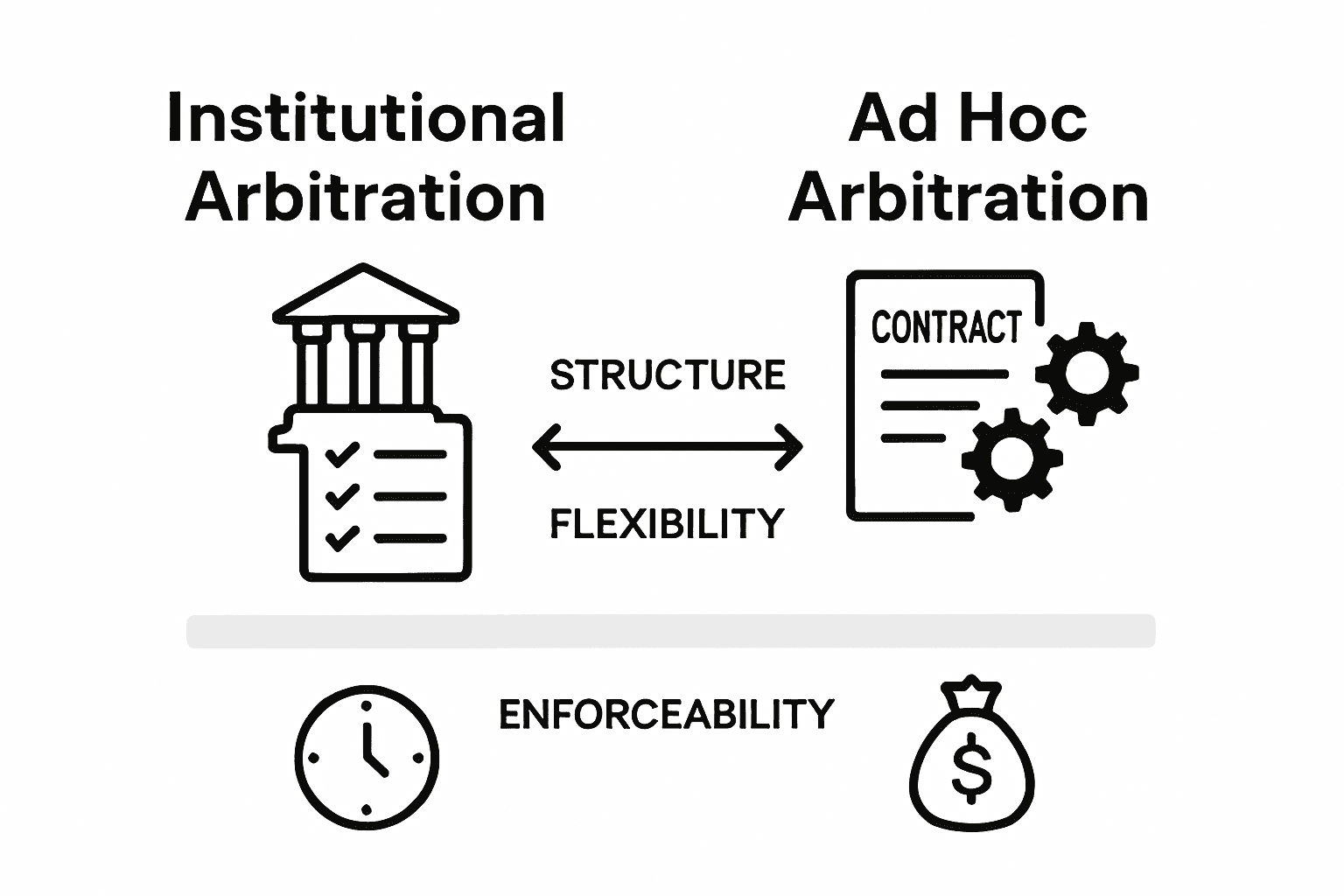
International arbitration operates within complex legal landscapes, with global frameworks designed to standardise dispute resolution processes. The UNCITRAL Model Law stands as a pivotal instrument, providing comprehensive guidelines that enable consistent interpretation and application of arbitration principles across diverse jurisdictional boundaries. This model law establishes critical standards for procedural fairness, ensuring that international commercial disputes can be resolved with transparency and predictability.
Key legal frameworks governing international arbitration include multiple international treaties and conventions. The New York Convention on the Recognition and Enforcement of Foreign Arbitral Awards remains particularly significant, offering a standardised mechanism for recognising and enforcing arbitration agreements and awards across signatory nations. These frameworks collectively aim to reduce legal uncertainties, promote party autonomy, and create a robust environment for cross-border dispute resolution.
Moreover, arbitration legal frameworks are increasingly adapting to contemporary challenges. Digital technologies, evolving commercial practices, and complex transnational business relationships necessitate dynamic legal interpretations. Contemporary frameworks now address emerging issues such as data protection, digital evidence admissibility, and cross-border enforcement mechanisms, reflecting the increasingly interconnected nature of global commerce.
Pro Tip: Legal Preparation: Thoroughly review the specific arbitration rules and legal frameworks applicable to your jurisdiction before initiating any international dispute resolution process, as nuanced differences can significantly impact procedural outcomes.
Here is a comparison of the main international legal frameworks relevant to arbitration:
| Framework | Primary Purpose | Geographic Scope | Unique Features |
|---|---|---|---|
| UNCITRAL Model Law | Harmonises arbitration laws and outlines standard procedures | Adopted globally | Emphasises party autonomy and procedural fairness |
| New York Convention | Facilitates recognition and enforcement of foreign arbitral awards | 170+ countries | Universal enforceability of awards |
| ICSID Convention | Resolves disputes between foreign investors and states | 150+ member states | Focused on investor–state disputes |
International arbitration follows a structured procedural framework designed to resolve disputes through a systematic and efficient approach. The process typically commences with the establishment of an arbitral tribunal, comprising neutral arbitrators selected by the involved parties or appointed through predetermined mechanisms. These arbitrators possess specialised expertise relevant to the specific dispute, ensuring a knowledgeable and impartial evaluation of complex commercial matters.
The arbitration procedure encompasses several critical stages. Initial proceedings involve comprehensive document exchange and discovery, where parties submit relevant evidence, written statements, and supporting documentation. Subsequent hearings allow both sides to present oral arguments, examine witnesses, and provide detailed testimonies before the arbitral tribunal. This structured approach enables a thorough exploration of the dispute, facilitating a nuanced understanding of the underlying issues and legal considerations.

Upon conclusion of the hearing process, the arbitral tribunal deliberates and prepares a binding decision known as an arbitral award. Unlike traditional court proceedings, arbitration offers greater flexibility in procedural rules, confidentiality, and potential for expedited resolution. The award is typically final and enforceable across multiple jurisdictions, providing a robust mechanism for international dispute settlement that transcends national legal boundaries.
Pro Tip: Strategic Preparation: Meticulously compile and organise all documentary evidence and potential witness testimonies well in advance of arbitration hearings to strengthen your procedural position and enhance the effectiveness of your legal presentation.
International arbitration presents a complex landscape of strategic advantages and potential challenges, requiring careful consideration of its multifaceted nature. The key benefits encompass several critical dimensions, including expedited dispute resolution, enhanced confidentiality, and the ability to select specialised arbitrators with expertise directly relevant to the specific commercial or legal context. This approach offers parties significantly more control over the resolution process compared to traditional litigation.
However, the financial implications of arbitration demand meticulous evaluation. Costs can escalate rapidly, with expenses including arbitrator fees, administrative charges, legal representation, and potential venue expenditures. The binding nature of arbitral awards introduces another crucial risk dimension, as parties have limited opportunities for appeal. This finality necessitates thorough preparation and strategic assessment before committing to the arbitration process, understanding that the decision will be largely conclusive.
Furthermore, international arbitration involves nuanced risks related to jurisdictional complexities and enforcement challenges. While arbitral awards are generally recognised across multiple jurisdictions, practical enforcement can vary significantly depending on national legal frameworks. Parties must carefully assess potential geopolitical, legal, and economic factors that might impact the ultimate resolution and implementation of the arbitration outcome.
Pro Tip: Risk Assessment: Conduct a comprehensive preliminary analysis of potential arbitration costs, jurisdictional challenges, and long-term strategic implications before initiating the arbitration process, ensuring a holistic understanding of potential outcomes.
Understanding the complexities of international arbitration requires more than just legal knowledge it demands strategic guidance and clear communication to protect your interests across borders. Whether you face challenges related to arbitrator selection, procedural intricacies, or enforcement of awards, Ali Legal offers expert support tailored to your unique dispute. We appreciate how important party autonomy, binding decisions, and navigating frameworks like the UNCITRAL Model Law are to your case.
Take control of your international dispute resolution now by consulting with specialists who value transparency, speed, and fixed fees. Discover how we simplify complex arbitration processes and help you manage costs and risks effectively. Act today for a strategic advantage and connect with Ali Legal via our contact page to start your journey towards a clear, binding resolution.
International arbitration is a private dispute resolution mechanism that allows parties from different jurisdictions to resolve conflicts outside traditional court systems through neutral arbitrators.
The core principles include party autonomy, which grants participants significant control over the dispute resolution process, including the selection of arbitrators and procedural rules, fostering mutual respect and agreement between parties.
Institutional arbitration is managed by established organisations that provide structured processes, while ad hoc arbitration allows parties greater flexibility in designing the dispute resolution process, relying on mutual cooperation without institutional oversight.
Key benefits of international arbitration include expedited dispute resolution, confidentiality, and the ability to select specialised arbitrators. However, it also carries risks such as potentially high costs, limited opportunities for appeal, and jurisdictional enforcement challenges.
Over 90 percent of companies expanding internationally encounter at least one major cross-border legal challenge, highlighting the complexity faced by British businesses in the global market. Navigating these obstacles matters because even a minor legal error can lead to costly disputes or regulatory setbacks. This guide breaks down essential legal steps, helping British decision-makers minimize risk and maintain smooth transactions with confidence.
Addressing cross-border legal requirements demands a systematic approach that blends strategic analysis and comprehensive research. Understanding the intricate legal landscape requires careful examination of multiple jurisdictional frameworks to ensure smooth international business transactions.
To effectively assess cross-border legal requirements, start by conducting a thorough jurisdictional analysis. This involves examining specific legal systems, regulatory environments, and potential compliance challenges in each country involved in your transaction. International dispute legal frameworks provide critical insights into the complex interactions between different national legal systems. Focus on identifying potential legal risks, understanding local regulatory standards, and mapping out potential areas of legal complexity.
Your assessment should include detailed investigation of contractual requirements, export regulations, intellectual property protections, and potential taxation implications. Engage local legal experts who understand the nuanced legal environments of specific jurisdictions to provide targeted guidance. Pay special attention to differences in contract interpretation, dispute resolution mechanisms, and potential legal constraints that might impact your business operations.
Professional tip: Always allocate sufficient time and resources for comprehensive legal due diligence before finalising any international business transaction to minimise potential legal risks and unexpected complications.
Here is a comparison of key cross-border legal risks and their typical business impacts:
| Legal Risk Type | Description | Potential Business Impact |
|---|---|---|
| Contractual Ambiguities | Differing contract interpretations | Increased dispute likelihood |
| Regulatory Non-Compliance | Unmet local or international statutes | Fines, legal actions, reputational harm |
| Taxation Differences | Conflicting or unclear tax rules | Unexpected costs, double taxation |
| IP Protection Variances | Inconsistent intellectual property laws | Risk of IP theft or infringement |
| Export Restrictions | Country-specific export controls | Delivery delays, blocked transactions |
Identifying jurisdiction and regulatory obligations forms the critical foundation for navigating international business transactions. This crucial step requires meticulous research and strategic understanding of legal frameworks that govern cross border interactions.
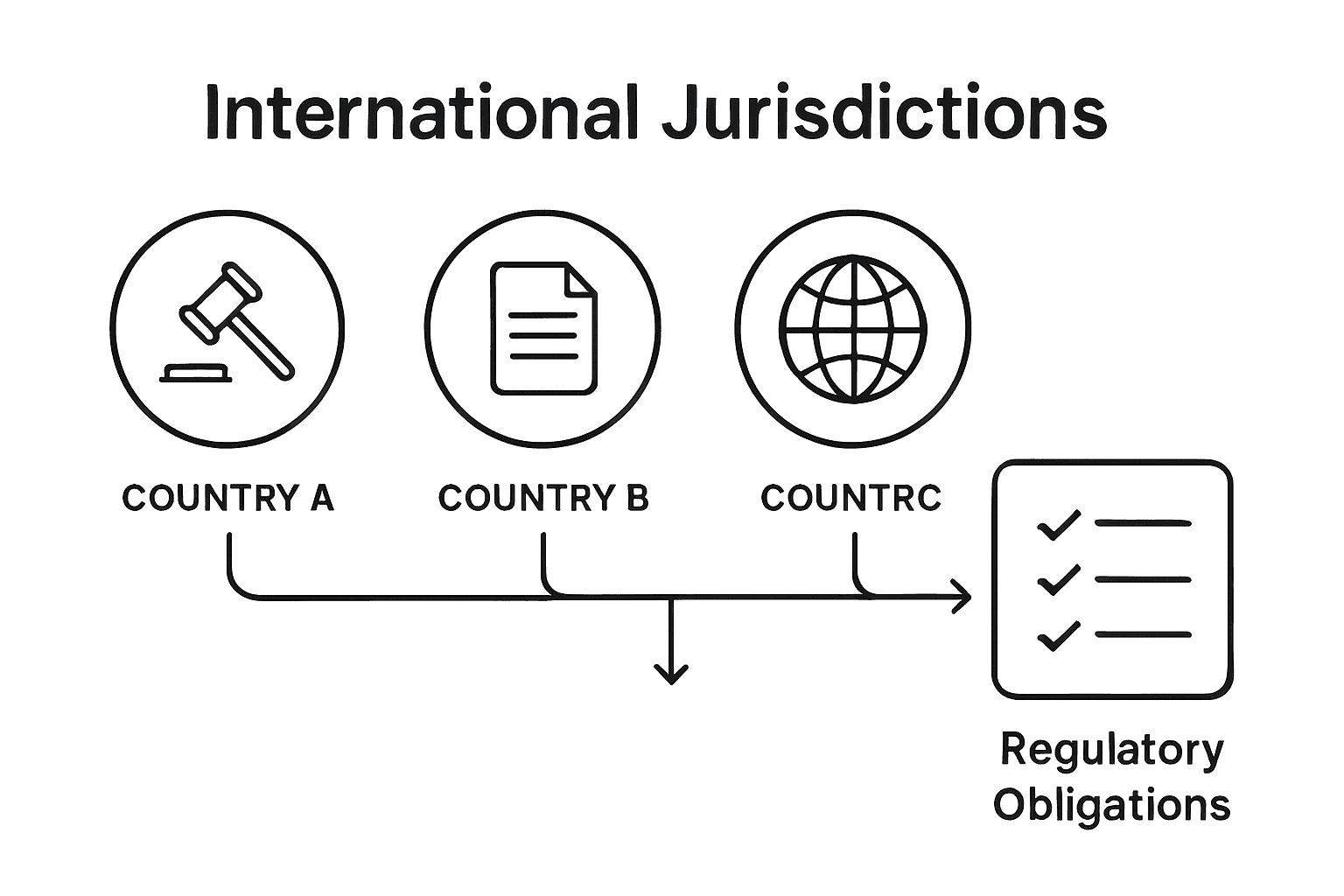
Begin by comprehensively mapping the legal landscapes of all jurisdictions involved in your transaction. Cross border dispute resolution strategies provide essential insights into understanding complex regulatory environments. Examine specific legal requirements, including local legislation, international treaties, compliance standards, and potential regulatory constraints that might impact your business operations. Focus on identifying key differences in legal interpretations, statutory requirements, and potential enforcement mechanisms across different jurisdictional boundaries.
Your jurisdiction assessment should include detailed analysis of specific regulatory frameworks governing your industry, potential licensing requirements, mandatory reporting obligations, and potential legal restrictions. Engage legal professionals with expertise in international regulations to help navigate these complex landscapes. Pay particular attention to nuanced legal interpretations, potential conflict resolution mechanisms, and regulatory compliance requirements that could significantly impact your international business strategy.
Professional tip: Develop a comprehensive regulatory compliance matrix that systematically tracks legal requirements across different jurisdictions to ensure comprehensive and proactive risk management.
Structuring and drafting international contracts requires precision and comprehensive understanding of complex legal frameworks across multiple jurisdictions. This critical process demands meticulous attention to detail and strategic legal planning.

Begin by developing a robust contract structure that accommodates diverse legal systems and international business practices. International business law principles emphasise the importance of creating flexible yet comprehensive contractual frameworks. Carefully draft each clause to address potential jurisdictional variations, ensuring clear language that minimises ambiguity and potential legal disputes. Focus on key elements such as precise definitions, comprehensive scope of work, payment terms, intellectual property protections, confidentiality provisions, and detailed dispute resolution mechanisms.
Your contract drafting process should incorporate thorough risk assessment and cultural considerations. Engage legal experts specialising in international commercial law to review and validate your contract structure. Pay particular attention to nuanced language interpretations, potential regulatory constraints, and specific legal requirements that might differ across various international jurisdictions. Consider incorporating multilingual provisions, clear governing law statements, and explicit clauses that address potential cross border complexities.
Professional tip: Always include comprehensive dispute resolution clauses that specify exact arbitration mechanisms and predetermined jurisdictional frameworks to minimise potential legal uncertainties in international business transactions.
The following table summarises essential elements of a robust international contract:
| Contract Element | Purpose | Why It Matters |
|---|---|---|
| Clear Definitions | Avoids misinterpretation | Minimises future disputes |
| Governing Law Clause | Selects applicable legal system | Ensures consistent enforcement |
| Dispute Resolution Terms | Details resolution process (e.g. arbitration) | Reduces legal uncertainty |
| Payment Terms | Specifies methods and deadlines | Prevents payment confusion |
| Confidentiality Provisions | Protects sensitive information | Safeguards business interests |
Negotiating and formalising international business agreements requires a strategic approach that balances legal precision with cultural sensitivity. This critical stage demands comprehensive preparation and nuanced communication skills to successfully bridge potential gaps between different business practices and legal frameworks.
International business negotiation strategies underscore the importance of thorough preparation and adaptive communication techniques. Begin by conducting comprehensive research on your counterparty’s business culture, legal environment, and specific organisational expectations. Develop a clear negotiation strategy that identifies your core objectives while maintaining flexibility for potential compromises. Prepare detailed documentation that articulates your position, including precise financial terms, performance expectations, risk allocation mechanisms, and comprehensive liability provisions. Ensure your negotiation approach demonstrates respect for cultural differences and promotes collaborative problem solving.
During the formalisation process, carefully document every agreed element with precision and clarity. Engage legal professionals with expertise in international commercial law to review and validate the agreement. Pay particular attention to language translations, ensuring that key terms retain their intended meaning across different linguistic contexts. Verify that the final agreement comprehensively addresses potential scenarios including performance standards, dispute resolution mechanisms, termination conditions, and potential contingencies. Confirm that all parties have a shared understanding of the agreement’s terms and implications.
Professional tip: Always allocate dedicated time for detailed review and seek independent legal counsel to validate the agreement’s comprehensiveness and protect your organisation’s strategic interests.
Implementing and monitoring compliance procedures represents a critical safeguard for international business operations, ensuring legal alignment and minimising potential regulatory risks. This comprehensive process demands meticulous attention and systematic approaches to maintaining organisational integrity across diverse legal environments.
International regulatory compliance strategies emphasise the importance of developing robust monitoring frameworks that adapt to changing legal landscapes. Begin by establishing a comprehensive compliance programme that includes detailed documentation of regulatory requirements specific to each jurisdiction where you operate. Create clear internal protocols that outline reporting mechanisms, accountability structures, and specific procedural steps for maintaining regulatory adherence. Develop a centralised compliance management system that tracks regulatory changes, monitors potential risks, and provides real time updates to relevant organisational stakeholders.
Ensure your compliance monitoring approach incorporates regular internal audits, comprehensive documentation processes, and proactive risk assessment techniques. Engage legal and compliance specialists who can provide expert guidance on navigating complex international regulatory requirements. Implement technology driven solutions that enable efficient tracking of compliance metrics, automated reporting, and rapid identification of potential regulatory discrepancies. Establish a culture of transparency and continuous learning that encourages employees to understand and actively participate in maintaining regulatory compliance.
Professional tip: Develop a dynamic compliance dashboard that provides real time insights into regulatory status and enables rapid response to emerging legal and regulatory challenges.
Expanding your business across borders comes with many complexities such as dealing with diverse jurisdictional obligations, cross border dispute resolution, and drafting watertight international contracts. This article highlights the critical need to assess legal requirements carefully, understand jurisdictional frameworks, and implement robust compliance procedures. Ali Legal is dedicated to helping you overcome these challenges by offering clear, strategic advice tailored to your unique global transactions.
If you want to protect your business and confidently navigate international legal landscapes visit our Uncategorized | Ali Legal section to explore insightful resources. Start the conversation with our expert solicitors today by contacting us through https://alilegal.co.uk/contact-us. Act now to ensure a smoother, risk-managed international expansion supported by transparent legal guidance. For a broad view of our services see All | Ali Legal.
To assess cross-border legal requirements, conduct a thorough jurisdictional analysis to understand specific legal systems and regulations. Begin by identifying potential legal risks and compliance challenges in each jurisdiction involved in your transaction.
When drafting an international contract, incorporate clear definitions, a governing law clause, and detailed dispute resolution terms. Ensure all key elements are well-defined, which helps avoid ambiguities and reduces the likelihood of future disputes.
Identify jurisdictional obligations by mapping the legal landscapes of all jurisdictions involved in the transaction. Research specific regulations, local legislation, and international treaties that apply to your industry to ensure compliance.
Effective negotiation of international agreements involves thorough preparation and understanding the counterparty’s business culture. Develop a clear strategy and articulate your position while demonstrating respect for cultural differences and potential compromises.
To monitor compliance procedures, establish a centralised compliance management system that tracks regulatory changes and potential risks. Regularly conduct internal audits and maintain comprehensive documentation to ensure adherence to the specific regulations in each jurisdiction.
Most major british companies now include arbitration clauses in their contracts, shaping how disputes are handled in and out of the courtroom. With over 80 percent of large United Kingdom firms relying on these provisions, understanding their nuances is vital for businesses and individuals alike. This overview will clarify what arbitration clauses are, why their structure matters under british law, and how they can influence the outcome of commercial disagreements.
Arbitration clauses represent specialised legal provisions designed to outline alternative dispute resolution mechanisms within contractual agreements. These clauses provide parties with a structured pathway to resolve potential conflicts outside traditional court systems, offering a more flexible and potentially cost-effective approach to legal disagreements.
In the context of UK legal frameworks, arbitration clauses serve as critical contractual instruments that define the procedural mechanisms for dispute resolution. They typically specify key parameters such as the number of arbitrators, the selection process, the governing legal jurisdiction, and the procedural rules that will guide the arbitration proceedings. By establishing these parameters in advance, parties can create a predictable and mutually agreed upon dispute resolution strategy.
The structural complexity of arbitration clauses demands precise drafting and careful consideration. Arbitration agreements are distinct from standard contractual provisions, as they create a separate legal mechanism for resolving disputes. Unlike litigation, arbitration allows parties to choose their adjudicators, maintain confidentiality, and potentially resolve conflicts more efficiently. This autonomy enables businesses and individuals to craft dispute resolution strategies tailored to their specific needs and industry requirements.
Legal professionals emphasise the importance of comprehensive arbitration clause drafting to ensure enforceability and clarity. The clause must explicitly outline the scope of disputes covered, the arbitration process, and the legal principles that will govern the proceedings. Ambiguity in these provisions can lead to potential challenges and undermine the effectiveness of the arbitration mechanism.
Pro Tip for Contract Drafting: Consult a specialised legal professional when drafting arbitration clauses to ensure they comprehensively address potential dispute scenarios and align with current legal standards in your specific industry or sector.
Arbitration agreements manifest in two primary forms, each serving distinct legal purposes within contractual frameworks. These variations represent critical mechanisms for dispute resolution across different sectors and legal contexts.
The first type encompasses anticipatory arbitration clauses, which are embedded directly within original contracts and pre-emptively establish dispute resolution protocols. These clauses proactively address potential future conflicts by defining arbitration parameters before any disagreement emerges. They provide a structured approach that allows parties to agree on procedural elements such as arbitrator selection, jurisdiction, and potential remedies in advance.
In contrast, submission agreements represent the second primary arbitration clause type, typically formed after a specific dispute has already arisen. These agreements emerge when parties mutually decide to resolve an existing conflict through arbitration, rather than pursuing traditional litigation. Such agreements offer flexibility and demonstrate a collaborative approach to conflict resolution, enabling parties to craft bespoke solutions tailored to their specific disagreement.
Beyond these fundamental classifications, arbitration clauses can further differentiate based on industry-specific requirements. Sectors like shipping, construction, and international commerce often develop nuanced arbitration provisions reflecting their unique operational complexities. These specialised clauses might incorporate detailed technical provisions, sector-specific terminology, and procedural mechanisms that align with industry standards and practices.
Here is a summary of the key distinctions between arbitration clause types:
| Clause Type | Timing of Agreement | Typical Use Case | Main Advantage |
|---|---|---|---|
| Anticipatory Arbitration | Before any dispute arises | Standard in commercial contracts | Proactive conflict management |
| Submission Agreement | After a conflict has emerged | Ad hoc dispute settlements | Tailored resolution for specific cases |
Pro Tip for Legal Strategy: Carefully analyse the specific context and potential future scenarios when drafting arbitration clauses to ensure comprehensive coverage and maximum flexibility in potential dispute resolution pathways.
The United Kingdom’s legal framework for arbitration clauses represents a sophisticated and nuanced system that balances contractual autonomy with procedural integrity. The UK Supreme Court has provided critical guidance on determining the governing law of arbitration agreements, establishing a comprehensive approach to interpreting and enforcing these contractual provisions.
Central to the UK’s arbitration legal framework is the Arbitration Act 1996, which provides the foundational legislative structure governing arbitration agreements. This Act establishes key principles, including party autonomy, the ability to choose arbitration procedures, and the court’s supportive role in arbitration processes. The legislation ensures that arbitration clauses maintain legal validity and can be effectively enforced, providing a robust mechanism for dispute resolution outside traditional court systems.
Recent judicial developments have further refined the legal landscape surrounding arbitration clauses. English Commercial Court rulings have affirmed the validity of sophisticated contractual mechanisms, such as unilateral option clauses, demonstrating the legal system’s adaptability to complex commercial arrangements. These judgments underscore the UK’s commitment to providing a flexible yet structured approach to arbitration, recognising the evolving needs of commercial entities in resolving disputes.
The legal framework additionally emphasises the principle of separability, which treats arbitration clauses as distinct legal agreements independent of the primary contract. This approach ensures that the validity of an arbitration clause remains unaffected even if the underlying contract is challenged, providing parties with a reliable dispute resolution mechanism that maintains its legal integrity under various circumstances.
Pro Tip for Legal Compliance: Carefully review the specific requirements of the Arbitration Act 1996 and consult with specialised legal counsel to ensure your arbitration clauses are drafted with precision and align with current legal standards.
Arbitration clauses transform dispute resolution from traditional litigation into a structured, consensual process that offers parties significantly more control over their legal proceedings. Practical interpretation of these clauses requires understanding their intricate operational mechanisms, which extend far beyond simple contractual language.

The operational process typically begins when a dispute emerges, triggering the predetermined arbitration mechanism. At this point, the clause outlines specific procedural steps, including selecting arbitrators, determining the jurisdiction, establishing timelines, and defining the scope of evidence admissibility. Unlike court proceedings, arbitration allows parties to choose decision-makers with specialised expertise relevant to their specific industry or conflict, creating a more targeted approach to dispute resolution.
Practically, arbitration clauses function through a series of negotiated stages. The initial phase involves both parties acknowledging the arbitration agreement’s validity and selecting an appropriate arbitration forum. Subsequently, they must agree on procedural rules, such as the number of arbitrators, the language of proceedings, and the location where arbitration will take place. These negotiations require careful consideration, as the chosen parameters can significantly impact the eventual dispute resolution outcome.
Technical considerations play a crucial role in the practical implementation of arbitration clauses. Parties must carefully draft provisions that specify precise mechanisms for initiating arbitration, including notification requirements, timeframes for responses, and detailed protocols for presenting evidence. The enforceability of these clauses depends on their clarity, specificity, and alignment with established legal standards, making meticulous drafting an essential component of effective arbitration agreements.
Pro Tip for Dispute Resolution: Consult experienced legal professionals when drafting arbitration clauses to ensure comprehensive coverage of potential scenarios and maximise the clause’s effectiveness in resolving potential future conflicts.
Defective arbitration clauses can introduce substantial financial and legal risks that extend far beyond simple contractual disagreements. These risks emerge from poorly constructed provisions that fail to anticipate potential complexities in dispute resolution, potentially undermining the entire purpose of establishing an arbitration mechanism.
Financial considerations play a critical role in evaluating arbitration’s viability. Institutional arbitration typically involves higher upfront costs, including administrative fees, arbitrator compensation, and potential venue expenses. While these costs can be significant, they are often offset by the process’s efficiency and the potential to avoid protracted litigation. Parties must carefully weigh the financial implications, considering factors such as the dispute’s complexity, the amount in contention, and the potential long-term cost savings compared to traditional court proceedings.
Different dispute resolution alternatives present unique trade-offs between institutional and ad hoc arbitration approaches. Mediation emerges as a particularly attractive alternative, offering a collaborative approach that can preserve business relationships while potentially reducing costs. Negotiation and expert determination represent additional strategies, each with distinct advantages depending on the specific nature of the dispute. These alternatives provide flexibility that traditional arbitration might not afford, allowing parties to select a resolution mechanism most appropriate to their specific circumstances.
The table below compares arbitration to other common dispute resolution options:
| Method | Costs Involved | Flexibility | Outcome Enforceability |
|---|---|---|---|
| Arbitration | Moderate to high fees | High (procedure choice) | Strong (binding awards) |
| Mediation | Low to moderate fees | Very high | Variable (if agreement) |
| Litigation | Often high court costs | Low (court imposed) | Very strong (court orders) |
| Negotiation | Minimal to low costs | Highest (informal) | Depends on contract |
Risks associated with arbitration extend beyond financial considerations. Potential challenges include limited appeal options, the risk of selecting inappropriate arbitrators, and potential enforceability issues across different jurisdictions. Parties must conduct thorough due diligence, carefully draft arbitration clauses, and consider the specific context of potential disputes to mitigate these inherent risks effectively.
Pro Tip for Risk Management: Conduct a comprehensive cost-benefit analysis and carefully evaluate alternative dispute resolution mechanisms before committing to a specific arbitration approach, ensuring alignment with your organisation’s strategic objectives and potential conflict scenarios.
Understanding the complex role of arbitration clauses in UK contracts reveals common challenges such as drafting clear dispute resolution mechanisms, ensuring enforceability under the Arbitration Act 1996, and managing risks related to costs and procedural flexibility. Key concerns include establishing precise arbitration terms, avoiding ambiguity, and maintaining control over the process while protecting your legal interests.
Ali Legal specialises in guiding individuals and businesses through these complexities with strategic legal advice. Our team helps you draft and review arbitration clauses that are tailored to your specific contracts and industry requirements. Benefit from fixed fees and transparent communication while we ensure your agreement aligns with UK legal frameworks and maximises dispute resolution effectiveness.
Looking to safeguard your contracts with trusted legal expertise and avoid costly misunderstandings?
Contact our expert solicitors today for a straightforward consultation on arbitration clauses and dispute resolution. Take the proactive step now by visiting Ali Legal Contact Us and secure your business with precise, legally sound arbitration agreements.
An arbitration clause is a specific provision within a contract that outlines the procedures for resolving disputes through arbitration instead of traditional court litigation.
Arbitration clauses provide parties with a structured process for dispute resolution that is typically more flexible, confidential, and cost-effective than litigation.
The two primary types of arbitration clauses are anticipatory arbitration clauses, which are included before any disputes arise, and submission agreements, which are formed after a dispute has occurred.
Precise drafting ensures that arbitration clauses are enforceable and clear, reducing the risk of ambiguity that could lead to challenges in the arbitration process.
Over 1 in 4 people living in the United Kingdom today were born outside its borders, making the role of british immigration lawyers more crucial than ever. With evolving regulations and complex paperwork, navigating the legal side of migration can quickly become overwhelming for individuals and families hoping to call the United Kingdom home. This guide explains what british immigration lawyers do, the types of services they offer, and why expert legal guidance often becomes a turning point for successful relocation.
Immigration lawyers specialise in navigating the complex legal landscape of migration and nationality law. They provide crucial legal support to individuals and organisations seeking to understand and comply with intricate immigration regulations. These legal professionals are fundamental in helping clients traverse challenging administrative processes, ensuring their rights are protected throughout immigration proceedings.
The core responsibilities of immigration lawyers encompass several critical areas. They assist clients with visa applications and legal documentation by preparing comprehensive paperwork, interpreting legislative requirements, and strategically presenting cases to immigration authorities. Their expertise extends beyond simple form completion; they offer strategic counsel on potential legal challenges, analyse individual circumstances, and develop tailored approaches to immigration challenges.
Professional immigration lawyers typically handle a wide range of scenarios, including asylum applications, work permit requests, family reunification cases, and appeals against immigration decisions. They must possess deep understanding of human rights legislation, administrative law, and international legal frameworks. Specialised knowledge becomes particularly crucial when representing vulnerable populations or managing complex cross-border legal situations that require nuanced interpretation of immigration statutes.
Understanding the legal system’s intricacies is essential, which is why many practitioners maintain active membership with professional bodies like the Immigration Law Practitioners’ Association to stay current with evolving regulations and best practices. Their role goes beyond simple legal representation, serving as critical advocates who protect individual rights and facilitate legal migration pathways.
Pro Tip: Always schedule an initial consultation with an immigration lawyer who specialises in your specific migration scenario, as each case requires personalised legal strategy and expert guidance.
Immigration legal services encompass a comprehensive range of specialised support designed to address diverse migration challenges. These services cater to individuals, families, and businesses seeking professional guidance through complex immigration processes. Personal immigration services typically focus on helping individuals navigate visa applications, residency permits, citizenship requests, and family reunification programmes.
Professional immigration lawyers offer multiple critical service categories tailored to specific client needs. These include visa and entry clearance services, which involve preparing and submitting applications for work visas, student visas, family visas, and settlement permits. Asylum and humanitarian protection services represent another crucial area, where lawyers provide legal representation for individuals seeking refuge or protection from persecution in their home countries. Additionally, lawyers assist with complex appeal processes, representing clients in administrative tribunals and immigration courts.
Business immigration services represent a sophisticated segment of legal support, particularly for organisations expanding internationally. These services include advising corporations on work permit strategies, managing global talent mobility, navigating sponsorship licence requirements, and ensuring compliance with international employment regulations. Lawyers in this domain help companies understand intricate legal frameworks surrounding international workforce management and strategic global expansion.
Specialised immigration services also extend to high-net-worth individuals and investors seeking unique migration pathways. These bespoke services involve developing comprehensive relocation strategies, managing investment-linked migration programmes, and providing strategic counsel on complex cross-border legal considerations. Such services often require nuanced understanding of international law, investment regulations, and diplomatic protocols.
Here is a summary of key immigration legal services and their intended audiences:
| Service Category | Typical Clients | Primary Purpose |
|---|---|---|
| Personal Immigration | Individuals, families | Achieving residency, visas, or citizenship |
| Business Immigration | Companies, employers | Talent mobility, compliance, sponsorship |
| Asylum & Humanitarian | Vulnerable migrants, refugees | Protection from persecution or instability |
| High Net Worth & Investors | Investors, entrepreneurs | Access through investment, global mobility |
Pro Tip: Always request a comprehensive initial consultation that maps out your specific immigration journey, allowing your legal team to develop a tailored strategy addressing your unique circumstances and migration objectives.
Immigration lawyers shoulder profound responsibilities in protecting clients’ legal interests and navigating complex migration frameworks. Ensuring meticulous compliance with administrative deadlines represents a fundamental duty that can dramatically impact an individual’s migration prospects. These legal professionals must systematically track application timelines, prepare comprehensive documentation, and anticipate potential procedural challenges that might compromise a client’s immigration objectives.

Client representation involves far more than completing paperwork. Immigration lawyers act as strategic advocates, interpreting complex legal statutes, communicating with governmental authorities, and developing nuanced arguments that protect their clients’ rights. This requires deep understanding of human rights legislation, administrative procedures, and international migration policies. Lawyers must craft compelling narratives that demonstrate an individual’s eligibility, whether for asylum, work permits, family reunification, or permanent residency.
The scope of legal duties extends beyond immediate case management. Immigration lawyers must maintain ongoing professional development to stay current with rapidly evolving legal landscapes. This includes monitoring policy changes, understanding shifting geopolitical dynamics, and maintaining extensive networks within immigration administrative systems. The role of a solicitor in immigration contexts involves providing comprehensive strategic guidance that anticipates potential legal obstacles and proactively develops mitigation strategies.
Each client interaction demands a personalised approach, recognising that immigration challenges are inherently unique and emotionally complex. Lawyers must balance technical legal expertise with empathetic communication, helping clients understand intricate legal processes while providing emotional support during potentially stressful migration journeys. This holistic approach distinguishes exceptional immigration legal representation from merely transactional service delivery.
Pro Tip: Always request a comprehensive documentation checklist during your initial consultation, ensuring you understand exactly what evidence and supporting materials will be required for your specific immigration application.
Navigating the intricate landscape of UK immigration law requires profound understanding of complex legal frameworks, administrative procedures, and evolving governmental policies. Immigration lawyers must develop comprehensive expertise across multiple interconnected legal domains, including administrative law, human rights legislation, and international migration regulations. The United Kingdom’s immigration system presents unique challenges, demanding precise knowledge of nuanced statutes and regulatory requirements that frequently undergo significant transformations.
The Home Office serves as the primary administrative body governing immigration processes, establishing stringent criteria for entry, residency, and citizenship. Immigration lawyers must meticulously interpret these regulations, helping clients understand eligibility requirements, preparing robust documentation, and developing strategic approaches to navigate potential legal obstacles. This involves comprehensive analysis of visa categories, work permit regulations, asylum protocols, and family reunification pathways, each requiring specialised legal interpretation and strategic planning.
Professional development plays a critical role in maintaining legal expertise within this dynamic field. Immigration law practitioners must continuously update their knowledge, tracking policy changes, judicial precedents, and emerging legislative trends. This ongoing learning process involves engaging with professional networks, attending specialist conferences, and maintaining active memberships in professional organisations that provide updated guidance and training resources. Understanding the interconnected nature of international migration law requires lawyers to develop a holistic perspective that transcends traditional legal boundaries.
The complexity of UK immigration law necessitates a multifaceted approach that balances legal technicality with human compassion. Lawyers must not only interpret statutes but also understand the broader socio-economic contexts that shape migration experiences. This involves recognising individual circumstances, addressing potential humanitarian considerations, and developing nuanced legal strategies that respect both legal frameworks and fundamental human rights principles.
Pro Tip: Maintain a comprehensive digital portfolio of all immigration-related documents, ensuring you can quickly access and reproduce critical paperwork throughout your migration journey.
Identifying and mitigating potential risks in immigration processes represents a critical aspect of successful legal migration strategies. Immigration applicants frequently encounter complex challenges that can significantly compromise their legal objectives, ranging from procedural errors to misunderstandings of intricate regulatory requirements. These risks can result in application rejections, extended processing times, potential legal complications, and in extreme cases, potential deportation or future immigration restrictions.
Critical documentation errors constitute one of the most prevalent risks in immigration applications. Incomplete or inaccurate paperwork can trigger immediate application rejection, requiring applicants to restart complex procedures. Common mistakes include providing outdated documentation, submitting incorrect forms, failing to translate official documents properly, or neglecting to include essential supporting evidence. Immigration lawyers play a crucial role in meticulously reviewing documentation, ensuring every submission meets stringent governmental standards and minimising potential procedural obstacles.
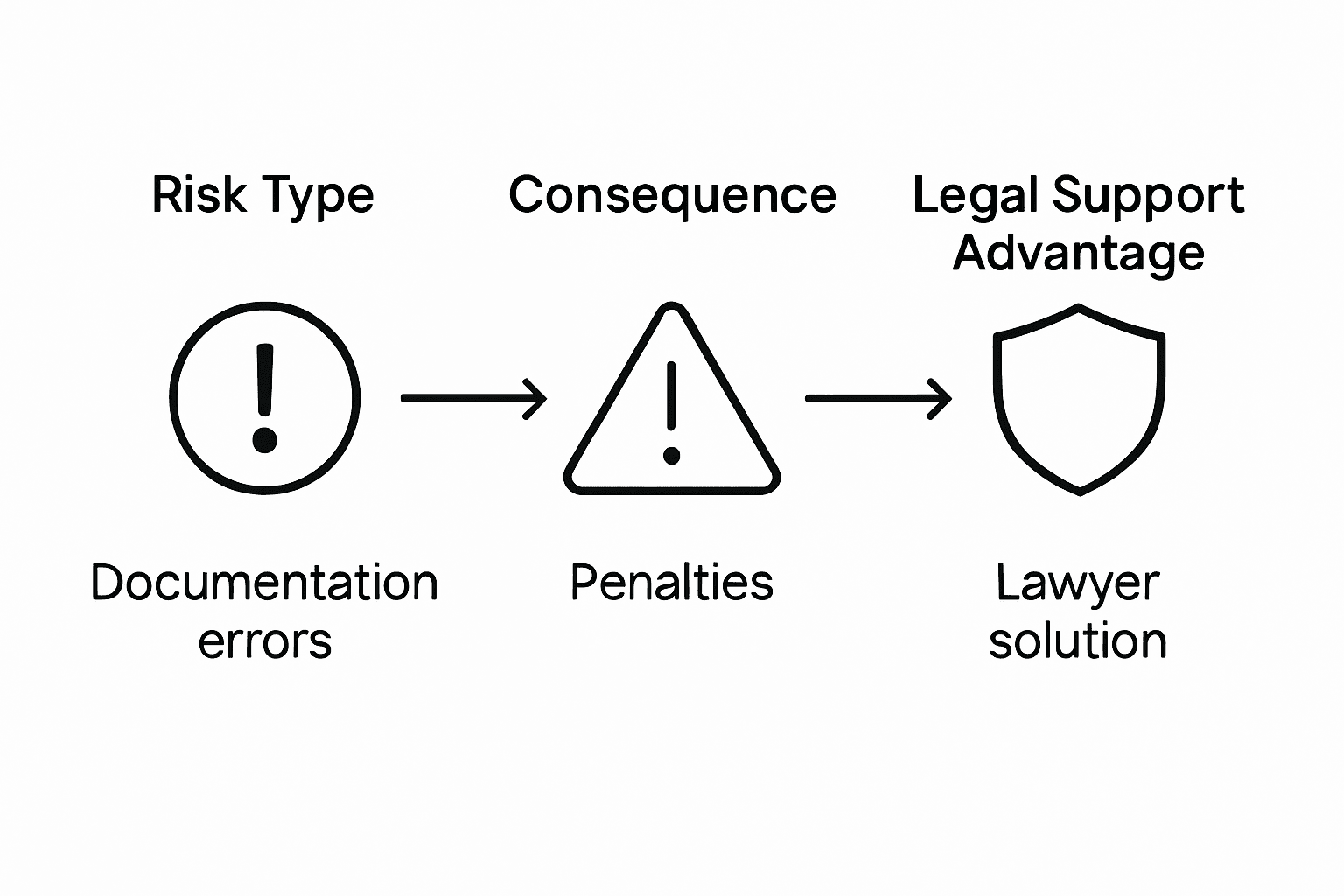
Legal and administrative risks extend beyond mere paperwork. Applicants must navigate complex eligibility criteria, understanding nuanced requirements across different visa categories, work permits, and residency programmes. Compliance challenges can emerge from rapidly changing immigration policies, requiring constant vigilance and proactive legal guidance. Potential risks include misinterpreting visa conditions, inadvertently breaching immigration regulations, or failing to maintain required documentation throughout residency periods. Professional legal representation becomes instrumental in interpreting these complex regulatory landscapes and developing comprehensive risk mitigation strategies.
Emotional and psychological risks represent another critical dimension often overlooked in immigration processes. The prolonged uncertainty, potential financial investments, and complex legal requirements can create significant stress for individuals and families. Immigration lawyers must not only provide technical legal support but also offer compassionate guidance, helping clients understand potential scenarios, manage expectations, and develop resilient approaches to navigating challenging immigration journeys.
Below is a comparison of common risks in immigration processes and how effective legal support can address them:
| Risk Type | Consequence | Legal Support Advantage |
|---|---|---|
| Documentation errors | Application rejection | Detailed review, correct form selection |
| Misinterpreting regulations | Regulatory non-compliance | Accurate advice on eligibility and policy |
| Missed deadlines | Delays, dismissals | Systematic tracking of key dates |
| Emotional pressure | Stress, poor decision-making | Empathetic guidance and stress management |
Pro Tip: Create a comprehensive digital file management system that maintains chronological records of all immigration-related documents, enabling quick retrieval and ensuring you can promptly respond to any administrative queries.
Navigating the complex and often overwhelming UK immigration system demands more than just knowledge it requires strategic guidance and steadfast advocacy to protect your rights and achieve your goals. This article highlights critical challenges such as meticulous documentation, intricate legal requirements, and emotional pressures faced by migrants. At Ali Legal, we understand these unique pain points and offer tailored immigration solutions that focus on transparency, speed, and clear communication so you feel supported every step of the way.
Ready to take control of your immigration journey with confidence Consult our experienced solicitors who specialise in immigration law and benefit from straightforward advice, fixed fees, and a client-centric approach. Whether you are seeking personal immigration assistance or business-related support, Ali Legal is here to develop a personalised strategy that fits your needs. Contact us today through our contact page or explore expert insights in our Uncategorized | Ali Legal section to see how we can protect your rights and streamline your immigration process.
Immigration lawyers specialise in navigating complex migration legalities, helping individuals and organisations understand and comply with immigration regulations, and advocating for their clients’ rights throughout immigration processes.
Immigration lawyers prepare comprehensive visa applications, interpret legislative requirements, and develop tailored strategies to enhance the likelihood of approval, reducing the risk of errors or omissions that may lead to application rejection.
Immigration lawyers handle a variety of cases, including visa applications, asylum requests, family reunification, work permits, and appeals against immigration decisions, addressing the specific needs of each client.
Engaging an immigration lawyer provides clients with expert guidance and support throughout their immigration journeys, ensuring meticulous compliance with legal requirements, minimising risks, and enhancing the chances of a successful outcome.


