
Menu
Get Expert Legal Support Today

Many British families face unnecessary uncertainty about who will inherit their assets because of common misunderstandings about wills. Some believe wills are only needed for the wealthy or that unmarried partners will automatically inherit, yet these assumptions can leave loved ones exposed to financial risk. By understanding what a will truly is and addressing critical planning misconceptions, you can ensure your wealth is protected and your family’s future is secure.
A will is a powerful legal document that provides clear instructions about how your assets, property, and personal possessions should be distributed after your death. Far from being a complex legal instrument reserved only for the wealthy, a will is a critical planning tool for individuals across different financial backgrounds.

Many people hold significant misconceptions about wills. For example, some believe that only wealthy individuals need a will, or that their assets will automatically pass to their preferred beneficiaries without legal documentation. These myths can lead to serious financial complications for surviving family members.
Key aspects of understanding a will include:
Without a properly constructed will, your estate falls under intestacy rules, which means government regulations determine how your assets are distributed. This can result in unintended consequences, potentially leaving loved ones in financially vulnerable positions.
A will is not just about distributing wealth, but about providing care and protection for those you love most.
Professional legal advice is recommended when creating a will, as complex probate processes can arise from improperly drafted documents. While it’s possible to draft a basic will independently, solicitors can help navigate potential legal complexities and ensure your final wishes are precisely documented.
Pro tip: Review and update your will every three to five years, or after significant life events like marriage, divorce, or the birth of children to ensure it remains current and reflects your current wishes.
Understanding the nuanced landscape of wills is crucial for effective estate planning. Different types of wills exist to accommodate varying personal circumstances, family structures, and financial complexities. Legal variations in testaments mean individuals have multiple options for documenting their final wishes.
The primary categories of wills include:
Each will type serves distinct purposes and carries unique legal implications. Solicitor guidance becomes critical when navigating these complex legal instruments, particularly for estates with multiple assets or intricate family dynamics.
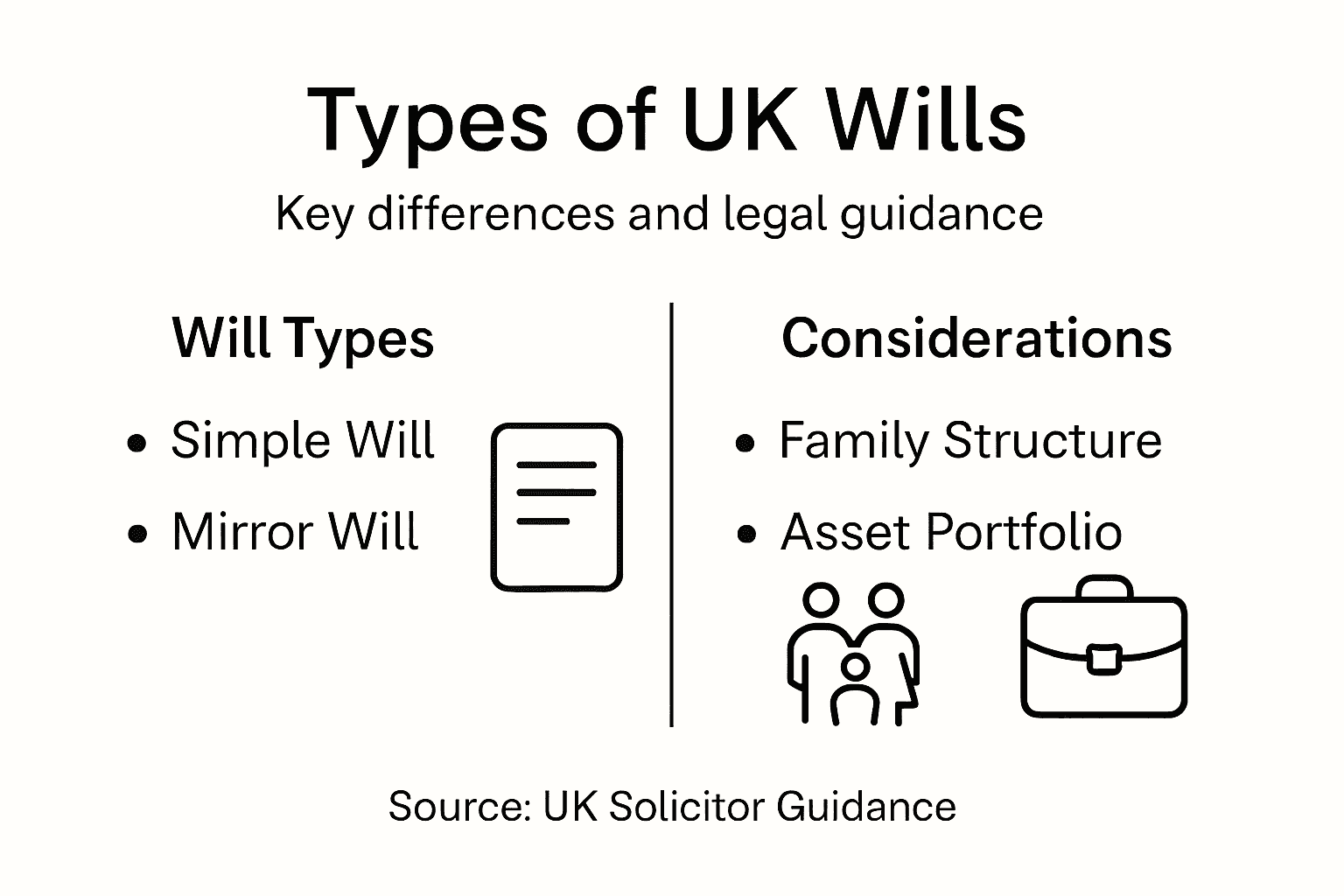
Here’s a comparison of different will types and when they might be appropriate:
| Will Type | Who It Suits | Main Benefit | Drawback |
|---|---|---|---|
| Simple Will | Single, uncomplicated estates | Quick and straightforward to set up | Limited flexibility |
| Complex Will | Large or intricate estates | Allows for trusts and detailed provisions | May require a solicitor |
| Living Will | Anyone wishing to address healthcare decisions | States medical preferences | Does not cover assets |
| Joint Will | Married couples | Unified planning for both partners | Inflexible post-death |
| Holographic Will | Individuals without solicitor access | Can be written by hand without legal assistance | Not always legally valid |
Not all wills are created equal: The right will can protect your legacy and provide clarity for your loved ones.
The selection of an appropriate will depends on multiple factors, including family structure, asset portfolio, potential tax implications, and specific inheritance goals. Professional legal consultation can help determine the most suitable approach for individual circumstances.
Pro tip: Consider consulting a specialist solicitor who can assess your specific circumstances and recommend the most appropriate will type for your unique situation.
Creating a legally binding will in the United Kingdom requires strict adherence to specific legal formalities and requirements. These precise guidelines ensure that an individual’s final wishes are recognised and legally enforceable, protecting the interests of both the testator and potential beneficiaries.
The fundamental legal requirements for a valid will in the UK include:
Mental capacity is a critical component of will validity. The testator must fully understand the implications of their document, comprehend the extent of their assets, and recognise the potential beneficiaries. Legal guidelines emphasise the importance of testamentary capacity to prevent potential challenges to the will’s legitimacy.
A properly constructed will is more than a legal document—it’s a final expression of your intentions and care for your loved ones.
Professional legal guidance can help navigate these complex requirements, ensuring that your will meets all necessary legal standards. Errors in drafting can render the entire document invalid, potentially leaving your estate vulnerable to intestacy laws.
Pro tip: Always have a solicitor review your will to confirm it meets all legal requirements and accurately reflects your precise intentions.
Dying without a valid will, known as dying intestate, can create significant complications for your loved ones. Intestacy rules create unexpected inheritance challenges that may dramatically differ from your intended wishes, potentially leaving your family in financial and emotional distress.
The consequences of dying without a will include:
Under intestacy regulations, legal administrators determine estate distribution, which may not reflect your personal relationships or family dynamics. The default legal hierarchy typically prioritises married partners and blood relatives, potentially leaving long-term partners, stepchildren, and close friends without any inheritance.
Intestacy transforms your final wishes into a bureaucratic lottery, where legal strangers decide your legacy.
The government’s strict intestacy rules can result in unintended and potentially devastating financial consequences. Without a clear will, your estate might be divided in ways that contradict your personal values and relationships, causing unnecessary stress and potential conflict among surviving family members.
The table below outlines some key differences between dying with and without a valid will in the UK:
| Scenario | Control Over Assets | Speed of Estate Settlement | Who Inherits |
|---|---|---|---|
| Valid Will | Full, based on your wishes | Typically quicker | Named beneficiaries |
| No Will (Intestacy) | Limited, determined by law | Often slower, more complex | Set by statutory hierarchy |
Pro tip: Consult a legal professional to draft a comprehensive will that explicitly captures your precise wishes and protects your loved ones’ financial interests.
Creating a comprehensive will goes far beyond simple asset distribution, serving as a strategic financial planning tool that can significantly impact your family’s long-term financial security. Careful will planning helps reduce inheritance tax liabilities and provides critical protection for your loved ones during challenging transitional periods.
Key financial and family considerations include:
Professional will planning allows for nuanced strategies such as establishing specific gifts and charitable donations, which can offer both personal satisfaction and potential tax advantages. By carefully documenting your wishes, you can create a robust framework that addresses complex family dynamics and financial objectives.
A meticulously crafted will is more than a legal document—it’s a final act of love and responsibility towards your family.
Executors play a crucial role in implementing your wishes, managing estate distribution, settling outstanding debts, and ensuring your final instructions are carried out precisely. Selecting trustworthy and competent executors is fundamental to smooth estate administration and minimising potential legal complications.
Pro tip: Consult a specialist tax and legal professional who can provide personalised advice tailored to your specific family and financial circumstances.
Crafting a legally sound will requires meticulous attention to detail and understanding of complex legal requirements. Common will-making errors can invalidate your entire document, potentially leaving your loved ones in a precarious financial situation.
Frequent mistakes that can compromise your will include:
Legal professionals recommend careful document preparation to prevent these critical errors. Subtle mistakes in will drafting can lead to prolonged legal disputes, potentially draining estate resources and causing emotional distress for your family.
A single overlooked detail can transform your carefully planned legacy into a legal battleground.
Professional legal guidance becomes crucial in navigating the intricate landscape of will creation. Solicitors can help identify potential pitfalls, ensure precise language, and create a comprehensive document that accurately reflects your final wishes while meeting all legal requirements.
Pro tip: Review and update your will every three to five years, or immediately after significant life events such as marriage, divorce, birth of children, or substantial changes in financial circumstances.
Understanding the critical importance of a legally valid will is the first step in protecting your family and assets from the costly consequences of dying intestate. This article highlights common will-making pitfalls, the complexity of legal requirements, and the emotional strain caused by unclear or outdated documents. If you want to ensure your final wishes are honoured and avoid unnecessary family disputes or tax burdens, professional support is essential.

Ali Legal offers transparent and straightforward legal advice tailored to your unique situation. Our experienced solicitors specialise in helping clients across the UK create comprehensive, valid wills that accurately reflect their intentions. With a client-centred approach, we guide you through every detail, so you gain peace of mind knowing your will meets all necessary legal standards. Don’t leave your legacy to chance. Contact us today at Ali Legal Contact to discuss how we can help you protect your loved ones and secure your estate for the future.
A will is a legal document that specifies how your assets and possessions will be distributed after your death. It is important because it allows you to control your estate distribution, name guardians for minor children, and potentially reduce inheritance tax liabilities.
Dying without a will, known as intestate, means your estate will be distributed according to statutory rules. This can lead to unintended inheritance outcomes, such as unmarried partners receiving nothing and lengthy legal procedures for your family.
A clearly written will reduces ambiguity regarding asset distribution, thus providing explicit instructions for your beneficiaries. This clarity helps prevent misunderstandings and potential conflicts among family members after your passing.
To be legally valid, a will must be in writing, signed by the testator, and witnessed by two independent adult witnesses who also sign in the presence of the testator. The testator must have mental capacity and make the will voluntarily without pressure.


