

Fraud represents a massive criminal threat in the UK today. Fraud accounts for approximately 41% of all crime against individuals in England and Wales, yet confusion persists about what legally constitutes fraud. This article demystifies fraud law under the Fraud Act 2006, explains practical implications for individuals and businesses, and offers actionable guidance to manage risks and strengthen compliance in 2026.
| Point | Details |
|---|---|
| Legal Definition | Fraud Act 2006 defines fraud through false representation, omission, and abuse of position. |
| Crime Prevalence | 41% of crimes against individuals are fraud related, with 67% cyber enabled. |
| Severe Penalties | Convictions can result in up to 10 years imprisonment and unlimited fines. |
| Common Confusion | Many believe fraud requires false statements only, but omission and abuse also qualify. |
| Low Reporting | Only 14% of fraud victims report to authorities, limiting enforcement effectiveness. |
Understanding fraud begins with knowing its legal definition. The Fraud Act 2006 legally defines fraud in three main ways: by false representation, failure to disclose information, and abuse of position. These categories cover a broad spectrum of dishonest conduct affecting individuals and businesses.
Each fraud offence shares core legal elements. The legal test for fraud requires proof of dishonesty, an intention to make a gain or cause loss, and that the dishonest act was effective in causing actual or potential harm. These elements form the foundation for assessing whether actions meet the legal threshold for fraud prosecution.
Knowing these criteria helps you recognise fraudulent behaviour and protect your interests. The three offence types work together to capture different forms of dishonest conduct:
These definitions connect to broader legal principles you might understand through contract law essentials, where honesty and disclosure duties underpin valid agreements. Grasping the Fraud Act 2006 legal framework empowers you to identify risks and take preventive action.
Pro Tip: Document all business communications and transactions carefully. Clear records help demonstrate honesty and provide evidence if fraud allegations arise.
Fraud takes many forms in the UK, impacting diverse victims across society. The scale is staggering: fraud accounts for approximately 41% of all crime against individuals in England and Wales as of the year ending September 2024. This statistic reveals fraud as the most common crime type affecting everyday people.
Technology amplifies fraud risks significantly. 67% of fraud reported in the UK is cyber enabled, indicating how criminals exploit digital channels to reach victims. Online platforms, email, and social media have become primary tools for fraudsters targeting unsuspecting individuals and businesses.
Common types of fraud affecting UK individuals and businesses include investment fraud, romance fraud, courier fraud, and payment diversion fraud. Each type targets different vulnerabilities:
Emerging trends in 2026 include AI enhanced fraud techniques. Criminals use artificial intelligence to create convincing deepfake videos, generate authentic sounding voice recordings, and automate phishing campaigns at scale. These sophisticated methods make fraud harder to detect and easier to execute.
| Fraud Type | Primary Target | Common Method |
|---|---|---|
| Investment Fraud | Individuals seeking returns | Fake investment schemes |
| Romance Fraud | Lonely individuals online | Dating platform exploitation |
| Courier Fraud | Elderly victims | Impersonation of authorities |
| Payment Diversion | Businesses | Invoice interception |
| Cyber Fraud | All demographics | Phishing and malware |
Understanding prevalence helps you assess your own risk profile. If you hold a compliance officer role in fraud prevention, staying informed about fraud trends is essential. Review UK fraud statistics and types regularly to adapt your prevention strategies.
Fraud carries serious legal penalties in the UK. Penalties for fraud may include imprisonment of up to 10 years, fines, and other financial penalties under UK law. These sanctions reflect the severity with which courts treat fraudulent conduct.

Sentencing depends on multiple factors. Courts consider the value of loss, the sophistication of the fraud scheme, the number of victims, and whether the offender held a position of trust. Higher value frauds and those targeting vulnerable victims typically receive harsher sentences.
Legal compliance with fraud prevention is critical as penalties can include criminal prosecution, fines, and damaged business reputation affecting long term operations. Beyond immediate legal consequences, fraud convictions destroy professional reputations and limit future business opportunities.
Key penalty considerations include:
Businesses face additional consequences beyond individual prosecutions. Corporate liability can arise when fraud occurs within an organisation, leading to regulatory sanctions, loss of licenses, and stakeholder trust erosion. Insurance premiums often increase following fraud incidents, adding ongoing financial burden.
Pro Tip: Implement robust internal controls and regular audits. Prevention is far less costly than dealing with fraud consequences and legal defence.
Effective risk management for fraud compliance reduces your exposure to prosecution and operational disruption. Understanding UK fraud penalties and enforcement trends helps you appreciate the stakes and prioritise prevention.
Many people hold inaccurate beliefs about fraud that create vulnerabilities. Clearing these misconceptions strengthens your legal awareness and risk management capabilities.
Misconception 1: Fraud only involves false statements. Reality: Fraud can include omission and abuse of position, not just false statements. Deliberately withholding information you should disclose, or exploiting a trusted position dishonestly, both constitute fraud under the Fraud Act 2006.
Misconception 2: Any dishonest act is fraud. Reality: Fraud requires proof of a dishonest act intended to cause gain or loss, not all dishonesty is fraud. The legal threshold demands specific intent and an effective dishonest act. Simple negligence or poor judgment without dishonest intent does not meet fraud criteria.
Misconception 3: Only large corporations are fraud targets. Reality: Individuals and small businesses are common fraud targets. Criminals often view smaller entities as easier targets with weaker controls. Your size does not protect you from fraud risk.
Misconception 4: Fraud must cause actual financial loss. Reality: UK law prosecutes fraud where there is potential for gain or loss, even if no actual loss materialises. The attempt and intent suffice for criminal liability.
Misconception 5: Victims share blame for falling for fraud. Reality: Sophisticated fraud schemes deceive intelligent, careful people. Blaming victims discourages reporting and helps criminals evade justice.
Understanding these distinctions helps you distinguish fraud from negligence in business contexts. Negligence involves failure to meet reasonable care standards without dishonest intent. Fraud requires deliberate dishonesty.
Clarity about fraud’s legal scope prevents two problems. First, it stops you from dismissing genuine fraud risks because they do not match stereotypical fraud images. Second, it prevents overreacting to honest mistakes or negligence as if they were fraud. Both extremes create legal and business problems.
Fraud inflicts widespread damage beyond immediate financial loss. Fraudulent activities significantly harm victims financially and psychologically, with losses leading to serious financial difficulties and emotional distress. Victims often experience anxiety, shame, and loss of trust that persists long after the fraud incident.
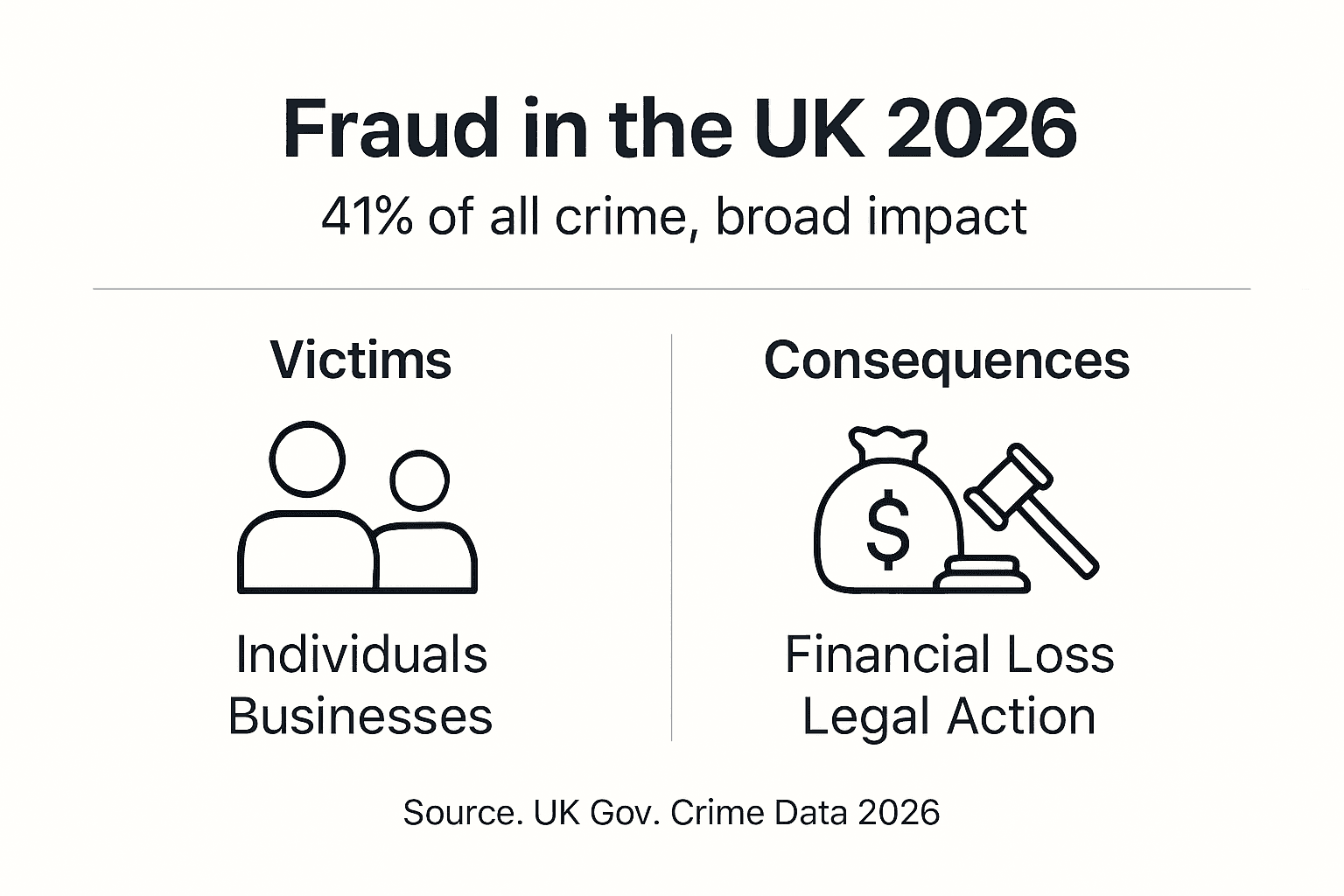
Financial impacts can be devastating. Individuals may lose life savings, retirement funds, or money earmarked for essential needs. Businesses suffer revenue loss, increased costs, and potential insolvency. The ripple effects extend to families, employees, and business partners.
The public sector faces enormous fraud costs. The Public Sector Fraud Authority estimates UK fraud losses including error cost the public sector between £55 billion and £81 billion annually. This massive sum diverts resources from essential public services like healthcare, education, and infrastructure.
Beyond financial harm, fraud creates operational disruption:
“Fraud is not a victimless crime. It destroys lives, undermines businesses, and erodes public confidence in institutions. Every pound lost to fraud is a pound not spent on vital services or business growth.”
Real cases illustrate severe consequences. Small businesses forced into liquidation after payment diversion fraud. Elderly individuals losing homes after romance fraud schemes. Employees facing redundancy when employers suffer major fraud losses. These human stories reveal fraud’s true cost.
Recognising fraud consequences motivates prevention. Understanding UK public sector fraud losses highlights the collective impact on society and economy. Your prevention efforts contribute to broader societal protection.
Taking action against fraud requires knowing how to report incidents and implement effective prevention measures. Despite fraud’s prevalence, only about 14% of fraud cases are reported to authorities, indicating significant underreporting. This gap limits law enforcement effectiveness and allows criminals to continue operating.
Government efforts show results. The Public Sector Fraud Authority recovered over £480 million in the financial year 2024-25, demonstrating government anti fraud efforts. These recoveries return stolen funds and deter future fraud attempts.
Reporting fraud properly involves several steps:
Legal compliance with fraud prevention is critical as penalties can include prosecution and fines. Businesses must implement robust compliance frameworks to reduce legal exposure and reputational risk.
Effective prevention strategies include:
Pro Tip: Create a fraud response plan before incidents occur. Knowing exactly who does what during a fraud emergency saves crucial time and limits damage.
Integrating fraud legal risk management tips into your business operations strengthens resilience. If you employ a compliance officer for fraud prevention, ensure they have authority and resources to implement effective controls.
Navigating fraud risks requires specialist legal expertise. Ali Legal offers tailored support for individuals and businesses facing fraud challenges in 2026. Whether you need guidance on fraud prevention, assistance with fraud litigation, or help strengthening compliance frameworks, our experienced team provides strategic solutions.

Our commercial litigation expertise helps businesses resolve fraud disputes effectively when commercial relationships break down. We bring strength to complex cases involving misrepresentation, breach of fiduciary duty, and financial misconduct. Our civil litigation support extends to individuals seeking justice after fraud victimisation.
We emphasise transparency, fixed fees, and clear communication throughout our engagement. Our approach combines legal rigour with practical business understanding to protect your assets and reputation. Contact Ali Legal for fraud guidance and secure professional support tailored to your specific circumstances.
Fraud requires three specific elements: dishonesty, intent to gain or cause loss, and an effective dishonest act. Not every dishonest behaviour meets this threshold. Simple negligence, poor judgment, or mistakes without dishonest intent do not constitute fraud even if they cause harm.
Report fraud to Action Fraud at actionfraud.police.uk or by calling 0300 123 2040. For tax related fraud, report directly to HMRC. Preserve all evidence including emails, messages, and transaction records before reporting to help investigators build a case.
Fraud convictions carry up to 10 years imprisonment, unlimited fines, and confiscation of assets obtained through criminal activity. Courts also impose director disqualifications and other sanctions depending on the fraud’s severity and impact.
Cyber enabled fraud represents 67% of all reported fraud in the UK. Criminals extensively use email, social media, and online platforms to target victims. This prevalence makes cybersecurity and digital awareness essential for fraud prevention.
Yes. Small businesses can implement strong internal controls, employee training, transaction monitoring, and verification procedures. Regular audits and clear policies create accountability. Professional legal guidance helps develop comprehensive fraud prevention frameworks appropriate for your business size and resources.


