
Menu
Get Expert Legal Support Today

More than half of British businesses face legal disputes each year, yet many remain confused about what litigation lawyers actually do. Understanding their core role is crucial for any company navigating the high-stakes world of commercial conflict and risk. This guide breaks down the strategic expertise litigation lawyers provide, highlights common myths, and shows how their skills can make a decisive difference in protecting your business interests.
Litigation lawyers play a critical strategic role in resolving legal disputes for businesses, providing comprehensive legal representation and expert guidance through complex legal challenges. Litigation, known as dispute resolution, involves assisting with civil disputes that emerge from commercial transactions between companies or individuals, requiring specialised legal expertise.
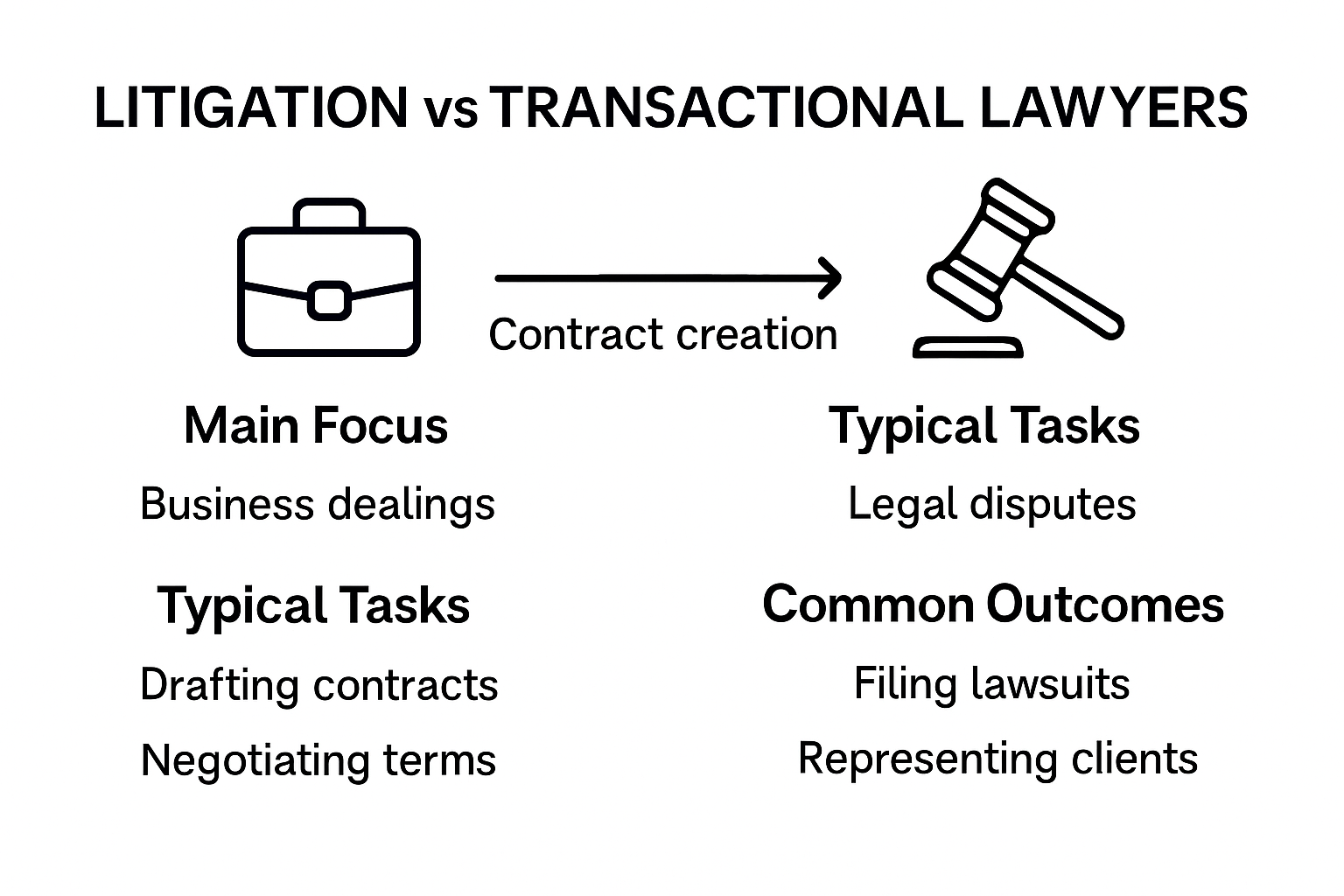
At its core, a litigation lawyer’s primary responsibility is to represent and defend their client’s legal interests across various legal proceedings. Unlike transactional lawyers who focus on preventing legal issues, litigation lawyers are specialised legal professionals who step in when conflicts arise, developing strategic approaches to resolve disputes through negotiation, mediation, or courtroom proceedings. These legal professionals must possess exceptional analytical skills, comprehensive legal knowledge, and the ability to construct compelling arguments that protect their client’s interests.
Common misconceptions about litigation lawyers often centre around their perceived confrontational nature. While they are prepared to engage in courtroom battles, most skilled litigation lawyers prioritise efficient, cost-effective dispute resolution. A solicitor is a qualified legal professional who provides specialist advice and representation, which means their goal is not necessarily to escalate conflicts but to achieve the most advantageous outcome for their client through strategic legal manoeuvring.
Pro Expert Tip: Always select a litigation lawyer with proven experience in your specific industry and type of legal dispute, as sector-specific knowledge can significantly impact the effectiveness of legal representation and potential case outcomes.
The table below contrasts litigation lawyers and transactional lawyers, highlighting their distinct functions and business impact:
| Aspect | Litigation Lawyers | Transactional Lawyers |
|---|---|---|
| Main Focus | Dispute resolution after issues arise | Preventing disputes through agreements |
| Typical Activities | Negotiation, mediation, court representation | Drafting contracts, legal compliance advice |
| Business Impact | Mitigates losses and risk during conflicts | Facilitates deals and reduces future risk |
| Required Skills | Advocacy, analytical thinking, strategic argumentation | Attention to detail, forecasting, negotiation |
Litigation encompasses a wide range of legal disputes across various sectors, with businesses encountering multiple potential conflict scenarios that require strategic legal intervention. Civil cases are primarily handled through county courts, typically addressing critical commercial issues such as debt recovery, property repossession, personal injury claims, goods return, and insolvency proceedings.
In the United Kingdom, business litigation can be categorised into several key types, each requiring specialised legal expertise. Commercial disputes often emerge from contract breaches, partnership disagreements, intellectual property conflicts, and shareholder tensions. Competition law litigation presents two distinct action types: follow-on cases, where a competition authority has already identified an infringement, and stand-alone cases, which initiate proceedings without prior official determination.
Additionally, businesses may encounter litigation in areas such as employment law, where disputes can arise from wrongful termination, discrimination claims, contractual disagreements, or regulatory compliance challenges. Intellectual property litigation represents another significant domain, protecting companies’ innovative assets through trademark, patent, and copyright enforcement actions. Cross-border disputes are increasingly complex, involving international commercial transactions that require nuanced legal strategies and understanding of multi-jurisdictional regulations.
Pro Expert Tip: Proactively document all business interactions, communications, and agreements to build a robust evidence trail that can significantly strengthen your position in potential litigation scenarios.
Litigation lawyers manage a comprehensive range of responsibilities that extend across the entire legal process, requiring meticulous attention to detail and strategic planning. These legal professionals are responsible for guiding clients through complex legal challenges, from initial consultation to potential post-trial proceedings, with each stage demanding specific expertise and tactical approach.

The litigation process involves several critical stages where legal professionals play pivotal roles. Initially, lawyers conduct extensive preliminary investigations, gathering evidence, interviewing witnesses, and assessing the potential strengths and weaknesses of a case. Litigation attorneys are tasked with representing clients in court proceedings and negotiations, which requires exceptional communication skills, deep legal knowledge, and the ability to construct persuasive arguments. They must draft comprehensive legal documents, conduct rigorous legal research, and develop nuanced strategies that anticipate potential counterarguments.
As cases progress, litigation lawyers manage increasingly complex responsibilities. This includes managing extensive documentation, coordinating expert witness testimonies, preparing detailed legal briefs, and representing clients during mediation, arbitration, or court hearings. They must continuously analyse emerging evidence, adapt legal strategies in real-time, and provide clients with clear, realistic assessments of potential outcomes. Advanced litigation lawyers also handle post-trial procedures, such as filing appeals, negotiating settlements, or enforcing judgments, demonstrating their comprehensive role beyond the courtroom.
Pro Expert Tip: Maintain a comprehensive and organised digital case file with all communications, evidence, and legal documents to enable swift, efficient responses and strategic decision-making throughout the litigation process.
Lawyers are a critical part of a social system designed to deliver collective trust and confidence in legality, operating within a complex framework of legal and ethical responsibilities. These professionals serve as guardians of justice, challenging inappropriate uses of power and protecting citizens’ legal rights through rigorous adherence to professional standards and regulatory guidelines.
The legal framework governing litigation lawyers encompasses multiple layers of professional conduct and regulatory compliance. Solicitors must navigate intricate ethical boundaries, maintaining absolute confidentiality, avoiding conflicts of interest, and prioritising their clients’ best interests while simultaneously upholding the broader principles of justice. Expert witnesses must provide independent, objective assistance to the Court, rendering unbiased professional opinions even when financially instructed by a specific party. This requirement underscores the fundamental ethical obligation of maintaining professional integrity regardless of financial arrangements.
Legal professionals are bound by strict codes of conduct that extend beyond mere technical compliance. They must demonstrate unwavering commitment to professional ethics, which includes transparent communication, maintaining client confidentiality, managing potential conflicts of interest, and ensuring their actions consistently reflect the highest standards of professional behaviour. These ethical obligations require constant vigilance, professional judgment, and a commitment to preserving the integrity of the legal system, balancing individual client needs with broader societal responsibilities.
Pro Expert Tip: Regularly review and update your understanding of professional conduct rules, attending continuous professional development sessions to stay current with evolving ethical standards and legal expectations.
Civil litigation cases primarily handled by county courts encompass substantial financial and strategic risks that businesses must carefully navigate. Litigation represents a complex landscape where potential expenses extend far beyond immediate legal fees, potentially impacting a company’s financial stability, reputation, and long-term strategic objectives.
Businesses engaging in litigation face multifaceted financial challenges that require comprehensive risk assessment. Direct costs include legal representation fees, court expenses, expert witness testimonies, and potential settlement payments. Indirect costs are equally significant, involving potential business disruption, management time allocation, potential reputational damage, and opportunity costs associated with prolonged legal proceedings. Some litigation risks can be mitigated through strategic preparation, thorough documentation, and proactive legal counsel, but companies must remain aware that no legal strategy guarantees absolute protection.
Here is a summary of common risks and costs associated with business litigation:
| Risk/Cost Type | Description | Potential Impact |
|---|---|---|
| Direct Costs | Legal fees, court charges, expert witnesses | Immediate financial outlay |
| Indirect Costs | Management time, business disruption | Reduced productivity, delayed projects |
| Reputational Risk | Public legal disputes may harm brand | Loss of client trust or market standing |
| Long-term Consequences | Unfavourable rulings, future liability | Lasting financial or operational setbacks |
Common pitfalls in litigation frequently emerge from inadequate preparation, poor documentation, and reactive rather than strategic approaches. Legal guidance should be considered informative but not definitive professional advice, highlighting the importance of obtaining specialised legal counsel tailored to specific circumstances. Businesses often underestimate the complexity of legal proceedings, failing to anticipate potential counterarguments, overlooking critical evidence, or miscalculating the potential long-term implications of their legal disputes. Successful litigation management requires a holistic approach that balances legal strategy, financial considerations, and potential reputational impacts.
Pro Expert Tip: Develop a comprehensive litigation risk management strategy that includes maintaining meticulous records, conducting regular internal audits, and establishing clear communication protocols with your legal representatives to minimise potential vulnerabilities.
Navigating complex legal disputes demands strategic guidance from experienced litigation lawyers who understand your industry and legal challenges. This article highlights the crucial role of litigation solicitors in resolving conflicts effectively while mitigating financial and reputational risks. If you seek clear, transparent advice combined with fast, strategic solutions to protect your business interests, Ali Legal provides trusted support every step of the way. Our client-centric approach ensures your case is handled with meticulous care and professionalism.

Discover how Ali Legal’s expert team can help you manage litigation risks with confidence. Explore essential insights and updates on legal disputes in our Uncategorized | Ali Legal section. When you are ready to take decisive action, reach out directly via our contact page for straightforward advice and fixed fees. Protect your business today with trusted legal representation from Ali Legal, where lasting client relationships and transparent communication come first. Learn more about our comprehensive services in the All | Ali Legal portfolio and start resolving your legal challenges now.
The primary role of a litigation lawyer is to represent and defend their client’s legal interests in various legal proceedings, developing strategic approaches to resolve disputes through negotiation, mediation, or courtroom actions.
Litigation lawyers focus on dispute resolution after issues arise, while transactional lawyers work to prevent disputes through drafting agreements and legal compliance advice.
Litigation lawyers handle a wide range of cases, including commercial disputes, employment law issues, intellectual property conflicts, and cross-border disputes, each requiring specialised legal expertise.
Common risks and costs include direct legal fees, court charges, management time allocation, reputational damage, and potential long-term consequences from unfavourable rulings, requiring thorough preparation and documentation.


