
Menu
Get Expert Legal Support Today

TL;DR:
- Getting legal advice after a car accident is essential to protect your right to compensation.
- Police reports, witness statements, and medical evidence are crucial within the first 48 hours to build a strong claim.
Getting the right legal advice after a car accident is the single most effective step you can take to protect your compensation rights. In UK personal injury law, the formal term for this process is a personal injury claim, and the quality of legal guidance you receive shapes every outcome that follows. Police reports, insurance companies, and personal injury solicitors are the three key entities you will deal with from the moment a collision occurs. The first 48 hours after an accident are the most critical window for evidence gathering and medical evaluation. Acting quickly and with proper legal support is not optional. It is the difference between a fair settlement and a denied claim.
The actions you take in the hours after a collision directly determine the strength of your claim. Most people focus on the physical shock of the event and overlook the legal groundwork that needs to happen simultaneously.
Report the accident to the police. In the UK, you must report a road traffic accident to the police within 24 hours if anyone is injured or if you did not exchange details at the scene. Failing to do so can complicate your insurance position and weaken your claim.
Document everything at the scene. Time-stamped photos and videos of vehicle damage, road conditions, skid marks, and traffic signs carry significant weight with insurers and courts. Take images from multiple angles before any vehicles are moved.
Here is a checklist of the most important immediate steps:
That last point matters more than most people realise. Soft-tissue injuries such as whiplash often emerge 24–72 hours after impact. If you delay seeking treatment, insurers will argue the injury is exaggerated or unrelated to the accident.
Pro Tip: Never give a recorded statement to an insurer before speaking to a solicitor. Recorded statements taken early are the primary tool insurers use to deny or devalue claims. Politely decline and say you will respond once you have taken legal advice.
Liability is the legal term for who is responsible for causing the accident. Establishing it clearly is the foundation of any successful personal injury claim, and it is rarely as straightforward as it appears.
UK road traffic law uses the concept of negligence to assign fault. A driver is negligent if they failed to meet the standard of care expected of a reasonable driver. Contributory negligence applies when both parties share some degree of fault. This is common in junction collisions, lane-change disputes, and rear-end shunts where speed is contested.

Police reports and witness statements are the two most influential pieces of evidence in any liability dispute. Insurers rely heavily on official police records when making initial liability decisions. Witness accounts from neutral third parties carry particular weight because they have no financial interest in the outcome.
The following evidence types are ranked by their typical impact on liability decisions:
| Evidence type | Typical impact on liability |
|---|---|
| Official police report | Very high |
| Neutral witness statement | Very high |
| Time-stamped scene photographs | High |
| Dashcam footage | High |
| Driver statements | Moderate |
| Vehicle damage assessments | Moderate |
A solicitor’s role in liability disputes is to analyse this evidence and construct a coherent account of fault. Comparative negligence laws mean that even partial fault on your part can reduce your compensation. Experienced legal advice helps you understand exactly where you stand before you engage with an insurer.
A personal injury claim after a car accident covers far more than the visible damage to your vehicle. Understanding what you can claim for is one of the most valuable things proper legal help for car crashes provides.
The main categories of compensation in UK personal injury claims are:
Proof of causation is the legal requirement that links your injury directly to the accident. Medical records, GP notes, hospital discharge summaries, and expert medical reports all serve this purpose. Without clear causation evidence, insurers will dispute whether the accident caused your condition at all.
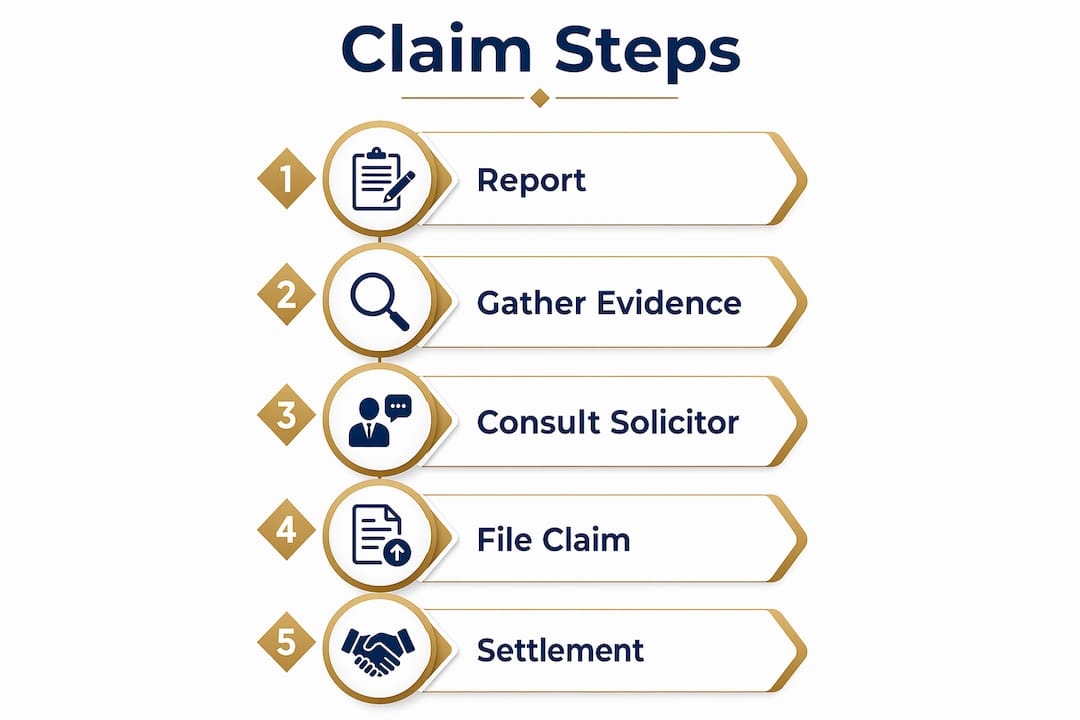
The UK personal injury claims process follows a structured pre-action protocol. This requires both parties to exchange information before proceedings are issued, which often leads to settlement without court involvement. Most straightforward road traffic accident claims resolve within 6–12 months.
Pro Tip: Keep a daily pain and symptom diary from the day of the accident. Courts and insurers give significant weight to contemporaneous records of how your injury affected your daily life. A solicitor can advise you on what to record and how to present it.
Self-representing a personal injury claim against an insurer is one of the most costly mistakes an accident victim can make. Insurers employ specialist claims handlers whose job is to minimise payouts. You need equivalent expertise on your side.
The numbers make the case clearly. Attorney-represented claims settle for an average of 3.5 times more than self-represented ones, according to Insurance Research Council data. That gap exists because solicitors understand how to value claims correctly, negotiate effectively, and avoid procedural errors that reduce settlements.
Key benefits of instructing a personal injury solicitor include:
Consulting a solicitor before signing any settlement or release document is non-negotiable. Once you sign, you waive your right to further compensation, even if your injuries worsen.
Most personal injury solicitors in the UK offer no win, no fee arrangements, formally known as Conditional Fee Agreements. Under this structure, you pay nothing if your claim fails, and the solicitor’s success fee is capped by law. This removes the financial barrier to accessing proper legal representation. When choosing a solicitor, look for specific experience in road traffic accident claims, transparent fee structures, and a clear communication commitment.
Being partially at fault does not end your right to compensation. UK law applies the principle of contributory negligence, which means your damages are reduced in proportion to your share of fault. If a court finds you 30% responsible for an accident, your compensation reduces by 30%. You still recover 70%.
The challenge is that insurers routinely overstate a claimant’s contributory negligence to reduce their liability. Without legal advice, many claimants accept inflated fault percentages that significantly undercut their entitlement. A solicitor challenges these assessments using the same evidence that establishes primary liability.
Uninsured drivers face a different set of barriers. The Motor Insurers’ Bureau (MIB) exists specifically to compensate victims of uninsured or untraced drivers in the UK. Claims through the MIB follow a separate process with specific procedural requirements, including strict reporting deadlines. Missing these deadlines can forfeit your right to compensation entirely.
Pro Tip: If the other driver was uninsured, report the accident to the police immediately and contact the Motor Insurers’ Bureau as soon as possible. A solicitor experienced in MIB claims can manage the procedural requirements and maximise your recovery in what is otherwise a complex process.
After years of working with clients who come to us following road traffic accidents, one pattern stands out above all others. The clients who act within the first 48 hours, document everything, and take legal advice before speaking to any insurer almost always achieve better outcomes than those who wait.
The most common mistake I see is people assuming the other driver’s insurer will treat them fairly. Insurers are not neutral parties. Their interest is in settling claims for as little as possible, and they are very good at it. Early recorded statements, quick settlement offers, and requests to access your medical records without restriction are all tactics designed to limit their exposure, not protect your rights.
The second mistake is undervaluing the claim. Most people think only about their immediate medical costs. They do not account for future treatment, lost earnings, or the psychological impact of the accident. A thorough personal injury claims guide will walk you through every head of loss you are entitled to pursue.
My honest advice is this: treat the legal side of a car accident with the same urgency as the medical side. The evidence you preserve in the first 48 hours cannot be recreated later. The statement you give before taking legal advice cannot be unsaid. Get proper representation early, and the process becomes far more manageable.
— Panagiotis
Car accident claims involve medical evidence, insurance negotiations, liability disputes, and court procedures. Alilegal handles all of it under one roof, with a client-focused approach built on fixed fees, clear communication, and no hidden costs.

Alilegal’s civil litigation team handles road traffic accident claims from initial evidence gathering through to settlement or trial. No win, no fee arrangements are available for qualifying personal injury cases, meaning you face no financial risk in pursuing your claim. For a straightforward assessment of your position, contact Alilegal directly. The earlier you seek advice, the stronger your claim will be. You can also review Alilegal’s 2026 compensation guide to understand what your injuries may be worth before your first consultation.
Report the accident to the police within 24 hours if anyone is injured, document the scene with photographs, collect witness details, and seek medical evaluation within 24 hours. Avoid admitting fault or giving a recorded statement to any insurer before consulting a solicitor.
The standard limitation period for personal injury claims in the UK is three years from the date of the accident. Acting well within this period preserves evidence and strengthens your position significantly.
Yes. UK law applies contributory negligence, which reduces your compensation by your percentage of fault rather than eliminating it entirely. A solicitor can challenge inflated fault assessments made by the other party’s insurer.
A no win, no fee arrangement, formally called a Conditional Fee Agreement, means you pay your solicitor nothing if your claim is unsuccessful. If you win, the solicitor’s success fee is capped by law and is typically recovered from the other party.
Compensation depends on injury severity, financial losses, and future impact on your life. UK courts use the Judicial College Guidelines to set general damages, while special damages cover documented financial losses such as lost earnings and medical costs.


