
Menu
Get Expert Legal Support Today

Legal issues in the maritime world can cause major setbacks for businesses and individuals alike. With global shipping valued at over $14 trillion each year, even a minor misstep can lead to costly disputes or regulatory trouble. Understanding your specific legal requirements and being proactive about compliance not only protects your interests but can also give you a competitive edge. This guide breaks down the critical steps you need to manage maritime law challenges with clarity and confidence.
Navigating maritime law requires a precise understanding of your unique legal requirements, whether you are a business owner, shipping company, or individual involved in maritime activities. According to Institute of Advanced Legal Studies, comprehensive legal resource assessment is crucial when determining your specific maritime legal needs.
To effectively assess your maritime legal requirements, begin by clearly defining your specific situation. Are you dealing with cargo disputes, vessel ownership transfer, maritime employment contracts, or international shipping regulations? The University of Exeter recommends conducting a thorough evaluation of your precise legal context, which involves examining several key factors:
Careful initial assessment helps prevent future legal complications. Maritime Law | Ali Legal recommends consulting with legal professionals who specialise in maritime law to ensure a comprehensive review of your specific legal needs. Professional guidance can help you identify potential risks, understand applicable regulations, and develop a strategic approach to your maritime legal challenges.
Collecting comprehensive documentation and evidence is a critical step in addressing maritime legal challenges. According to University of Southampton, maritime legal cases require meticulous evidence gathering to establish a robust legal foundation.
Your documentation collection should encompass a wide range of critical materials. UCL highlights the importance of assembling key documents that may include:
Professional tip: Ensure all documents are original copies or certified duplicates. Digital scans with clear resolution can be acceptable, but always keep physical originals safely stored. International Disputes & Arbitration | Ali Legal recommends maintaining a comprehensive and chronological filing system to streamline potential legal proceedings. Having organised documentation can significantly expedite legal processes and strengthen your position in maritime disputes.

Selecting the right maritime law solicitor is crucial for effectively resolving complex legal challenges. University of Law emphasizes the importance of engaging legal professionals with specialized expertise in maritime legal frameworks.
When searching for a qualified maritime law solicitor, consider the following key criteria:
Professional insight: Not all solicitors are equally equipped to handle maritime legal complexities. Role of Solicitors Explained recommends conducting thorough initial consultations to assess a solicitor’s specific maritime law expertise. During these consultations, ask detailed questions about their experience with cases similar to yours, their approach to maritime legal challenges, and their understanding of the specific jurisdictional nuances that might impact your situation. A comprehensive initial assessment will help you select a solicitor who can provide targeted, strategic legal support tailored to your maritime legal requirements.
University of Strathclyde highlights the critical importance of developing robust compliance and risk management strategies in maritime legal contexts. These strategies serve as a proactive approach to navigating the complex landscape of maritime regulations and potential legal challenges.
Effective risk management in maritime law requires a comprehensive and strategic approach. According to Research Association for Maritime Law, key implementation strategies should include:
Professional insight: Risk management is not a one time event but an ongoing process. International Disputes & Arbitration | Ali Legal recommends creating a dynamic risk management framework that can adapt to changing maritime regulations and emerging legal challenges. By maintaining flexibility and continuously updating your strategies, you can significantly reduce potential legal vulnerabilities and protect your maritime interests.
Lloyd’s Maritime and Commercial Law Quarterly emphasizes the critical importance of systematic verification and continuous compliance in maritime legal proceedings. Successfully navigating maritime law requires more than just initial legal resolution you must establish a robust mechanism for monitoring and maintaining ongoing legal compliance.
Effective verification involves several strategic approaches. According to the Incorporated Council of Law Reporting, key steps to verify legal outcomes and maintain compliance include:
Professional insight: Regulatory & Compliance recommends treating compliance as a dynamic process rather than a static achievement. By maintaining vigilance and creating adaptive frameworks, you can proactively manage potential legal risks and ensure your maritime operations remain aligned with current regulatory standards. This approach transforms compliance from a potential burden into a strategic advantage.
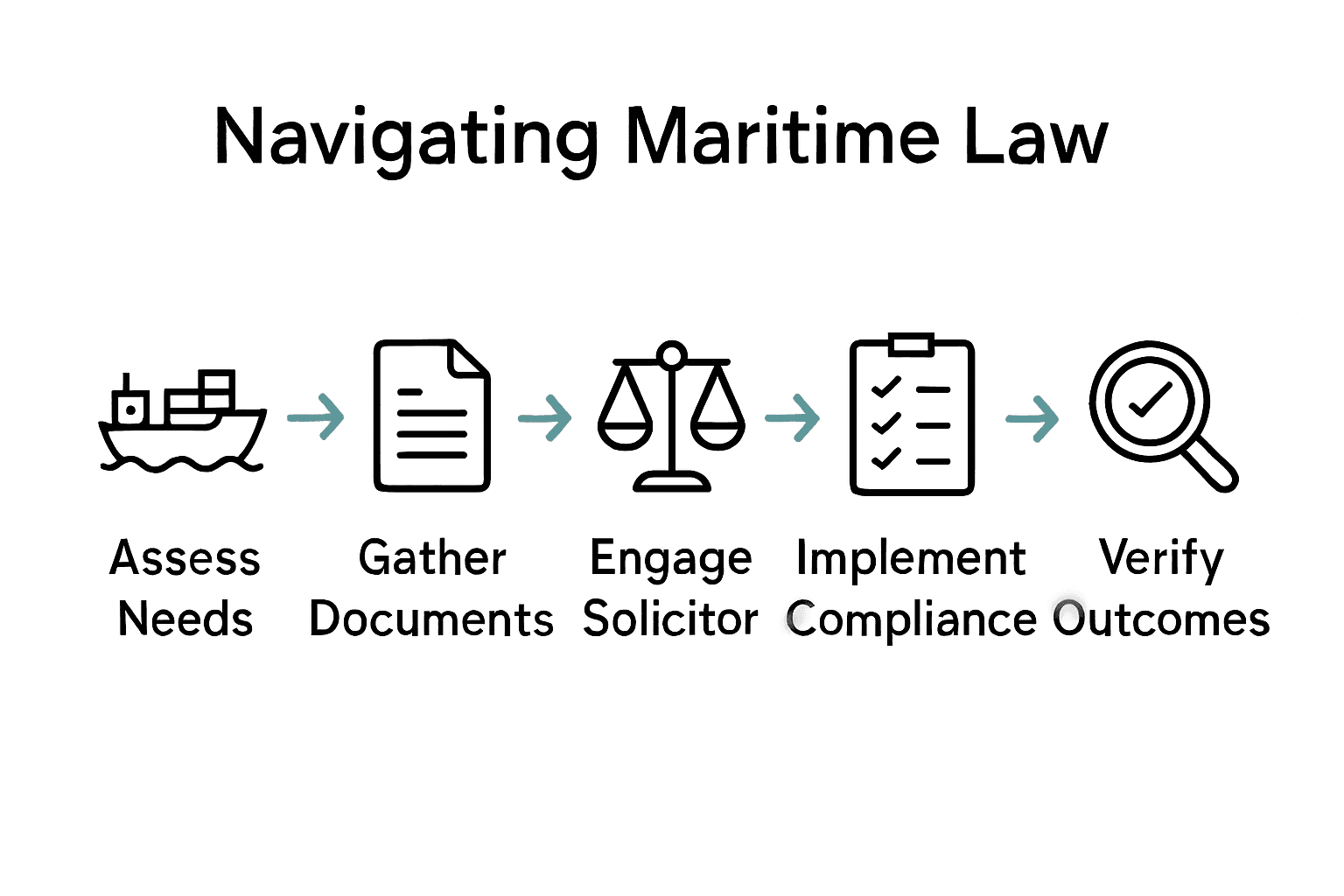
Navigating maritime law can feel overwhelming, whether you are a business owner facing complex shipping disputes or an individual concerned about regulatory compliance and risk management. This article highlights crucial steps such as assessing your specific legal needs, gathering proper documentation, and working with a specialised maritime solicitor — all essential for preventing costly complications and ensuring your interests are fully protected.

If you want clear advice that is straightforward and tailored to your unique situation, explore our All | Ali Legal resources for expert guidance across all legal fields including maritime law. Don’t let uncertainty hold you back. Visit Ali Legal today for transparent, fast solutions with fixed fees and start building a trusted relationship with solicitors who put you first. Your maritime legal success depends on taking action now.
To assess your maritime legal needs, clearly define your situation, such as whether you are dealing with cargo disputes or vessel ownership. Identify key factors like the geographic scope of your activities and your specific role to guide your evaluation.
Gather critical documents such as shipping contracts, bills of lading, and vessel registration certificates. Ensure all paperwork is original or certified and organized chronologically for easy reference during legal proceedings.
Search for a maritime law solicitor with specific experience and a track record in your area of need. Conduct initial consultations to ask about their experience with similar legal issues and their familiarity with relevant maritime regulations.
Implement compliance and risk management strategies, including regulatory audits and training programs for maritime personnel. Create a dynamic framework that adapts to changing regulations to mitigate potential legal risks effectively.
To verify legal outcomes, conduct periodic reviews and maintain up-to-date documentation of legal proceedings. Establish clear communication channels with your legal advisor to adapt your strategies as regulatory changes occur.
When addressing maritime employment contracts, focus on the specific roles and responsibilities outlined, as well as compliance with international maritime regulations. Review terms meticulously to protect both your interests and those of your employees.


