
Menu
Get Expert Legal Support Today

Assign a named Senior Client Manager, build a structured communication cadence, centralise everything in a CRM, and set clear review triggers from day one. That is the one-line playbook. Here is how to put it into practice this week:
When a relationship reaches the point where remediation has failed and the client remains non-compliant or abusive, exit cleanly: issue a final invoice for all completed work, transfer files, and close the matter in writing.
Retaining a client costs a fraction of acquiring a new one. That is not a platitude; it is the commercial logic that separates firms that grow steadily from those that chase new business to replace the clients they quietly lose. Insight6’s Professional Service Client Journey research identifies slow response times and poor follow-up as primary drivers of client dissatisfaction, and the revenue consequence is direct: firms that fix those two basics see measurable improvements in both satisfaction scores and retention.
Expansion revenue, meaning additional work from existing clients, is typically higher-margin than new business because the trust infrastructure is already built. A client who trusts your firm will instruct you on a second matter without a competitive pitch. One who feels neglected will not, even if your technical work was excellent.
The shift that matters most is moving from “managing to the contract” to thinking about the full client lifecycle. CGA’s B2B client relationship research shows that firms adopting a Contract Lifecycle Management approach make renewal conversations about strategic value rather than price, which reduces churn and increases the average contract value over time.
Key commercial benefits of structured client relationship management:
The processes and tools discussed later in this guide only work if the underlying principles are sound. These are the non-negotiables.
On segmentation specifically: a useful rule of thumb is to divide your client base into three tiers. Tier one clients get a dedicated Senior Client Manager, quarterly face-to-face reviews, and proactive strategic input. Tier two clients get scheduled calls, structured email updates, and an annual review. Tier three clients get a self-service portal, templated communications, and a check-in when triggered by a specific event. The criteria for each tier should be written down and reviewed annually.
Pro Tip: When building rapport with a new client, replace at least one email exchange per week with a phone call during the first 90 days. Ask directly: “Is there anyone else in your business we should be speaking to?” That single question, recommended by ICAEW, deepens the relationship and surfaces new instructions faster than any formal cross-selling process.
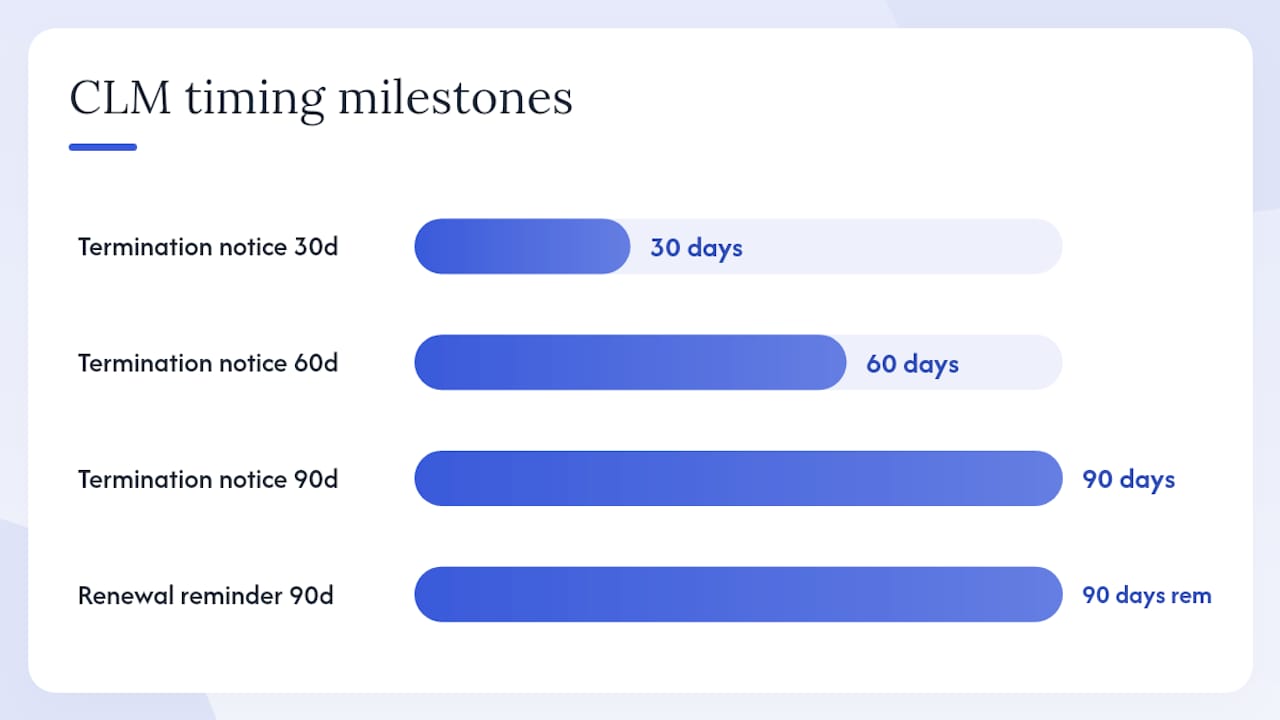
Progress updates should be sent on a fixed schedule, not only when there is news. For active matters, a weekly or fortnightly written update keeps the client informed and reduces inbound queries. All client communications, decisions, and commitments must be logged in the CRM immediately after the interaction, not at the end of the week. Scheduled checkpoints at 30, 60, and 90 days in the first quarter give both sides a structured opportunity to recalibrate.
When a relationship ends, whether by mutual agreement, non-renewal, or termination, the process matters as much as the outcome. Issue a final invoice for all completed work before closing the matter. Transfer all client files and data in the format agreed in the engagement letter. Archive the CRM record with a closing note. A professional exit preserves your reputation and, in many cases, leads to a future re-instruction.
First 90-day meeting agenda template:
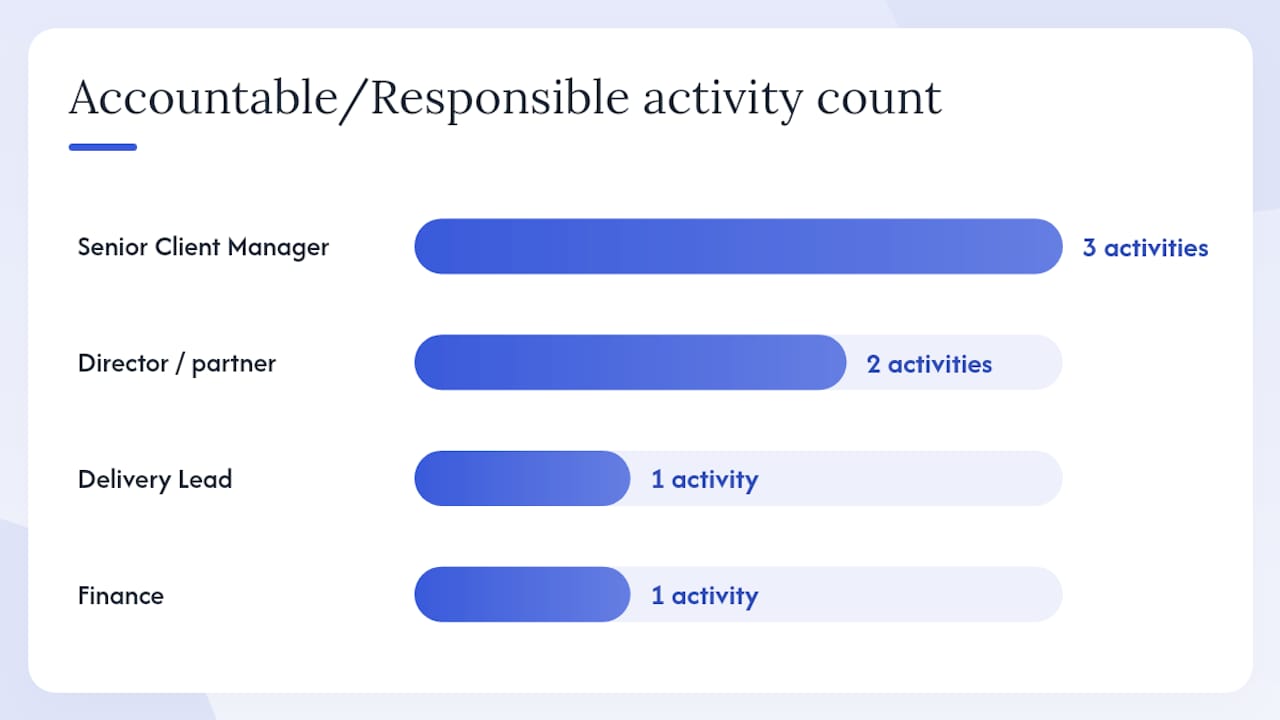
Confusion about who owns a client relationship is one of the most common and most avoidable causes of client dissatisfaction. Mondaq’s guidance on efficient client management is clear: assign a Senior Client Manager who is accountable for the relationship while other team members focus on technical delivery. The client should know who to call for what.
Recommended role definitions:
RACI summary:
| Activity | Senior Client Manager | Delivery Lead | Finance | Director |
|---|---|---|---|---|
| Relationship ownership | Accountable | Consulted | Informed | Informed |
| Escalation (first response) | Responsible | Informed | Informed | Consulted |
| Escalation (senior review) | Consulted | Informed | Informed | Accountable |
| Renewal negotiation | Responsible | Consulted | Consulted | Accountable |
| Billing and invoicing | Informed | Informed | Accountable | Informed |
| Delivery quality | Consulted | Accountable | Informed | Informed |
When handing over a client to a new Senior Client Manager, introduce the incoming person on a call or in person before the outgoing manager leaves. Never communicate a handover by email alone. The client should feel the transition is managed, not dumped.
The right tool stack for most UK professional services firms is smaller than vendors would have you believe. The goal is one source of truth for client data, a reliable way to communicate, and a feedback mechanism. That is it.
Tool categories and what to look for:
CRM adoption checklist:
Pro Tip: The biggest CRM failure mode is not choosing the wrong system; it is running three communication channels simultaneously. Pick one primary channel for each client (usually email, confirmed at onboarding) and use everything else as a supplement. A client who receives updates via WhatsApp, Teams, and email simultaneously will miss things and blame you for it.
Gut feel is not a measurement. These six metrics, tracked consistently, tell you whether your client relationships are healthy or deteriorating.
| Metric | What it measures | Healthy signal | Warning signal |
|---|---|---|---|
| Retention rate | % of clients who renew or continue | — | — |
| Expansion revenue | Additional revenue from existing clients | Growing quarter-on-quarter | Flat or declining |
| NPS / CSAT | Client satisfaction and likelihood to recommend | — | — |
| Time-to-value | How quickly clients see the outcome they came for | Shortening over time | Lengthening or variable |
| SLAs met | % of response and delivery commitments hit | — | Below 90% |
| Escalation frequency | Number of formal complaints or escalations per quarter | Declining | Stable or rising |
A simple dashboard for senior leaders does not need to be sophisticated. A monthly one-page report showing these six figures, with a traffic-light status and a brief narrative on any metric that has moved, is enough to drive the right conversations. Review it in your monthly leadership meeting and assign an owner to any metric in the amber or red.
Insight6’s research makes a specific point worth noting: defining a small set of measurable SLAs for response times and follow-up, and making them visible internally, yields disproportionate improvements in client satisfaction. The discipline of tracking them is as important as the targets themselves.
Speed matters more than perfection in the first response to a complaint. A client who receives an acknowledgement within two hours feels heard; one who waits two days feels dismissed, regardless of the eventual outcome.
Escalation flow:
Template responses for common scenarios:
Exit criteria. A relationship should be exited when: the client is persistently non-compliant with agreed processes; the work has become loss-making with no prospect of recovery; the client’s conduct is abusive or creates legal or reputational risk for your firm. Per Mondaq’s guidance, always issue a final invoice for completed work before terminating, and document the decision internally.
Pro Tip: Before deciding to exit, offer one structured remediation conversation at director level. Frame it as a reset, not a warning. Many relationships that appear irretrievable are actually suffering from a single unresolved misunderstanding that was never escalated properly.
Contract Lifecycle Management (CLM) is the practice of treating a contract not as a static document signed at the start of an engagement, but as a living framework that governs the relationship through delivery, review, renewal, and renegotiation. The distinction matters commercially: firms that manage contracts as lifecycle documents make renewal conversations about strategic impact rather than line-item cost.
CGA’s research identifies this shift as one of the most effective levers for reducing churn in B2B professional services. When a client’s renewal conversation opens with “here is the value we have delivered against your objectives this year,” price becomes one factor among several rather than the only one on the table.
Policy checklist for embedding CLM into client governance:
Engagement letter and contract clauses that support value conversations:
For further background on how contracts support commercial relationships, the structure of the engagement document matters as much as the relationship behaviours around it.
Pro Tip: Start the value conversation at the mid-contract review, not at renewal. By the time a client is weighing up whether to renew, their perception of value is already formed. A mid-contract conversation gives you time to address any gaps and reframe the relationship before the commercial negotiation begins.
Subject: Welcome to [Firm Name] — next steps for [Matter/Project Name]
Dear [Client Name],
Thank you for instructing us. This email confirms the key details for your matter and sets out what happens next.
Your matter: [Brief description]
Your Senior Client Manager: [Name, direct line, email]
Scope of work: As set out in the attached engagement letter/statement of work
Key dates: [First milestone / 90-day review date]
What we need from you: [List any documents, access, or decisions required]
Please review the attached engagement letter and return a signed copy by [date]. If you have any questions before then, call [Name] directly on [number].
We look forward to working with you.
Questions to ask clients in the review:
For practical guidance on how to communicate legal problems clearly before and during meetings, that resource is worth sharing with clients ahead of review conversations.
“Thank you for raising this with me directly. I want to make sure we resolve this properly. Can you walk me through what happened from your perspective? I am going to take notes and come back to you with a clear response by [specific time]. I want to be transparent: I may not have all the answers on this call, but I will not leave you waiting.”
The principles in this guide are not abstract. In a legal practice, the stakes of poor client relationship management are particularly high: a missed update on a property transaction or a billing dispute that was never escalated properly can end a relationship that took years to build, and in some cases, generate a professional negligence claim.
At Ali Legal Ltd, the Senior Client Manager model is central to how the firm operates. Each client has a named point of contact who is responsible for the relationship, not just the matter. That person is accountable for the 90-day review, the renewal conversation, and the escalation call when something goes wrong. The delivery team handles the legal work; the Senior Client Manager handles the relationship. Keeping those two roles distinct prevents the most common failure mode in professional services: a technically excellent lawyer who is too busy to return calls.
One anonymised example illustrates the difference this structure makes. A commercial client instructed the firm on a series of contracts over 18 months. Midway through the second engagement, the client’s internal team changed and the new contact was unfamiliar with the scope agreed at the outset. Rather than waiting for a dispute to arise, the Senior Client Manager requested a face-to-face meeting, walked the new contact through the engagement letter, and used the meeting to identify two additional matters the client had not yet instructed anyone on. The relationship deepened rather than stalled.
The warning signs to watch for in any professional services firm: a client who stops responding to updates, a matter where the scope has drifted without a written change order, and a renewal that is being discussed for the first time in the final month of the contract. Any one of those is a signal to act immediately, not to wait for the next scheduled review.
The single most useful immediate action: pull your current client list, identify every relationship without a named Senior Client Manager, and assign one today. Everything else in this guide depends on that one decision being made first. For a deeper look at how relationship-based legal services translate into better client outcomes, that resource covers the practical mechanics in a legal context.
The processes in this guide work best when the legal documents underpinning your client relationships are sound. A poorly drafted engagement letter, a retainer with no change-control clause, or a contract that is silent on termination can undermine even the most disciplined relationship management process.
Ali Legal Ltd advises UK businesses on the legal architecture of client relationships: engagement letters, retainer structures, contract clauses that protect cashflow and scope, and exit provisions that close relationships cleanly. The firm’s business legal services cover the full range of commercial relationship documents, from initial instruction terms to dispute resolution clauses. If you would like a review of your current engagement letter or retainer, or advice on how to structure a new client relationship legally, contact Ali Legal Ltd for a short advisory call.
This article provides general information, not legal advice. Confirm the terms of any engagement document with a qualified solicitor before use.
The following sources informed this guide and are worth bookmarking for teams implementing or reviewing their client relationship processes.
Primary research and industry guidance:
Ali Legal Ltd resources:
These sources are suitable for use in internal training sessions, governance reviews, or as reference material when building or auditing your client relationship management process.


