
Menu
Get Expert Legal Support Today

Legal disputes and regulatory investigations can quickly disrupt business operations in the United Kingdom, leaving owners uncertain about what should remain confidential. For many, understanding the scope of legal professional privilege is the difference between protecting sensitive strategy and risking unwanted disclosure. This overview unpacks the principles, common pitfalls, and practical protections that help British businesses safeguard their legal communications and defend their corporate interests.
Legal professional privilege (LPP) represents a fundamental legal protection that safeguards confidential communications between businesses and their legal advisers. This critical legal concept ensures that organisations can seek candid legal guidance without risking subsequent disclosure of sensitive information. Legal professional privilege principles protect the confidentiality of communications in both corporate and legal contexts.
In the United Kingdom, LPP is divided into two primary categories: legal advice privilege (LAP) and litigation privilege (LP). Legal advice privilege covers communications between a lawyer and client specifically aimed at obtaining or providing legal counsel. This protection extends to in-house legal teams, ensuring that internal legal discussions remain confidential. Litigation privilege offers broader protection, encompassing communications created for the dominant purpose of contemplating or conducting legal proceedings.
Businesses must understand the nuanced requirements for maintaining legal professional privilege. Key considerations include:
Legal privilege serves as a critical mechanism for protecting businesses’ strategic interests. Compliance with UK legal principles ensures that organisations can candidly discuss legal matters without fear of mandatory disclosure.
Pro Tip: Always consult with a qualified legal professional to confirm the specific applications of legal professional privilege in your unique business context.
The United Kingdom’s legal professional privilege (LPP) framework comprises two distinct yet critically important categories that protect confidential business communications. Legal professional privilege principles provide essential safeguards for organisations seeking candid legal guidance while maintaining strategic confidentiality.
Legal advice privilege represents the first primary type of legal protection. This category specifically covers confidential communications between a lawyer and their client that are explicitly aimed at obtaining or providing legal counsel. The protection extends to both external legal firms and in-house legal departments, ensuring that strategic discussions remain entirely privileged. The key requirement is that the communication must be genuinely focused on seeking or delivering legal advice.
The second category, litigation privilege, offers a broader protective scope. This type of privilege encompasses communications between lawyers, clients, and potentially third parties when the dominant purpose is preparing for actual or anticipated legal proceedings. Critical aspects of litigation privilege include:
UK legal frameworks recognise these privilege types with nuanced exemptions. Businesses must understand that privilege can be lost if confidentiality is compromised or if communications involve criminal or fraudulent activities.
The following table compares the key features of legal advice privilege and litigation privilege:
| Aspect | Legal Advice Privilege | Litigation Privilege |
|---|---|---|
| Purpose | Seeking legal advice | Preparing for litigation |
| Parties Involved | Lawyer and client | Lawyer, client, third parties |
| Scope | Communications for legal counsel | Documents and communications for litigation |
| Business Impact | Safeguards confidential strategy | Protects litigation preparation |
Pro Tip: Maintain meticulous documentation and consistently seek professional legal guidance to ensure your communications qualify for legal professional privilege protection.
Legal professional privilege mechanisms operate through a sophisticated framework of confidentiality and trust between legal professionals and their clients. In practical terms, this means that businesses can communicate openly and candidly with their legal advisers, knowing that these communications will remain protected from mandatory disclosure.

Confidential communication forms the cornerstone of legal privilege in practice. When a business seeks legal advice, every communication must be deliberately structured to maintain privileged status. This requires careful consideration of several key factors: the nature of the communication, the intention behind it, and the specific individuals involved. Dominant purpose becomes a critical test – the communication must be primarily about seeking or providing legal advice, not merely incidental to other business discussions.
The practical application of legal privilege involves several critical considerations:
In-house legal teams must be particularly vigilant in preserving privilege. This means meticulously reviewing communications, avoiding mixed communications that might compromise privileged status, and understanding the nuanced boundaries of legal advice. Privilege can be inadvertently waived through careless sharing or by mixing privileged content with non-privileged material.
Pro Tip: Create a robust internal protocol for identifying, managing, and protecting privileged communications to prevent unintentional loss of legal privilege.
Legal professional privilege regulations in the United Kingdom establish a comprehensive framework that protects confidential business communications. This legal structure is rooted in common law and statutory provisions, providing businesses with clear guidelines for maintaining privileged communications.
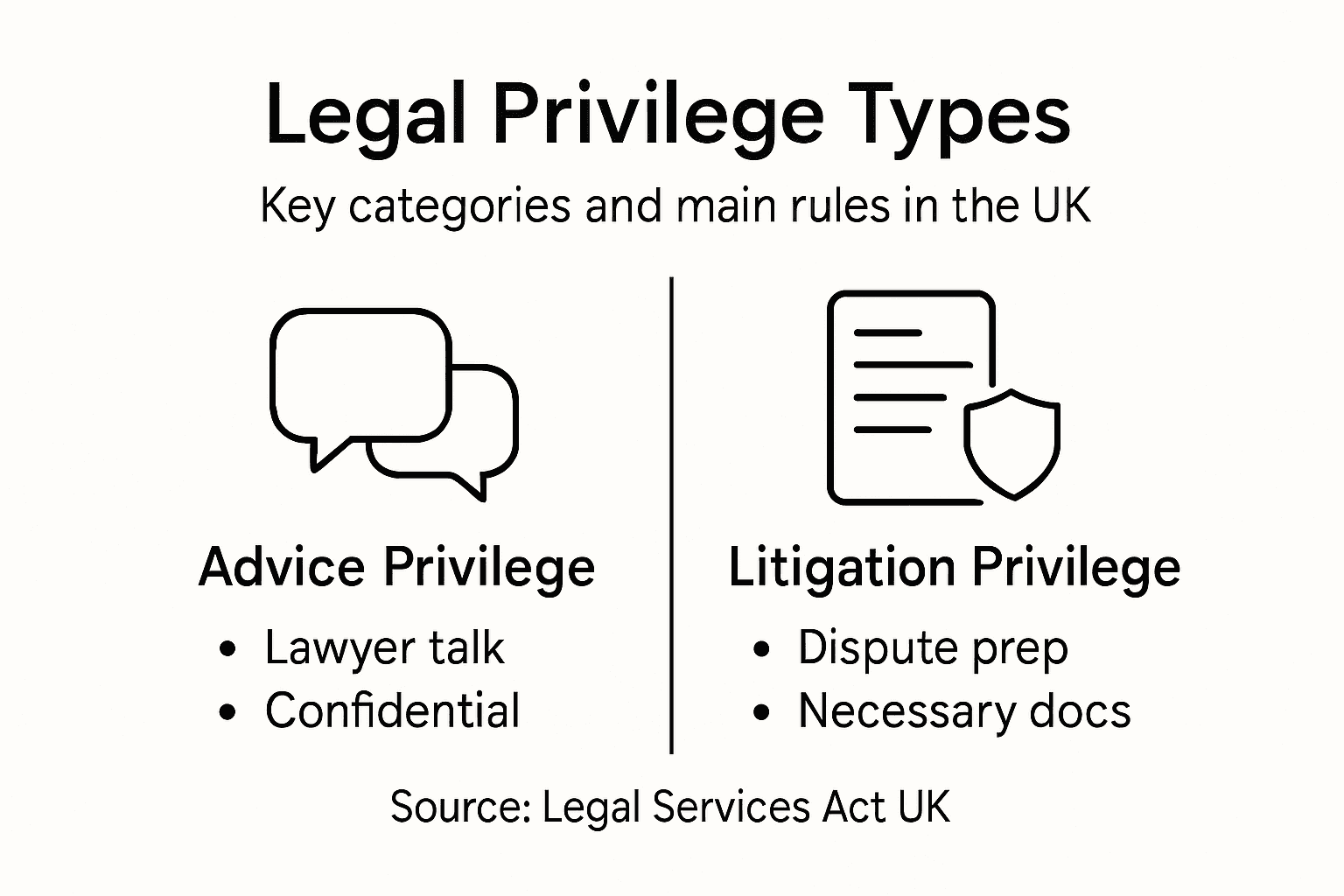
The qualifying criteria for legal privilege are precise and multifaceted. To establish legal privilege, communications must satisfy several critical requirements. Confidentiality stands as the primary foundation, meaning the communication must be inherently private and not disclosed to unintended parties. The communication must also originate between a client and a qualified legal adviser, with a clear and demonstrable legal purpose.
Key qualifying elements for legal privilege include:
Legal Services Act provisions outline important exceptions to privilege. Notably, the iniquity exception prevents privilege from applying when legal advice is sought for criminal purposes. This ensures that legal privilege cannot be used as a shield for unlawful activities, maintaining the integrity of legal professional communications.
Pro Tip: Develop a rigorous internal review process to ensure all communications meet the strict qualifying criteria for legal professional privilege.
Risks to legal privilege present complex challenges for businesses seeking to maintain confidential communications. Understanding these potential pitfalls is crucial for preserving the integrity of privileged information and preventing unintentional disclosure.
The most significant risks of losing privilege stem from inadvertent actions that compromise confidentiality. These include sharing privileged documents with unauthorized parties, mixing privileged and non-privileged content, or failing to maintain a clear legal purpose in communications. Waiver of privilege can occur through seemingly minor oversights, such as discussing confidential legal matters in non-secure environments or including unnecessary parties in communications.
Key risks that can lead to loss of legal privilege include:
Legal best practices emphasize proactive management of privileged communications. This involves creating clear internal guidelines, training staff on privilege preservation, and implementing robust document management systems. Businesses must develop a systematic approach to identifying, protecting, and segregating privileged communications from standard business correspondence.
Pro Tip: Implement a comprehensive internal training programme that educates all staff about the critical importance of maintaining legal privilege and the specific protocols for protecting confidential communications.
Obligations for maintaining legal privilege require meticulous attention to detail and comprehensive understanding of confidentiality principles. Businesses must develop a strategic approach to protecting sensitive legal communications, recognising that even minor oversights can compromise privileged status.
The core obligations for preserving legal privilege centre on maintaining strict confidentiality and ensuring communications serve a genuine legal purpose. Identifying the client correctly becomes paramount, as misunderstandings about the precise legal relationship can inadvertently expose communications to potential disclosure. This requires clear documentation, precise communication protocols, and a disciplined approach to managing legal interactions.
Common mistakes that can compromise legal privilege include:
Legal best practices emphasise establishing comprehensive training programmes and creating robust internal guidelines. Businesses must develop systematic approaches to identifying privileged communications, implementing secure document management systems, and educating all relevant staff about the critical boundaries of legal privilege.
Here is a summary of common mistakes and best practices in preserving legal professional privilege:
| Common Mistake | Business Impact | Recommended Best Practice |
|---|---|---|
| Mixing legal and non-legal content | Loss of privilege status | Keep communications separate |
| Sharing documents with unauthorised staff | Unintentional disclosure | Limit access to essentials |
| Poor document management | Increased risk of breaches | Implement secure systems |
| Inconsistent protocol application | Vulnerable communications | Conduct regular staff training |
Pro Tip: Create a detailed internal protocol manual specifically designed to guide employees in recognising, protecting, and maintaining the confidentiality of legal communications.
Understanding and preserving legal professional privilege is vital for UK businesses that need to safeguard confidential communications with their legal advisers. This article highlights crucial challenges such as maintaining strict confidentiality, recognising when privilege applies, and avoiding accidental waiver. If you want clear strategies to protect your organisation’s sensitive legal communications and navigate complex legal privilege rules, Ali Legal offers expert guidance tailored to your needs.

Explore our Uncategorized | Ali Legal articles for practical insights or contact us directly to discuss how we can help secure your privileged communications. With a client-centred approach that values transparency and speed, Ali Legal ensures your legal strategy stays protected. Take the next step now by reaching out through our contact page for straightforward advice and fixed fees that give you confidence in your legal safeguards.
Legal professional privilege (LPP) is a legal protection that ensures confidential communications between businesses and their legal advisers remain undisclosed, allowing organisations to seek legal guidance without fear of exposure.
The two main types of legal privilege are legal advice privilege (LAP), which covers communications aimed at obtaining legal advice, and litigation privilege (LP), which protects communications created for the purpose of preparing for legal proceedings.
A business can maintain legal privilege by ensuring all legal communications are confidential, limiting document access, keeping legal and non-legal communications separate, and clearly documenting the legal purpose of each interaction.
Risks that could lead to the loss of legal privilege include accidental disclosure to third parties, mixing privileged communications with non-privileged content, and failing to uphold confidentiality protocols.


