
Menu
Get Expert Legal Support Today

Selecting the right expert witness often shapes the outcome of challenging cases in English and Welsh courts. Civil litigation practitioners know that expert witnesses must deliver independent, impartial opinions, placing their duty to the court above client interests by law. Understanding the qualifications, procedural rules and risks involved helps solicitors secure persuasive expert evidence, supporting fair and credible decisions in complex disputes.
In the complex landscape of legal proceedings, expert witnesses play a pivotal role in providing specialised insights that assist courts in understanding technical or specialised matters. Expert witnesses contribute objective perspectives beyond the ordinary understanding of legal professionals, offering critical analysis and professional interpretation of complex evidence.
Under UK legal frameworks, expert witnesses are distinguished by several key characteristics:
The legal system recognises expert witnesses as professionals who bridge the knowledge gap between technical complexity and judicial understanding. Independent specialists help courts make fair decisions by presenting evidence-based analysis on matters requiring specialised expertise.

Qualifications and Professional Standards
To serve as an expert witness, professionals must demonstrate:
Pro tip: Prospective expert witnesses should maintain meticulous documentation and remain committed to objectivity, as their credibility directly impacts judicial proceedings.
Expert witnesses serve diverse roles across multiple legal domains, bringing specialised knowledge to judicial proceedings. Different professional backgrounds contribute unique perspectives to legal investigations, ensuring comprehensive understanding of complex cases.
The primary categories of expert witnesses include:
Healthcare professionals play a crucial role in providing specialised testimony. Unlike professional witnesses who testify about observed facts, expert witnesses offer professional interpretations and analytical insights that help courts understand complex technical or medical issues.
Here is a summary of the main types of expert witnesses and the unique value each brings to court proceedings:
| Expert Type | Area of Expertise | Distinct Value to Courts |
|---|---|---|
| Medical Expert | Clinical and healthcare | Assesses injury, treatment, causation |
| Technical Expert | Engineering and forensics | Clarifies technical failures, processes |
| Financial Expert | Accounting or economics | Offers financial analysis and valuation |
| Psychological Expert | Mental health assessment | Evaluates competency, intent, motives |
| Scientific Expert | Laboratory and research work | Validates scientific evidence and tests |
Specific Functions of Expert Witnesses
Each type of expert witness performs critical functions:
Pro tip: When selecting an expert witness, prioritise professionals with recent, relevant experience and demonstrable expertise in the specific domain of your legal proceedings.
Expert witness evidence plays a critical role in legal proceedings, with stringent standards governing its admissibility. Comprehensive legal frameworks regulate expert testimony to ensure courts receive reliable, objective, and professionally validated information.
The key admissibility criteria encompass several fundamental requirements:
Civil Procedure Rules govern expert witness standards with particular emphasis on ensuring the reliability and objectivity of professional testimony. Courts maintain strict discretion in evaluating whether submitted expert evidence meets the necessary benchmarks for admissibility, focusing on the quality, methodology, and professional integrity of the expert’s analysis.
Procedural Requirements
Experts must adhere to specific procedural standards:
Expert witnesses must prioritise their duty to the court above any allegiance to the instructing party.
Pro tip: Meticulously document your professional credentials, methodological approach, and potential limitations to enhance the credibility and admissibility of your expert testimony.
Expert witnesses shoulder significant legal and ethical responsibilities that extend far beyond traditional professional obligations. Core duties prioritise court assistance through transparent, impartial, and professionally rigorous testimony.
The fundamental responsibilities of expert witnesses include:
Professional ethics guide expert witness conduct through comprehensive guidelines that emphasise transparency and judicial integrity. Expert witnesses must navigate intricate procedural requirements while preserving their professional reputation and commitment to justice.
Specific Court Responsibilities
Experts must fulfil critical court-related duties:
An expert witness’s paramount duty is to the court, not to the party instructing them.
Pro tip: Develop a structured approach to documenting your professional reasoning, ensuring each opinion can be traced back to credible scientific or professional methodologies.
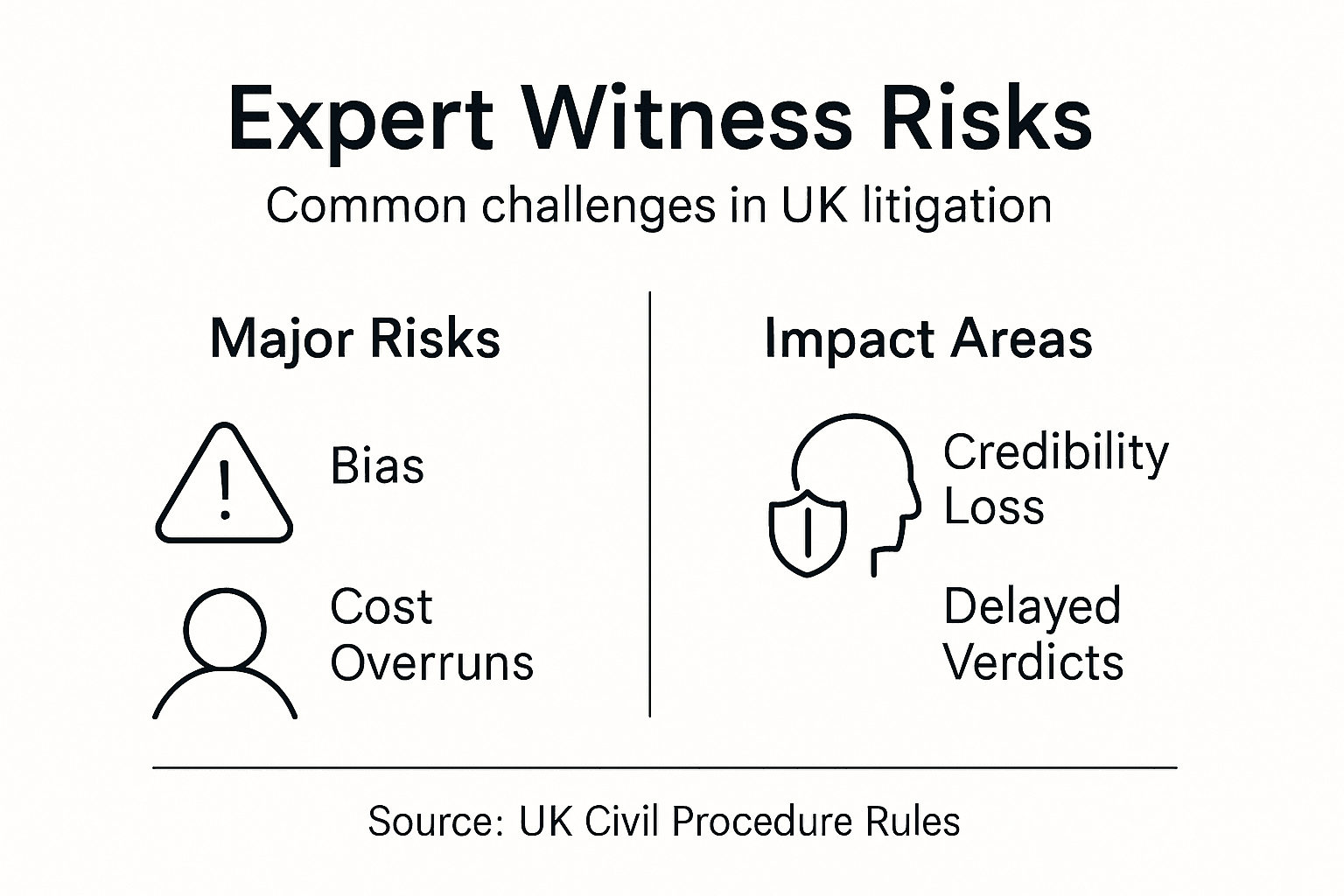
Expert witness testimony carries significant professional and legal risks that demand meticulous preparation and understanding. Potential risks can lead to serious judicial consequences when professionals fail to adhere to strict procedural and ethical standards.
Common risks and pitfalls include:
Expert witnesses face substantial professional challenges that can compromise their credibility and potentially result in legal repercussions. Financial implications are significant, with expert fees ranging from initial report preparation to court appearance costs.
The following table contrasts common pitfalls for expert witnesses with strategies to avoid them:
| Common Pitfall | Potential Consequence | Recommended Avoidance Strategy |
|---|---|---|
| Overstepping expertise | Damaged credibility | Clearly state scope of expertise |
| Insufficient report documentation | Court rejects evidence | Maintain thorough, transparent records |
| Inadequate preparation | Poor cross-examination outcome | Diligently prepare for court appearances |
| Unclear communication | Misunderstanding by court | Use plain language and clear examples |
Financial and Professional Consequences
Experts must carefully navigate potential risks:
Misunderstandings or errors can irreparably damage an expert witness’s professional reputation.
Pro tip: Develop a rigorous personal quality control process that critically evaluates your expert testimony before submission, ensuring every statement can withstand intense legal scrutiny.
Navigating the complexities of Expert Witness roles in UK litigation requires more than just understanding legal jargon and procedural rules. The challenges of ensuring impartial, clear, and professionally robust testimony can make or break your case. At Ali Legal, we recognise the importance of reliable expert evidence and offer tailored legal support to help you manage these critical aspects with confidence. Our client-focused approach prioritises transparency, speed, and straightforward advice to guide you through every step.

Don’t leave your litigation to chance when expert witness credibility and adherence to strict legal standards are at stake. Contact our skilled solicitors today for efficient and strategic assistance. Whether you need guidance on selecting qualified experts, preparing for cross-examination, or ensuring compliance with Civil Procedure Rules, our team is ready to deliver clear solutions that protect your interests. Start securing your success now by reaching out through Ali Legal Contact Us. Let us help you turn complex expert testimony into a winning advantage.
Expert witnesses provide specialised knowledge and independent opinions to assist the court in understanding complex technical or specialised matters. Their primary duty is to the court, not to the instructing party.
To qualify as an expert witness, professionals must have extensive credentials in their field, a proven track record of expertise, and the ability to communicate complex concepts clearly while adhering to legal obligations and ethical standards.
Expert witnesses primarily come from various fields including medical, technical, financial, psychological, and scientific backgrounds, providing unique perspectives and specialised knowledge to the court.
Common risks include overstepping personal expertise, inadequate preparation for cross-examination, and potential misrepresentation of evidence. Experts must maintain professional objectivity and document their reasoning thoroughly to avoid these pitfalls.


