
Menu
Get Expert Legal Support Today

Nearly every british business or individual will rely on contracts to protect interests and manage risk. Without clear understanding, even simple agreements can spark legal disputes or cost thousands in damages. Contract law forms the backbone of the british legal system, establishing rules that define when promises are truly binding. This guide highlights the core principles, types, and requirements crucial for anyone navigating agreements within the british context.
Contract law represents a fundamental legal framework governing agreements between parties, establishing clear expectations and protecting the rights of individuals and businesses. Contract law encompasses a structured process involving multiple critical stages: negotiation, formation, performance, and potential termination.
At its core, contract law revolves around several essential legal elements that transform a casual agreement into a legally binding arrangement. These foundational components include an offer, acceptance, consideration, and intention to create legal relations. An offer represents a clear proposal made by one party, which can be accepted by another, creating mutual agreement. Consideration refers to something of value exchanged between parties - whether monetary compensation, goods, services, or a promise to do (or not do) something specific.
The lifecycle of a contract follows a systematic progression that ensures clarity and legal protection. From initial negotiations through final execution, each stage carries specific legal implications. Negotiation involves parties discussing potential terms, while formation occurs when all essential elements converge. Performance represents the actual execution of contractual obligations, and termination addresses how and when agreements can be legally concluded. Understanding these stages helps individuals and businesses navigate complex legal interactions with confidence and precision.
Key principles underpinning contract law include mutual consent, legal capacity of parties, and the requirement that contractual objectives remain lawful. Importantly, not all agreements constitute legally enforceable contracts. Courts assess specific criteria to determine whether a particular arrangement meets the necessary legal standards, examining factors such as genuine intent, clarity of terms, and the absence of undue pressure or misrepresentation.
Contracts represent diverse legal instruments designed to address specific organisational and interpersonal requirements. Research contracts demonstrate significant variations in structure and purpose, ranging from collaborative arrangements to specialised legal agreements that define precise operational parameters.
Several primary contract categories emerge in legal practice, each serving distinct functional objectives. Written contracts provide comprehensive documentation of agreement terms, offering robust legal protection through explicit language. Verbal contracts represent less formal agreements relying on spoken commitments, though these can pose challenges in legal enforcement. Standard form contracts present pre-drafted templates commonly used in commercial transactions, featuring standardised terms applicable across multiple scenarios. Specialised contracts like framework agreements allow organisations to establish long-term collaborative relationships with predefined operational guidelines.
Understanding contract classifications requires examining their fundamental structural characteristics. Bilateral contracts involve mutual obligations between parties, where each participant commits to specific actions or exchanges. Unilateral contracts create scenarios where only one party assumes legally binding responsibilities. Conditional contracts introduce specific performance requirements or contingent outcomes, establishing clear parameters for agreement fulfilment. These nuanced distinctions enable precise legal interpretation and support effective risk management strategies.
Beyond structural variations, contracts also differ in their specific domain applications. Confidentiality agreements protect sensitive information, collaboration contracts facilitate joint ventures, and research collaboration agreements establish frameworks for academic and commercial research partnerships. Critically, each contract type demands meticulous drafting, ensuring clarity, comprehensiveness, and legal enforceability across diverse professional contexts.
Contract law establishes rigorous requirements to ensure legal agreements possess genuine validity and enforceability. Key elements form the foundational framework that transforms a simple agreement into a legally binding contract, protecting the interests of all parties involved.

The primary essential elements critical for creating a valid contract include: offer, acceptance, consideration, and intention to create legal relations. An offer represents a clear, definitive proposal made by one party, expressing willingness to enter into an agreement under specific terms. Acceptance occurs when the receiving party unequivocally agrees to those precise terms without introducing substantial modifications. Consideration represents the critical exchange of value between parties - whether monetary compensation, goods, services, or a promise to undertake (or refrain from) specific actions. This element distinguishes contracts from gratuitous promises, ensuring mutual commitment.
Legal capacity and contractual consent play fundamental roles in establishing contract validity. Parties must possess the legal competence to enter agreements, which means being of sound mind, of legal age, and free from undue external pressure. Consent must be genuine, meaning all participants understand the contract’s terms and agree voluntarily. Critically, contracts cannot involve illegal objectives or actions that contravene public policy. Factors such as misrepresentation, fraud, duress, or mistake can potentially invalidate an otherwise seemingly robust agreement, underscoring the importance of transparency and mutual understanding.
Beyond these core elements, contracts must demonstrate clarity of terms and mutual intent. Ambiguous or excessively vague agreements risk legal challenges, making precise language paramount. Courts typically assess contracts holistically, examining whether reasonable individuals would interpret the agreement’s terms similarly. Supplementary considerations include the parties’ previous interactions, industry standards, and the specific context surrounding the contractual relationship. This comprehensive approach ensures that legal agreements reflect genuine mutual understanding and protect the legitimate expectations of all involved parties.
The legal landscape of contract law in the United Kingdom comprises a sophisticated interplay between statutory legislation and judicial precedent, creating a robust framework for interpreting and enforcing contractual obligations. Unfair Contract Terms Act 1977 represents a pivotal legislative instrument that regulates contract terms, restricting provisions that attempt to exclude or limit legal liability and protecting parties from potentially exploitative contractual arrangements.
Statutory provisions form the foundational structure of contract law, with key legislation establishing critical standards and protections. Common law principles developed through judicial decisions complement these statutes, creating a dynamic legal ecosystem that adapts to evolving commercial and social contexts. Comprehensive legal resources like Chitty on Contracts provide authoritative guidance on interpreting these complex legal frameworks, offering detailed analyses of contract formation, capacity, and fundamental legal principles that courts consistently reference.
The hierarchical nature of the British legal system ensures that case law progressively refines statutory interpretations. Higher courts’ decisions create binding precedents that lower courts must follow, establishing consistent legal standards across jurisdictions. This stare decisis principle means that judicial interpretations of contract law become increasingly nuanced and precise over time, allowing for flexible yet structured legal reasoning that can address intricate contractual disputes while maintaining fundamental legal consistency.
Critical legislative instruments such as the Sale of Goods Act, Contract (Rights of Third Parties) Act, and Consumer Rights Act work in conjunction with common law principles to create a comprehensive contractual regulatory environment. Litigation funding strategies have become increasingly important in supporting individuals and businesses navigating complex legal challenges, ensuring that parties can effectively pursue contractual disputes and protect their legal interests through accessible judicial mechanisms.
Contract law establishes a comprehensive framework of rights and obligations that govern interactions between parties, delineating clear expectations and legal responsibilities. Contract rights and duties form a delicate balance of mutual commitments, ensuring each party understands their specific legal entitlements and expectations within an agreement.
Contractual fundamental rights typically encompass several critical dimensions. Parties possess the right to expect performance of agreed terms, seek remedies for breach of contract, and receive compensation for demonstrable losses. Correspondingly, these rights generate reciprocal legal duties: delivering promised goods or services, maintaining contractual standards, acting in good faith, and providing timely communication about potential performance challenges. A common misconception is that contracts represent rigid, inflexible documents, when in reality they often include provisions for negotiation, amendment, and reasonable adaptation to changing circumstances.
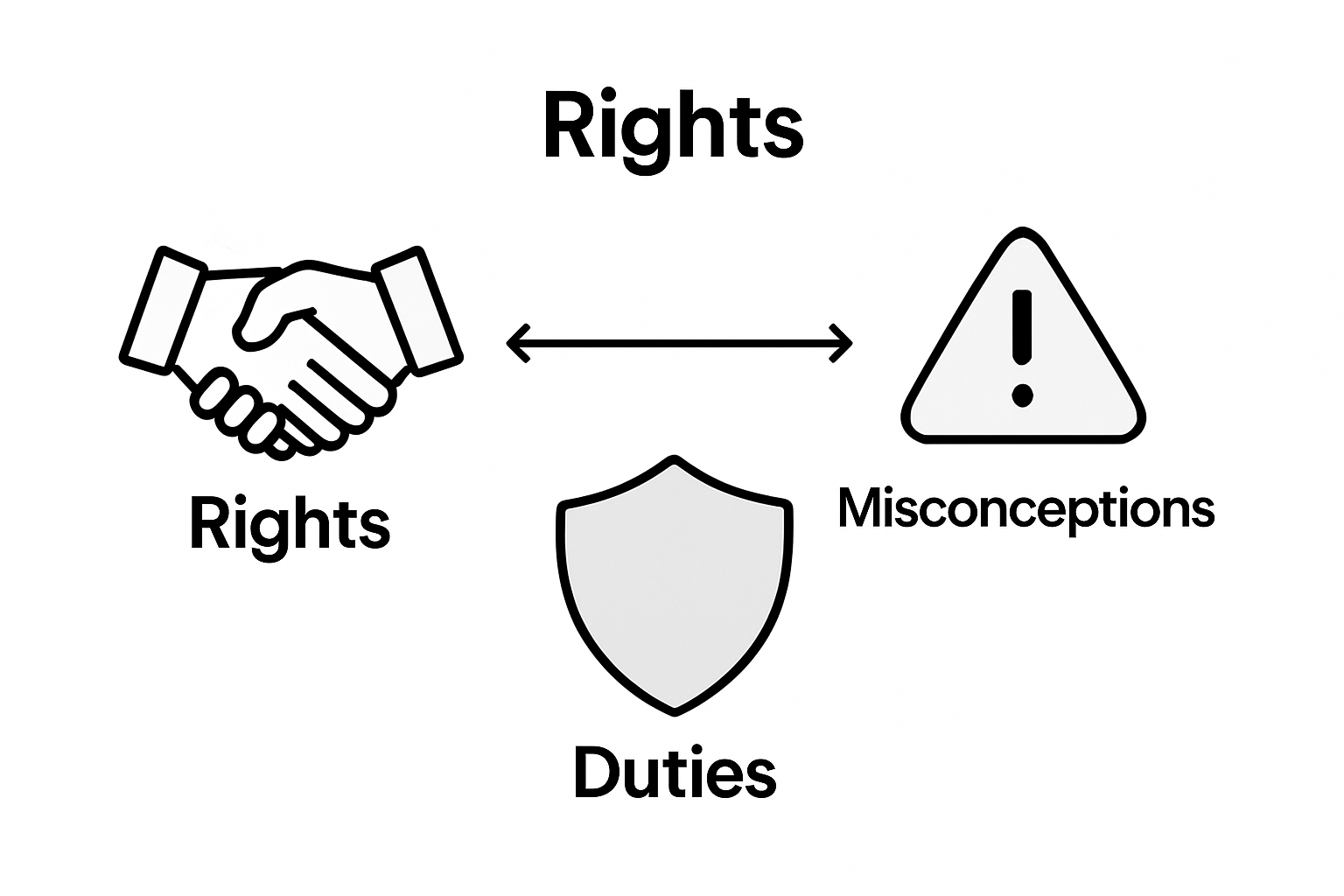
Several persistent misconceptions can complicate contractual understanding. Many individuals incorrectly believe that verbal agreements hold no legal weight, whereas certain verbal contracts can indeed be legally enforceable under specific conditions. Another widespread misunderstanding relates to contract termination, with many assuming that any party can unilaterally end an agreement without consequences. In reality, premature or unjustified contract termination can trigger significant legal repercussions, including potential financial penalties and litigation funding requirements for dispute resolution.
Understanding the nuanced landscape of contractual rights demands recognising both explicit and implicit obligations. Implied terms often supplement written agreements, introducing additional responsibilities not explicitly documented but reasonably expected within a specific commercial or professional context. These might include obligations of reasonable performance, maintaining professional standards, or acting in good faith. Critically, contractual rights extend beyond mere transactional exchanges, encompassing broader principles of fairness, transparency, and mutual respect that underpin sophisticated legal interactions.
Contract breaches represent significant legal challenges that can trigger complex consequences for involved parties. Contractual risks and remedies encompass a sophisticated range of potential legal interventions designed to address violations and protect the legitimate interests of affected participants.
The primary legal remedies available for contract breaches include monetary damages, specific performance, and injunctive relief. Monetary damages aim to compensate the injured party financially, restoring them to the position they would have occupied had the contract been fulfilled correctly. Specific performance represents a court-ordered requirement for the breaching party to complete their original contractual obligations, typically employed when monetary compensation proves insufficient. Liquidated damages provisions within contracts can also predetermine precise financial penalties for specific breaches, providing clarity and predictability in potential dispute scenarios.
Several critical factors influence the assessment of contractual breach consequences. Courts evaluate the materiality of breach, considering whether the violation fundamentally undermines the contract’s core purpose or represents a minor technical deviation. Complex business litigation strategies become particularly relevant when assessing substantial contractual disputes, as the potential financial and reputational implications can be significant. Partial breaches might result in proportional remedies, while fundamental breaches can justify complete contract termination and substantial compensatory measures.
Risks associated with contract breaches extend beyond immediate financial penalties. Reputational damage, loss of future business opportunities, and potential legal costs can create long-term consequences that far exceed the immediate financial impact. Mitigation strategies become crucial, encouraging parties to resolve disputes through negotiation, mediation, or alternative dispute resolution mechanisms before escalating to formal litigation. Understanding the nuanced landscape of contractual risks requires proactive management, clear communication, and a strategic approach to potential performance challenges.
Navigating contract law in the UK can be complex and fraught with challenges such as unclear terms, enforcement difficulties, and potential breaches. Whether you face issues around offer and acceptance, consideration, or valid contractual consent, ensuring your rights are protected is crucial. Ali Legal understands these pain points and offers tailored legal solutions to help you avoid costly misunderstandings and secure your interests with confidence.
Explore our comprehensive legal services designed for individuals and businesses alike at All | Ali Legal.

Take control of your contractual matters today by consulting with our experienced solicitors who provide straightforward advice, fixed fees, and a client-focused approach. Do not wait until a dispute arises. Contact Ali Legal now to protect your rights and achieve clarity in your agreements by visiting https://alilegal.co.uk/contact-us.
The essential elements for a valid contract include an offer, acceptance, consideration, and intention to create legal relations. These components ensure that the agreement is legally binding and enforceable.
Verbal agreements can be legally enforceable under certain conditions, provided there is clear mutual consent and consideration involved, although proving the terms can be more challenging than with written contracts.
Available legal remedies for a breach of contract include monetary damages, specific performance of contractual obligations, and injunctive relief. These remedies aim to compensate the injured party or compel the breaching party to fulfil their obligations.
Common misconceptions include the belief that verbal agreements hold no weight and the assumption that any party can terminate a contract at will. In reality, both verbal contracts can be enforceable, and premature termination may lead to significant legal repercussions.


