
Menu
Get Expert Legal Support Today

Buying your first home in the United Kingdom often brings excitement mixed with uncertainty. Every step matters as the legal transfer of property involves detailed checks, careful documentation and financial decisions. For first-time buyers, understanding the conveyancing process is essential to avoid stressful complications and financial surprises. This guide explains how professional conveyancers navigate each stage, ensuring a secure and transparent property purchase from the initial offer through to receiving the keys.
Conveyancing is the critical legal process of transferring property ownership in the United Kingdom. When buying or selling a residential property, this specialised legal procedure ensures that the transaction is conducted professionally and securely. The Conveyancing Protocol established by the Law Society provides a structured framework for solicitors to follow during property transfers.
At its core, conveyancing involves several key stages that protect both buyers and sellers:
The process officially begins when an offer on a property is accepted and concludes when the keys are handed over and ownership is legally transferred. Property ownership transfer involves complex legal procedures that require professional expertise to navigate successfully.
Professional conveyancers play a crucial role in managing the intricate legal documentation, ensuring that all necessary checks are completed, and handling the financial aspects of property transactions. They conduct essential searches including local authority checks, environmental assessments, and title investigations to protect the buyer’s interests.
Conveyancing is not just a legal formality, but a critical process that safeguards your most significant investment.
Pro tip: Always engage a qualified conveyancer early in your property transaction to prevent potential legal complications and ensure a smooth ownership transfer.
The conveyancing process involves a comprehensive series of legal steps designed to protect both buyers and sellers during property transactions. Understanding these stages is crucial for navigating the complexities of property ownership transfer in the United Kingdom. Residential conveyancing transactions follow a structured approach that ensures legal compliance and protects the interests of all parties involved.
The key stages of the conveyancing process typically include:
Professional conveyancers play a critical role in managing these intricate legal procedures. They act as intermediaries between buyers, sellers, estate agents, and mortgage lenders, ensuring that every legal requirement is meticulously fulfilled. The Conveyancing Protocol established by the Law Society provides a comprehensive framework that guides solicitors through each transaction stage.
Successful property transactions depend on thorough preparation, expert legal guidance, and precise documentation.
Pro tip: Request a detailed breakdown of all potential fees and disbursements from your conveyancer before commencing the property transaction to avoid unexpected financial surprises.
In the United Kingdom, property ownership is primarily categorised into two distinct types: freehold and leasehold. These classifications significantly impact the legal rights, responsibilities, and financial obligations of property owners. Property ownership structures play a crucial role in determining how individuals interact with their real estate investments.

Key characteristics of each ownership type include:
Freehold Property:
Leasehold Property:
The primary differences between freehold and leasehold ownership extend beyond mere legal terminology. Freehold owners have absolute ownership, meaning they own the land and building outright, whereas leaseholders essentially purchase the right to occupy a property for a predetermined period. Leasehold property details typically range from 90 to 999 years, with specific terms and conditions outlined in the lease agreement.
Understanding these distinctions is critical for potential property buyers, as they directly impact long-term financial planning, property value, and ownership rights. Leasehold properties, in particular, require careful consideration of remaining lease length, potential extension costs, and ongoing financial obligations to the freeholder.
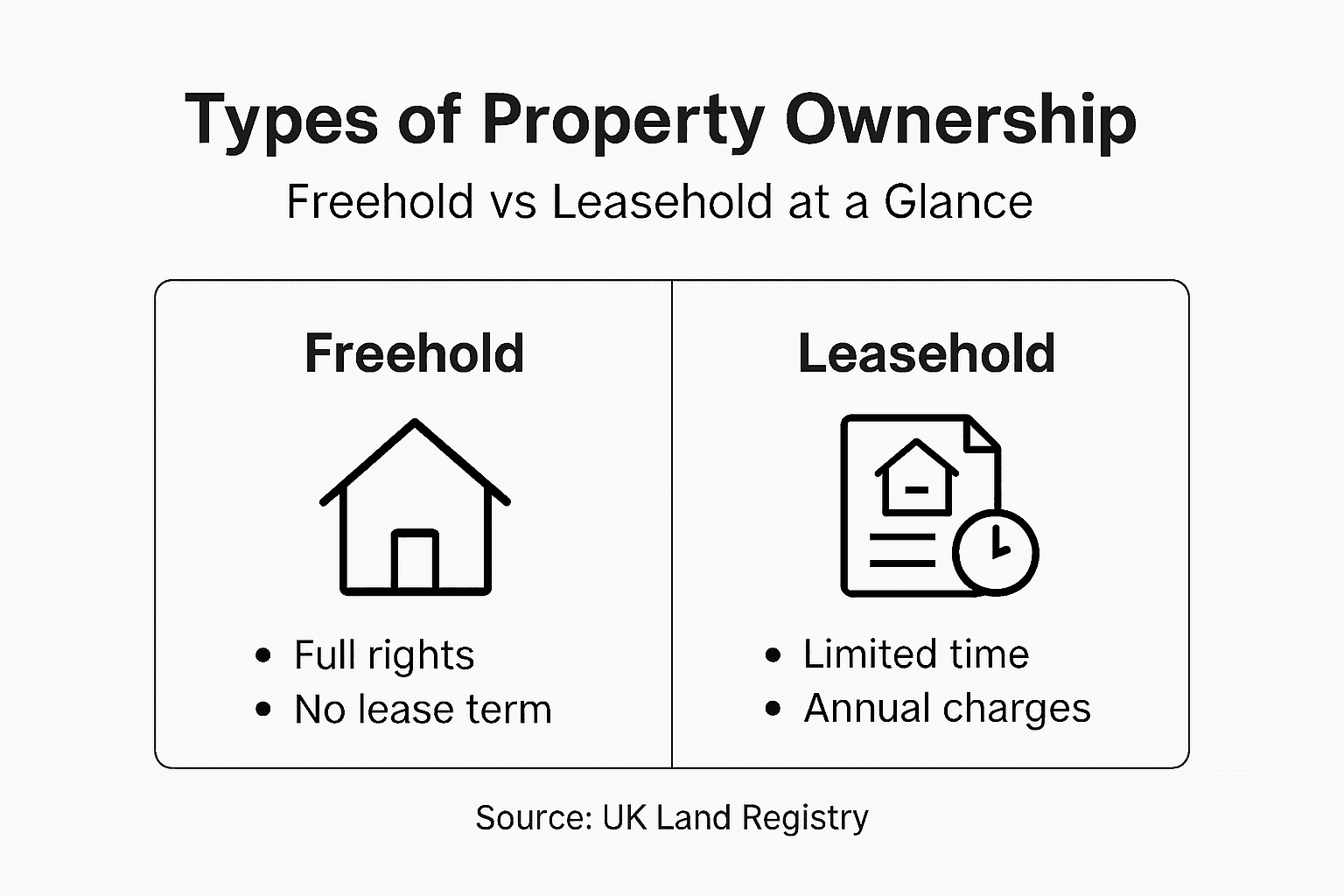
The following table highlights key differences between freehold and leasehold property ownership in the UK for quick reference:
| Ownership Aspect | Freehold Property | Leasehold Property |
|---|---|---|
| Ownership Duration | Unlimited, perpetual | Fixed term, usually 90–999 years |
| Control Over Property | Full decision-making rights | Subject to lease restrictions |
| Regular Payments | No ground rent or fees | Ground rent and service charges |
| Common Property Type | Detached or semi-detached houses | Flats or apartments |
| End of Ownership | Retained indefinitely | Reverts to freeholder at lease end |
Property ownership is not just about having a home, but understanding the legal framework that defines your rights and responsibilities.
Pro tip: Always request a comprehensive lease review and investigate the remaining lease term before purchasing a leasehold property to avoid unexpected future complications.
In the intricate world of property transactions, the relationship between buyers and solicitors is governed by a complex set of legal responsibilities and professional obligations. Professional conveyancing duties require both parties to work collaboratively to ensure a smooth and legally compliant property transfer.
Key responsibilities of the solicitor include:
Buyer’s primary responsibilities encompass:
Professional solicitors must navigate potential conflicts of interest with utmost transparency and ethical consideration. This means maintaining clear communication, documenting decision-making processes, and ensuring they consistently act in their client’s best interests throughout the property transaction.
Effective conveyancing is a partnership built on trust, communication, and mutual understanding between the buyer and their legal representative.
Pro tip: Maintain open and regular communication with your solicitor, promptly providing all requested documentation to expedite the conveyancing process and minimise potential delays.
Property transactions in the United Kingdom are fraught with potential complications that can derail even the most well-intentioned purchase. Conveyancing risk management requires buyers and solicitors to be vigilant and proactive in identifying and addressing potential issues before they escalate.
Common conveyancing pitfalls include:
Potential strategies for avoiding these challenges involve:
Research indicates that residential conveyancing challenges frequently stem from poor communication and inadequate client guidance. Successful property transactions depend on maintaining transparent, detailed, and proactive interactions between buyers, solicitors, and other involved professionals.
Prevention is always more cost-effective than resolving complications after they emerge.
Pro tip: Invest in a comprehensive property survey and request detailed written explanations of any complex legal or financial terms to prevent future misunderstandings.
Understanding the financial landscape of property transactions is crucial for UK buyers. Conveyancing cost breakdown reveals a complex array of expenses that potential homeowners must carefully consider before embarking on their property purchase.
Typical conveyancing expenses include:
Fee ranges for different transaction types:
Key factors influencing conveyancing costs include property location, value, ownership type, and transaction complexity. Home buying legal expenses require meticulous budgeting and understanding of potential additional charges that can significantly impact overall purchase expenses.
Here is a summary of typical conveyancing expenses and what they cover in a UK property transaction:
| Expense Type | Typical Cost Range | Purpose |
|---|---|---|
| Legal Fees | £400 – £1,500 | Professional solicitor or conveyancer advice |
| Search Fees | £200 – £450 | Legal, local authority and environmental checks |
| Land Registry Fees | £40 – £910 | Official new owner registration |
| Stamp Duty/LBTT | Rate-based, variable | Government tax based on property price |
| Leasehold Extras | Approx. £300 | Additional leasehold documentation |
Financial preparedness is the cornerstone of a smooth property transaction.
Pro tip: Request detailed, itemised quotes from multiple conveyancers and factor in potential additional disbursements to create an accurate budget for your property purchase.
Navigating the complex legal steps of conveyancing as highlighted in our Uncategorized | Ali Legal articles can feel overwhelming. Common challenges like understanding leasehold versus freehold, managing financial transactions, and avoiding costly pitfalls require clear advice and professional guidance. Ali Legal understands these concerns and offers transparent, fixed-fee legal services that ensure every stage of your property transfer is handled swiftly and thoroughly.

Take control of your property purchase today by consulting with our experienced solicitors. We prioritise clear communication and strategic solutions tailored to your needs. Avoid delays and legal uncertainties with Ali Legal’s trusted conveyancing expertise. Contact us now at https://alilegal.co.uk/contact-us to start your seamless property journey.
Conveyancing is the legal process of transferring property ownership, involving various stages such as contract preparation, property searches, and the registration of the new owner.
Conveyancing is crucial for ensuring a secure and orderly transfer of property, protecting the interests of buyers and sellers by managing legal documentation and financial transactions.
The key stages include initial instruction and property searches, contract preparation and review, financial arrangements, and the exchange and completion of contracts.
Freehold properties involve full ownership of both the property and land, whereas leasehold properties grant ownership for a specific period, often with ongoing ground rent and service charge obligations.


