
Menu
Get Expert Legal Support Today
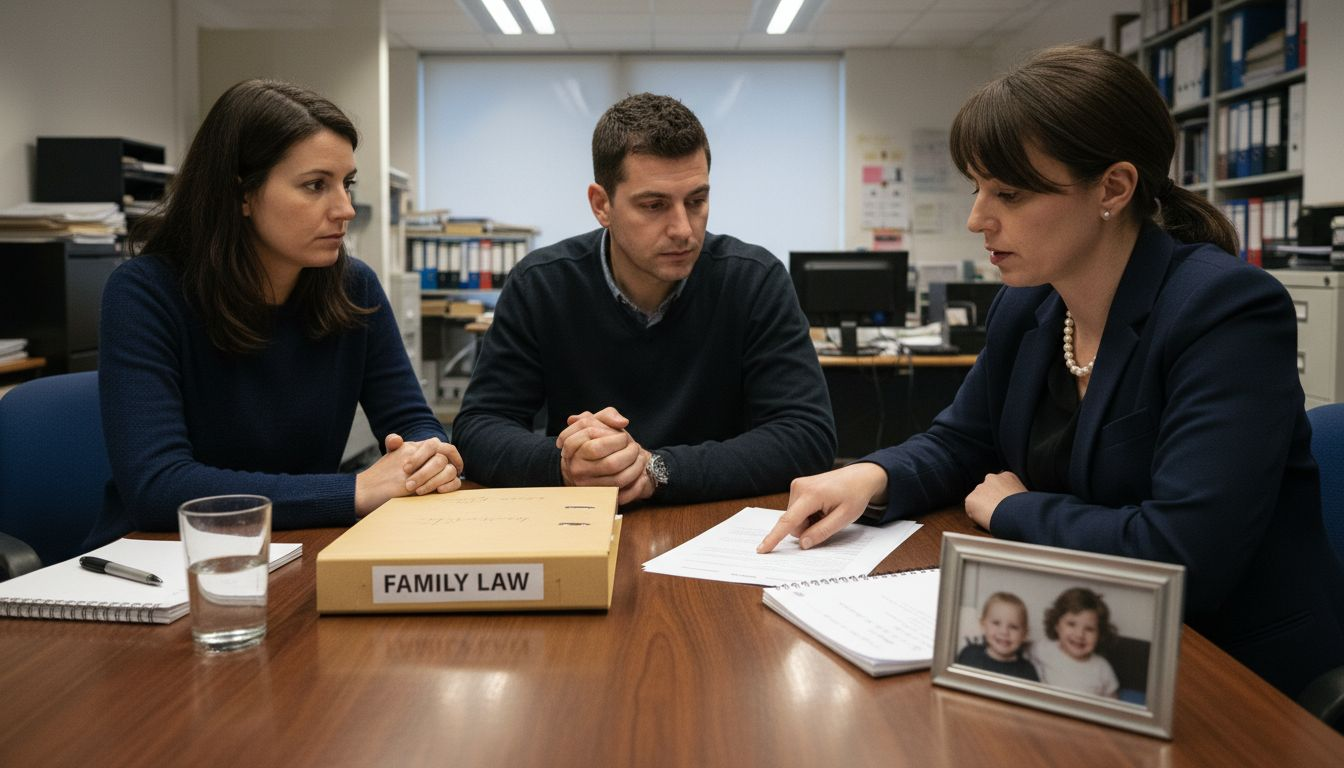
Separating from a partner or going through a divorce can make family law feel confusing and overwhelming. You might worry about your rights as a parent, your financial security, and how decisions will affect your children. Every choice can feel high-stakes when your family’s future is at the centre.
This guide gives you clear, practical information on the rights you have during separation or divorce in the United Kingdom. You will learn how parental responsibility works, what to expect when making child arrangements, and the steps you can take if agreement is hard to reach.
With each key point, you’ll uncover proven strategies and legal facts that can help you protect your relationship with your children and secure your financial wellbeing. Understanding parental responsibility and contact rights is the first step. The insights that follow will help you feel more confident and prepared for what comes next.
Parental responsibility represents the legal framework that defines a parent’s fundamental rights and obligations towards their child. In the United Kingdom, this concept goes far beyond mere biological connection and establishes a comprehensive set of legal duties designed to protect and support a child’s welfare.
Under the Children Act 1989, parental responsibility encompasses critical aspects of a child’s upbringing. This includes making significant decisions about their education, healthcare, religious upbringing, and overall life trajectory. Mothers automatically receive parental responsibility upon a child’s birth, while fathers acquire this status through marriage, birth registration, or a court order.
Practically, this means you have the legal authority and duty to provide a stable home, protect your child’s physical and emotional wellbeing, and make crucial decisions that shape their future. Unlike common misconceptions, parental responsibility does not automatically guarantee contact or visitation rights but mandates active involvement in key life choices.
For unmarried fathers, acquiring parental responsibility requires proactive steps. This can be achieved by jointly registering the birth with the mother, entering a formal parental responsibility agreement, or obtaining a court order. Each pathway ensures legal recognition of your parental role and associated responsibilities.
Pro tip: If you are an unmarried father, consult a family law solicitor to understand the precise steps for securing parental responsibility and protecting your child’s legal interests.
Child custody and residence represent complex legal territories that determine where children live and how parents share time and responsibilities following separation. Understanding these rights is crucial for maintaining healthy family dynamics and ensuring your children’s emotional wellbeing.
In the United Kingdom, parents are encouraged to reach child arrangements through mutual agreement whenever possible. This collaborative approach allows families to design flexible solutions that prioritise the children’s best interests. The court views these arrangements as preferable to formal legal interventions, which can be emotionally and financially demanding.
When creating child residence arrangements, multiple factors come into consideration. These include each parent’s work schedule, the children’s schooling, travel logistics, and crucially, the children’s own preferences and emotional needs. Courts will always place the child’s welfare as the paramount consideration, ensuring decisions support their psychological and developmental requirements.
Should parents struggle to reach an agreement, mediation provides a structured pathway for negotiation. Professional mediators can help facilitate discussions, explore compromise, and develop practical solutions that respect both parents’ relationships with their children. This approach often proves less adversarial and more constructive than immediate court proceedings.
Pro tip: Document all child arrangement agreements in writing and maintain open, respectful communication with your co-parent to ensure smooth implementation and minimal disruption to your children’s lives.
Contact and access rights represent the legal framework that allows parents to maintain meaningful relationships with their children following separation. Understanding these rights is crucial for preserving family connections and ensuring your children’s emotional wellbeing during challenging transitions.
Under UK law, divorce proceedings prioritise the child’s best interests when determining contact arrangements. This means that both parents typically retain the right to spend time with their children, regardless of relationship status or living arrangements. The specific contact schedule can be negotiated through private agreement, mediation, or court intervention if necessary.
Practical contact arrangements might include alternating weekends, shared holidays, midweek visits, or more flexible schedules tailored to the family’s unique circumstances. Courts encourage parents to develop collaborative approaches that minimise disruption to the children’s lives and maintain stable emotional connections with both parents.
Importantly, contact rights are distinct from parental responsibility. While contact determines time spent with children, parental responsibility focuses on making significant decisions about their upbringing. Parents without primary residence can still participate in crucial life choices regarding education, healthcare, and overall welfare.
Pro tip: Document all contact agreements in writing and maintain a consistent, respectful communication channel with your co-parent to ensure smooth implementation and minimise potential conflicts.
Child maintenance represents the financial cornerstone of ensuring your children’s wellbeing after separation. Understanding how to secure fair support is crucial for maintaining your child’s quality of life and standard of living during challenging family transitions.
The Child Maintenance Service provides a structured framework for calculating and managing financial support. Parents can choose between private arrangements or formal government assisted mechanisms. Typically, maintenance continues until the child reaches 16 years of age, or extended to 20 if they remain in approved educational training programmes.
Calculations consider multiple factors including the non resident parent’s gross annual income, number of children, and frequency of overnight stays. The standard calculation involves a percentage based system where income determines the maintenance amount. For instance, a parent earning £200 per week might be required to pay between 12 to 19 percent of their income depending on the number of children requiring support.
Should the paying parent fail to meet their obligations, the Child Maintenance Service can enforce collection through various legal mechanisms. These include direct earnings attachments, court proceedings, and potential seizure of assets. This ensures children receive consistent financial support regardless of parental cooperation.
Pro tip: Maintain transparent financial records and communicate clearly about maintenance arrangements to minimise potential conflicts and ensure your children’s financial stability.
Financial rights during divorce represent a critical aspect of legal separation that can significantly impact your long term economic stability. Understanding these rights helps ensure fair and equitable distribution of assets and financial resources.
Family law in England and Wales provides a comprehensive framework for addressing financial provisions during divorce. Courts approach financial settlements through three fundamental principles: needs, compensation, and fair sharing of marital assets. This means that the division is not simply about mathematical calculation but about creating a just outcome that considers both parties circumstances.
The financial settlement typically encompasses multiple dimensions including property division, pension sharing, savings, investments, and potential spousal maintenance. Courts evaluate factors such as each spouse’s earning capacity, age, duration of marriage, and most critically the welfare of any children involved. This holistic approach ensures that the most vulnerable family members receive appropriate protection.
Practically, spouses have several options for reaching financial agreements. Voluntary negotiations, mediation, and collaborative law processes offer opportunities to design mutually acceptable arrangements without lengthy court proceedings. If an agreement cannot be reached, the court can issue a binding financial order that determines the precise division of assets.
Pro tip: Collect comprehensive financial documentation early and consider professional legal advice to understand the full scope of your financial rights during divorce proceedings.
Domestic abuse transcends physical violence and encompasses psychological manipulation, coercive control, and systematic emotional degradation. Understanding your legal protections is crucial for safeguarding yourself and your children from harmful environments.
The United Kingdom has developed robust legal mechanisms to protect victims of domestic abuse. Domestic Abuse Protection Notices and Orders provide comprehensive safeguards that extend beyond traditional restraining measures. These legal instruments can be issued by police and courts, with no fixed duration, offering flexible protection tailored to individual circumstances.
Legal protections cover multiple forms of abuse including physical violence, psychological intimidation, financial control, stalking, and coercive behaviours. Critically, these orders can be applied for by victims, police, or third parties, reducing direct confrontation and potential risk. Breaching these protection orders constitutes a criminal offence, providing meaningful consequences for potential abusers.
Practical steps for seeking protection include documenting incidents, consulting local support services, and understanding your legal rights. Police and specialised domestic violence organisations can provide confidential guidance on creating safety plans and accessing legal remedies.
Pro tip: Maintain a confidential record of incidents and seek support from trusted professionals who can help navigate legal protections while ensuring your immediate safety.
Court orders in family law represent legally binding agreements that outline parental responsibilities and child arrangements. When one party fails to comply, understanding the enforcement mechanisms becomes crucial for protecting your rights and ensuring your children’s welfare.
The legal system provides multiple pathways for enforcing child arrangement orders when agreements are not followed. Initial approaches prioritise amicable resolution through mediation and communication. However, persistent non compliance can trigger more formal enforcement actions.
Courts possess a range of enforcement mechanisms designed to secure compliance. These can include varying existing orders, issuing enforcement orders, imposing financial compensation, mandating unpaid work, applying fines, or in extreme cases, considering imprisonment. Each intervention is carefully considered with the child’s best interests as the paramount consideration.
The official process involves submitting specific legal documentation, such as Form C79, which provides a structured approach for applicants seeking order enforcement. Professional bodies like Cafcass may also conduct investigations to assess the impact of non compliance and recommend appropriate interventions.
Pro tip: Document all instances of order violations meticulously and seek legal advice early to understand the most appropriate enforcement strategy for your specific situation.
Below is a comprehensive table summarising the key points discussed throughout the article concerning family law topics and parental responsibilities.
| Aspect | Explanation | Key Considerations |
|---|---|---|
| Parental Responsibility | Legal framework outlining parents’ duties towards their child. | Includes decisions on education, healthcare, and welfare. Parents must actively engage in their child’s life but contact rights are separate. |
| Unmarried Fathers’ Rights | Methods to acquire parental responsibility. | Requires joint registration, agreements, or court orders. Consulting legal advisers is recommended. |
| Child Custody and Residence | Agreements on children’s living arrangements post-separation. | Focus is on mutual agreements or mediation prioritising children’s welfare and preferences. |
| Contact and Access Rights | Maintaining parent-child relationships post-divorce. | Separate from parental responsibility; involves negotiating visitation schedules. |
| Child Maintenance | Financial support framework for children’s welfare. | Determined by income and children’s needs. Non-compliance may invoke legal interventions. |
| Spousal Financial Rights | Distribution of assets during divorce. | Based on needs, compensation, and fair sharing supported by negotiation or court orders. |
| Protection from Domestic Abuse | Legal measures for safeguarding against abuse. | Includes flexible protection orders covering various abusive behaviours. |
| Enforcing Court Orders | Mechanisms to address non-compliance with legal agreements. | Utilises mediation, legal enforcement orders, and investigations by authorities like Cafcass. |
Navigating complex family law rights such as parental responsibility, child custody, contact arrangements, and financial settlements can feel overwhelming. Whether you are facing challenges in enforcing court orders, securing fair child maintenance, or protecting yourself from domestic abuse, Ali Legal is here to provide clear and strategic legal guidance tailored to your unique circumstances. Understanding your rights is the first step but having a dedicated legal partner ensures those rights are protected with transparency and speed.

Explore how our experts effectively handle critical family law matters by visiting our All | Ali Legal page. Do not wait until confusion or conflict escalates—take control now by contacting us directly through Ali Legal Contact. Get straightforward advice on parental responsibility, safeguarding your children’s welfare, and securing your financial rights with professionals committed to lasting client relationships.
Parental responsibility is the legal authority and duty a parent has towards their child, which includes making important decisions about their upbringing. To obtain it as an unmarried father, you can register the child’s birth together with the mother or seek a court order.
To establish child custody and residence arrangements, parents should aim to reach mutual agreements whenever possible, focusing on the child’s best interests. If an agreement cannot be reached, consider mediation to help facilitate the negotiation process.
After a divorce, both parents typically retain the right to spend time with their children, with contact arrangements tailored to suit individual family circumstances. It is important to document all agreements and maintain respectful communication with your co-parent to ensure smooth visitation.
Child maintenance is calculated based on the non-residential parent’s income and the number of children requiring support, typically continuing until the child turns 16 or up to 20 if they are in approved training. To enforce maintenance, ensure clear communication about the arrangements and keep records to support potential actions should payment not be made.
Financial rights during divorce include the fair division of marital assets, pensions, and potential spousal maintenance based on factors like earning capacity and the welfare of any children. Begin by gathering comprehensive financial documentation to clarify your position and consider seeking legal advice.
To protect yourself and your children from domestic abuse, document incidents and seek legal protections such as Domestic Abuse Protection Notices or Orders. Connect with support services and create a safety plan to ensure your immediate well-being and access to needed resources.


