
Menu
Get Expert Legal Support Today

Most British business owners are surprised to learn that confusing lease terms account for a significant share of commercial property disputes every year. With so much at stake in each agreement, understanding British commercial lease law becomes vital for protecting your business and avoiding unexpected costs. This guide demystifies the legal structure, key lease types, and common pitfalls so you can negotiate with confidence and keep your next move firmly in your control.
Commercial lease law in the United Kingdom provides a comprehensive legal framework governing the relationship between business property landlords and tenants. These regulations establish critical guidelines for leasing commercial spaces, defining rights, obligations, and protections for both parties. The legal landscape surrounding commercial tenancy is complex, requiring businesses to understand intricate statutory requirements.
Under UK legislation, a commercial lease represents a legally binding contract that grants a business the right to occupy and utilise a property for specific commercial purposes. Commercial premises are defined within specific legal parameters that distinguish them from residential tenancies. Key characteristics include the property’s primary use for business activities, the potential for economic generation, and the absence of residential occupation.
The legal structure of commercial leases encompasses multiple dimensions, including rental agreements, property maintenance responsibilities, lease duration, and termination conditions. Her Majesty’s Revenue and Customs (HMRC) provides additional nuance, particularly regarding the taxation aspects of commercial rent. Commercial rent classifications are critically important for understanding tax implications, which can significantly impact a business’s financial planning.
Pro Tip for Business Tenants: Always conduct thorough due diligence before signing a commercial lease, carefully reviewing all terms, potential hidden costs, and understanding your legal obligations to prevent future disputes.
Commercial leases in the United Kingdom represent diverse legal arrangements tailored to different business requirements. The primary categories include full repairing and insuring (FRI) leases, short-term leases, long-term leases, and periodic tenancies. Each lease type carries distinct legal obligations, financial implications, and strategic considerations for businesses seeking commercial property.
Business lease forms vary significantly in their structural complexity, with the Full Repairing and Insuring (FRI) lease being the most common commercial lease format. In an FRI lease, tenants assume comprehensive responsibility for property maintenance, insurance, and repair costs, effectively transferring most property-related financial risks from the landlord to the tenant. These leases typically range from 5 to 25 years, providing long-term stability for both parties.
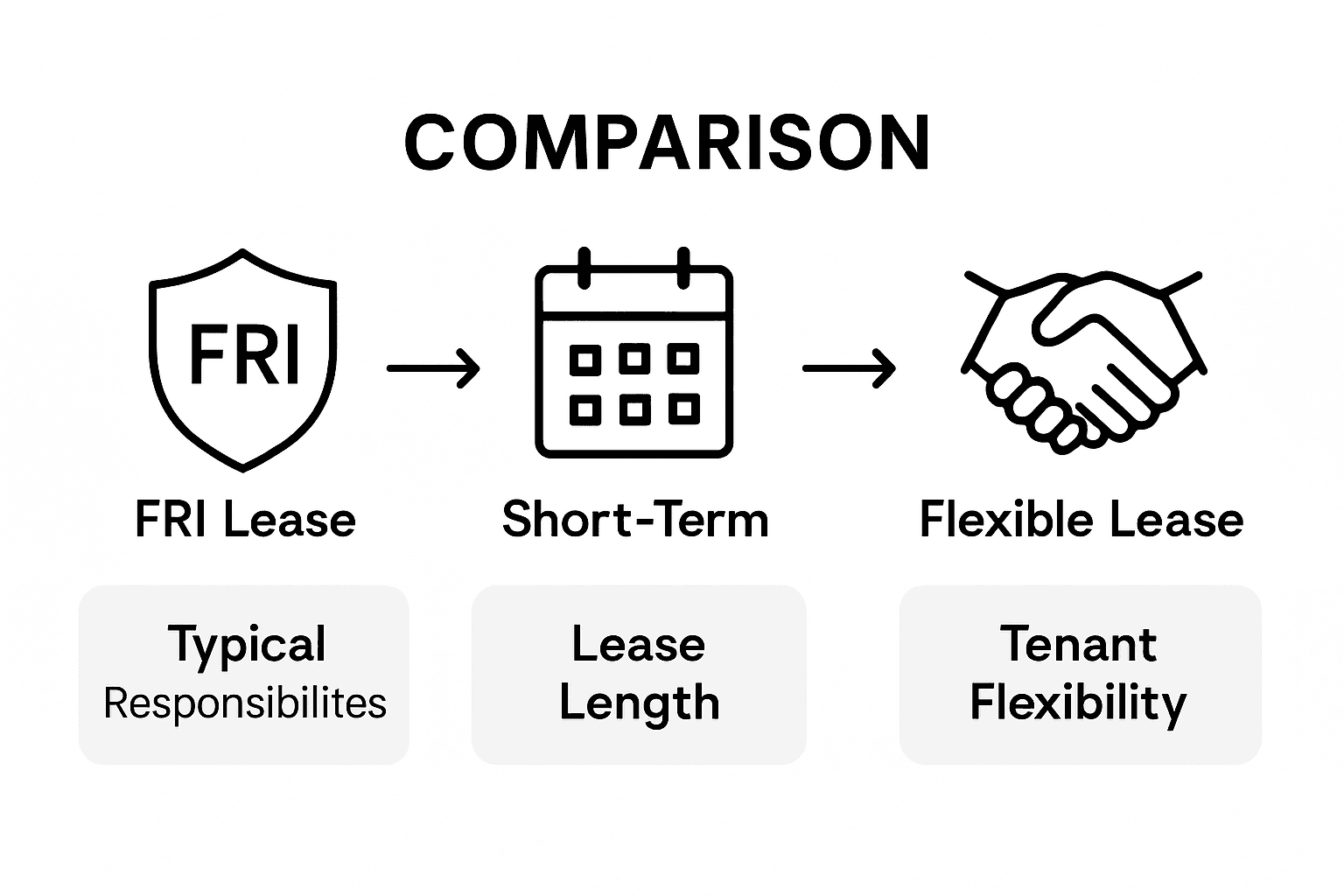
Short-term and periodic leases offer greater flexibility for businesses with uncertain growth trajectories or those requiring temporary premises. Local authority guidelines provide detailed insights into the nuanced terms of different business lease structures, highlighting critical differences in lease duration, break clauses, and renewal options. Periodic tenancies, which automatically renew on a month-to-month basis, represent the most adaptable lease type, allowing businesses to adjust their property commitments with minimal legal complexity.
To clarify the main types of commercial leases, consider the following comparison:
| Lease Type | Typical Duration | Main Tenant Responsibility | Flexibility for Tenant |
|---|---|---|---|
| Full Repairing & Insuring (FRI) | 5 to 25 years | All maintenance and insurance | Limited; long-term commitment |
| Short-Term Lease | 1 to 5 years | Basic upkeep and some repairs | Higher; suits changing needs |
| Long-Term Lease | 10 years or more | Maintenance varies by contract | Low; less exit flexibility |
| Periodic Tenancy | Month-to-month | Minimal; standard condition | Very high; easy to end |
Pro Tip for Property Seekers: Carefully analyse your business’s long-term strategic objectives and cash flow projections before selecting a commercial lease, as the wrong lease structure can significantly impact your operational flexibility and financial performance.
Commercial lease agreements encompass multiple critical terms that define the legal relationship between landlords and tenants. Core lease elements include rental rates, lease duration, permitted property usage, maintenance responsibilities, and termination conditions. Understanding these terms is fundamental for businesses seeking to protect their operational interests and financial stability.
Local authority guidelines provide comprehensive insights into the intricate details of business lease structures, highlighting the significance of precise contractual language. The rent review clause represents a particularly crucial term, allowing landlords to adjust rental rates periodically based on market conditions or predetermined indices. Typically, these reviews occur every three to five years, ensuring the lease remains commercially viable for the property owner while providing tenants with some predictability.
Business lease forms offer detailed templates demonstrating how essential terms function in practice, revealing the complexity of commercial tenancy agreements. Break clauses emerge as another critical component, providing businesses with strategic flexibility to exit the lease under specific circumstances. These clauses typically specify exact conditions under which a tenant can terminate the agreement before its natural conclusion, such as significant business changes, relocation requirements, or financial constraints.
Here is a summary of crucial commercial lease terms and why they matter:
| Lease Term | Purpose | Impact on Business |
|---|---|---|
| Rent Review Clause | Adjusts rent at set intervals | Keeps payments in line with market |
| Break Clause | Allows early lease exit | Enables flexibility for tenants |
| Maintenance Clause | Defines repair obligations | Affects future property costs |
| Permitted Use | Specifies allowed activities | Ensures business can operate legally |
Pro Tip for Lease Negotiation: Engage a legal professional to meticulously review all lease terms before signing, paying special attention to hidden clauses and potential long-term financial implications that could significantly impact your business’s operational flexibility.
Commercial lease relationships in the United Kingdom are governed by a complex framework of legal rights and responsibilities that balance the interests of both landlords and tenants. Landlord obligations typically encompass providing a habitable and safe commercial premises, ensuring structural integrity, and maintaining essential infrastructure that enables business operations. These fundamental responsibilities form the cornerstone of a legally compliant commercial tenancy arrangement.
The legal provisions for renewing commercial property leases outline specific rights for tenants, particularly regarding lease extension and negotiation. Tenants possess statutory protections that allow them to request lease renewal under certain conditions, with landlords required to provide legitimate grounds for potential rejection. These protections ensure businesses can maintain operational continuity and have reasonable opportunities to negotiate fair lease terms.
Government guidelines provide clear frameworks for terminating commercial property leases, establishing precise conditions under which early termination can occur. Break clauses represent a critical mechanism allowing either party to exit the lease under predetermined circumstances. These clauses must be carefully drafted, specifying exact notice periods, permissible reasons for termination, and potential financial penalties. Tenants must understand their contractual obligations, including potential liability for outstanding rent, property reinstatement costs, and potential compensation to the landlord.
Pro Tip for Lease Management: Thoroughly document all communications and property conditions at the lease’s commencement and throughout its duration, creating a comprehensive record that can protect your legal interests in potential dispute scenarios.
Commercial lease agreements present numerous financial and legal risks that can significantly impact a business’s operational stability. Financial exposure encompasses potential costs beyond standard rental payments, including unexpected maintenance expenses, dilapidation charges, and potential legal disputes that can emerge from complex contractual interpretations.
Government guidelines highlight critical risks associated with terminating commercial property leases, revealing the substantial financial consequences of premature contract termination. Early lease termination can trigger significant penalty clauses, including outstanding rent obligations, reinstatement costs, and potential compensation payments. Businesses must carefully evaluate break clauses, understanding precise conditions and financial implications before attempting to exit a lease agreement.
Local authority resources provide comprehensive insights into navigating business lease complexities, emphasising the importance of thorough due diligence. Common pitfalls include inadequate understanding of repair obligations, overlooking subtle contractual nuances, and failing to negotiate favourable terms during initial lease discussions. Hidden costs such as service charges, insurance requirements, and property maintenance can dramatically increase a tenant’s financial burden if not carefully scrutinised during lease negotiations.
Pro Tip for Lease Risk Management: Engage a specialised commercial property solicitor to conduct a comprehensive lease review before signing, ensuring you fully comprehend all potential financial risks and contractual obligations.
Navigating the complexities of commercial lease law in the United Kingdom requires clear understanding and strategic guidance. With challenges such as interpreting break clauses, managing rent review obligations, and avoiding hidden financial risks, businesses need trusted legal partners to protect their interests. Whether you face uncertainties with lease terms, repair responsibilities or seeking renewal advice, Ali Legal offers straightforward advice focused on your peace of mind.
All | Ali Legal provides comprehensive legal solutions tailored to commercial tenancy needs.

Take control of your commercial lease arrangements today by consulting with Ali Legal’s experienced solicitors. Reach out now via https://alilegal.co.uk/contact-us to gain clear, fixed-fee guidance that safeguards your business’s operational and financial flexibility.
A commercial lease is a legally binding contract that grants a business the right to occupy and use a property for specific commercial purposes, distinguishing it from residential tenancies.
The primary types of commercial leases include Full Repairing and Insuring (FRI) leases, short-term leases, long-term leases, and periodic tenancies, each with different responsibilities and durations.
Essential terms in a commercial lease should include rental rates, lease duration, permitted property usage, maintenance responsibilities, and termination conditions to protect both parties’ interests.
Businesses should consider potential financial exposure from unexpected maintenance costs, legal disputes, dilapidation charges, and the implications of break clauses when entering a commercial lease.


