
Menu
Get Expert Legal Support Today

Many British businesses rely on commercial contracts to keep operations running smoothly, yet over 60 percent of contract disputes in the United Kingdom arise from unclear terms or obligations. For any organisation, a single poorly drafted agreement can threaten financial stability and reputation. This guide takes a closer look at what makes a contract truly commercial, revealing the essential elements and legal safeguards every British business should understand.
A commercial contract represents a legally binding agreement between parties engaged in business transactions, designed to facilitate economic exchanges and protect organisational interests. These contracts go beyond simple interpersonal agreements by establishing specific parameters for professional interactions. Commercial agreements establish crucial frameworks that define expectations, risks, and obligations within business relationships.

The fundamental characteristics of commercial contracts distinguish them from other legal arrangements. Key elements typically include clear commercial purposes, measurable economic value, professional intent, and documented terms governing business interactions. Unlike personal contracts, commercial agreements require precise language addressing specific business scenarios such as service delivery, product sales, partnership arrangements, or financial transactions.
Commercial contracts must demonstrate several critical components to be considered legally valid. These include explicit identification of contracting parties, defined scope of work or transaction, precise payment terms, performance expectations, potential remedies for breach, and comprehensive dispute resolution mechanisms. Corporate contractual theories highlight the complex nature of these agreements, recognising them as more than simple transactional documents.
Pro Business Tip: Always consult a legal professional when drafting commercial contracts to ensure comprehensive protection of your business interests and alignment with current regulatory requirements.
Commercial contracts encompass a diverse range of legal agreements that facilitate business transactions across various industries. These contracts serve critical functions in protecting organisational interests and establishing clear operational frameworks. Commercial agreements are essential for establishing and regulating business transactions, ensuring legal compliance and mutual understanding between parties.
Several key types of commercial contracts are prevalent in the United Kingdom. These include:
Each contract type requires meticulous drafting to address specific business needs and potential legal complexities. Contemporary corporate theories underscore the intricate nature of these agreements, recognising them as sophisticated instruments of business governance beyond mere transactional documents.
For a clearer understanding, here is a summary of how key types of commercial contracts serve UK businesses:
| Contract Type | Main Function | Typical Business Impact |
|---|---|---|
| Service Contract | Governs delivery of professional services | Ensures clarity and accountability |
| Supply Agreement | Manages goods procurement and delivery | Secures smooth supply chain |
| NDA | Safeguards confidential information | Protects intellectual property |
| Partnership Contract | Defines terms of business collaboration | Sets boundaries and expectations |
| Employment Contract | Sets worker roles and responsibilities | Minimises HR-related disputes |
| Lease Agreement | Controls terms for business premises | Provides stability in operations |
Pro Business Tip: Customise contract templates to reflect your specific business context, and always seek professional legal review to ensure comprehensive protection and clarity in your commercial agreements.
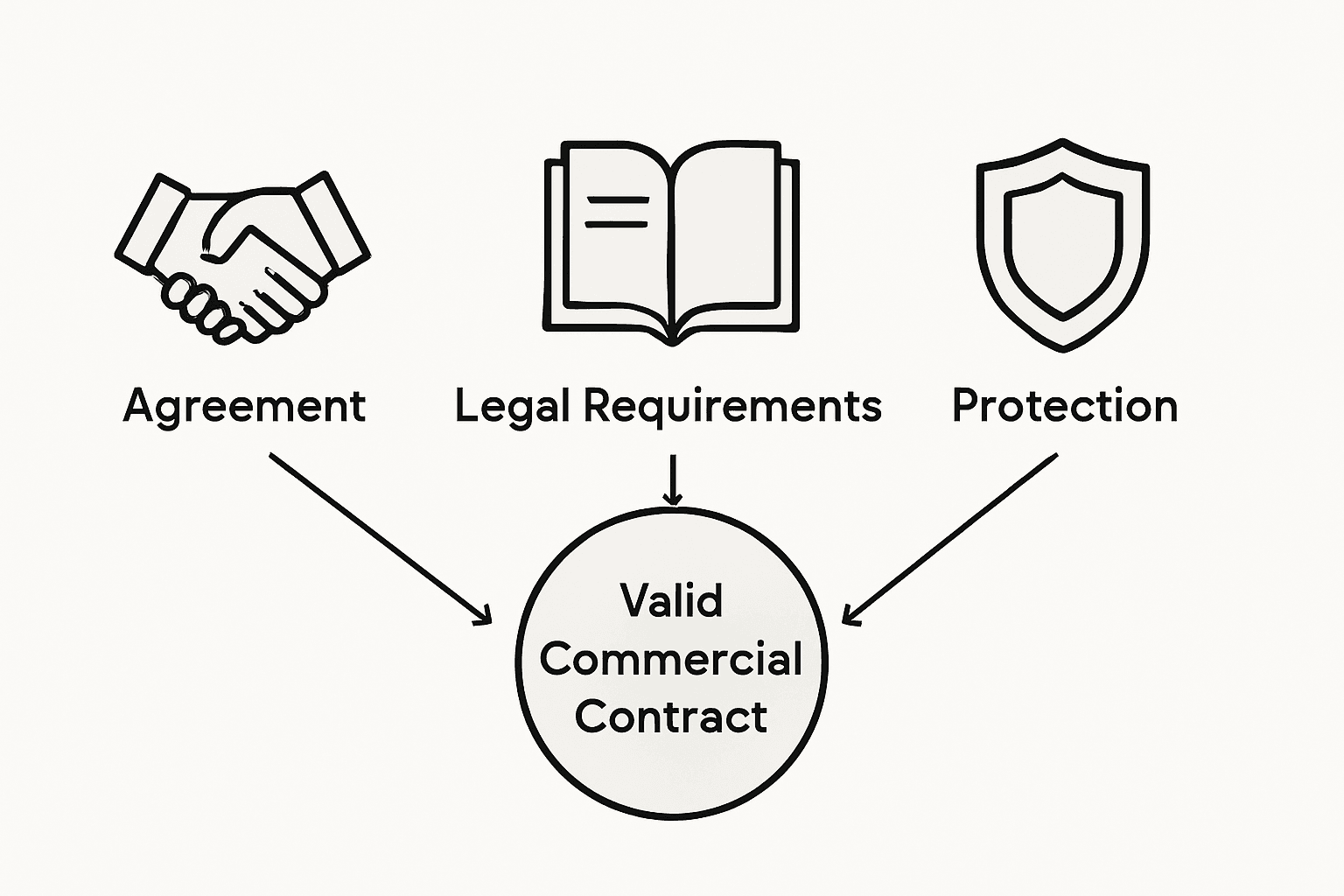
Commercial contracts require a sophisticated blend of legal elements to ensure their validity and enforceability. Offer and acceptance are fundamental requirements for contract formation, alongside other critical components that establish a legally binding agreement. Understanding these core elements is essential for businesses seeking to protect their interests and create robust legal frameworks.
The primary elements of a valid commercial contract include:
The intention to create legal relations is a critical conversion point that transforms a mere agreement into a legally enforceable contract. This nuanced requirement ensures that the parties genuinely intend to be bound by the contractual terms, distinguishing casual discussions from serious legal commitments. Professional legal drafting becomes crucial in explicitly demonstrating this intention through precise language and comprehensive clauses.
Pro Business Tip: Conduct thorough due diligence on all contracting parties and meticulously document every aspect of the agreement to strengthen the contract’s legal standing and minimise potential disputes.
Commercial contract law in the United Kingdom represents a sophisticated system of legal principles designed to regulate business interactions and protect organisational interests. Certainty in English law provides fundamental rules for judicial interpretation, ensuring consistent and predictable resolution of contractual disputes across various business scenarios.
The primary legal principles governing commercial contracts in the UK include:
Agency law forms a critical component of UK commercial legal frameworks, establishing essential rules that facilitate smooth business operations. This legal principle addresses the complex relationships between principals and their representatives, defining rights, responsibilities, and potential liabilities. Understanding these intricate legal mechanisms becomes crucial for businesses seeking to navigate the complex landscape of commercial interactions and minimise potential legal risks.
The table below compares key legal principles regulating UK commercial contracts:
| Legal Principle | Definition | Influence on Contracts |
|---|---|---|
| Common Law | Judge-made precedents | Guides contract interpretation |
| Statutory Regulation | Laws passed by Parliament | Imposes specific obligations |
| Duty of Good Faith | Requirement for honest dealings | Fosters trust and ethical conduct |
| Risk Allocation | Mechanism to share possible losses | Reduces legal and financial shocks |
| Remedies & Enforcement | Legal options after breaches | Enables rights protection and redress |
Pro Business Tip: Engage specialised legal counsel to conduct comprehensive contract reviews, ensuring alignment with current regulatory standards and identifying potential legal vulnerabilities before finalising any commercial agreements.
Commercial contracts establish a complex landscape of legal obligations and potential vulnerabilities for businesses operating in the United Kingdom. Good faith principles represent a critical examination of contractual interactions, demanding ethical conduct and transparent communication between parties.
Key rights and duties in commercial contracts encompass several fundamental aspects:
Contemporary commercial contract developments highlight evolving legal frameworks that increasingly recognise the nuanced nature of business relationships. Legal risks can emerge from various sources, including misrepresentation, breach of contract, negligence, and unintentional non-compliance with regulatory standards. Understanding these potential vulnerabilities becomes crucial for businesses seeking to mitigate legal exposure and maintain robust commercial relationships.
Pro Business Tip: Regularly conduct comprehensive contract audits to identify potential legal risks, ensuring proactive management of contractual obligations and minimising unexpected legal complications.
Navigating the complexities of commercial contracts is essential to safeguard your business interests in the United Kingdom. This article highlights crucial challenges such as ensuring lawful purpose, defining performance obligations, and managing legal risks like breach or misrepresentation. Clear contractual terms and expert handling of elements like offer, acceptance, and consideration are vital for securing enforceable agreements. At Ali Legal, we understand how these core elements underpin successful business operations and the importance of customised, precise contracts to prevent costly disputes.

Do not leave your commercial agreements to chance. Benefit from Ali Legal’s transparent and swift legal services that deliver straightforward advice tailored to your unique business needs. Our specialists are ready to guide you through drafting, reviewing, and negotiating your contracts to ensure every obligation and right is clearly articulated. Take the proactive step today. Contact us via our dedicated consultation page and protect your business with confidence. For comprehensive legal assistance across corporate, commercial law, and dispute resolution, see how Ali Legal can help you build stronger business relationships now.
The key elements of a commercial contract include offer and acceptance, consideration, legal capacity, genuine consent, lawful purpose, and certainty of terms.
Businesses can ensure the validity of their commercial contracts by clearly defining the terms, providing mutual consideration, and ensuring that all parties have the capacity to enter into the agreement.
Common types of commercial contracts include service contracts, supply agreements, non-disclosure agreements (NDAs), partnership contracts, employment contracts, and lease agreements.
Consulting a legal professional is essential to ensure comprehensive protection of business interests, alignment with regulatory requirements, and to navigate any complex legal language involved in contract drafting.


