
Menu
Get Expert Legal Support Today

Cross-border disputes can quickly become a maze of conflicting rules, unexpected pitfalls, and costly delays. Over 60 percent of international cases face setbacks due to overlooked legal risks or missing documentation. Whether you are a business leader or legal professional, understanding each critical step will help you anticipate challenges and prevent expensive errors. Discover practical insights for assessing legal risks, choosing jurisdictions, hiring the right counsel, and executing agreements with confidence.
Assessing legal risks and jurisdiction options is crucial when managing cross-border disputes. This step helps you understand the complex legal landscape and strategically position your case for optimal resolution.
The process begins with a comprehensive evaluation of jurisdictional frameworks. According to the gov.uk guidance, legal professionals must carefully examine the rules governing jurisdiction in cross-border civil and commercial disputes. This involves understanding which legal system has authority to hear your case and how different jurisdictions might interpret contractual agreements.
As explained by Oxford Law, the Conflict of Laws framework provides essential guidance for navigating these complex scenarios. You will need to consider several critical factors:
Practically speaking, this means reviewing existing agreements, consulting international legal experts, and developing a strategic approach that anticipates potential jurisdictional challenges. International Disputes & Arbitration resources can provide additional insights into protecting your interests across different legal environments.
One key warning: never assume that your home jurisdiction will automatically have precedence. Each cross-border dispute requires meticulous analysis of specific legal contexts and potential complications.
Once you have thoroughly assessed jurisdictional risks, you will be prepared to make informed decisions about how to proceed with dispute resolution strategies.
Gathering and organising documentation is a critical foundation for successfully navigating cross-border disputes. This step will help you compile a comprehensive and strategically structured set of documents that can significantly strengthen your legal position.
According to gov.uk guidance, legal professionals must meticulously collect and organise documentation for cross-border civil and commercial cases. Your documentation collection should include:
As highlighted by Justice NI, different jurisdictions may have specific requirements for document presentation and authentication. This means you must ensure each document meets the legal standards of potentially multiple jurisdictions.
Practical organisation is key. Create a digital folder system with clear labelling and maintain multiple backup copies. Chronological and thematic organisation will help legal professionals quickly understand the context and details of your case. Cross Border M&A & Ventures resources can provide additional guidance on effective document management.
One critical warning: incomplete or poorly organised documentation can significantly weaken your legal position. Invest time in thorough and precise document collection and verification.

Once your documentation is gathered and organised, you will be well prepared to move forward with developing a robust legal strategy for your cross-border dispute.
Engaging the right legal counsel is paramount when navigating cross-border disputes. This critical step will help you identify and select international legal experts who can effectively represent your interests across complex jurisdictional landscapes.
According to International Chamber of Commerce, selecting legal counsel requires deep expertise in international arbitration, litigation, and alternative dispute resolution. Your selection process should focus on lawyers who demonstrate:
The University of Dundee highlights the importance of legal professionals with advanced training in cross-border litigation and private international law. This means seeking counsel who can navigate complex jurisdictional conflicts and understand nuanced international legal frameworks.
Practically speaking, you should conduct thorough interviews, request case histories, and verify international credentials. International Arbitration Solicitors can provide additional insights into selecting the most suitable legal representation.
One critical warning: do not compromise on expertise. Choosing legal counsel with insufficient international experience can significantly jeopardise your dispute resolution strategy.
Once you have engaged suitable legal counsel, you will be well positioned to develop a comprehensive and strategic approach to resolving your cross-border dispute.
Developing strategic negotiation and litigation tactics is crucial for successfully resolving cross-border disputes. This step will help you craft a nuanced approach that maximises your potential for achieving a favourable outcome.
According to the International Chamber of Commerce, effective dispute resolution involves understanding multiple legal avenues. Your strategic approach should include:
Practical implementation requires a multilayered strategy. This means developing flexible tactics that can adapt to changing circumstances while maintaining a clear strategic objective. Understanding the strengths and limitations of different dispute resolution methods will be critical to your success.
Your negotiation strategy should balance assertiveness with diplomatic flexibility. Commercial Litigation resources can provide additional insights into creating robust legal strategies that protect your interests.
One critical warning: rigidity can be your greatest weakness. Successful cross border dispute resolution demands adaptability and a nuanced understanding of complex international legal landscapes.
Once you have developed your strategic negotiation and litigation tactics, you will be prepared to move forward with confidence in addressing your cross-border dispute.
Executing agreements and ensuring compliance is the critical final stage of resolving cross-border disputes. This step transforms your strategic negotiations into legally binding and enforceable outcomes that protect your interests across international jurisdictions.
According to UK Government, recent legal frameworks like the 2019 Hague Convention have significantly simplified the recognition and enforcement of legal judgments in cross-border disputes. Your execution strategy should focus on:
The Private International Law framework provides comprehensive mechanisms for implementing international agreements. This means understanding the legal infrastructure that supports cross-border compliance and using it strategically to your advantage.
Practical implementation requires meticulous attention to detail. Commercial Litigation Solicitors can offer specialised guidance on creating robust compliance frameworks that transcend international boundaries.
One critical warning: do not underestimate the complexity of cross-border compliance. Small oversights can lead to significant legal complications and potential contract invalidation.
Once agreements are executed with comprehensive compliance mechanisms, you will have successfully navigated the challenging landscape of cross-border dispute resolution.
Cross-border disputes can feel overwhelming with complex jurisdictional challenges and critical documentation requirements. This article highlights the importance of strategic legal counsel and adaptable negotiation tactics to protect your interests internationally. At Ali Legal, we understand these pressures and offer clear, fixed-fee legal solutions designed to bring transparency and speed to every case.

Take control of your international dispute resolution today. Explore our comprehensive legal expertise tailored for complex cross-border matters in our Uncategorized | Ali Legal and enrich your understanding through our resources on All | Ali Legal. Start your journey with a solicitor who prioritises clear communication and long-term partnership. Visit Ali Legal now to arrange a consultation and ensure your strategy is robust and effective.
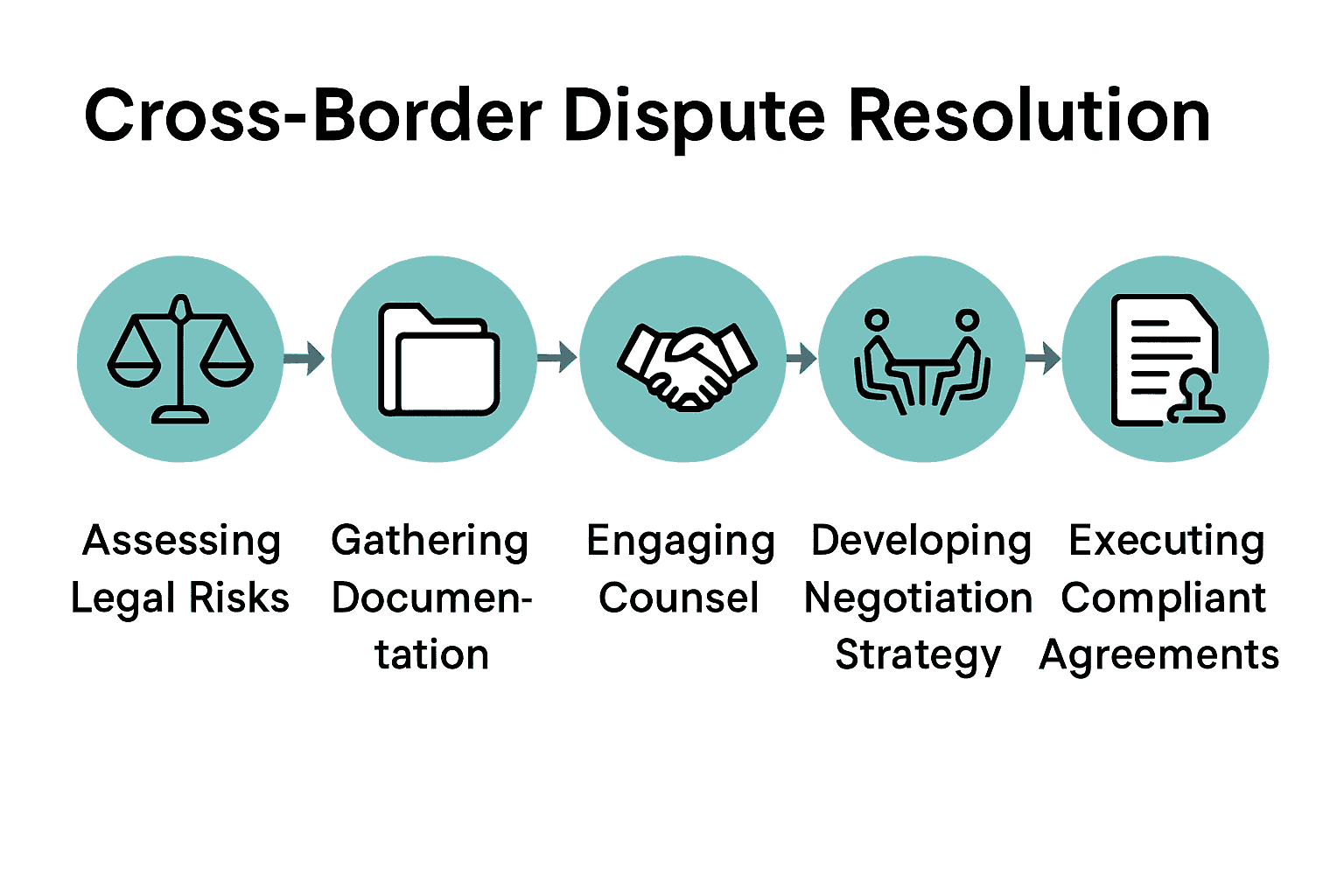
When assessing legal risks, focus on understanding the jurisdictional frameworks involved. Begin by evaluating the domicile of the parties, relevant contractual clauses, and potential enforcement challenges to better prepare your legal strategy.
To effectively gather documentation, compile original contracts, communication records, and financial evidence. Organize these documents into clearly labeled digital folders and maintain backups to facilitate quick access during legal proceedings.
Select legal counsel based on their expertise in international arbitration and familiarity with multiple jurisdictions. Look for proven experience and a track record of successful cases to ensure they can effectively represent your interests.
Develop negotiation and litigation tactics by analyzing different dispute resolution pathways, including litigation, arbitration, and alternative methods. Assess potential long-term implications and prepare to adapt your strategy as circumstances change during the process.
To execute agreements, document all terms precisely and define the compliance mechanisms clearly. Ensure you understand specific jurisdictional requirements and establish monitoring protocols to keep the execution process on track.
Jurisdictional challenges can significantly impact your resolution strategies by determining which legal systems apply. Assess these challenges early to adjust your approach and anticipate complications in enforcing agreements.


