
Menu
Get Expert Legal Support Today

Global business disputes are rising, yet nearly 60 percent of companies underestimate the complexity of cross-border litigation. International legal battles demand far more than understanding local laws. The stakes are high, with different countries enforcing dramatically different rules, procedures, and outcomes. Anyone navigating these disputes needs clear insight into the real challenges, misconceptions, and crucial steps that define successful cross-border litigation.
Cross-border litigation represents a complex legal landscape where disputes transcend traditional geographical boundaries, involving multiple jurisdictions, legal systems, and international regulations. Unlike domestic legal proceedings, these cases require sophisticated navigation of diverse legal frameworks, cultural nuances, and international treaty obligations.
At its core, cross-border litigation encompasses legal disputes involving parties from different countries, where the resolution requires understanding and reconciling distinct legal systems. This might involve international commercial disagreements, intellectual property conflicts, contract breaches across national borders, or enforcement of judgments between sovereign states. Critically, such litigation demands comprehensive knowledge of international private law, jurisdictional principles, and potential enforcement challenges.
Common misconceptions about cross-border litigation often stem from oversimplified assumptions about legal uniformity. Many individuals and businesses mistakenly believe that legal processes are standardised worldwide, when in reality, significant variations exist between jurisdictional approaches. For instance, evidential standards, procedural requirements, and remedies can dramatically differ between common law jurisdictions like the United Kingdom and civil law systems prevalent in continental Europe.
Practitioners engaging in cross-border litigation must be prepared for multifaceted challenges. These include determining appropriate legal venues, managing language barriers, understanding conflict of laws principles, and anticipating potential enforcement complications.
 International Disputes & Arbitration services become crucial in these scenarios, offering strategic guidance through these intricate legal terrains.
Cross-border disputes in the United Kingdom encompass a diverse range of legal conflicts that span multiple jurisdictional boundaries, reflecting the complex nature of international business and personal interactions. These disputes can arise in various domains, each presenting unique challenges and requiring specialised legal expertise to navigate effectively.
Commercial and contractual disputes represent a significant category of cross-border legal conflicts. These often involve international business transactions, contract breaches, trade disagreements, and complex commercial negotiations between parties from different countries. International Arbitration Solicitors play a crucial role in resolving these intricate disputes, offering strategic guidance through the labyrinth of international commercial law.
According to Keoghs, the landscape of cross-border disputes has undergone significant transformation following Brexit, particularly in areas such as personal injury claims and commercial litigation. The post-Brexit legal environment has introduced additional complexity in jurisdictional rules and the recognition and enforcement of judgments, compelling businesses and legal practitioners to adapt to new regulatory frameworks.
Other prominent types of cross-border disputes include intellectual property conflicts, maritime and shipping disputes, international employment disagreements, and cross-border family law matters. Each of these domains requires nuanced understanding of international legal principles, bilateral treaties, and the specific regulatory environments of the countries involved. The complexity of these disputes underscores the importance of engaging legal professionals with robust international litigation experience and comprehensive cross-jurisdictional knowledge.
International legal frameworks form the critical foundation for resolving cross-border disputes, establishing comprehensive guidelines that govern complex transnational legal interactions. These frameworks provide essential mechanisms for determining jurisdictional authority, applicable laws, and potential enforcement strategies in international legal conflicts.
The landscape of cross-border litigation has undergone significant transformation, particularly in the wake of Brexit. According to EACCNY, the UK’s departure from the Brussels Regime has introduced complex challenges in jurisdictional rules and the recognition and enforcement of judgments between the UK and EU member states. This shift has necessitated a more nuanced approach to international dispute resolution, with increased reliance on alternative mechanisms such as the Hague Conventions.
Key legal frameworks in cross-border litigation typically encompass several critical components. These include bilateral treaties, international conventions, private international law principles, and specific jurisdictional rules that determine which court system has the authority to hear a particular dispute. Practitioners must navigate complex considerations such as forum selection, conflict of laws principles, and the potential for concurrent proceedings in multiple jurisdictions.
The practical application of these frameworks requires sophisticated legal expertise. Role of Solicitor in Dispute Resolution becomes paramount in interpreting and applying these intricate legal mechanisms. Solicitors must carefully assess jurisdictional challenges, evaluate potential enforcement obstacles, and develop strategic approaches that align with international legal standards and bilateral agreements.
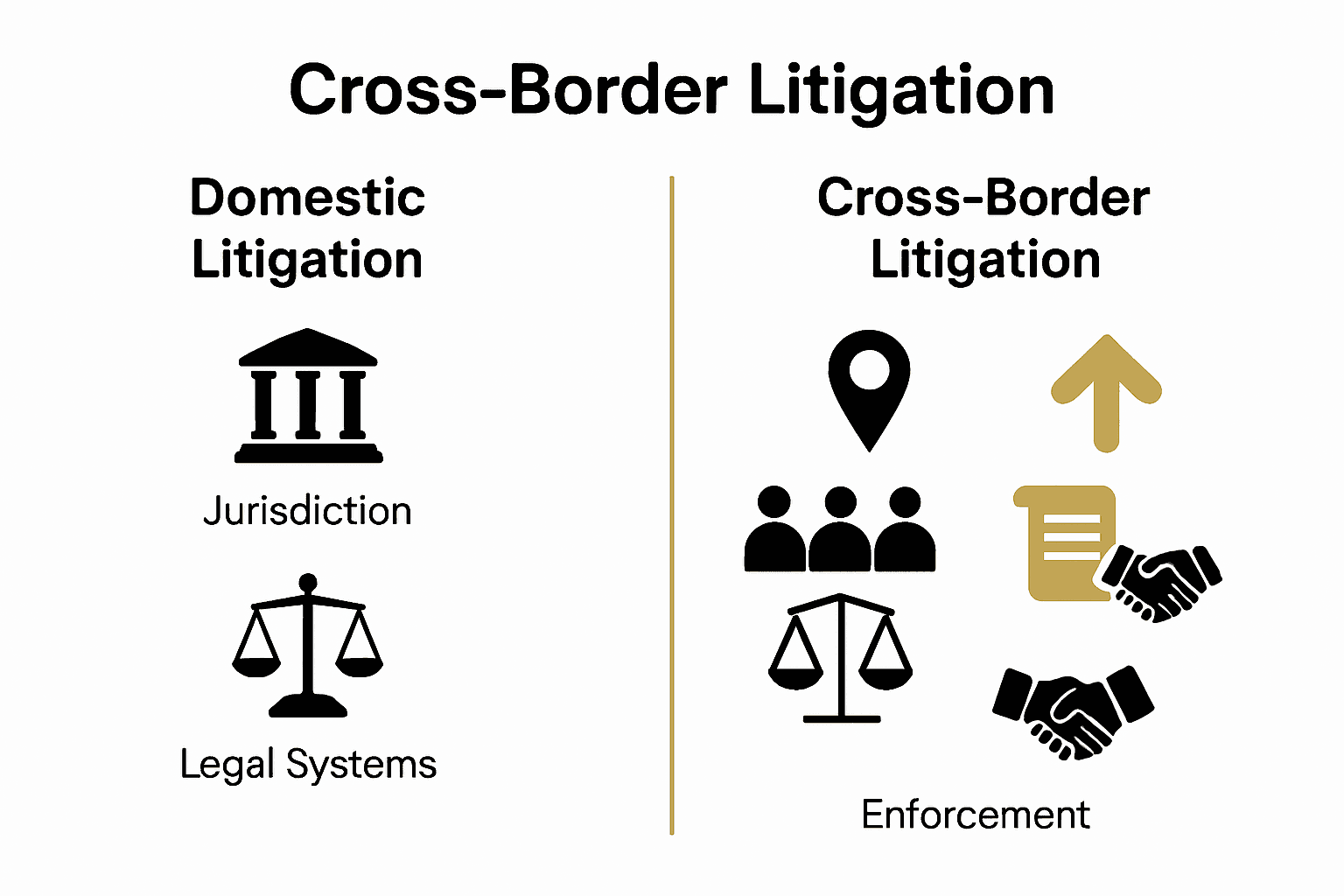
Cross-border litigation involves a complex, multi-stage process that requires meticulous planning and strategic execution. Each stage presents unique challenges that demand careful navigation and comprehensive legal expertise, transforming international dispute resolution into a sophisticated legal journey.
According to Legal Foundations, the typical cross-border litigation process encompasses several critical stages. These begin with initial case assessment and jurisdictional analysis, where legal practitioners carefully evaluate the appropriate forum, applicable laws, and potential procedural obstacles. This preliminary stage is crucial for developing a robust litigation strategy that anticipates potential challenges and maximizes the likelihood of successful resolution.
The subsequent stages typically involve critical procedural steps such as service of process across international boundaries, evidence gathering under different legal systems, and managing potential language and documentary translation challenges. Practitioners must navigate complex international protocols, including obtaining necessary permissions, ensuring proper document authentication, and complying with varied jurisdictional requirements. Cross-Border M&A & Ventures legal expertise becomes instrumental in managing these intricate procedural complexities.
Ultimately, the litigation process may culminate in negotiation, arbitration, or formal court proceedings, with each potential outcome requiring different strategic approaches. Successful cross-border litigation demands not just legal knowledge, but also cultural intelligence, communication skills, and the ability to synthesize diverse legal frameworks into a cohesive and compelling legal argument. The most effective practitioners understand that success lies not just in legal technicalities, but in a holistic approach that considers diplomatic, economic, and strategic dimensions of international dispute resolution.
Cross-border litigation presents a complex landscape of financial, legal, and strategic risks that can significantly challenge even the most well-prepared organisations. The multifaceted nature of international disputes demands comprehensive risk assessment and mitigation strategies that go far beyond traditional domestic legal proceedings.
Financial implications represent a substantial challenge in cross-border litigation. Potential costs extend well beyond standard legal fees, encompassing translation expenses, international travel, expert witness fees, document authentication, and potentially prolonged legal processes. The unpredictability of international jurisdictional requirements can lead to exponential cost escalations, with some disputes consuming substantial financial resources before reaching any resolution.
Practical challenges in cross-border litigation are equally demanding. Language barriers, divergent legal systems, cultural misunderstandings, and complex communication protocols can create significant operational obstacles. 7 Key Types of Business Litigation become particularly nuanced when operating across international boundaries, requiring legal practitioners to develop sophisticated cross-cultural communication and negotiation skills.
Moreover, enforcement of judgments represents another critical risk dimension. Even after successfully navigating complex legal proceedings, organisations may find themselves unable to effectively enforce court decisions across different jurisdictional boundaries. This challenge underscores the importance of strategic planning, comprehensive legal expertise, and a nuanced understanding of international legal frameworks that can anticipate and mitigate potential enforcement complications before they arise.
Cross-border disputes demand more than just legal knowledge; they require strategic guidance through complex jurisdictional rules, enforcement challenges and unforeseen procedural hurdles. If you are facing the pressure of multi-jurisdictional conflicts or concerned about navigating international legal frameworks, Ali Legal is ready to support you with fixed fees, straightforward advice and a client-centred approach.
Feel empowered to face international disputes with our expert International Disputes & Arbitration team who specialise in turning complexity into clear strategic solutions. We understand the risks and practical challenges covered in the article on cross-border litigation and are committed to delivering fast, transparent communication to keep you informed every step of the way.

Don’t let uncertainty over jurisdiction or enforcement hold your case back. Visit Ali Legal today to consult with a solicitor skilled in international dispute resolution. Take control of your cross-border legal issues now to protect your interests and avoid costly delays. Discover how our experience in Role of Solicitor in Dispute Resolution can provide peace of mind and strategic clarity in complex litigation.
Cross-border litigation refers to legal disputes that involve parties from different countries, requiring the resolution of conflicts across multiple jurisdictions and legal systems.
Common types of cross-border disputes include commercial and contractual disputes, intellectual property conflicts, maritime and shipping disputes, international employment disagreements, and cross-border family law matters.
Key legal frameworks for cross-border litigation include bilateral treaties, international conventions, principles of private international law, and specific jurisdictional rules that determine which courts have authority in a dispute.
Risks and costs in cross-border litigation include significant financial implications such as translation expenses and travel costs, practical challenges like language barriers and cultural misunderstandings, and difficulties in the enforcement of judgments across different jurisdictions.


