
Menu
Get Expert Legal Support Today

Selecting the right international arbitration strategy can mean the difference between a swift, cost-effective resolution and years of costly procedural disputes. Many businesses struggle to balance enforceability, procedural flexibility, and budgetary constraints when evaluating arbitration options. This guide provides clear selection criteria and compares major arbitration rules to help you choose strategies that minimize delays, control costs, and protect your commercial interests across borders.
| Point | Details |
|---|---|
| Balance cost, enforceability, and flexibility | Effective arbitration strategies must address all three factors to suit your dispute characteristics. |
| ICC rules dominate globally | ICC Arbitration Rules account for 33% of international disputes but carry higher costs than alternatives. |
| Clear clauses reduce delays | Well-drafted arbitration clauses specifying seat and governing law cut procedural delays by 40%. |
| Institutional arbitration prevails | Over 70% of cases use institutional administration for predictability and standardized procedures. |
| Interim measures protect assets | Tribunals grant interim relief in 60% of urgent cases to secure evidence and prevent dissipation. |
Before committing to any arbitration framework, you need a clear decision-making lens. The right strategy depends on your dispute’s complexity, budget, and enforcement needs. Understanding these core criteria helps you avoid mismatched rules that inflate costs or jeopardize award recognition.
Start with cost implications. Arbitration fees vary dramatically between institutional rules and ad hoc proceedings. ICC arbitration, for example, involves higher administrative costs but delivers robust case management. Budget early to avoid surprises. Transparent fee structures offered by institutions like LCIA give you predictable expense forecasts, which matters when stakeholders demand financial accountability.
Enforceability ranks equally high. An award means nothing if you cannot collect. The New York Convention provides enforcement mechanisms across 160+ jurisdictions, but only if your arbitration clause specifies a compliant seat and governing law. Vague clauses invite jurisdictional challenges that delay or block enforcement.
Procedural flexibility determines how much control you retain over timelines, evidence rules, and tribunal composition. Institutional arbitration sacrifices some flexibility for administrative support and standardized procedures. Over 70% of international commercial arbitration cases are administered by institutions rather than ad hoc processes, reflecting demand for predictability. Ad hoc arbitration offers maximum customization but requires parties to manage logistics themselves, increasing administrative burden.
Your choice between institutional and ad hoc formats also affects risk tolerance. Institutional rules provide fallback mechanisms when parties deadlock on arbitrator appointments or procedural issues. Ad hoc arbitration leaves these decisions entirely to the parties, which works well for cooperative counterparties but becomes problematic in contentious disputes.
Finally, seat and governing law selection shape procedural safeguards and judicial oversight. Arbitration-friendly seats like London or Singapore offer supportive courts that respect tribunal autonomy while providing interim relief when needed. Hostile jurisdictions may intervene excessively or refuse to enforce awards. Understanding international arbitration basics helps clarify how seat selection interacts with enforceability.
Key selection criteria:
Pro Tip: Align your arbitration strategy with your international dispute options early in contract negotiations to avoid retrofitting incompatible clauses later. Consider how you might minimize investment risk through strategic clause design.
Once you understand selection criteria, evaluate specific rule sets. The three dominant frameworks offer distinct strategic advantages depending on your priorities.
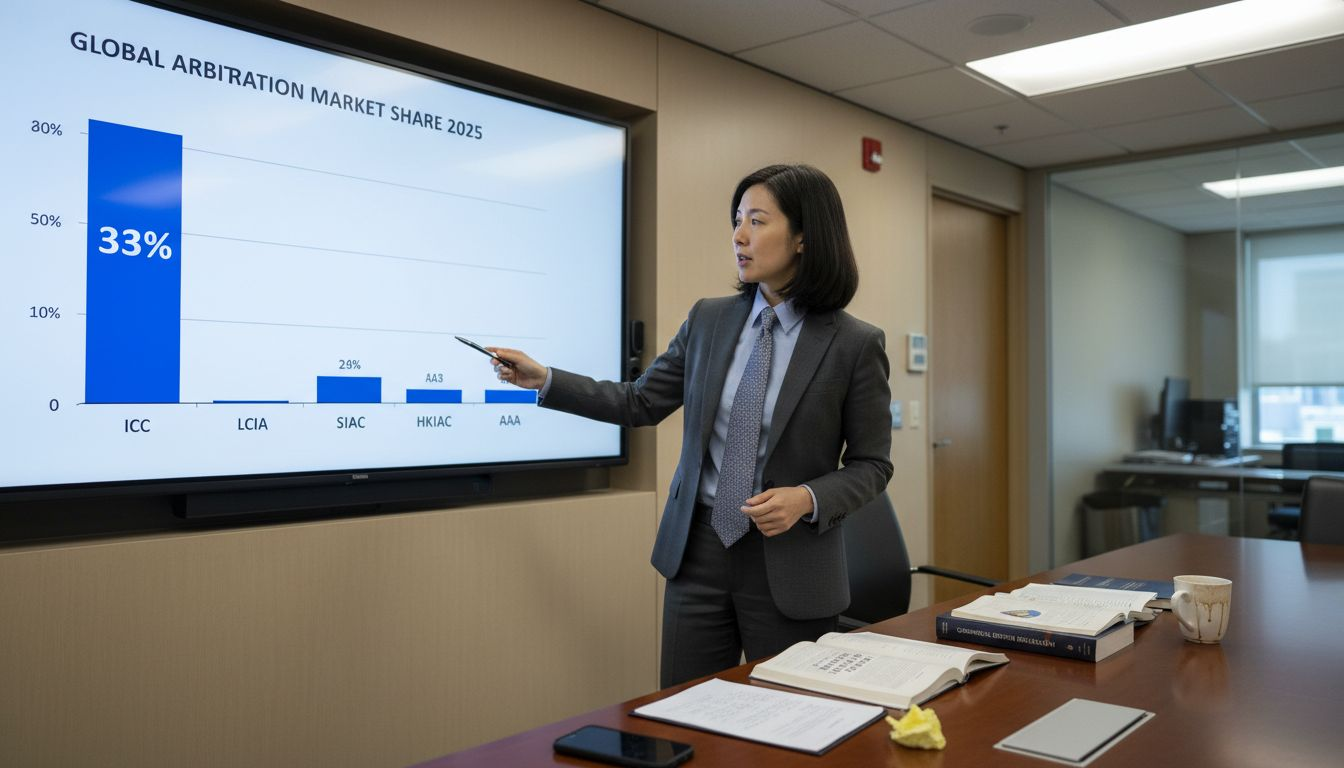
ICC Arbitration Rules lead the market. The ICC accounts for approximately 33% of arbitrations globally as of 2025, making it the most recognized choice for complex, high-value disputes. ICC provides comprehensive case management, multilingual support, and scrutiny of draft awards before issuance. This scrutiny enhances enforceability but extends timelines and raises costs. Expect administrative fees ranging from $5,000 to over $150,000 depending on dispute value, plus arbitrator fees.
LCIA Arbitration Rules offer a cost-effective alternative favored by UK and Commonwealth parties. LCIA emphasizes expedited procedures, with streamlined appointment processes and efficient case administration. Average costs run 20 to 30% lower than ICC for comparable disputes. LCIA’s London seat benefits from supportive English courts and a well-developed arbitration infrastructure. The rules suit mid-sized commercial disputes where speed and cost control matter more than extensive administrative oversight.
UNCITRAL Arbitration Rules provide flexibility for ad hoc arbitration. Parties control every procedural aspect, from appointing arbitrators to setting hearing schedules. This autonomy suits simple disputes or relationships where parties trust each other to cooperate. However, UNCITRAL proceedings may extend longer than institutional alternatives due to the absence of administrative case managers. You also bear full responsibility for logistical arrangements, which can complicate cross-border coordination.
Comparison of arbitration rules:
| Feature | ICC | LCIA | UNCITRAL |
|---|---|---|---|
| Cost | High | Moderate | Variable |
| Speed | Moderate | Fast | Slow to Moderate |
| Flexibility | Low | Moderate | High |
| Best For | Complex, high-value disputes | UK/Commonwealth parties, cost-conscious cases | Simple disputes, cooperative parties |
Choosing between these frameworks depends on your dispute profile. Complex multi-jurisdictional disputes benefit from ICC’s robust infrastructure. Cost-sensitive parties should explore LCIA’s fixed fee options. Highly customized disputes may justify UNCITRAL’s flexibility despite administrative challenges.
Pro Tip: Review your counterparty’s preferred dispute options overview before proposing arbitration rules. Mutual agreement on framework reduces early procedural friction. Check recent ICC dispute stats to benchmark costs and timelines against your budget.
Arbitration costs spiral when parties lack visibility into fee structures and procedural expenses. Strategic budgeting and transparent communication reduce financial surprises and keep disputes manageable.
Implement fixed fee arrangements wherever possible. Many institutions now offer fixed-fee arbitration for disputes below certain thresholds. LCIA, for example, provides predictable fee schedules that eliminate uncertainty around arbitrator hourly rates. Fixed fees let you budget accurately and avoid the cost overruns common in hourly billing models.
Early case budgeting cuts costs by up to 30%. Map out expected procedural phases, from document production through hearings and award drafting. Identify cost drivers like expert witnesses, translation services, and hearing venue rentals. Front-load discussions about cost-sharing and cost-capping agreements with opposing counsel. Parties who agree on cost controls before disputes escalate avoid wasteful procedural skirmishes.
Transparency between parties prevents budget blowouts. Share cost estimates and negotiate limits on document requests, witness numbers, and hearing days. Some arbitration agreements include cost-capping clauses that cap total legal fees at a predetermined amount or require tribunal approval before exceeding thresholds. These mechanisms align incentives and discourage scorched-earth tactics.
Choosing cost-effective institutions matters. LCIA’s streamlined procedures and lower administrative fees make it attractive for disputes where ICC’s comprehensive oversight is unnecessary. Evaluate whether your dispute truly requires ICC’s scrutiny or if LCIA’s expedited rules achieve comparable enforceability at lower cost.
Key cost management strategies:
Pro Tip: Integrate cost-effective dispute resolution principles into your arbitration strategy from the outset. Consider how operational efficiency techniques used to reduce operational costs in other business contexts apply to arbitration budgeting.
An unenforceable award wastes time and money. Enforceability depends on proper clause drafting and strategic use of the New York Convention’s framework.
Over 160 countries are signatories to the New York Convention, enabling enforcement of international arbitration awards across most commercial jurisdictions. This near-universal recognition makes arbitration far more enforceable than foreign court judgments. UK courts confirm approximately 95% of awards without set-aside challenges, reflecting judicial deference to arbitral decisions.
Clear clause drafting reduces jurisdictional conflicts. Specify the arbitration seat explicitly, as the seat determines which national courts have supervisory jurisdiction and which procedural law governs. Ambiguous seat provisions invite competing jurisdictions to assert authority, delaying enforcement. State the governing law for both the contract and the arbitration agreement separately to avoid interpretive disputes.
Draft clauses that align with Convention requirements. The Convention permits refusal of enforcement only on narrow grounds like lack of due process, non-arbitrability, or public policy violations. Ensure your clause addresses arbitrability by confirming disputes are commercial in nature and fall within the Convention’s scope. Avoid institutional rules or seats in non-signatory countries unless you have specific strategic reasons.
Best practices for enforceability:
Pro Tip: Assess legal risks in international disputes during contract drafting to identify enforceability vulnerabilities before they materialize. Review New York Convention enforcement precedents in your counterparty’s jurisdiction to anticipate potential challenges.
Arbitration clauses function as the foundation of your dispute resolution strategy. Poorly drafted clauses trigger years of procedural litigation before substantive issues are even heard.
Choose a clear, mutually agreed seat and governing law. Specifying both elements reduces delays by 40% compared to clauses that leave these decisions for later negotiation. The seat determines procedural law and supervisory court jurisdiction. Governing law controls interpretation of substantive contract rights. Misalignment between seat and governing law creates unnecessary complexity.
Specify procedural rules and interim relief explicitly. Incorporate institutional rules by reference or outline bespoke procedures if using ad hoc arbitration. Address arbitrator qualifications, language of proceedings, and document production protocols. Include provisions authorizing tribunals to grant interim measures to secure assets or preserve evidence. Silence on interim relief may limit your ability to obtain urgent protection.
Tailor clauses to dispute nature and party expectations. Multi-tiered clauses requiring negotiation or mediation before arbitration suit long-term commercial relationships. Single-tier clauses offering immediate access to arbitration work better for transactional disputes where speed matters. Match tribunal size and composition to dispute complexity; sole arbitrators suffice for straightforward cases while three-arbitrator panels suit technical or high-value matters.
Steps for drafting effective clauses:
Common pitfalls include vague seat provisions, failing to specify institutional rules editions, and omitting interim relief authorization. Fix these by reviewing arbitration clauses in contracts best practices and using model clauses published by arbitration institutions. Apply a cross-border dispute checklist to validate your clause against common jurisdictional challenges.
Choosing between institutional and ad hoc administration shapes your arbitration experience from appointment through award enforcement.
Institutional arbitration dominates the market. About 70% of global cases use institutional administration because institutions provide standardized procedures, administrative support, and fallback mechanisms when parties deadlock. Institutions appoint arbitrators if parties fail to agree, supervise procedural timelines, and scrutinize awards for formal compliance. This oversight reduces procedural risk but limits party control over logistics.
Ad hoc arbitration offers maximum procedural flexibility. Parties design every aspect of the process, from arbitrator selection criteria to hearing formats. This autonomy suits disputes where parties trust each other and want bespoke procedures. However, ad hoc arbitration provides no administrative safety net. If parties deadlock on arbitrator appointments or procedural issues, they must seek court intervention, which delays proceedings.
Institutional arbitration suits complex or high-value disputes. The administrative infrastructure justifies higher fees when disputes involve technical issues, multiple parties, or significant financial stakes. Institutions manage communications, scheduling, and cost deposits, freeing parties to focus on substantive arguments.
Ad hoc arbitration works for simpler cases or cooperative parties. When both sides want cost savings and can agree on procedures without institutional oversight, ad hoc formats deliver flexibility at lower administrative cost. But this approach backfires in contentious disputes where parties weaponize procedural disagreements.
Institutional vs ad hoc comparison:
| Feature | Institutional | Ad Hoc |
|---|---|---|
| Predictability | High | Low |
| Administrative Support | Comprehensive | None |
| Procedural Flexibility | Limited | Maximum |
| Cost | Higher fees | Lower fees |
| Risk of Deadlock | Low | High |
| Best For | Complex, high-value, contentious disputes | Simple, cooperative, cost-sensitive cases |
Pro Tip: Consult international arbitration solicitors when deciding between formats. Institutional arbitration reduces risk in most commercial contexts, but ad hoc may suit specific strategic needs.
Arbitration proceedings can span months or years. Interim measures protect your interests while the tribunal reaches a final award.
Interim measures granted by arbitration tribunals preserve assets and evidence, utilized in about 60% of cases involving urgent relief requests. Tribunals issue orders freezing assets, preventing asset dissipation, securing evidence, or maintaining status quo pending final resolution. These measures prevent counterparties from transferring property, destroying documents, or taking actions that render the final award meaningless.
Including interim relief provisions in your arbitration clause strengthens protection. Specify that tribunals have authority to grant interim measures and that parties will seek such relief from tribunals rather than national courts. Some institutional rules include emergency arbitrator procedures allowing parties to obtain interim relief before the full tribunal is constituted. ICC and LCIA both offer emergency arbitrator mechanisms that deliver decisions within days.
Interim measures provide critical leverage during proceedings. Freezing a counterparty’s assets encourages settlement by demonstrating your ability to enforce any eventual award. Securing evidence prevents spoliation that could undermine your case. Maintaining operational status quo prevents irreparable harm while disputes are resolved.
Common interim measures:
Pro Tip: Act quickly when seeking interim measures. Tribunals require credible evidence of urgency and irreparable harm. Prepare detailed applications demonstrating why relief cannot wait for the final award. Engage protecting interests during arbitration expertise to draft persuasive interim measure requests. Review interim measures usage guidance from your chosen institution.
Synthesizing the strategies discussed helps you evaluate options quickly based on your dispute profile.
| Strategy | Cost | Duration | Flexibility | Enforceability | Best Use Case |
|---|---|---|---|---|---|
| ICC Rules | High ($5k–$150k+) | 18–24 months | Low | Very High | Complex, high-value, multi-jurisdictional disputes |
| LCIA Rules | Moderate | 12–18 months | Moderate | High | UK/Commonwealth parties, cost-conscious cases |
| UNCITRAL Rules | Variable | 24+ months | High | High (if seat chosen well) | Simple disputes, highly customized procedures |
| Institutional Arbitration | Higher | Predictable | Limited | High | Contentious or complex cases needing oversight |
| Ad Hoc Arbitration | Lower | Variable | Maximum | Moderate (depends on execution) | Cooperative parties, simple disputes |
| Clear Arbitration Clauses | N/A | Reduces by 40% | N/A | Enhances significantly | All disputes |
| Interim Measures | Moderate (application costs) | Days to weeks | N/A | Strengthens enforcement | Cases with asset dissipation or evidence spoliation risk |
Cost ranges reflect administrative fees and typical arbitrator fees, excluding legal representation. Duration estimates assume standard procedural timelines without significant delays. Flexibility scores indicate party control over procedures. Enforceability ratings reflect likelihood of award recognition under the New York Convention.
Use this comparison to match strategies with your priorities. Cost-sensitive disputes favor LCIA or ad hoc formats. Complex cases justify ICC’s comprehensive framework. All disputes benefit from clear clauses and strategic use of interim measures.
Applying these insights to your specific context requires matching dispute characteristics with optimal strategies.
For cost-sensitive disputes, prioritize LCIA fixed fees and expedited rules. LCIA delivers enforceable awards at 20 to 30% lower cost than ICC, making it ideal when budgets constrain dispute resolution spending. Combine LCIA with clear arbitration clauses specifying London as the seat to leverage supportive English courts without excessive fees.
High-value or complex cases justify ICC’s comprehensive framework. When disputes involve technical issues, multiple parties, or significant financial stakes, ICC’s case management and award scrutiny reduce procedural risk. The higher cost is offset by enhanced enforceability and predictability. Specify ICC rules with a three-arbitrator tribunal for disputes exceeding £5 million.
When procedural flexibility matters most, UNCITRAL ad hoc arbitration suits customized approaches. Parties who want maximum control over timelines, evidence rules, and tribunal composition benefit from ad hoc formats. Ensure your clause appoints a reputable institution to administer arbitrator appointments if parties deadlock, avoiding court intervention delays.
Jurisdictional considerations guide seat and clause choices. Choose arbitration-friendly seats like London, Singapore, or Paris that offer supportive courts and well-developed arbitration infrastructure. Avoid seats in jurisdictions with interventionist courts or weak enforcement track records. Align governing law with the jurisdiction most familiar to both parties.
Tailored strategy recommendations:
Navigating arbitration strategies requires balancing legal precision with commercial pragmatism. Getting it right protects your business interests and delivers enforceable outcomes.
Ali Legal offers strategic commercial litigation services designed for businesses facing high-stakes disputes.

Our international arbitration expertise ensures you select optimal arbitration frameworks, draft enforceable clauses, and secure interim measures when needed. We provide transparent fixed fees, strategic advice, and long-term partnerships that minimize legal risk. Whether you need arbitration clause review, representation during proceedings, or enforcement support, our team delivers results tailored to your commercial objectives. Contact Ali Legal today to develop effective arbitration strategies that protect your interests across borders.
Key criteria include cost structures, enforceability under the New York Convention, procedural flexibility, choice between institutional and ad hoc administration, and alignment of seat and governing law. Balancing these factors based on your dispute characteristics ensures you select strategies that minimize delays, control expenses, and maximize the likelihood of enforceable awards. Businesses should evaluate each criterion against their priorities, whether cost sensitivity, speed, or comprehensive case management matters most.
Well-drafted arbitration clauses specifying the seat, governing law, and procedural rules reduce delays by up to 40% and prevent jurisdictional conflicts. Clauses that leave these elements ambiguous trigger procedural litigation before substantive disputes are heard. Tailoring clauses to the dispute context, including provisions for interim measures and arbitrator qualifications, ensures smoother proceedings and faster resolutions. Clear clauses also enhance enforceability by eliminating grounds for challenging awards.
Interim measures help secure assets and evidence pending final awards, used in 60% of urgent relief cases to prevent dissipation and strengthen enforcement positions. Tribunals grant orders freezing assets, preserving evidence, or maintaining status quo, which provides critical leverage during proceedings. Including interim measures support provisions in arbitration clauses ensures tribunals have clear authority to act quickly when urgent protection is needed. Emergency arbitrator procedures available under ICC and LCIA rules deliver relief within days.
Institutional arbitration suits complex, high-value disputes needing standardized administration and predictability. It offers comprehensive case management, fallback mechanisms when parties deadlock, and reduced procedural risk compared to ad hoc formats. Institutional arbitration advantages include administrative support for scheduling, communications, and cost management, justifying higher fees for contentious or technically complex cases. Ad hoc arbitration works best for simpler disputes involving cooperative parties who can agree on procedures without institutional oversight, delivering cost savings and maximum procedural flexibility.


