
Menu
Get Expert Legal Support Today

TL;DR:
- Solicitor fees for selling a house in the UK typically range from £800 to £1,500 plus VAT, with total costs often between £1,200 and £2,200 including disbursements. Factors such as property type, transaction complexity, regional location, and fee structure influence the final price, while additional costs like land registry and management packs should also be budgeted for. Sellers should request all-inclusive quotes, prepare documents early, and compare fixed-fee options to control expenses and avoid surprises.
Solicitor fees for selling a house in the UK are defined as the legal costs you pay a conveyancing solicitor to handle the transfer of property ownership to a buyer. Standard freehold fees range from £800 to £1,500 plus VAT, with total legal costs including disbursements typically falling between £1,200 and £2,200. Knowing what drives those numbers before you instruct a solicitor puts you in a far stronger position to budget accurately and avoid unwelcome surprises at completion.
Conveyancing is the formal term for the legal process of transferring property ownership, and it is what solicitors charge for when you sell. The fee covers drafting the contract of sale, responding to buyer enquiries, liaising with the Land Registry, and managing the transfer of funds on completion day.
Freehold sales typically cost £800–£1,500 plus VAT in solicitor fees alone. That figure does not include disbursements, which are third-party costs your solicitor pays on your behalf and then recharges to you. Once disbursements are added, the total legal bill for a standard sale usually lands between £1,200 and £2,200.

Leasehold properties cost more. Leasehold sales add £300–£800 to the base fee because of the extra legal work involved, including reviewing the lease and obtaining a management pack from the freeholder. The management pack alone typically costs around £275. If you own a leasehold flat, factor that in from the start.
Several variables move the final figure up or down, and understanding them helps you compare quotes on a like-for-like basis.
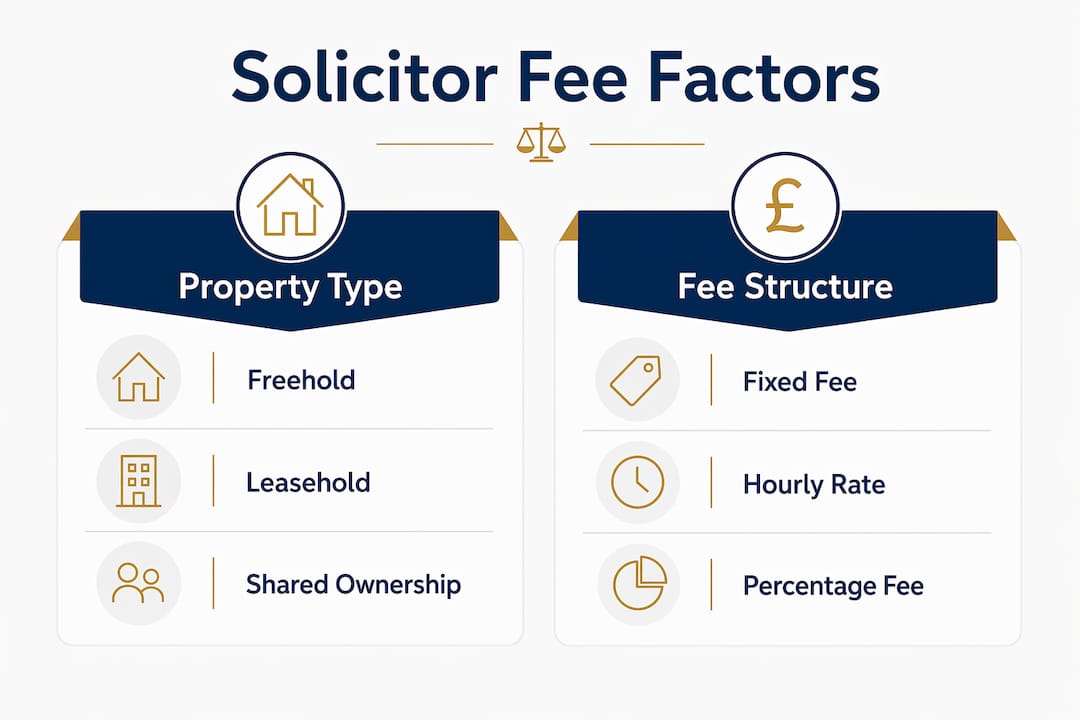
Freehold sales are the most straightforward and attract the lowest fees. Leasehold sales, shared ownership properties, and new builds all require additional legal work and push costs higher. A sale involving a Help to Buy equity loan, for example, requires the solicitor to liaise with Homes England, which adds time and cost.
Solicitors charge via three main structures: fixed fees, hourly rates of £150–£350, and percentage-based fees of 0.5%–1% of the sale price. Hourly rates carry the most risk for sellers because complexity or delays translate directly into a larger bill. Fixed fees give you certainty. Percentage-based fees can look attractive on lower-value properties but become expensive on higher-value sales.
London solicitors charge more than firms in the North of England or Wales, reflecting higher overheads. A sale in central London may attract fees at the top of the range, while a comparable property in Leeds or Cardiff is more likely to sit at the lower end.
Disbursements typically add £300–£800 on top of solicitor fees. Common items include Land Registry fees of £330, ID verification checks at £44, bank transfer charges of £33, and indemnity insurance averaging £108. These are not negotiable because they are set by third parties, not your solicitor.
Pro Tip: Ask every solicitor you approach to provide a full breakdown of disbursements alongside their headline fee. A quote that looks low often excludes routine charges that add up quickly.
Selling fees are generally lower than buying fees. Buying a property costs around £2,000 or more in solicitor fees, compared to £1,000–£1,500 for selling. The reason is workload. Buyers carry the heavier legal burden: their solicitor must commission local authority searches, investigate title, review mortgage conditions, and carry out environmental checks. Sellers primarily respond to enquiries and provide documentation.
The table below shows a typical cost comparison for a standard freehold transaction.
| Cost component | Selling | Buying |
|---|---|---|
| Solicitor base fee | £800–£1,500 | £1,000–£2,000 |
| Land Registry fee | £330 | £330 |
| ID checks | £44 | £44 |
| Bank transfer fee | £33 | £33 |
| Local authority searches | Not required | £250–£450 |
| Indemnity insurance | £108 (if needed) | £108 (if needed) |
| Estimated total | £1,200–£2,200 | £1,800–£3,000+ |
When you sell and buy simultaneously, many solicitors offer a combined fee that is lower than instructing two separate firms. If you are moving within the same area, ask your solicitor whether they can handle both transactions and what the combined cost would be. The saving can be meaningful.
The headline solicitor fee is rarely the full picture. Advertised fees frequently exclude routine administrative tasks, which can add £200–£500 to the final bill. Knowing the common extras in advance prevents them from catching you off guard.
Common additional costs include:
The risk of a sale falling through is also a cost most sellers overlook. If your sale collapses before completion, you remain liable for solicitor fees already incurred, including ID checks and document preparation. Those charges can amount to several hundred pounds even if no money changes hands at completion.
Pro Tip: Before you instruct a solicitor, ask specifically what you would owe if the sale fell through. Some firms offer “no completion, no fee” arrangements. Knowing your exposure upfront is worth the conversation.
Keeping costs under control starts before you even pick up the phone to a solicitor. These steps make a measurable difference.
Get all-inclusive quotes. All-inclusive quotes that explicitly cover VAT, bank transfers, and ID checks help you avoid surprise costs of £200–£500. Ask each firm to confirm in writing that their quote covers everything, including disbursements.
Prepare your documentation early. Preparing your legal pack before finding a buyer can reduce conveyancing time by several weeks. Gather your title deeds, property information forms (TA6), fittings and contents forms (TA10), and any guarantees or warranties for work done on the property. Sellers who have this ready before accepting an offer move significantly faster through the process.
Choose a fixed-fee solicitor. Fixed fees remove the risk of hourly charges escalating on a complex transaction. Compare at least three fixed-fee quotes before instructing. Use the checklist for hiring a solicitor to assess each firm on more than just price.
Ask about funding options upfront. Following a 2026 court ruling, solicitors must explore alternative funding options rather than defaulting to standard success fees. Ask your solicitor at the first meeting what funding arrangements are available and whether any insurance products apply to your transaction.
Understand what drives delays. Delays cost money when you are on an hourly rate and create friction even on fixed-fee arrangements. Respond to solicitor requests quickly, provide documents in one go rather than piecemeal, and chase your buyer’s solicitor if you have not heard anything for more than a week.
Use a comparison service. Platforms such as Compare My Move allow you to obtain multiple conveyancing quotes in one place. Comparing quotes side by side makes it easier to spot firms that are excluding disbursements from their headline price.
The pressure on solicitor fees is not coming only from property prices. Practising certificate fees have risen from £190 to £240, and the Law Society has raised serious concerns about the impact on smaller high-street firms. Those firms are the ones most sellers use. When their operating costs rise, those costs filter through to client bills.
I have watched this pattern play out over several years. The firms that absorb regulatory cost increases without passing them on are typically the ones cutting corners elsewhere, whether on response times, staff experience, or the thoroughness of their title checks. A slightly higher fee from a well-run firm is nearly always better value than the cheapest quote from a firm under financial pressure.
The 2026 court ruling on success fees is also worth understanding. Clients should clarify funding and insurance requirements upfront to avoid unnecessary charges. The ruling signals a broader shift: solicitors are now expected to have a genuine conversation about costs and alternatives at the outset, not after the bill arrives. If your solicitor does not raise this at your first meeting, raise it yourself. Knowing how to choose a solicitor with transparent billing practices is the single most effective thing you can do to protect your budget.
— Panagiotis
Alilegal’s property and conveyancing service is built around the principle that sellers should never be surprised by their legal bill. The team works on clear, fixed-fee structures with full disbursement disclosure from the first quote, so you know exactly what you are paying before you commit.

Alilegal handles UK property sales with experienced solicitors who prioritise speed and clear communication at every stage. Whether you are selling a straightforward freehold or a leasehold flat with a complex management pack, the team provides direct advice and transparent billing. Contact Alilegal for a personalised conveyancing quote and find out exactly what your sale will cost before you instruct.
The average solicitor fee for selling a freehold house ranges from £800 to £1,500 plus VAT. Total legal costs including disbursements typically fall between £1,200 and £2,200.
Selling fees are generally lower than buying fees. Buying costs around £2,000 or more because buyers require local searches, title investigations, and mortgage-related legal work that sellers do not.
Common disbursements include Land Registry fees of £330, ID checks at £44, bank transfer charges of £33, and indemnity insurance averaging £108. These third-party costs typically add £300–£800 to the total bill.
Yes. Sellers remain liable for fees already incurred up to the point of cancellation, including ID checks and document preparation. These charges can amount to several hundred pounds even without a completed sale.
Request all-inclusive quotes that cover VAT and all disbursements, prepare your legal documentation before accepting an offer, and choose a fixed-fee solicitor. Comparing at least three quotes side by side is the most reliable way to identify the best value.


